
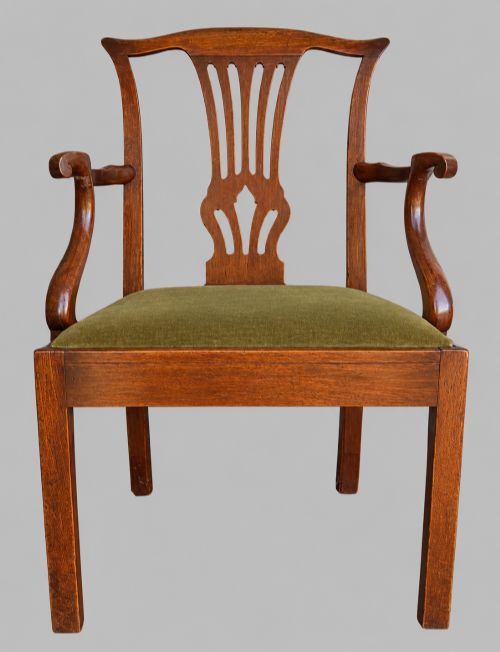
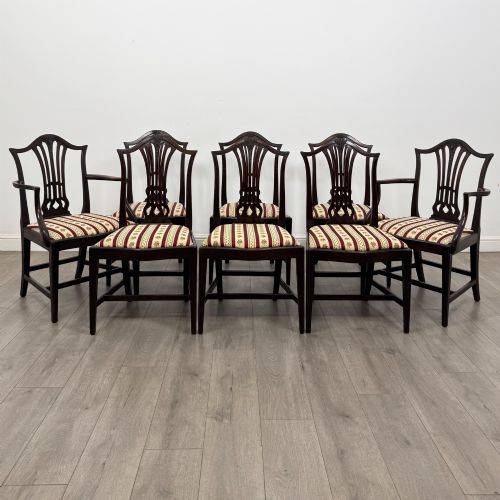
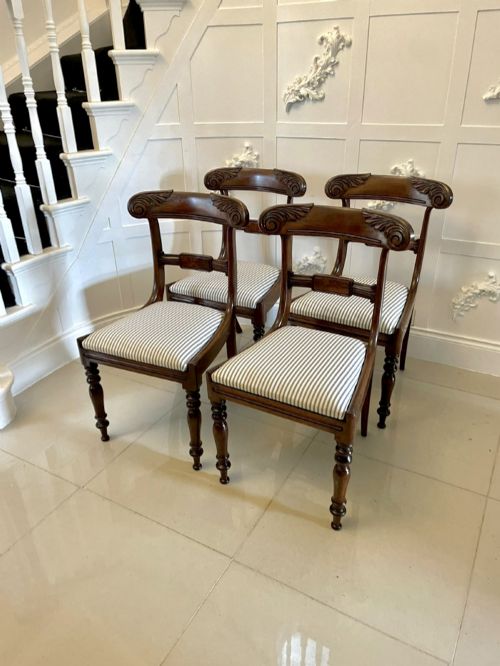
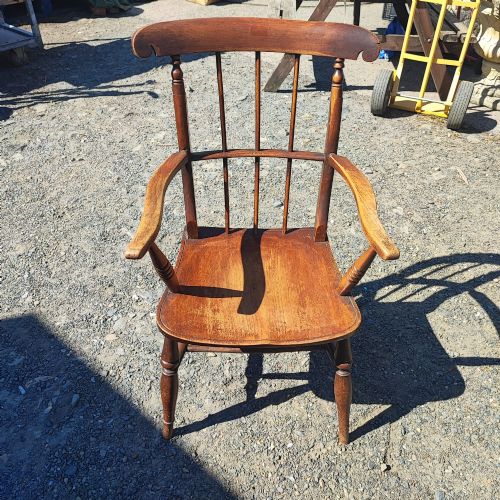

Georgian Style Dining Seating
Georgian style dining seating brings together mahogany chairs and tables from the eighteenth and nineteenth centuries, offering robust timber construction and classic carved forms for the modern dining room.
Georgian Style Dining Seating
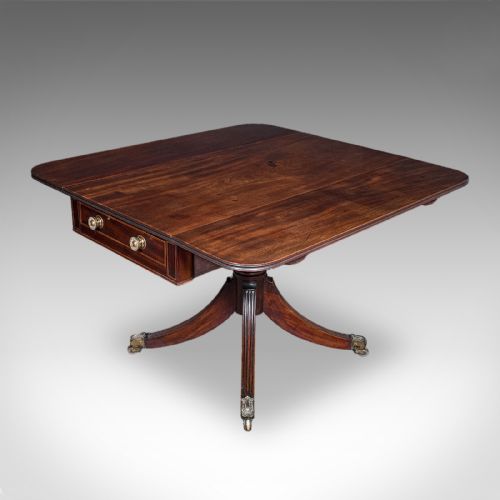
When buyers search for georgian style dining seating, they encounter various forms including dining chairs, armchairs, side chairs, and dining tables designed for traditional dining spaces. These pieces span periods from the eighteenth century through the nineteenth century, alongside later revivals from the twentieth century.
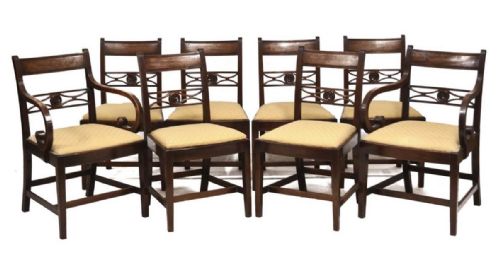
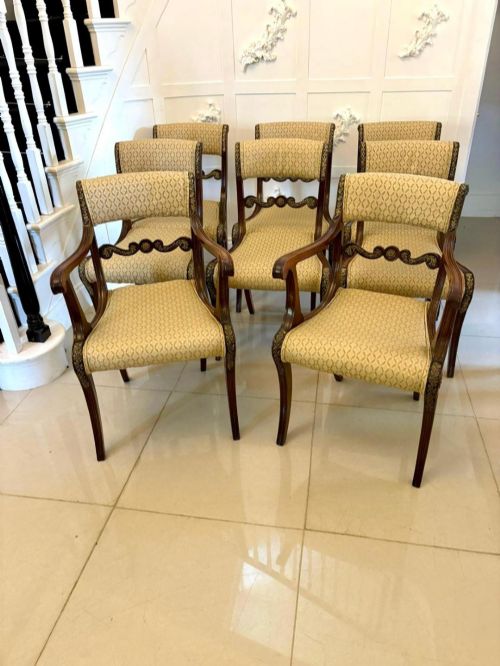
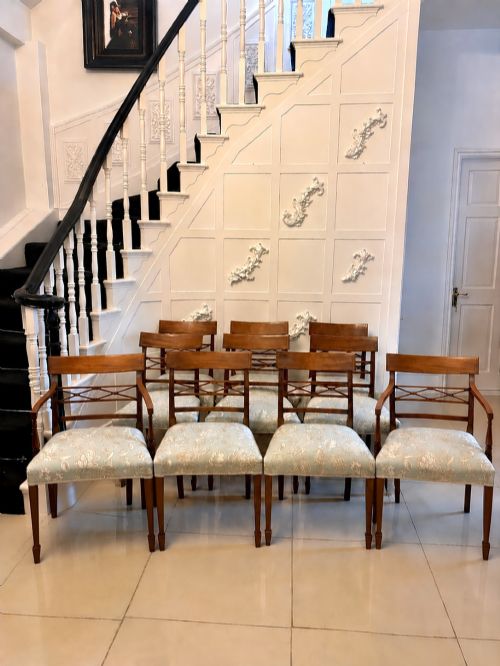
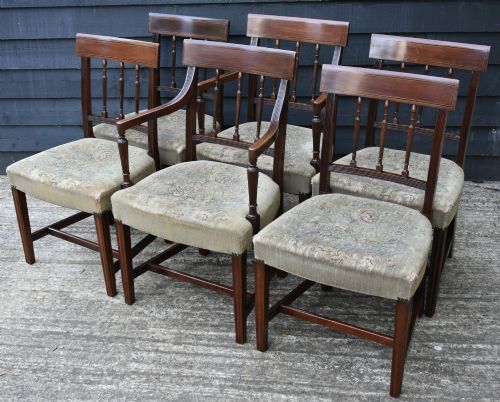
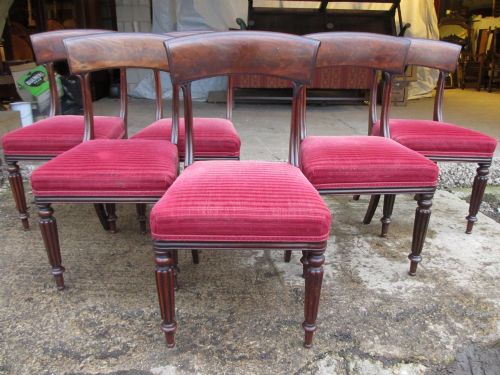
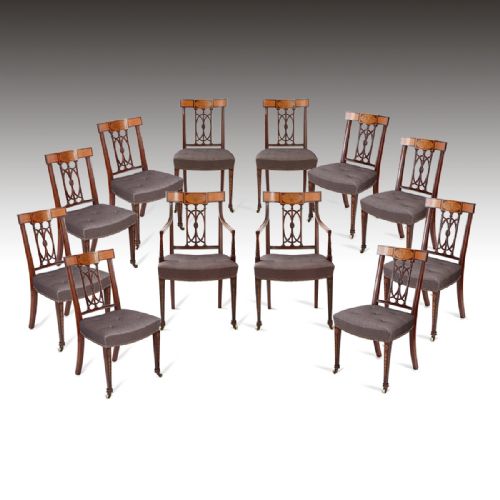
The most common configurations on this page are sets of chairs, ranging from pairs up to large sets of twelve or sixteen, often combining single chairs with matching carver armchairs. Woods such as mahogany predominate, complemented by ash, elm, fruitwood, and walnut across both original period items and later revival examples.
How they were made
Cabinetmakers constructed these pieces primarily using solid mahogany, alongside regional hardwoods like ash, elm, fruitwood, and walnut, shaped with traditional joinery methods. Wood surfaces were frequently left with a polished finish to highlight the natural grain of the timber.
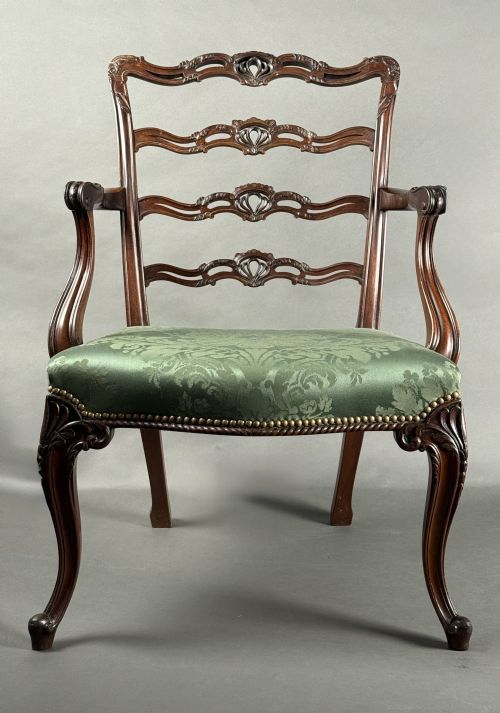
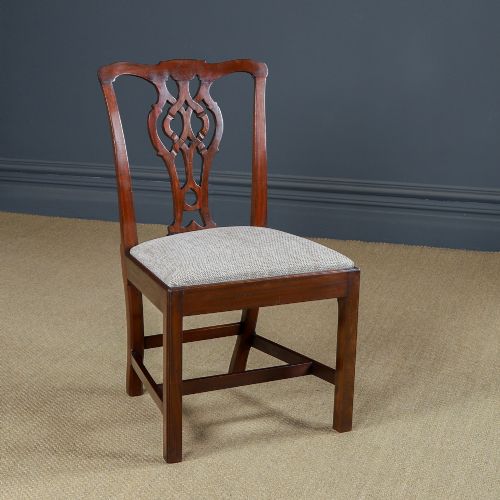
Seating components incorporated upholstered pads and drop-in seats finished in fabric, leather, velvet, or textile, while structural details often included brass fittings and hand-carved decorative elements along the chair backs.
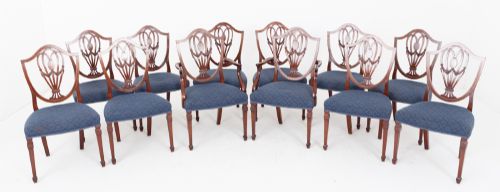
Early dining chairs occasionally show subtle handmade asymmetries where the maker hand-carved each shield back individually without templates.
What varies in quality
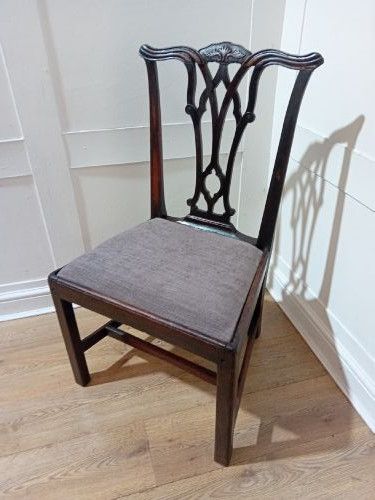
The degree of hand-carving on the chair backs and legs separates standard examples from exhibition grade or fine quality items. Crisp detailing in shield backs, pierced splats, and moulded frames indicates superior workshop output.
Consistency across a larger set influences desirability, particularly where sets of eight, ten, or twelve retain matching timber selection, uniform patination, and original structural integrity across all individual chairs and carvers.
The Georgian Style Dining Seating Glossary
- Carver
- An armchair designed with armrests, traditionally placed at the head of a dining table and paired with matching single chairs. These items often match the design of the surrounding dining seating.
- Bar back
- A horizontal wooden slat forming the upper or middle section of a chair back, common in nineteenth century seating designs. This style offers a simpler profile than openwork carved splats.
- Elbow chair
- An alternative term for an armchair, featuring supporting rests for the user's arms. Such pieces appear alongside side chairs in larger dining sets.
- Drop-in seat
- A removable upholstered frame that drops into the wooden seat rails of a chair. This construction method allows for straightforward reupholstery using various fabrics or leather.
Georgian Style Dining Seating: Frequently Asked Questions
What is included in georgian style dining seating?
This category includes dining chairs, armchairs, side chairs, and dining tables made in eighteenth and nineteenth century aesthetic traditions. Items range from individual hall chairs to large matched sets intended for formal dining.
Buyers will find both original period pieces from the seventeen hundreds and eighteen hundreds, alongside later revival furniture produced during the twentieth century using similar mahogany and walnut timbers.
How do I choose the right set size?
Selecting a set depends on your table length and available dining space, with common groupings on this page numbering four, six, eight, ten, or twelve pieces. Larger sets often include a combination of single chairs and two carver armchairs for the table ends.
Consider whether you need uniform seating or if mixed sets of side chairs and carvers suit your interior layout and daily dining requirements.
Are these pieces original or later copies?
Listings comprise both original pieces dating from the eighteenth and nineteenth centuries and later revival pieces from the early twentieth century. Each listing indicates the specific period or approximate date associated with the item.
Revival furniture often replicates classic Hepplewhite, Chippendale, or Sheraton styles, constructed with traditional materials like mahogany and upholstered pads.
How do I care for antique wood chairs?
Maintain mahogany and walnut dining furniture by keeping them away from direct heat sources and strong sunlight to prevent timber splitting and fading. Regular dusting with a soft, dry cloth preserves the polished surface finish.
Avoid excessive moisture and use appropriate wax or polish sparingly to maintain the natural patination of the wood over years of domestic use.