





Irish Mahogany Dining Chairs
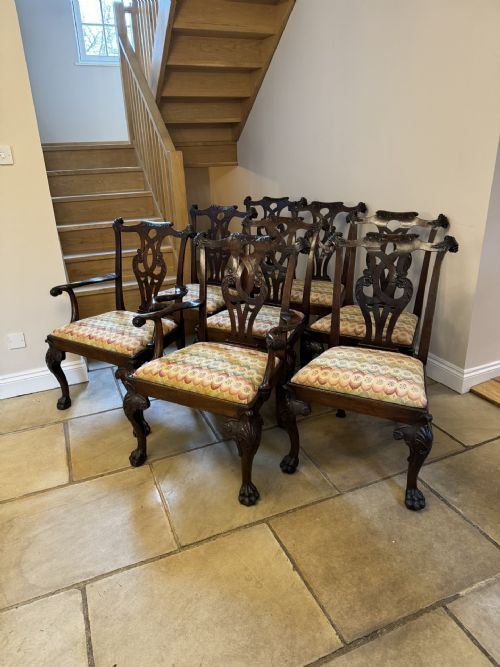
Irish mahogany dining chairs bring substantial timber, deep carving and robust proportion to the dining room.
Irish Mahogany Dining Chairs
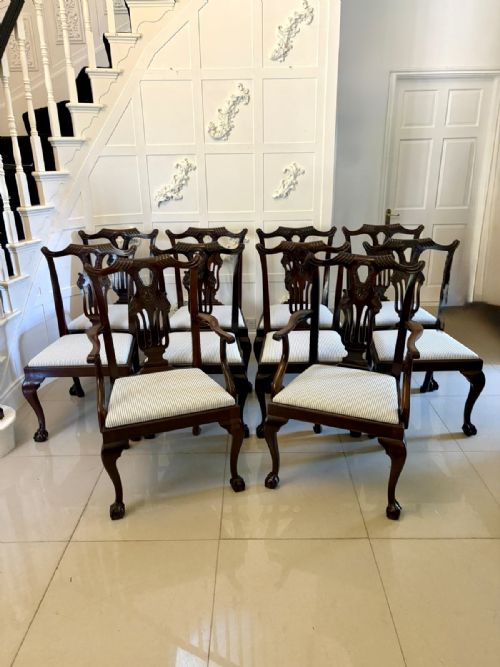
Irish mahogany dining chairs span several periods from the mid-eighteenth century into the twentieth century, appearing as single pieces, pairs or substantial sets of twelve.
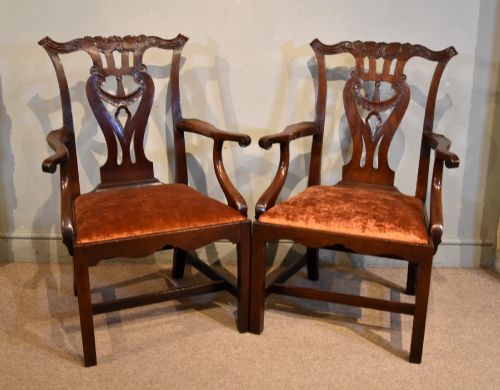
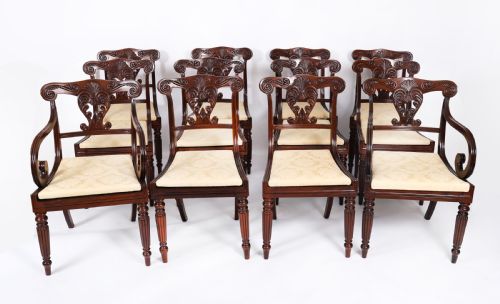
Buyers seeking Irish mahogany dining chairs encounter forms ranging from George II style side chairs and Chippendale designs to Regency bar backs and Victorian carved armchairs.
Makers and workshops across Dublin and the wider regions utilised heavy timbers, often incorporating ball and claw feet or ladder back frames into these dining seats.
How they were made
Craftsmen shaped dense mahogany into robust frames, frequently pairing the dark timber with drop-in seats upholstered in velvet, leather, fabric or textile.
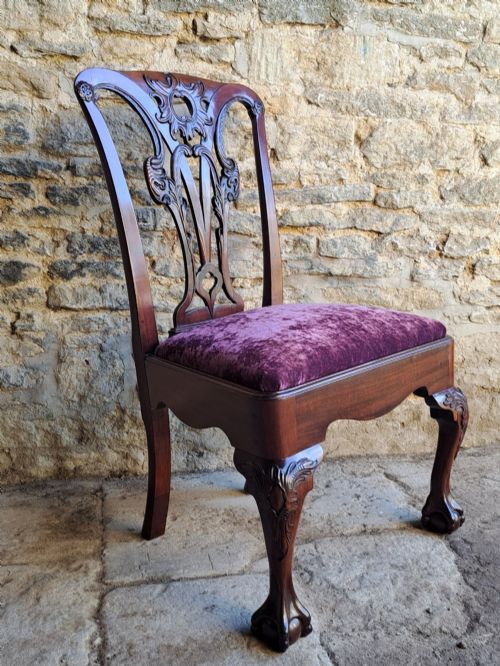
Structural details such as brass fittings, carved ball and claw feet, and inlaid accents mark the physical construction recorded across these periods.
Irish Mahogany Dining Chairs Retail Price Guide 2026
Typical asking prices for irish mahogany dining chairs among the pieces listed under this phrase on Sellingantiques today, from the lower quarter to the upper quarter. They describe what is for sale here now, not the wider market.
Listings feature mahogany paired with velvet, leather, fabric, oak, textile, brass and walnut across Georgian, Victorian and Regency periods.
What varies in quality
Depth and crispness of carved detail distinguish standard seating from exceptional examples, particularly on ball and claw feet and scrolling top rails.
Matching consistency across larger sets of eight or twelve dictates value, alongside the structural integrity of the heavy mahogany frames.
Robert Strahan Dublin
The Irish Mahogany Dining Chairs Glossary
- Carver
- An armchair designed for the head of a dining table, often matching a set of smaller side chairs. These pieces feature substantial armrests integrated into the frame.
- Bar Back
- A dining chair featuring a horizontal splat across the upper backrest that resembles the shape of a bar. This design appears frequently in Regency period seating.
- Ball and Claw
- A foot carved to represent a bird's talon gripping a ball. This motif is common on eighteenth-century and revival mahogany furniture.
- Chippendale Style
- A decorative style drawing on eighteenth-century design books, characterised by pierced splats and ornate carving. These chairs often incorporate cabriole legs.
Irish Mahogany Dining Chairs: Frequently Asked Questions
How do I identify genuine Irish mahogany dining chairs?
Examine the weight and density of the mahogany timber, along with regional construction characteristics such as heavy frame proportions and deep carving. Irish pieces often display distinct local cabinetmaking traits that differentiate them from English equivalents.
Look closely at the underside of the seat rails and the joinery methods used. Regional workshops frequently employed specific framing techniques passed down through generations.
Can I mix carvers with side chairs?
Carvers and side chairs were traditionally paired around large dining tables to seat the host and hostess at either end. Matching the timber tone and decorative style ensures visual harmony.
Sets often include two armchairs alongside a larger number of side chairs to create a balanced arrangement in the dining room.
How should I care for antique mahogany dining seats?
Maintain the timber by dusting regularly with a soft cloth and applying appropriate wax polish sparingly to preserve the finish. Protect the wood from direct sunlight and extreme temperature fluctuations.
Inspect the upholstery periodically, ensuring velvet, leather or fabric coverings are kept clean and free from moisture damage.
What defines George II style chairs?
George II style chairs showcase prominent cabriole legs ending in ball and claw feet, accompanied by solid splats and carved knees. The proportions are typically heavy and confident.
Revival pieces produced later in the nineteenth and twentieth centuries replicate these robust architectural elements with similar attention to timber selection.