
Georgian Style Dining Room
A georgian style dining room brings together solid timber tables, matching chairs, and generous sideboards built to host formal meals.
Georgian Style Dining Room
When you search for a georgian style dining room, you encounter furniture designed for entertaining and dining across several centuries. The selection spans authentic items from the eighteenth and nineteenth centuries alongside later revival pieces produced in the early twentieth century.
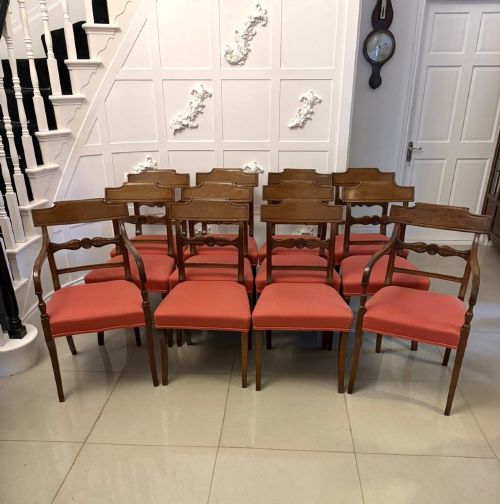
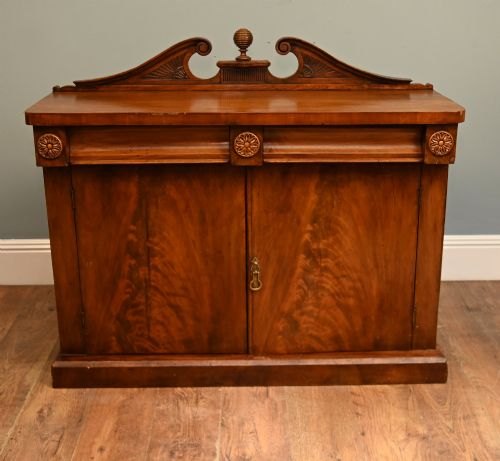
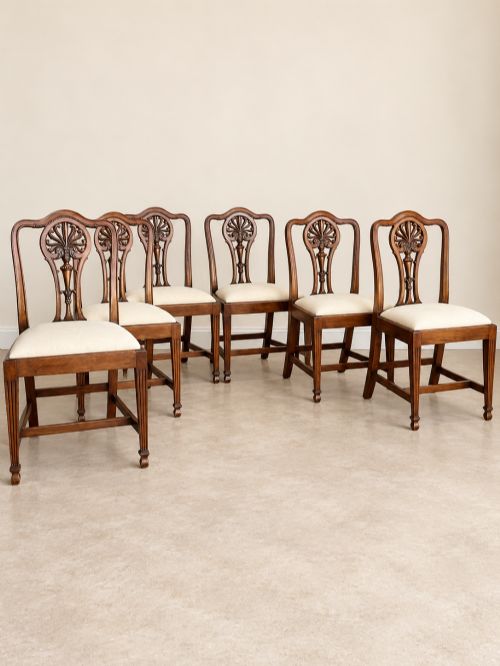
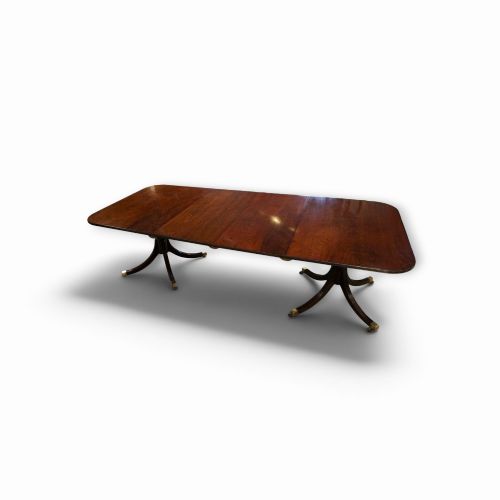
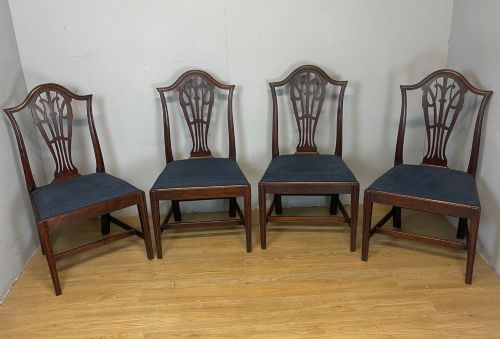
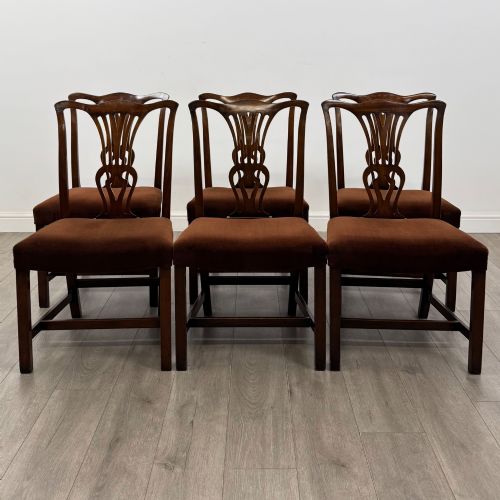
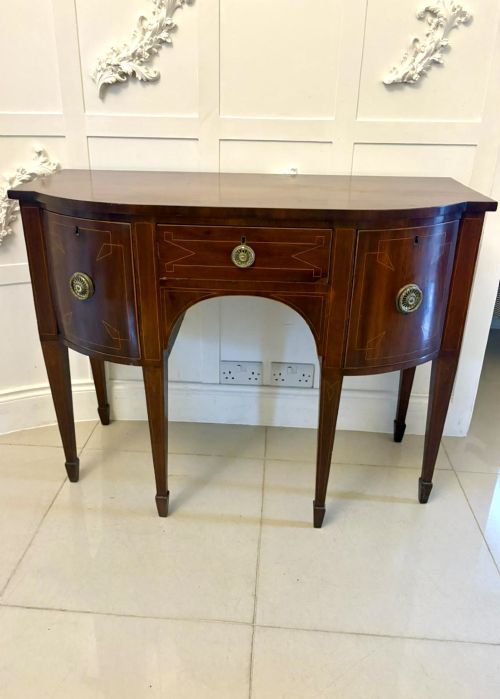
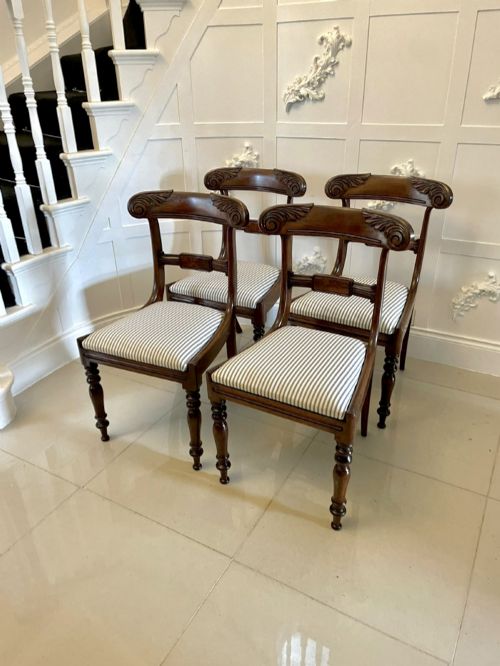
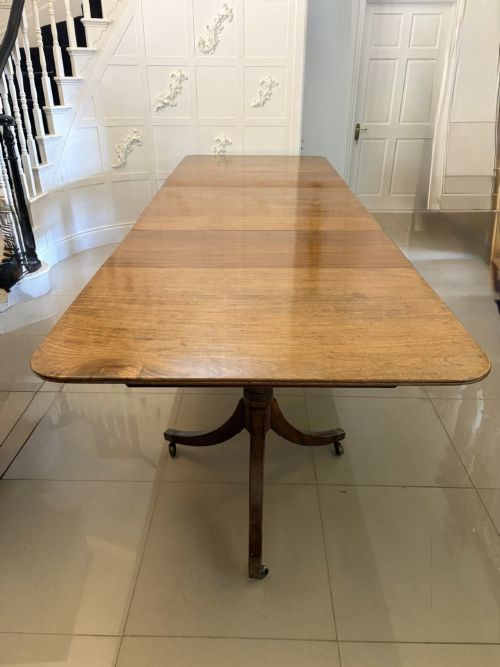
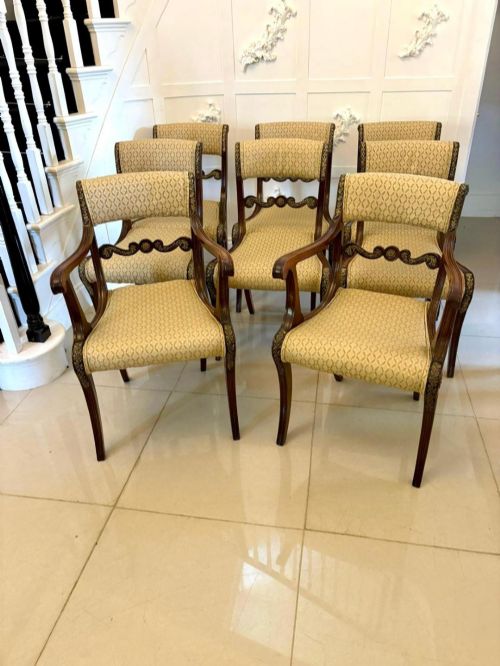
The most common configurations on this page include large extending dining tables accompanied by sets of chairs, often numbering six, eight, or twelve. Sideboards, buffets, and servers complete the arrangement, providing surface space and storage for dining rooms.
Originating from periods such as the Georgian era, Regency, and subsequent revival movements, these pieces reflect formal dining traditions. Makers utilised durable timbers to construct items intended for daily use in domestic dining spaces.
Materials and Construction
Cabinet makers and chair makers relied heavily on mahogany as the primary timber, valued for its dense grain and structural strength. Workshops enhanced this wood with contrasting veneers and stringing in satinwood, boxwood, and other light timbers.
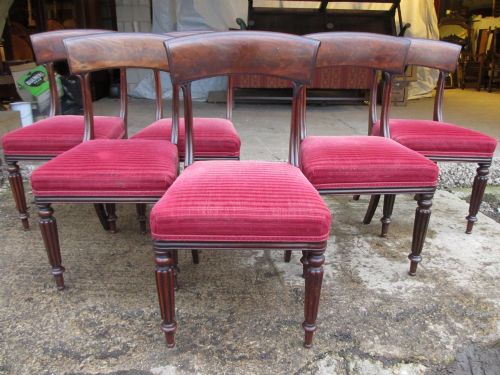
Detailing often included fine inlay, carved motifs, and brass fittings on cabinets and sideboards. Upholstered seats on dining chairs incorporate fabric or leather, secured over supportive frames designed to withstand long periods of sitting.
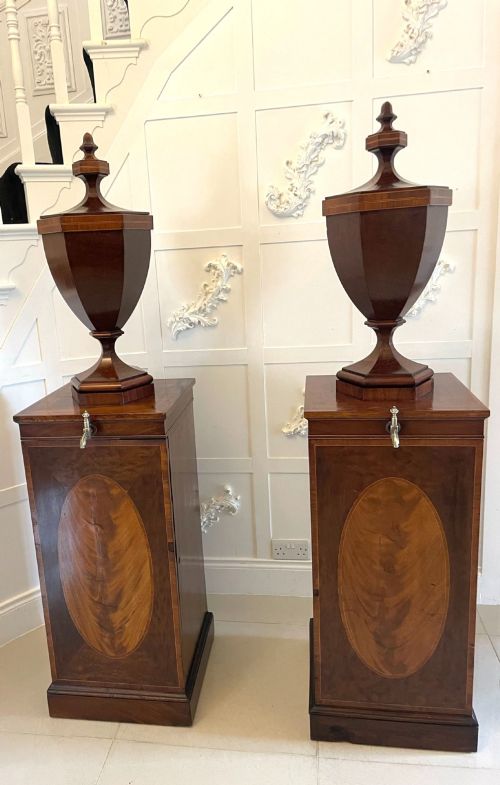
Wine urns on pedestals stand ready to chill bottles in grand style, proving that dining rooms took their beverages very seriously indeed.
Craftsmanship and Proportion
Quality in these dining sets rests upon the crispness of the carving, the selection of figured mahogany veneers, and the integrity of the joinery. Superior examples maintain balanced proportions across all matching chairs and large tables.
Subtle differences in timber selection and the precision of inlaid boxwood or satinwood distinguish standard production from exceptional work. Original surfaces and patination further elevate pieces that have survived centuries of domestic use.
M. D. Miller & Sons
The Georgian Style Dining Room Glossary
- Carver
- An armchair with armrests, traditionally placed at the head of a dining table for the host. These match the single chairs in a dining set.
- Breakfront
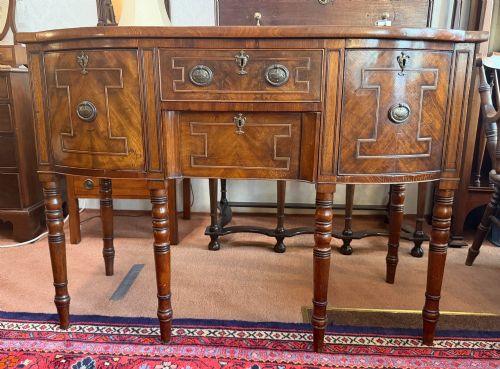
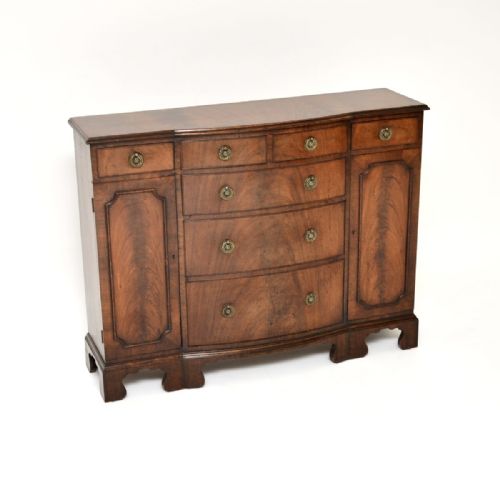
- A cabinet or sideboard design where the central section projects forward from the flanking outer sections. This architectural feature creates depth and visual interest in storage furniture.
- Pedestal
- A structural support column beneath a table or supporting a wine urn. Multiple pedestals allow large dining tables to extend securely.
- Serpentine
- A curved furniture front shaped in a gentle 'S' contour, convex in the centre and concave at the ends. This sophisticated shaping requires skilled woodworking.
- Shield Back
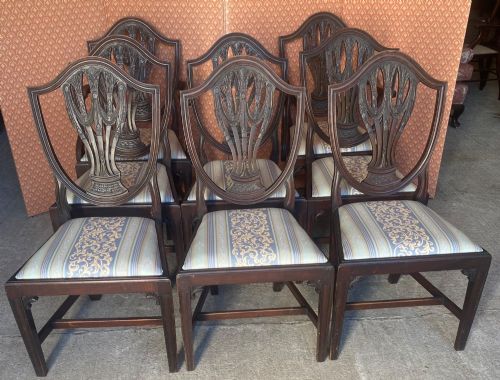
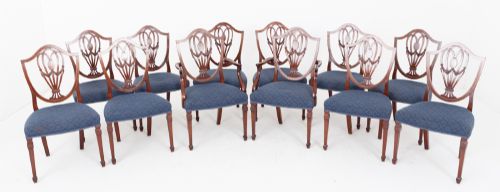
- A chair back design shaped like a heraldic shield, popularized by eighteenth-century designers. These frames often feature carved splats and openwork details.
Georgian Style Dining Room: Frequently Asked Questions
How do I choose the right table size?
Consider the number of guests you routinely host and the physical dimensions of your room. Extending tables offer flexibility for everyday use and larger gatherings.
Ensure you leave adequate clearance around the table for chairs to pull out comfortably and for people to walk past sideboards.
What is the difference between original and revival pieces?
Original pieces date back to the Georgian and Regency periods, carrying centuries of age and distinct patination on the timber. Revival pieces were manufactured later, often during the Edwardian era or the early twentieth century, copying those earlier designs.
Both categories utilise solid mahogany and traditional construction methods, but original items hold greater historical age.
How should I care for mahogany dining furniture?
Keep timber furniture away from direct sources of heat and strong sunlight to prevent the wood from drying out or fading. Apply bees wax occasionally to nourish the surface and maintain a natural sheen.
Use coasters and mats on tables to protect the polished finish from moisture and heat damage during meals.
What are carver chairs used for?
Carver chairs feature armrests and traditionally sit at either end of a dining table for the hosts. They match the design of the smaller single chairs in the set.
Their wider proportions provide extra comfort while maintaining a uniform appearance around the dining room.