

Georgian Style Candle Table
A georgian style candle table provides a stable surface for illumination, built with tripod legs and circular tops that suit sitting rooms.
Georgian Style Candle Table
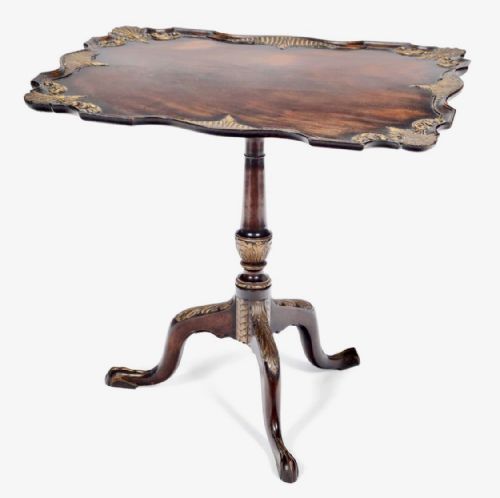
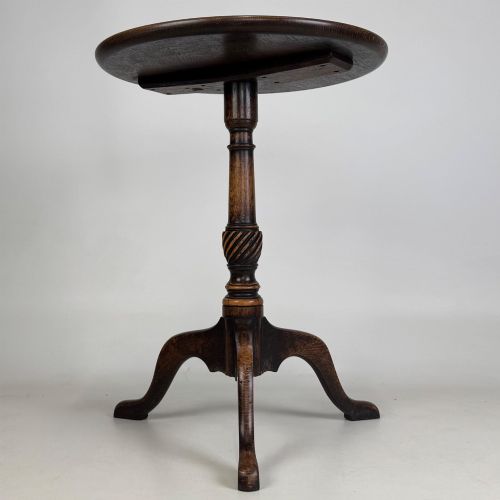
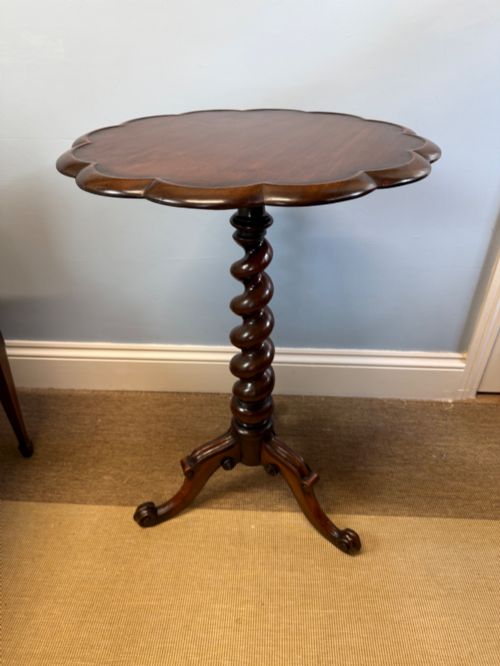
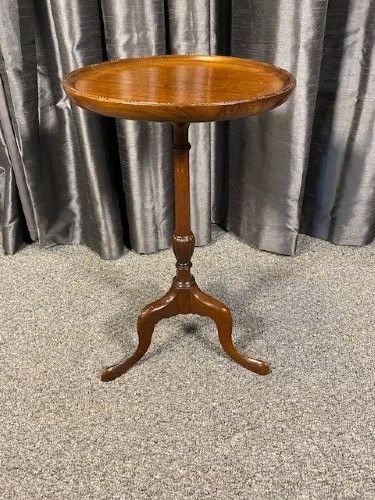
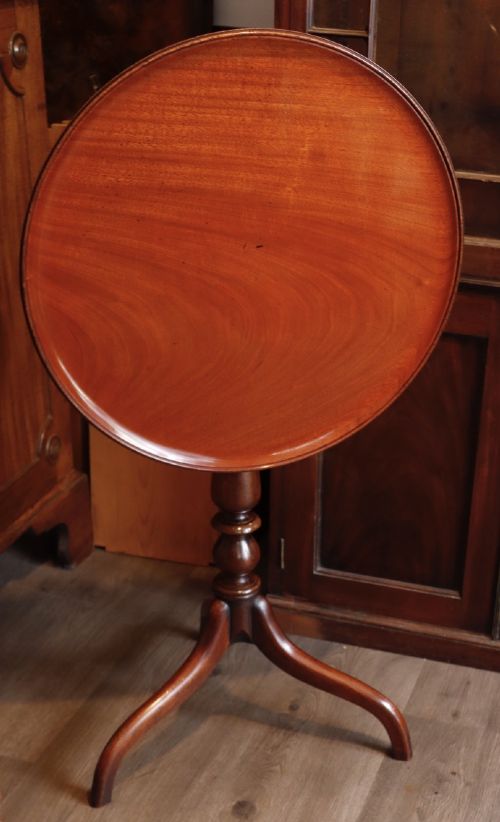
A georgian style candle table appears across this selection as a compact surface designed originally to hold a source of light. Most examples belong to the nineteenth and twentieth centuries, taking the form of wine tables, occasional tables, and tripod stands.
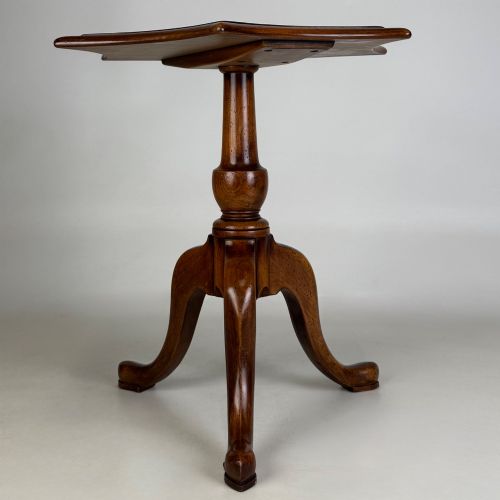
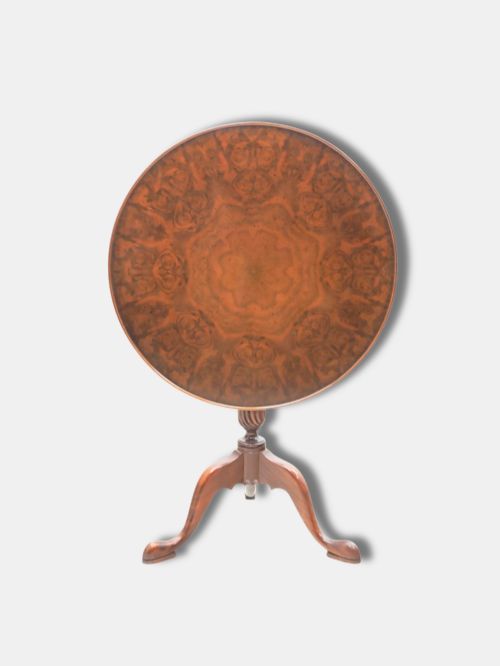
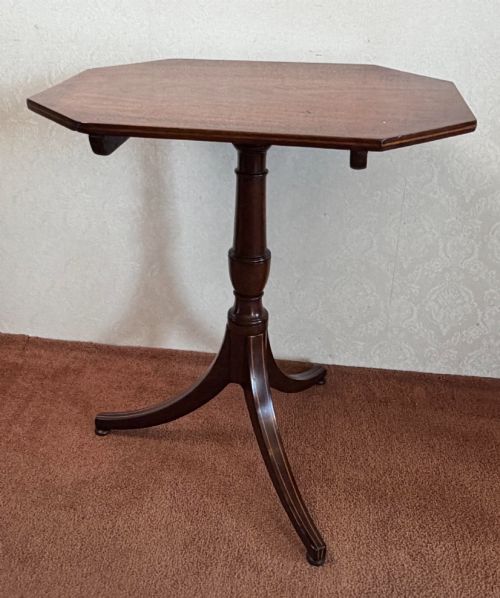
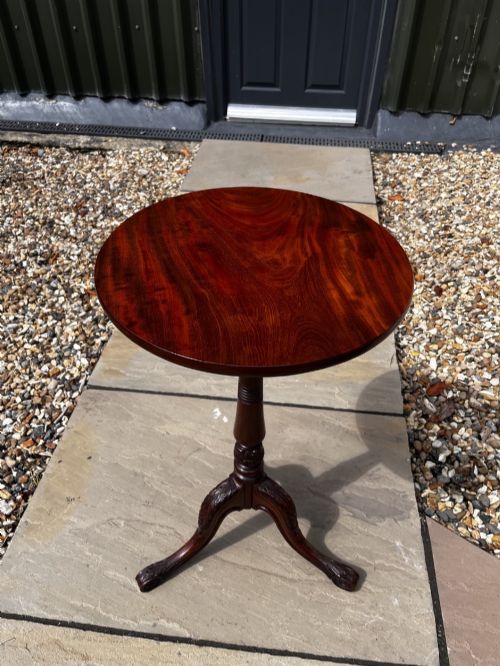
The common form combines a slender central pillar with three supporting legs and a circular or octagonal top. Many pieces incorporate a tilt-top mechanism, allowing the surface to fold away when not in use beside a chair.
Makers working in Georgian, Victorian, Edwardian, and later revival periods produced these tables in forms ranging from plain mahogany to inlaid satinwood and burr oak. They serve today as lamp tables and small occasional surfaces.
How they were made
Timber selection governs the construction, with solid mahogany, walnut, oak, and satinwood shaped into turned central pillars and curved legs. Cabinetmakers utilised turning lathes for the columns and hand saws for the shaped tripod feet.
Surface decoration relies on joinery techniques and inlay rather than heavy carving, though parcel gilt, boxwood inlay, and floral marquetry appear on select pieces. Tilt-top variants employ a birdcage mechanism or a wooden block catch to secure the top to the stem.
Some tables tilt entirely vertical, behaving like wooden sentinels resting quietly against the parlour wall.
What varies in quality
The refinement of the timber and the precision of the turning set pieces apart, where dense grain and rich colour elevate an ordinary walnut or mahogany stand. Fine execution shows in the balance of the tripod base and the crispness of edge mouldings.
Decorative additions such as boxwood inlay, pie-crust edges, or tilt-top mechanisms distinguish standard utility tables from more ambitious cabinet work. The integrity of the pillar joint determines how firmly the top sits upon the three legs.
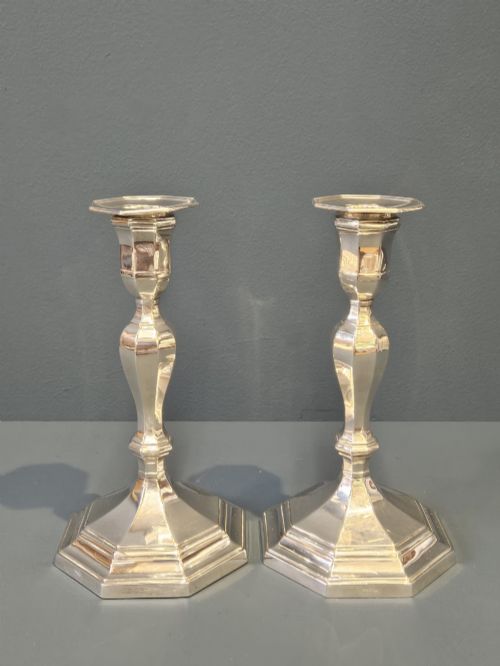
Mappin & Webb
The Georgian Style Candle Table Glossary
- Tripod table
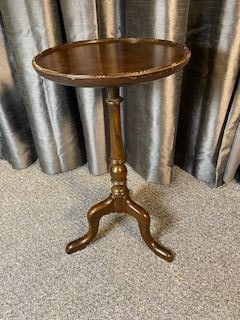
- A small stand supported by three legs radiating from a central pillar. This construction prevents wobbling on uneven floors.
- Tilt-top
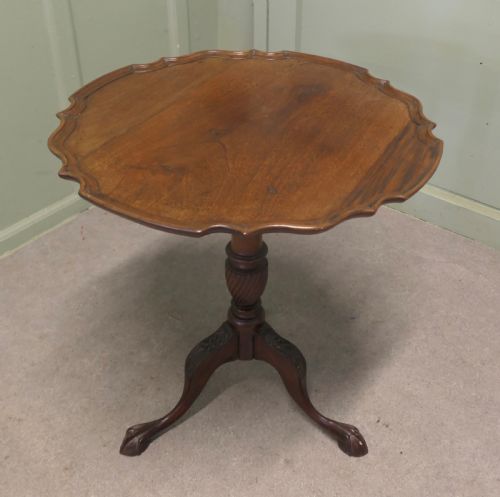
- A table top hinged to the central column so it can pivot vertically. This allowed easy storage against a wall when the room was cleared.
- Birdcage
- A revolving wooden frame beneath the table top that permits the surface to both tilt and rotate. It represents a more complex form of joinery.
- Pie crust
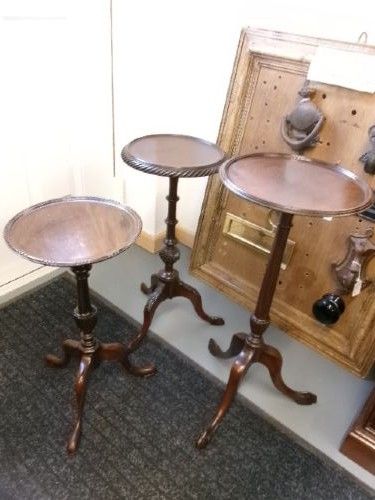
- A raised, carved border shaped around the edge of a circular table top. The profile resembles the crimped crust of a pastry.
- Urn stand
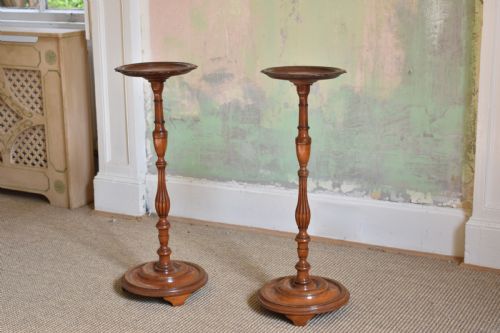
- A tall, slender occasional table designed to hold a heated water urn or candle. They often feature octagonal tops and Sheraton styling.
Georgian Style Candle Table: Frequently Asked Questions
What is a georgian style candle table used for?
These tables were originally built to hold wax candles or oil lamps close to seating areas before electric lighting became common. Today they function primarily as lamp tables or small occasional surfaces for drinks and books.
The compact footprint allows them to fit easily into corners or beside armchairs without crowding a room.
What woods were used for these tables?
Mahogany forms the majority of the examples, valued for its stability and deep reddish-brown tone. Walnut, oak, and satinwood also appear frequently across different periods and regional workshops.
Inlay work frequently incorporates lighter woods like boxwood to create contrasting geometric or floral borders.
Are these tables from the Georgian period?
The selection includes pieces made during the eighteenth century alongside nineteenth-century interpretations and twentieth-century revival pieces. Makers in the Edwardian era and the 1920s frequently reproduced the classic tripod proportions.
Examining the timber grain, secondary woods, and construction marks helps determine the exact age of a piece.