
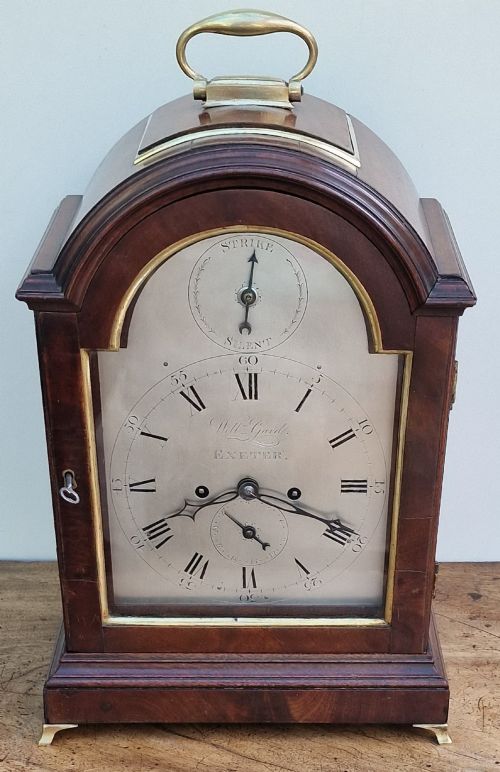
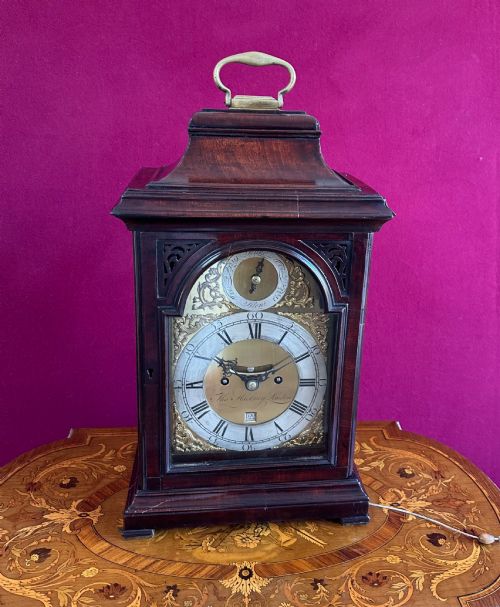
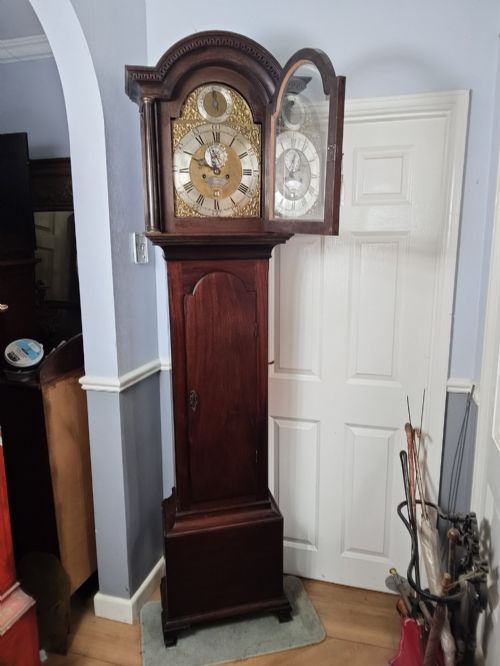

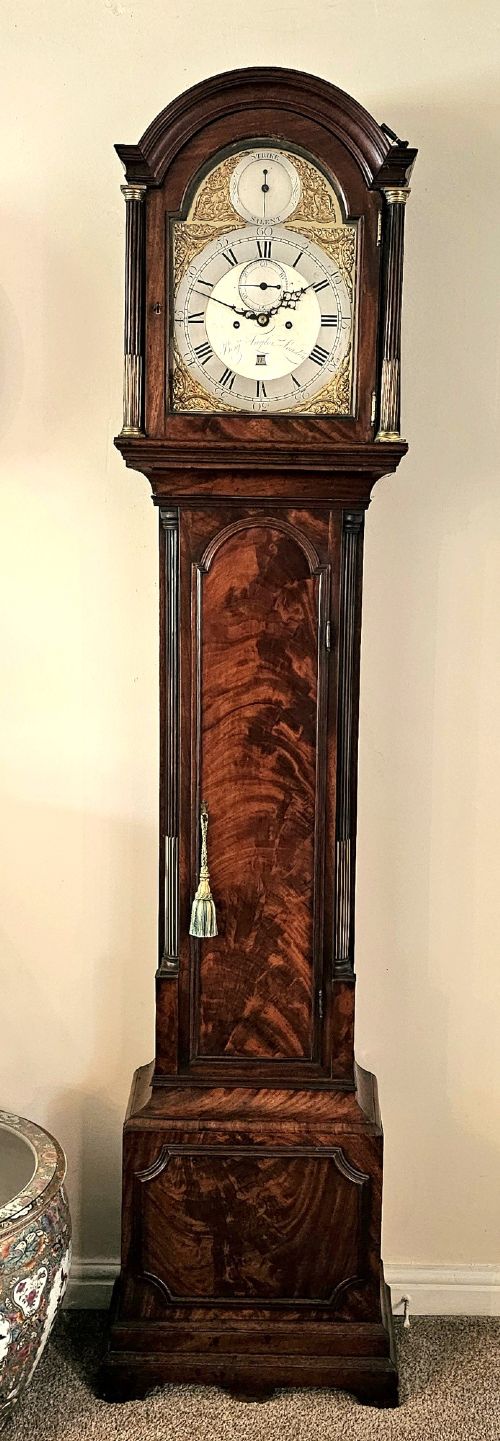
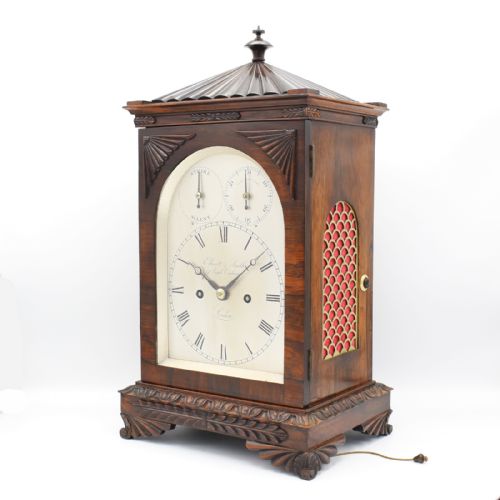


Georgian Striking Clock
A georgian striking clock brings together precision mechanical movement and substantial period cabinetry to anchor a room with its audible pulse.
Georgian Striking Clock
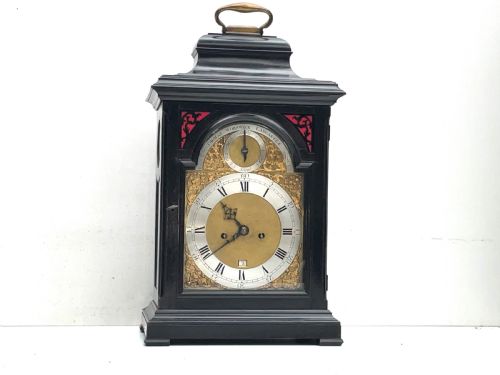
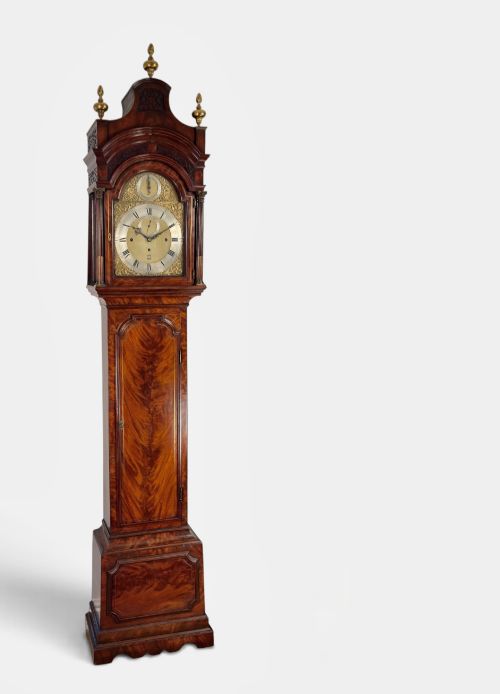
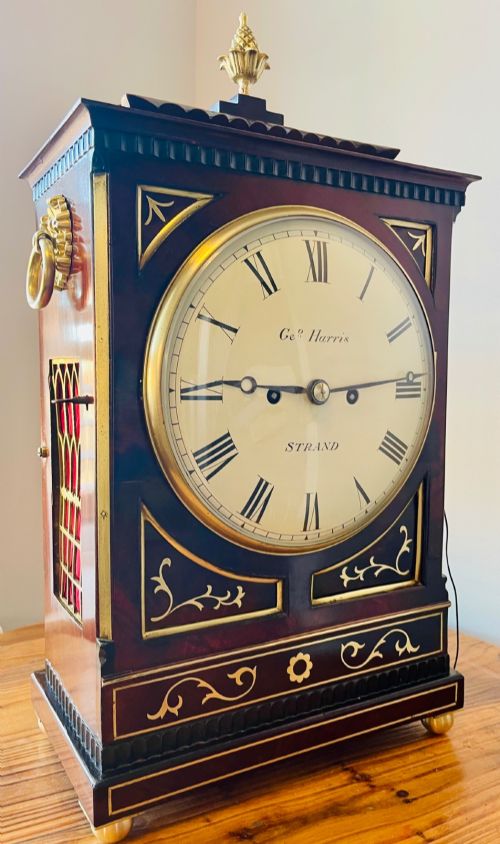
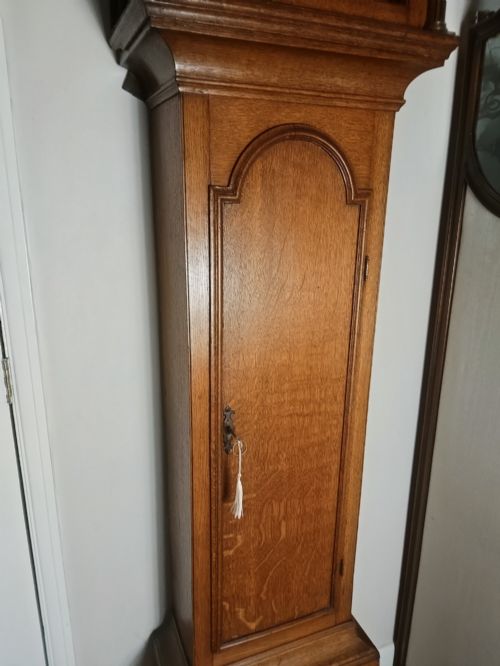
A georgian striking clock encompasses both tall case grandfather clocks and smaller bracket or mantel clocks produced through the eighteenth and early nineteenth centuries. The examples found here span the reigns of George II and George III, alongside Regency and Edwardian interpretations.
Tall longcase versions dominate the floor-standing group, while portable table and bracket formats utilise compact wooden cases designed for shelves or desks. Makers house these movements in architectural housings defined by proportion and traditional timber selection.
Materials and Construction
Cabinetmakers build the housings from mahogany, oak, and ebonised wood, frequently incorporating brass mounts, glass panels, and painted or silvered dials. Selected pieces feature decorative lacquering in red and gold or green and gold.
Materials recorded across the selection include tortoiseshell, ormolu, ebonised wood, and lacquered finishes in red, green, and gold.
Execution and Detail
Quality rests in the precision of the mechanical movement and the integrity of the cabinet work, from crisp brass engraving on the dial to the precise matching of wood veneers. Finer pieces incorporate complex complications such as quarter striking, quarter repeating, or automation.
The reputation of the maker heavily influences the standing of a clock, with signed works from notable London and provincial workshops demonstrating superior craftsmanship in both gear cutting and case proportions.
John Ellicott·Mappin & Webb·Benjamin Taylor·Henry Weedon·John Witherston·Des Granges·Louis Recordon·Somersall·John Shelton·Agar·William Withers·John Taylor·James Smith·Chater & Son·Robert Higgs·John Leroux·John McGregor·John Fletcher·Watson·William Smith·Benjamin Maud·John Hancock·Robt Jackson
The Georgian Striking Clock Glossary
- Fusee
- A conical pulley used in clock movements to maintain an even pull as the driving spring unwinds. This mechanism ensures consistent force is delivered to the gear train throughout the winding cycle.
- Verge
- An early type of escapement controlling the release of the gear train via a crown wheel and pendulum or balance. It provides the characteristic ticking motion in eighteenth-century pieces.
- Strike-silent
- A mechanism allowing the user to silence the striking train of the clock without stopping the timekeeping movement. It is often controlled by a small lever near the dial face.
- Bell-top
- A distinctive case shape where the top of a bracket clock curves upward in the profile of a bell. This architectural style was popular during the eighteenth century.
- Quarter striking
- A mechanism that sounds the quarters of the hour on bells alongside the full hour strike. Such movements require intricate gear trains to coordinate the additional sequences.
Georgian Striking Clock: Frequently Asked Questions
What is a fusee movement?
A fusee is a conical pulley designed to equalise the power of the mainspring as it runs down. This maintains steady energy delivery to the escapement for accurate timekeeping.
Most better bracket and longcase clocks from the Georgian era utilise this system to ensure consistent performance between windings.
How do I wind a striking clock?
Winding requires inserting a dedicated key into the winding holes on the dial face and turning it slowly until resistance is felt. Care must be taken not to overwind the spring or chain.
When dealing with striking trains, it is important to let the clock finish its chime cycle before attempting adjustments.
Where should I place a bracket clock?
Bracket clocks need a stable, level surface away from direct sunlight, draughts, and damp walls to protect the wood and internal movement. A sturdy mantelpiece or dedicated shelf works best.
Because these clocks rely on a plumb pendulum or balance, keeping the cabinet level ensures the escapement beats evenly.
How do I identify a Georgian clock?
Georgian clocks are identified by the architectural styles of their cases, such as bell-tops, break-arches, and mahogany or oak joinery typical of the eighteenth and early nineteenth centuries. The dial will often bear the signature of the maker.
Movement types like verge escapements and brass dials with engraved details also point toward this period of English clockmaking.