

Georgian Stick Windsor Chair
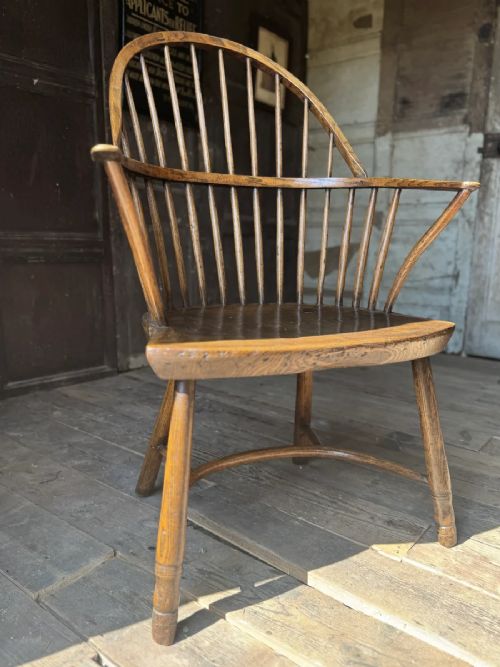
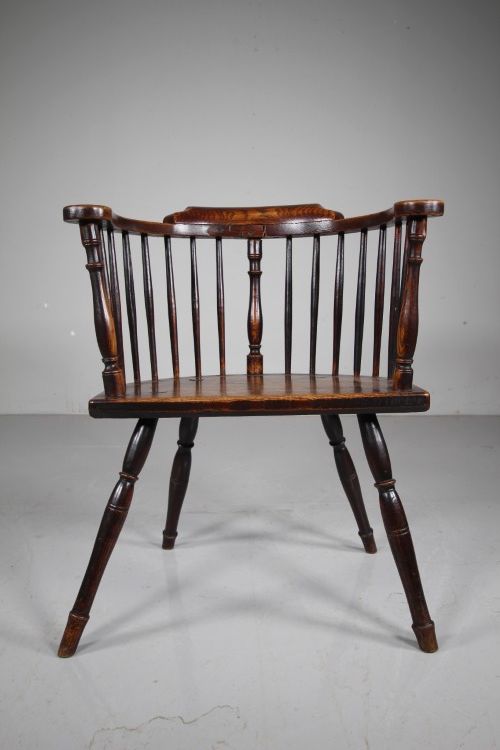
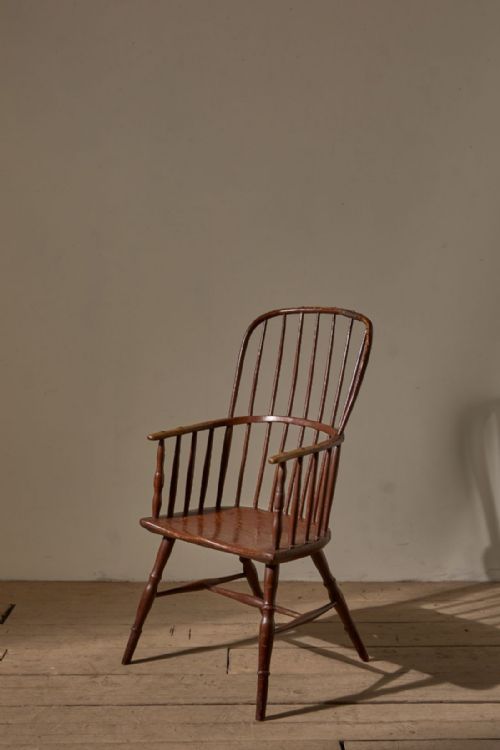
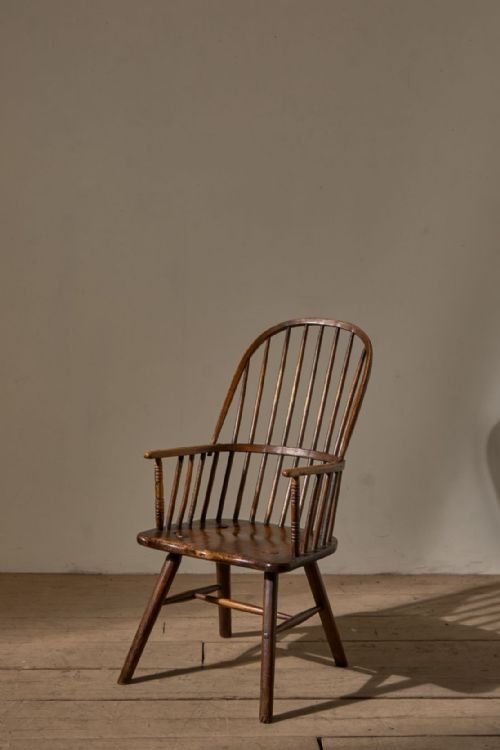
A georgian stick windsor chair brings regional country craftsmanship into a room with shaped seats and slender turned spindles.
Georgian Stick Windsor Chair
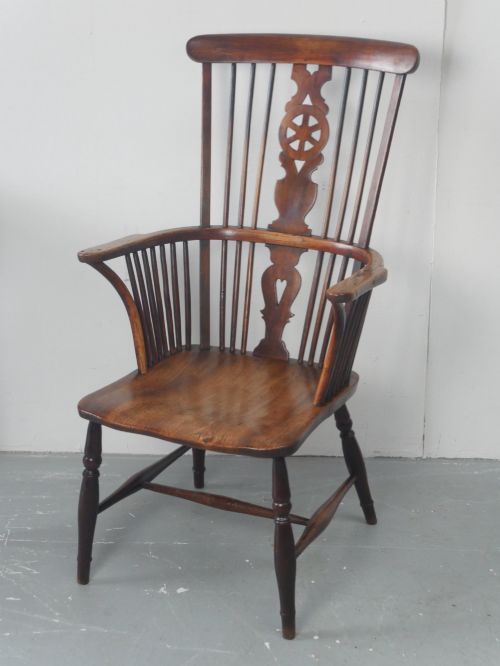
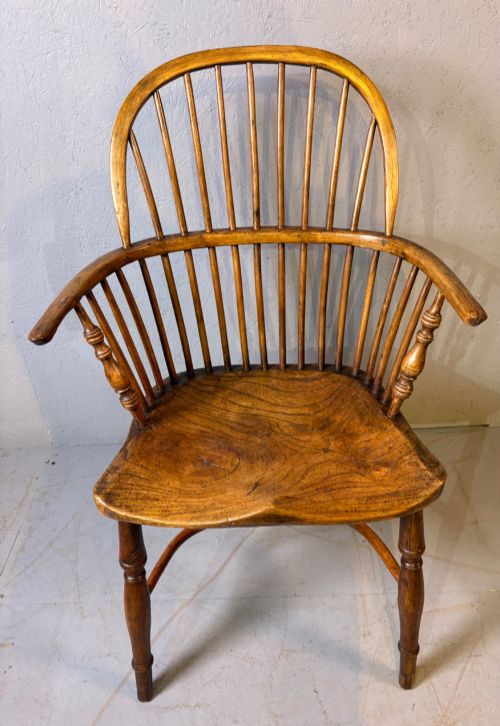
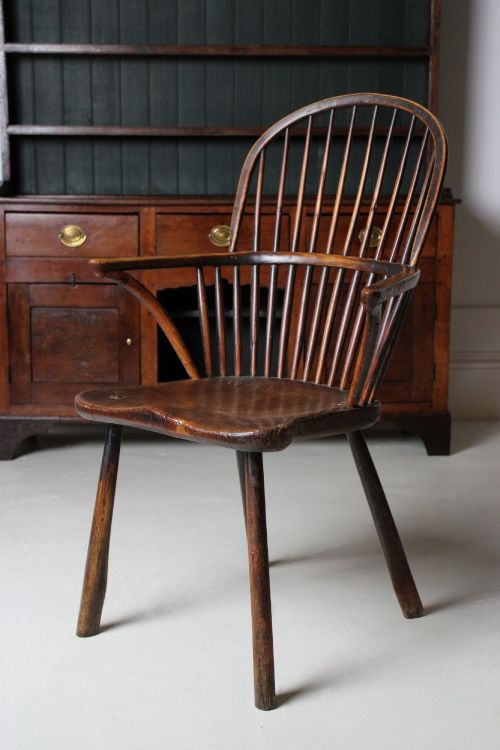
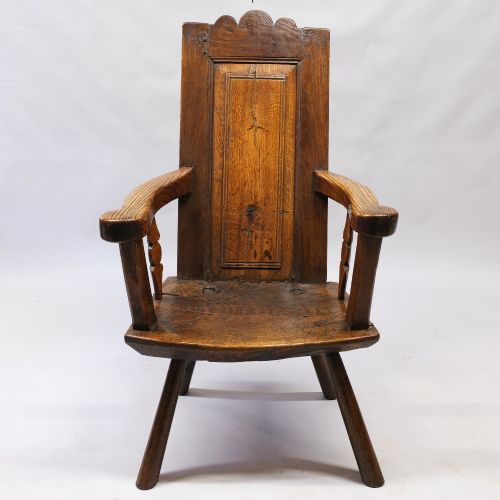
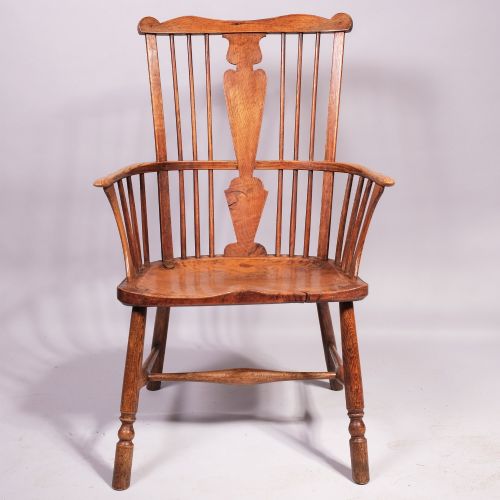
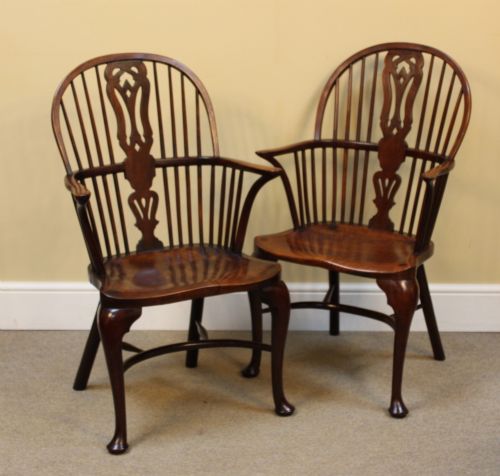
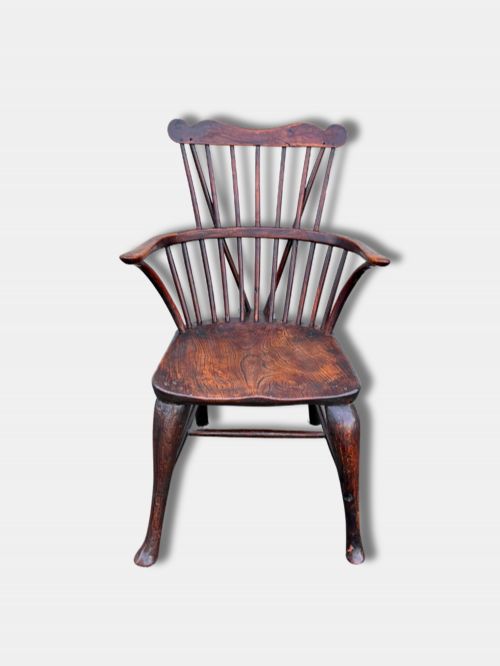
A georgian stick windsor chair is a form of vernacular seating where individual spindles are wedged directly into a solid wooden saddle seat. These pieces span the eighteenth and nineteenth centuries, emerging from regional English workshops in places like the Thames Valley, Wales, and the West Country.
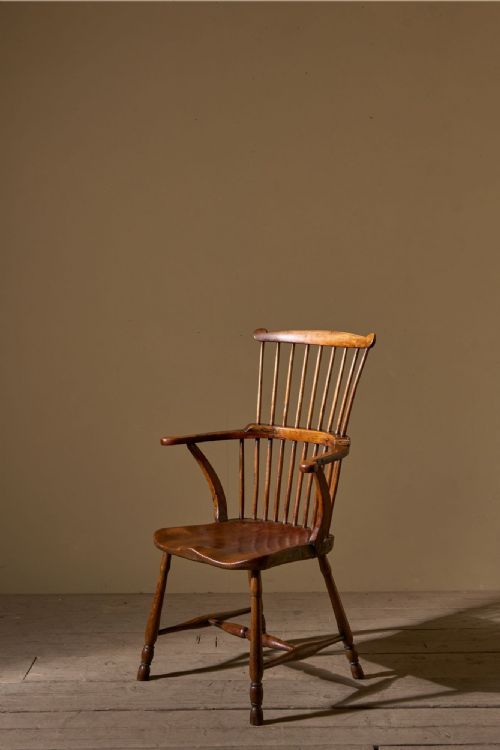
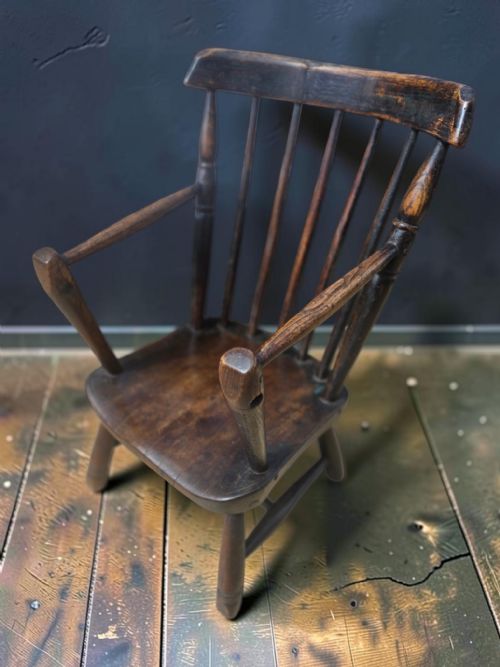
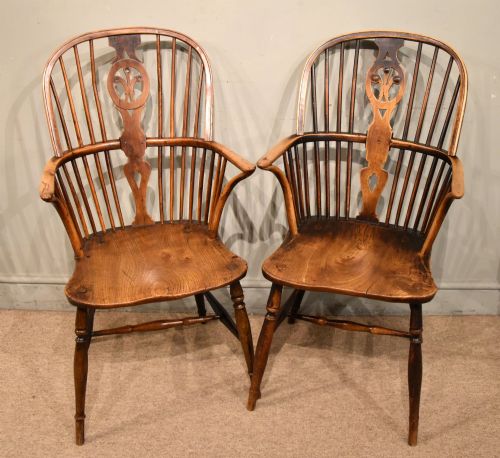
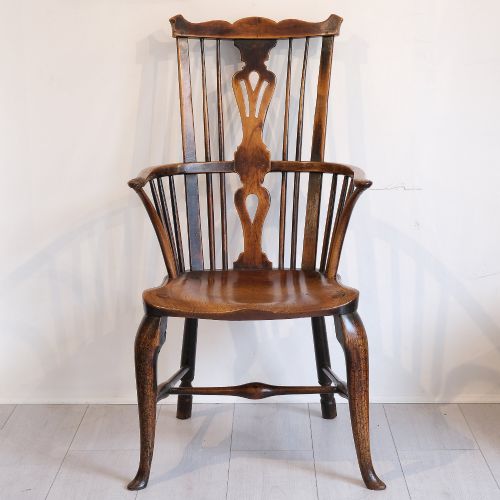
Buyers most frequently encounter armchairs and side chairs constructed in combinations of ash, elm, and yew. Regional variations range from low-back formats to tall comb-backs and panel-backed configurations, occasionally including smaller children's proportions.
How They Were Made
Maker construction relies on contrasting timbers selected for specific structural demands within a single frame. Solid elm typically forms the heavy saddle seat because its interlocking grain resists splitting under stress.
Slender spindles and curved backbows utilise straight-grained ash or bendable fruitwood for resilience, while yew provides figured decorative grain in select regional examples.
Makers occasionally recycled wheelwright offcuts for spindles, ensuring every chair survived with a slightly mismatched personality.
What Varies In Quality
Quality rests in the harmony of proportion between the turned undercarriage and the sweep of the stick back. Refined examples display elegant crinoline stretchers and well-sculpted saddle seats that balance utility with visual grace.
Surface preservation defines the remaining distinction between pieces. Original painted finishes or deep, timeworn patinas developed through decades of domestic use distinguish superior survivals from over-restored equivalents.
John Brand of Sleaford·Gabbitass of Worksop
The Georgian Stick Windsor Chair Glossary
- Comb-back
- A chair back featuring an upper horizontal rail supported by vertical sticks, resembling the teeth of a comb. This regional format often incorporates shaped ear pieces.
- Saddle seat
- A thick wooden seat base sculpted with deep depressions for comfort. Makers hollowed out these solid blocks using adzes and drawknives.
- Crinoline stretcher
- A curved stretcher bowed outward between the legs of a chair to provide rigidity. It receives its name from its fancied resemblance to Victorian undergarments.
- Hoop-back
- A continuous bentwood rail forming the arms and backrest in a single flowing curve. This technique requires green timber steamed to achieve the required radius.
Georgian Stick Windsor Chair: Frequently Asked Questions
How are these chairs dated?
Dating relies upon structural evolution, tool marks, and timber choice rather than maker stamps, which remain uncommon on country seating. Early examples from the eighteenth century typically exhibit primitive joining methods and deep saddle seats.
Nineteenth-century versions introduce thinner turnings and standardised component production while retaining traditional regional styles.
Where were these chairs made?
Production centred in rural districts where local woodsmen and wheelwrights utilised available timber supplies. Distinctive regional schools developed in the Thames Valley, Wales, and the West Country.
Each area favoured specific back designs and combinations of ash, elm, and fruitwood.
How do I live with one?
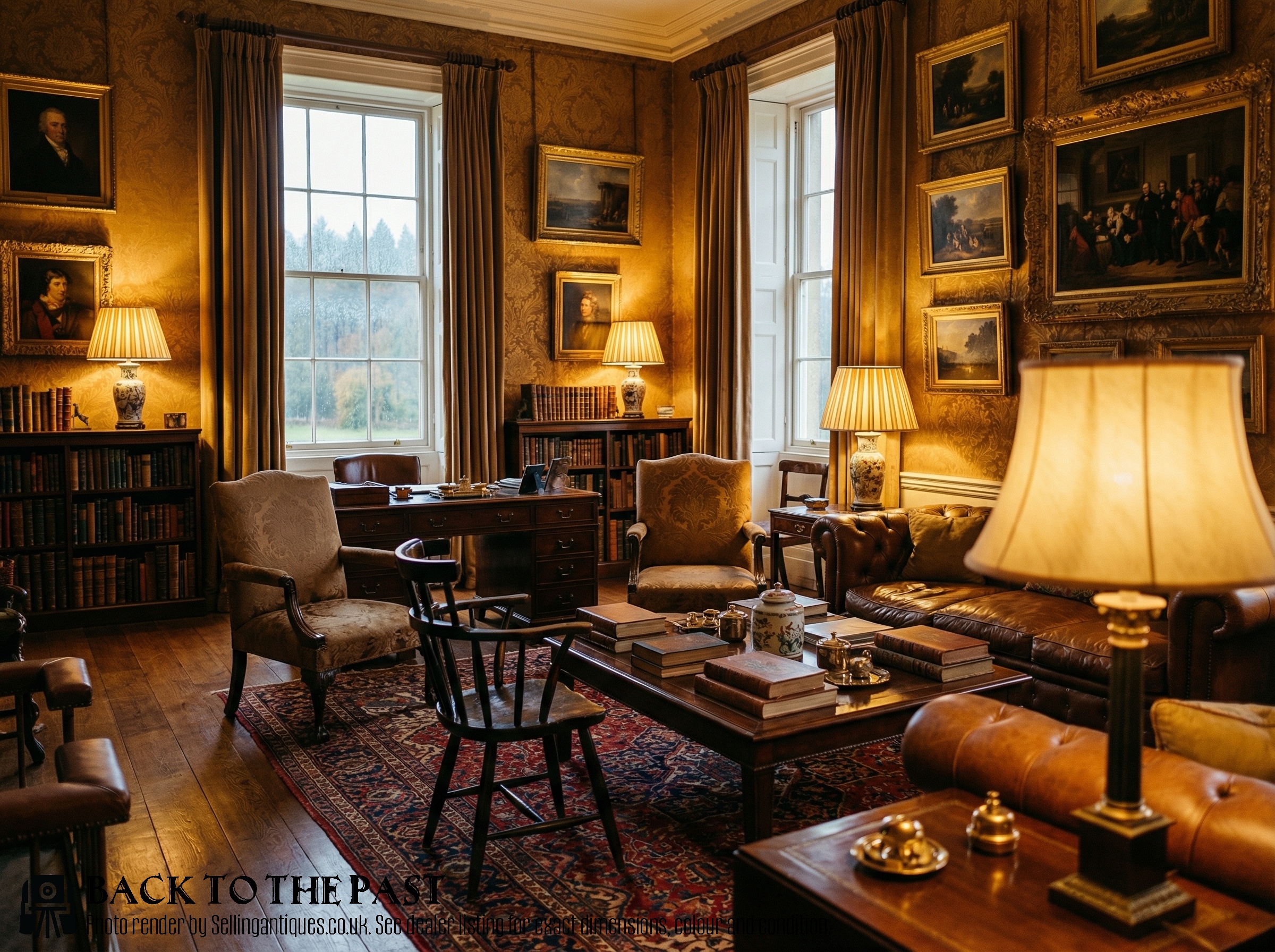
These pieces integrate easily into modern dining spaces and studies due to their sculptural silhouettes and sturdy frames. Stable humidity levels protect the dry timbers from shrinking or loosening the wedged joints.
Occasional waxing maintains the surface sheen without building up heavy chemical layers.
What is a primitive model?
A primitive descriptor indicates an earlier, less formal method of construction with minimal decorative turning. These variations often showcase thick plank seats and roughly hewn undercarriages.
Such characteristics reflect the utilitarian origins of workshop production before standardisation took hold.