
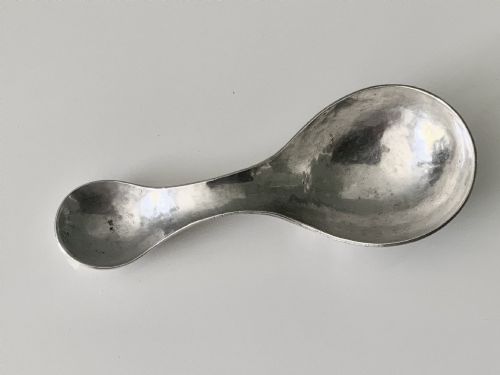
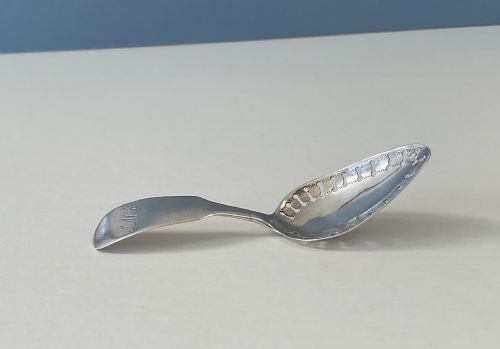


Georgian Sterling Tea Scoop
A georgian sterling tea scoop is a small silver implement designed for measuring loose tea leaves into a caddy, combining utility with fine metalwork.
Georgian Sterling Tea Scoop
When you search for a georgian sterling tea scoop, you encounter items predominantly catalogued as caddy spoons or tea caddy spoons from the eighteenth and nineteenth centuries. These pieces appear frequently in Georgian, Regency, and occasionally Edwardian iterations, reflecting the period's social rituals around tea drinking.
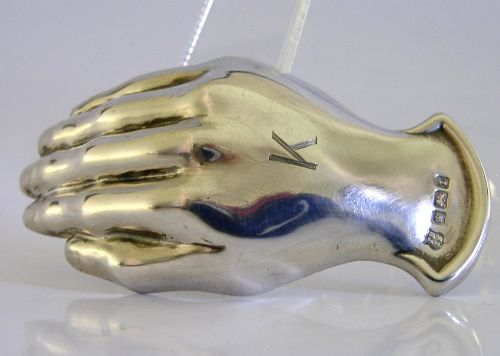
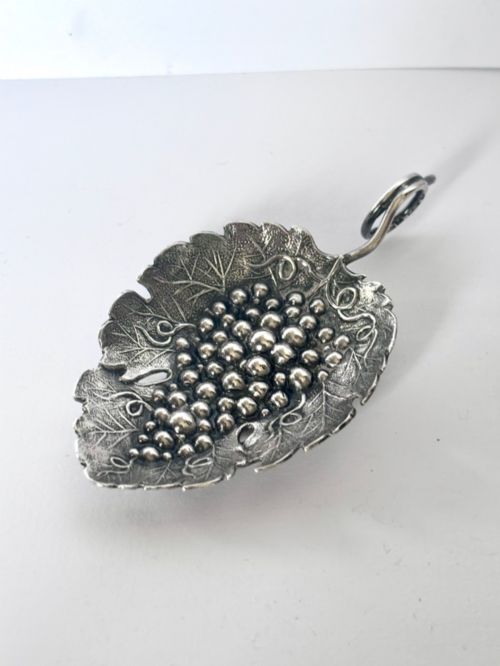
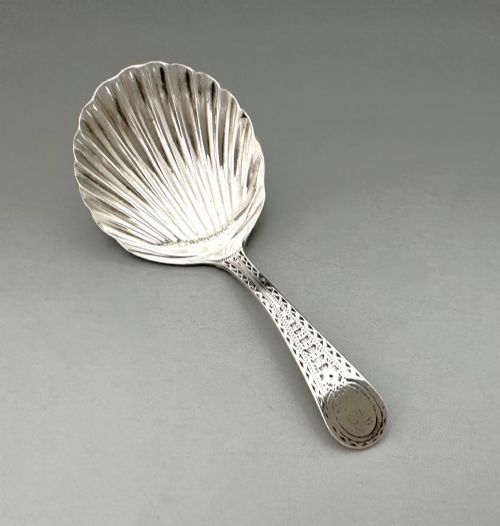
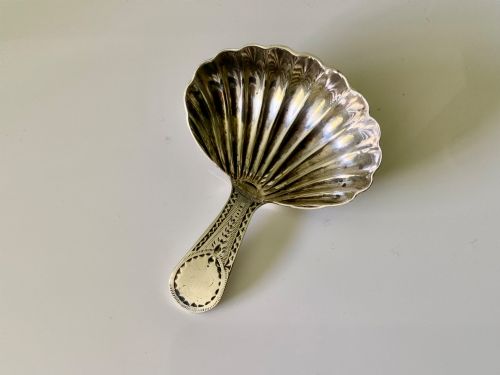
The forms vary from simple shovel shapes and shell bowls to novelty designs like jockey caps and vine leaves with grapes. Most examples originate from London, Birmingham, Glasgow, or Ireland, showing distinct regional silversmithing traits.
Materials and construction
These items are fashioned primarily from sterling silver, with occasional examples finished in silver-gilt or parcel-gilt. Silversmiths hammered, stamped, and engraved the metal to shape bowls resembling shells, leaves, or caps.
Handles feature engraved detailing or double struck patterns, executed by hand in provincial and metropolitan workshops across Britain.
Listings feature sterling silver and silver-gilt materials across Georgian, Regency, and Edwardian periods.
Factors of quality
Quality in these silver pieces rests on the crispness of the chasing and engraving on the bowl and handle. Distinct details on novelty forms, such as the stitching on a cap or the veins on a vine leaf, separate superior examples from plain shovels.
Legibility of the hallmarks adds to the standing of a piece, confirming the maker, town, and date of manufacture.
Joseph Willmore·George Wintle
The Georgian Sterling Tea Scoop Glossary
- Sterling silver
- An alloy consisting of silver and other metals, traditionally ninety-two point five percent silver. This standard is marked by the lion passant on English silver.
- Caddy spoon
- A short-handled spoon specifically used for measuring dry tea leaves from a storage canister into a teapot. These small utensils became popular as tea grew valuable.
- Parcel-gilt
- Silver objects that are partially gilded with gold on specific areas, such as the interior of the bowl, leaving the rest of the silver in its natural state.
- Hallmark
- An official stamp applied to precious metals in Britain to guarantee the purity of the metal, the maker, and the year of assay.
Georgian Sterling Tea Scoop: Frequently Asked Questions
What is a tea scoop used for?
These small spoons were created to measure loose tea leaves from a caddy into the pot.
Their compact size allowed them to fit neatly inside tea storage vessels.
How do I identify a Georgian piece?
Examination of the hallmarks stamped on the silver provides the exact year and assay office.
Stylistic elements like shell bowls and engraved handles also point to the late eighteenth and early nineteenth centuries.
What materials are used?
The majority of these pieces are made from solid sterling silver.
Some examples feature parcel-gilt or silver-gilt surfaces, adding a thin layer of gold to the silver.
Are all these spoons from England?
While many originate from London and Birmingham workshops, some examples come from Glasgow and Ireland.
Regional silversmiths produced distinct provincial styles alongside metropolitan pieces.