






Georgian Standing Wine Box
A georgian standing wine box is a robust and handsome piece designed to hold bottles securely in the dining room.
Georgian Standing Wine Box
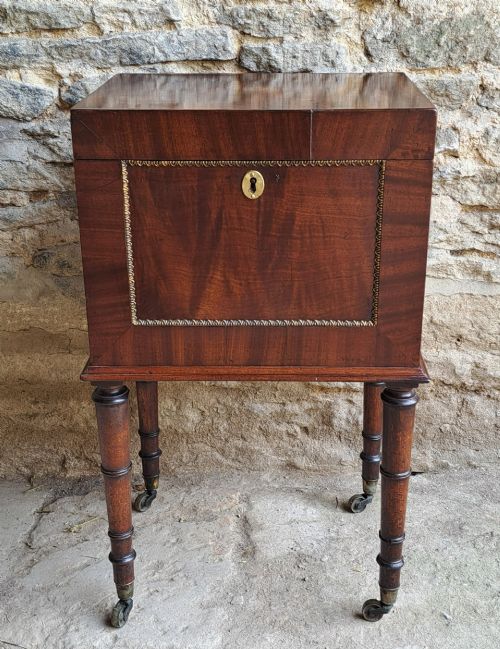
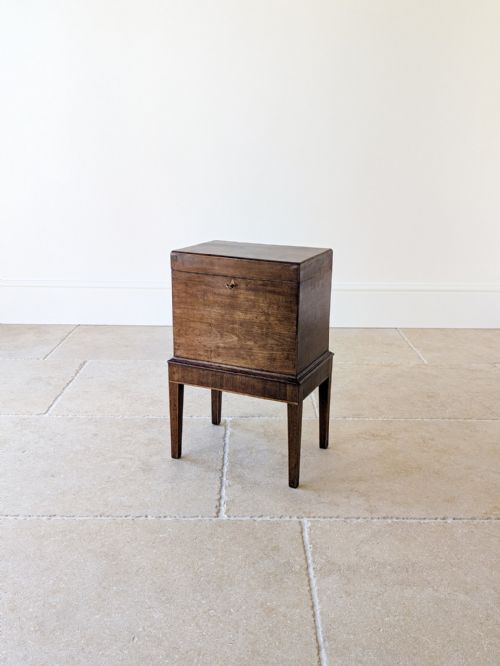
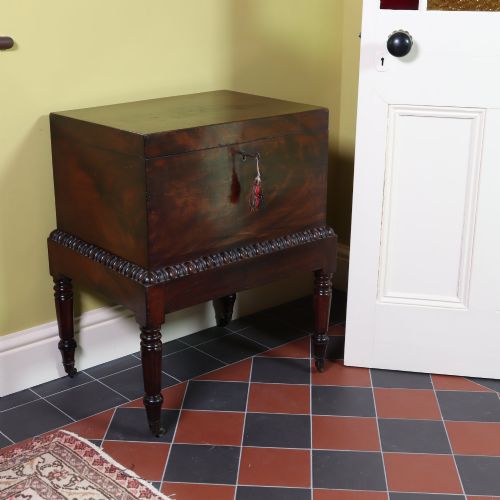
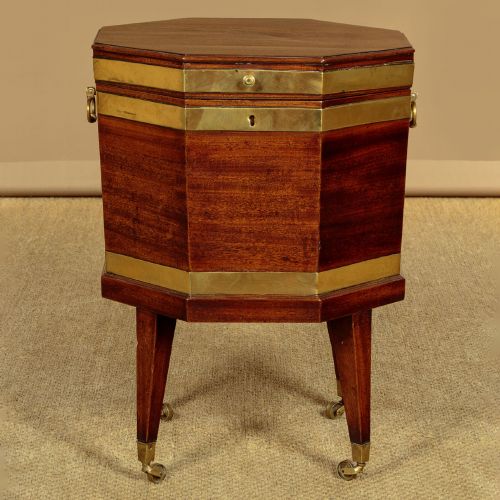
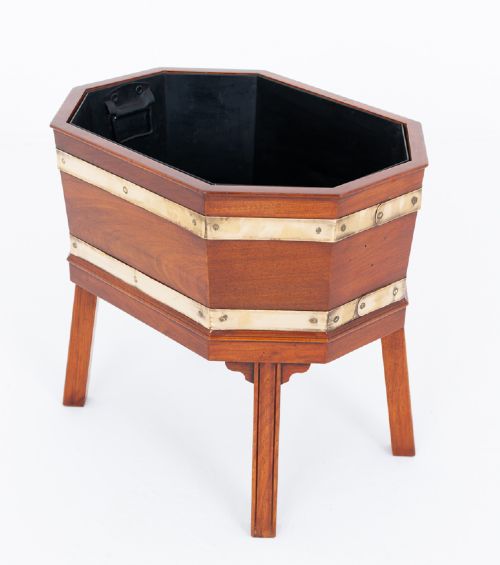
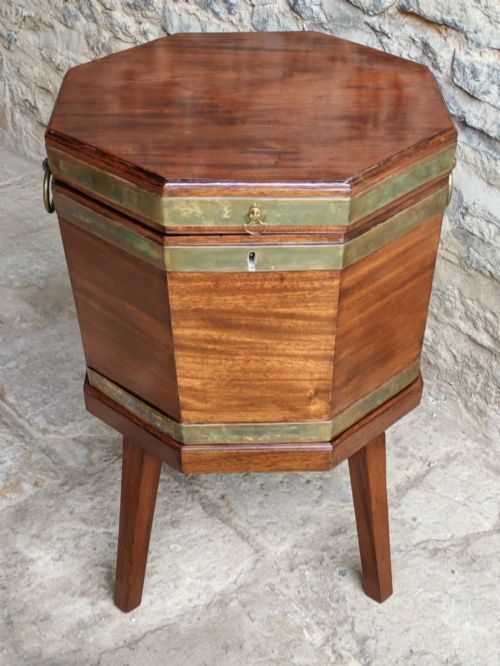
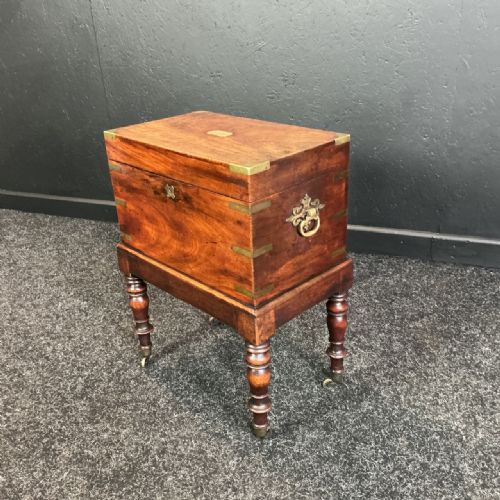
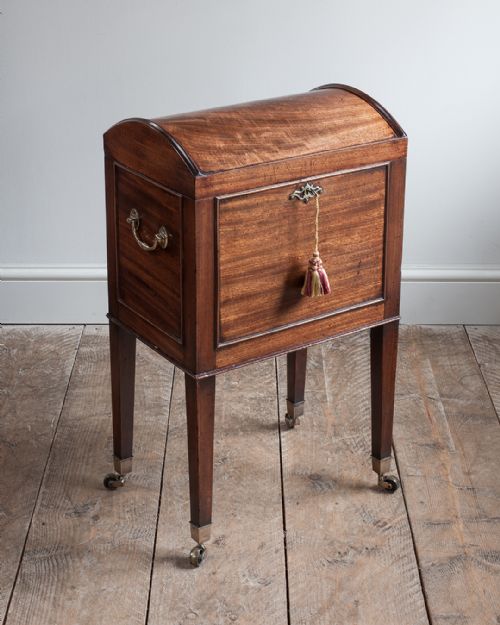
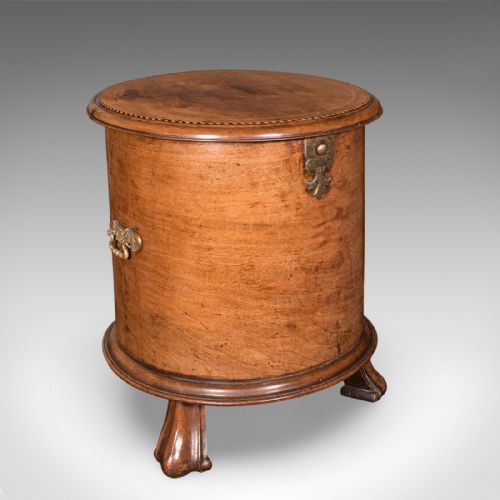
When you search for a georgian standing wine box, you encounter robust forms historically used for chilling and storing wine during formal meals. These vessels appear primarily as cellarettes, wine coolers, and jardiniere stands originating from the eighteenth and nineteenth centuries.
Materials and construction methods
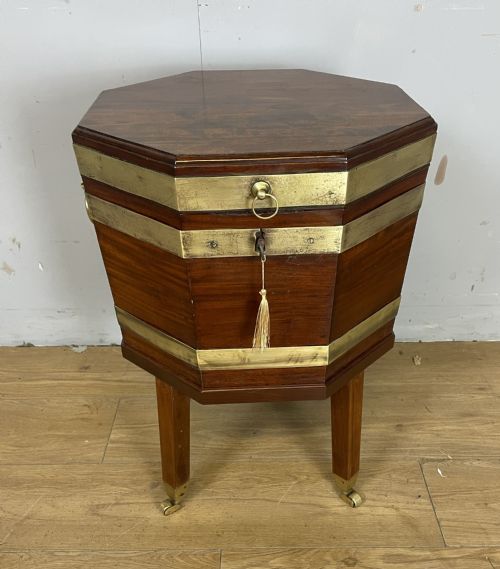
Makers relied heavily on rich timbers such as mahogany, flame mahogany, and padouk, often accentuating the surfaces with boxwood inlay and contrasting satinwood. Metal components played a vital structural and decorative role, with brass bands encircling the bodies to reinforce the heavy wooden staves.
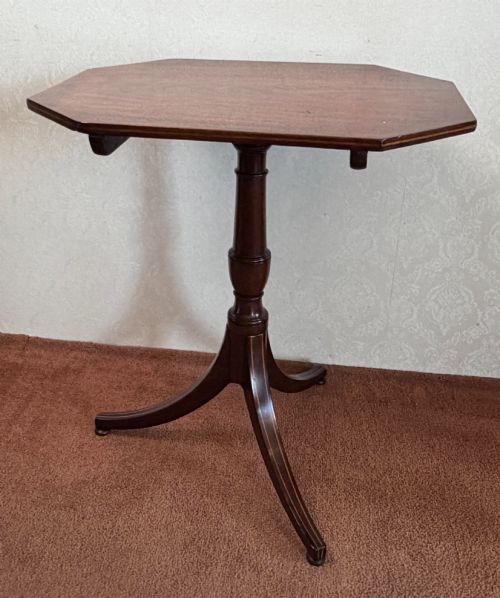
Joinery techniques prioritised durability to support the considerable weight of glass bottles and ice. Carpenters shaped timber into octagonal and oval forms, frequently mounting the primary box on original stands or supportive tripod bases.
Georgian Standing Wine Box Retail Price Guide 2026
Typical asking prices for georgian standing wine box among the pieces listed under this phrase on Sellingantiques today, from the lower quarter to the upper quarter. They describe what is for sale here now, not the wider market.
Some nineteenth-century makers evidently decided that keeping wine cold was serious business, strapping massive brass belts around sturdy mahogany trees.
Judging quality and craftsmanship
The grade of a piece rests heavily on the selection of timber veneers, such as flame mahogany or figured walnut, and the precision of any boxwood inlay. Superior examples retain their original stands, mounts, and hardware rather than relying on later replacements.
Patina and surface finish set finer vessels apart from standard utilitarian boxes. Original brass binding and intact internal fittings demonstrate a higher tier of period workshop production.
The Georgian Standing Wine Box Glossary
- Cellarette
- A lockable container used for storing wine bottles in the dining room. They often sat beneath the sideboard or on their own integral stands.
- Brass bound
- The application of brass hoops or bands around the exterior of a wooden vessel. This technique provided structural reinforcement while adding decorative contrast to the dark timber.
- Flame mahogany
- A veneer cut from the fork of a mahogany tree where the grain pattern resembles flickering flames. It was favored by cabinet makers for high-status furniture fronts.
- Padouk
- A heavy, dense tropical timber with a distinct reddish-brown hue. It was utilised in colonial workshops for durable case furniture.
- Jardiniere stand
- A decorative piece designed to hold plants or planters indoors. These frequently share the elevated forms and framing styles of wine coolers.
Georgian Standing Wine Box: Frequently Asked Questions
What is a georgian standing wine box used for?
These vessels were designed to hold wine bottles near the dining table, often containing ice or metal liners to keep beverages cool during lengthy meals.
Over time, collectors have repurposed them as plant stands, storage chests, or decorative accent tables within period interiors.
How do I tell a cellarette from a wine cooler?
The terms are frequently used interchangeably in historical records, though a cellarette traditionally implies a secure, often lockable box for private wine storage.
Wine coolers specifically emphasise the function of chilling bottles with ice, sometimes featuring lead or metal linings inside the timber frame.
Are these pieces usually found on stands?
Many examples are designed to sit directly on the floor or upon low feet, while others incorporate dedicated stands, tripod bases, or supporting legs.
When a piece retains its original stand or base, it carries greater historical integrity than boxes separated from their original supports.
What woods were used in these pieces?
Mahogany is the dominant timber seen across these forms, frequently selected in figured or flame varieties to highlight the grain.
Secondary woods and decorative accents include walnut, satinwood, padouk, and boxwood inlay.