


Georgian Standing Corner Cabinet
A georgian standing corner cabinet fits snugly into unused room junctions while offering ample display and storage space.
Georgian Standing Corner Cabinet
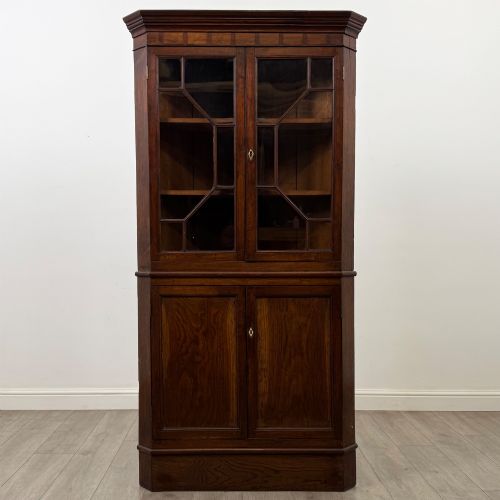
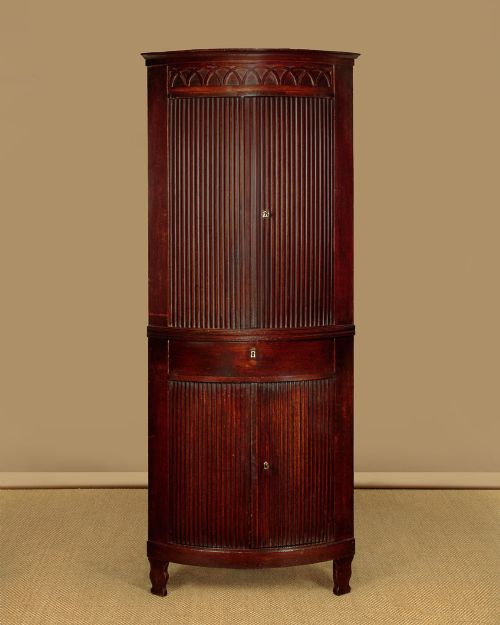
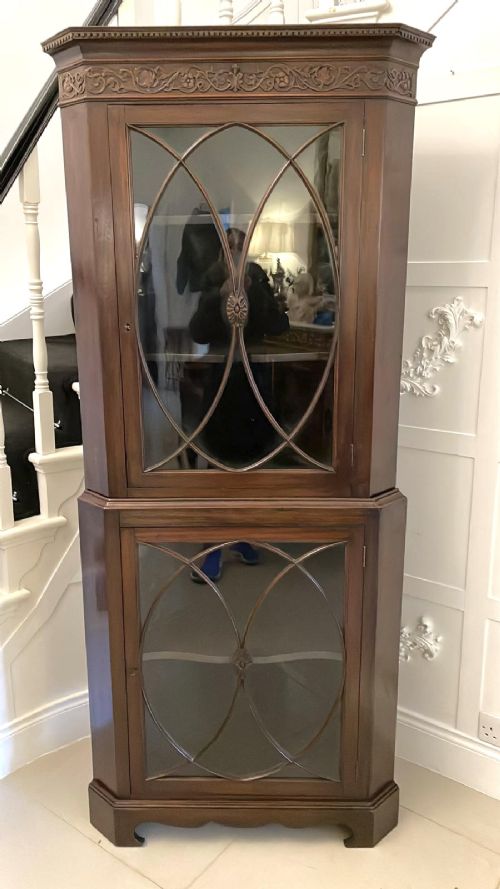
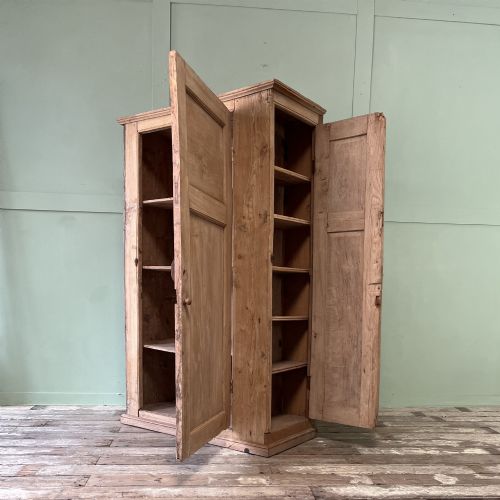
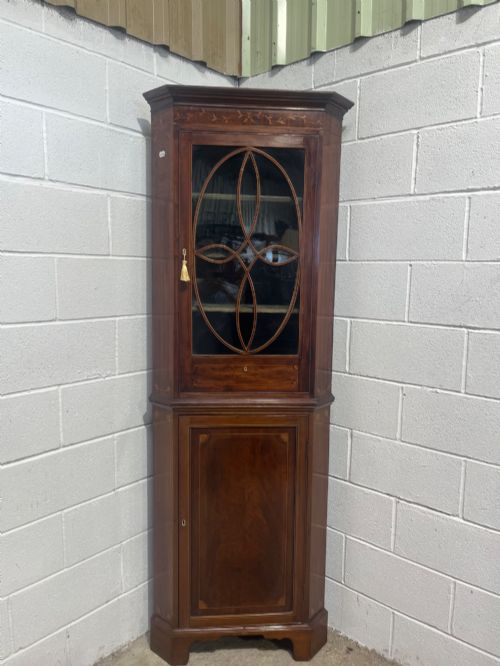
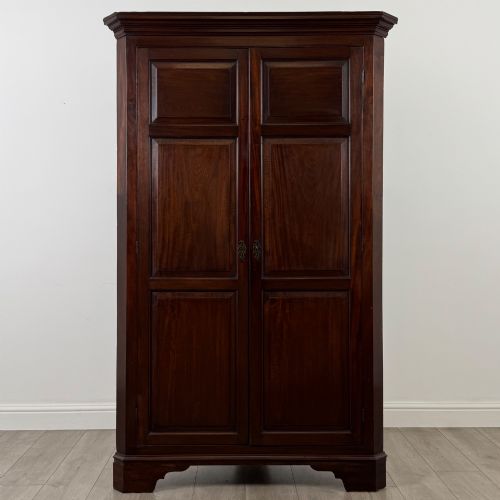
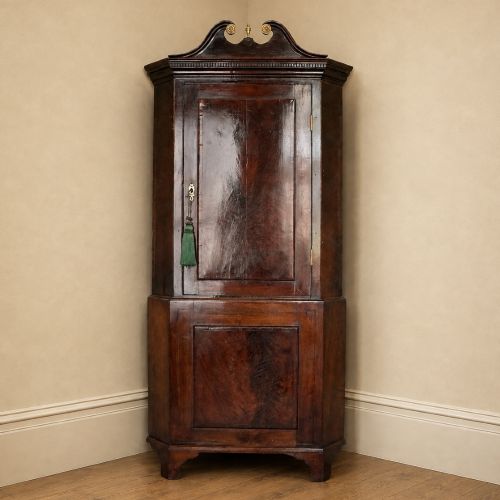
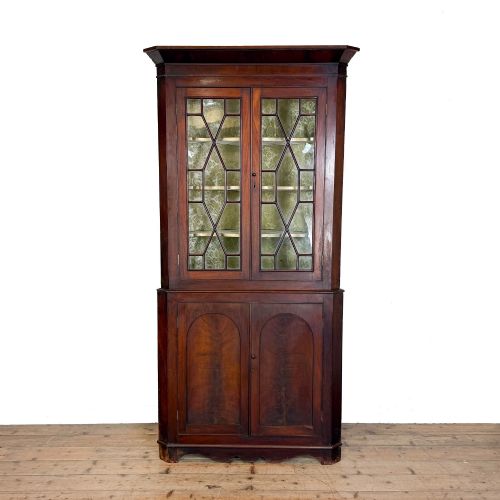
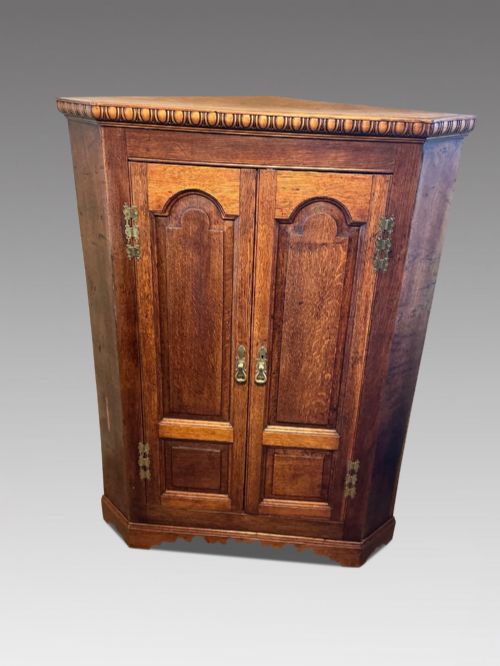
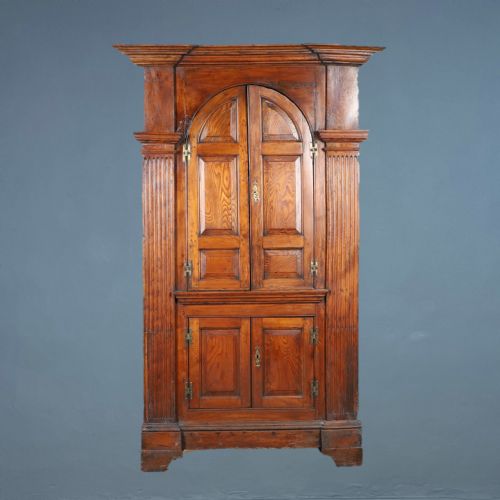
A georgian standing corner cabinet is a floor-standing storage piece designed to occupy the meeting point of two walls, making efficient use of awkward room angles. The most frequently encountered versions on this page are tall timber carcases built in two stacked sections, featuring panelled or glazed doors that conceal interior shelving.
The materials and aesthetic span the Georgian era through to later revivals, including pieces from the 18th century, 19th century, Regency period, and Edwardian times. Oak and mahogany dominate the selection, accompanied by walnut, satinwood, pine, and painted surfaces.
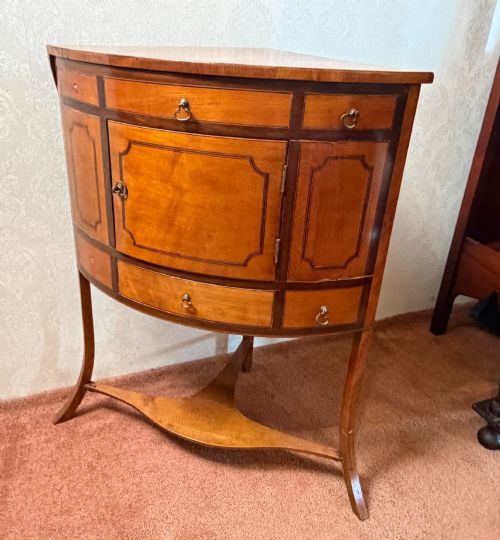
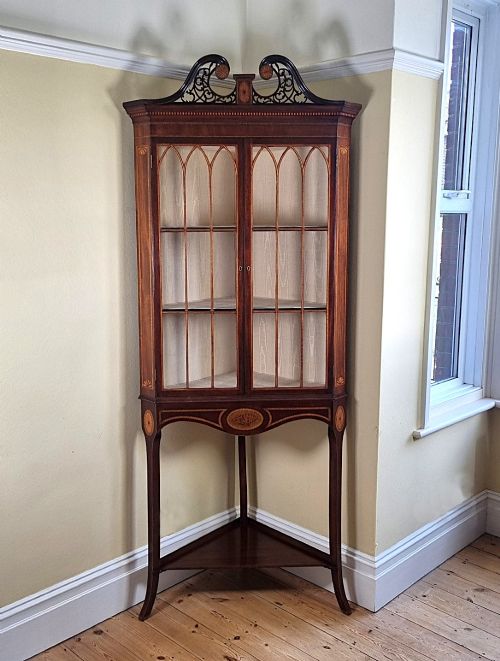
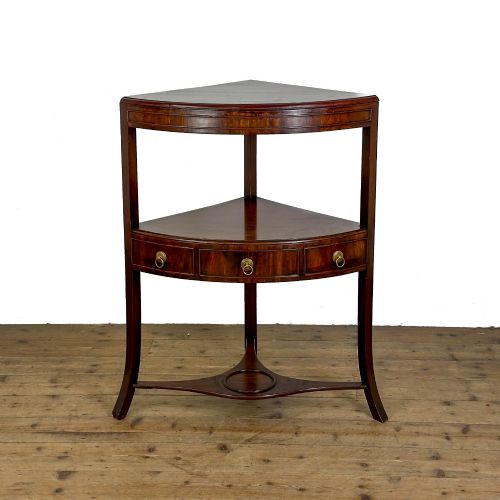
Makers designed these items to serve dining rooms, parlours, and hallways, supplying both single-height floor cupboards and grand double-height architectural variations. Alongside standard storage cupboards, the listings include washstands, tiered stands, and glazed display cabinets sharing the same angled footprint.
Materials and Construction
Cabinetmakers constructed the carcase primarily from dense hardwoods like mahogany and oak, frequently employing secondary timbers such as pine for internal framing and shelving. Cuban mahogany and walnut appear in specific examples, bringing deep grain patterns to the visible exterior faces.
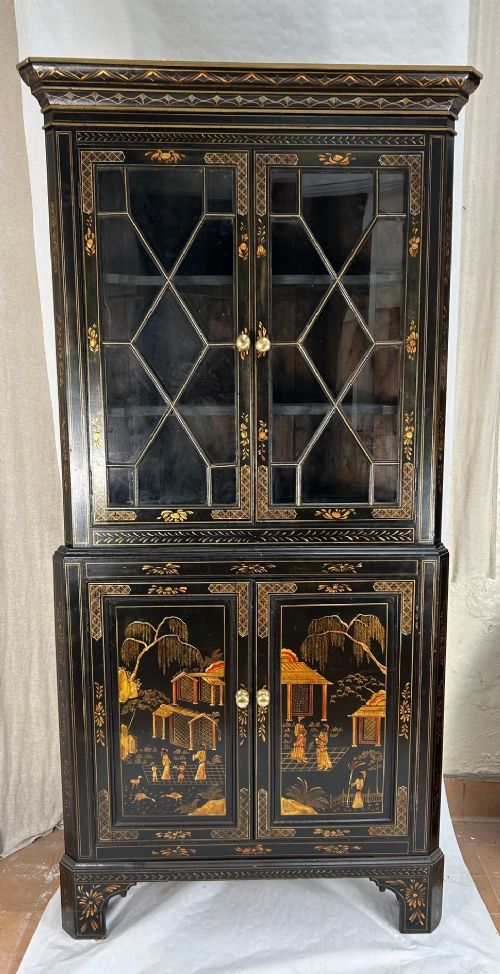
Surface decoration relies on joinery techniques and applied ornament rather than heavy structural alteration, utilising cross-banding, inlay, marquetry, and lacquering in Chinoiserie styles. Glazed upper doors often feature astragal bars forming geometric glass panes, while brass hardware secures the doors and drawers.
Listings feature oak, mahogany, walnut, satinwood, pine, and painted finishes across Georgian, Regency, and Edwardian periods.
Evaluating Execution
Quality rests upon timber selection and the precision of the joinery, particularly in the mitred joints where the cabinet meets the wall and the fit of the door panels. Superior examples display carefully chosen wood grains, such as matched mahogany veneers or well-figured oak boards.
The refinement of internal shelving, original brass hinges, working locks with keys, and balanced proportions between the upper and lower sections distinguish higher-grade pieces from simpler utilitarian storage.
The Georgian Standing Corner Cabinet Glossary
- Astragal glazed
- Glass doors divided into smaller panes by narrow wooden mouldings called astragals. This technique lightens the visual weight of heavy timber doors.
- Bracket feet
- Small, stable foot supports projecting from the bottom corners of the cabinet base. They lift the carcase slightly off the floor.
- Cross-banding
- A decorative border technique where thin strips of veneer are laid across the grain of the primary wood. It frames the door panels and top surfaces.
- Double height
- A tall cabinet built in two separate stacked sections, usually comprising a lower cupboard and an upper display or storage unit. This format maximises vertical wall space.
- Chinoiserie
- A European decorative style reflecting Chinese artistic motifs, often executed in lacquer or painted finishes on furniture carcases.
Georgian Standing Corner Cabinet: Frequently Asked Questions
How were corner cabinets used?
These cabinets served primarily to store porcelain, glassware, and tableware in dining rooms or parlours. Their triangular footprint allowed households to utilise dead space in room corners while keeping valuable items protected behind closed doors.
Upper glazed sections functioned as display areas for porcelain collections, while lower cupboards concealed everyday dining supplies and household provisions.
Where should I place a corner cabinet?
Position a floor-standing unit in any right-angled room junction where standard rectangular furniture would jut out awkwardly. They anchor empty corners in dining rooms, living spaces, and hallways without blocking pathways.
Ensure the wall angles match the 90-degree internal frame of the cabinet so the back panels sit flush against the plaster.
How do I distinguish between periods?
Earlier 18th-century examples often utilise solid oak or native timbers with architectural cornices and fielded panels. Regency and 19th-century pieces frequently showcase Cuban mahogany, finer cross-banding, and inlaid veneers.
Edwardian and later revival items tend to feature lighter internal construction methods, machine-cut elements, and distinctively crisp Edwardian or Georgian Revival styling.
Are two-part cabinets easy to move?
Double-height and two-part cabinets separate into an upper and lower section, which makes transportation and positioning significantly easier. The upper carcase lifts directly off the base during relocation.
Reassembling them requires checking that the unit sits level on the floor so the doors hang true and close properly against the frame.