
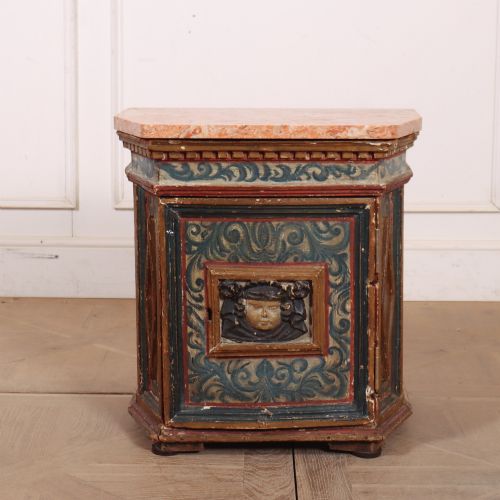
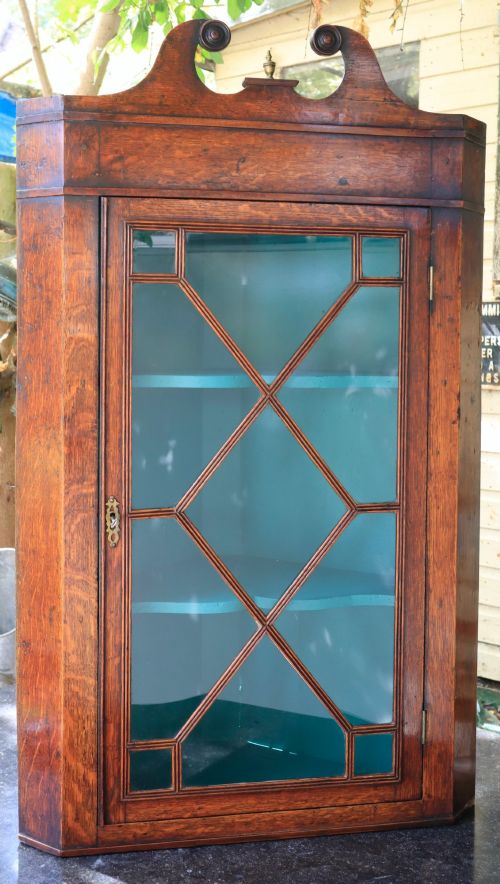
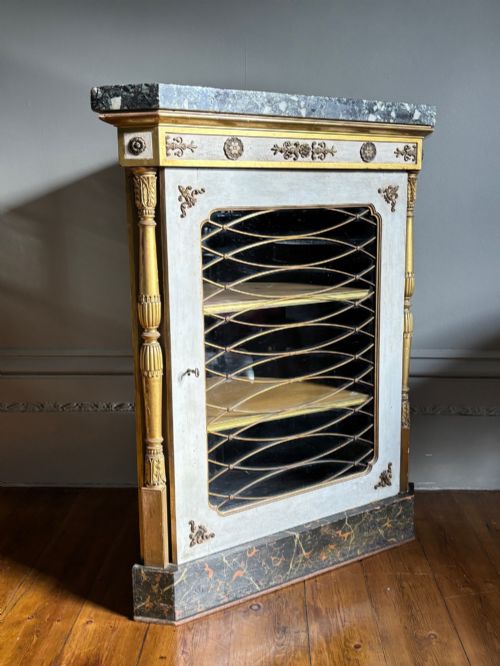
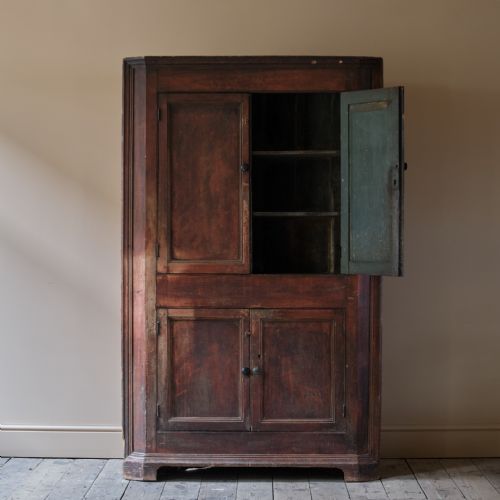
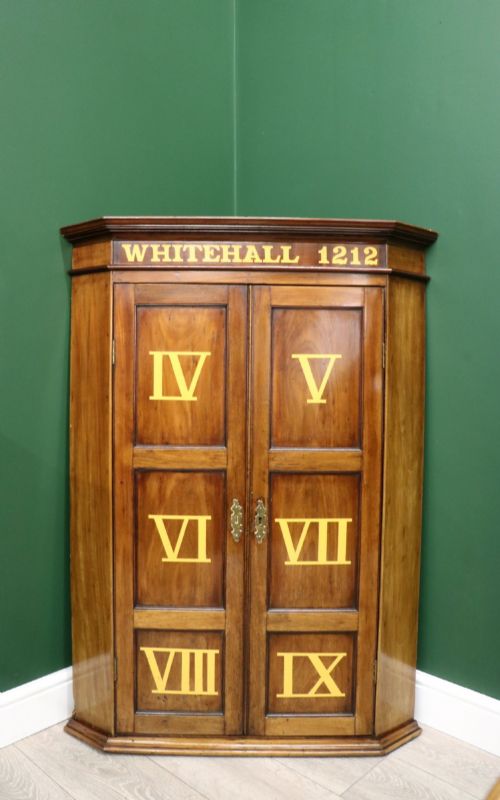
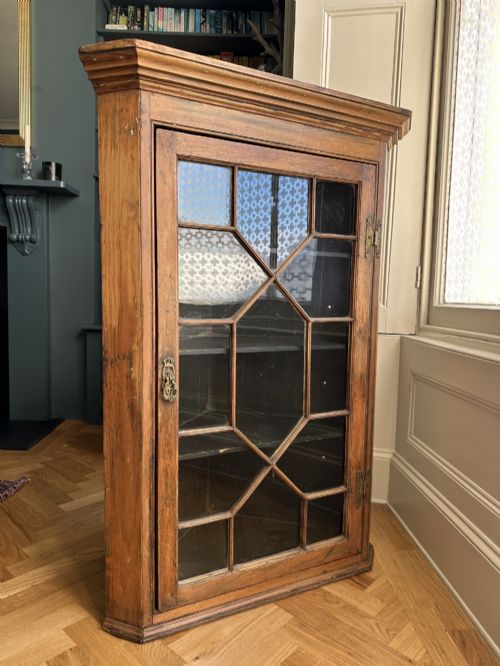
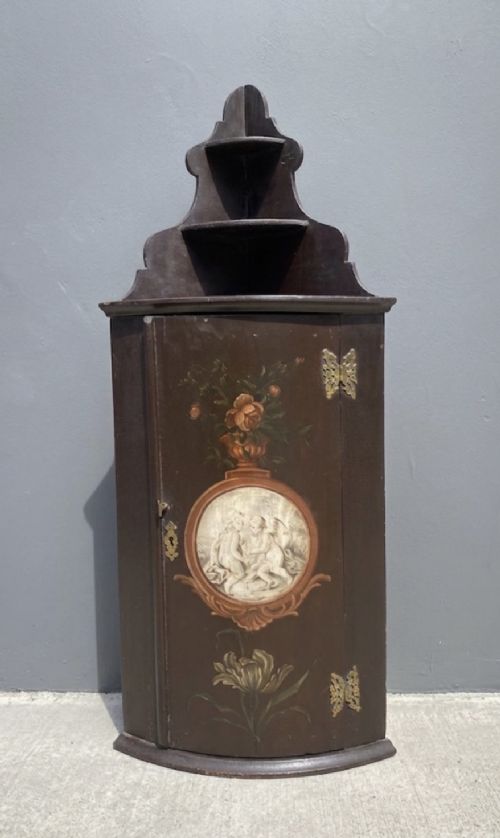


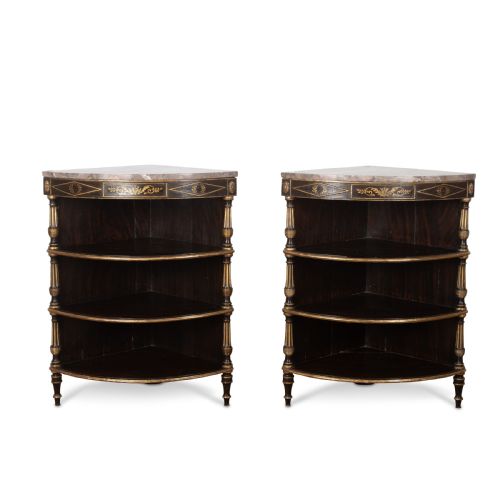

Painted Wood Corner Cupboard
These painted wood corner cupboards fit tight to the wall, turning dead angles into useful display space with character.
Painted Wood Corner Cupboard
A painted wood corner cupboard fits neatly into the intersection of two walls, making clever use of awkward angles in domestic rooms. The selection includes wall mounted and standing examples designed to store provisions, display china or hold domestic wares.
The pieces on this page span the eighteenth and nineteenth centuries, alongside later examples, reflecting various regional tastes. Buyers encounter straightforward rustic farmhouse pieces and sophisticated Italian Baroque or Georgian styles finished in paint.
Formats vary from simple single door cabinets with shelves to grander vitrines with glazed doors and marble tops. Certain items feature intricate decoration, including Chinoiserie motifs, Scandinavian folk art and original painted interiors.
Materials and construction
Makers utilised available timbers such as pine, mahogany and satinwood to build these corner cupboards, often pairing sturdy carcases with decorative surface treatments. Brass hardware and iron hinges secure the doors, while glass appears in glazed display variants.
Applied paint provides both protection and visual depth, seen in Scandinavian folk art treatments, Italian Rococo schemes and British Chinoiserie panels. Traditional joinery methods hold the angled walls together, ensuring stability when mounted or standing on the floor.
One remarkably compact item in the records is a child's doll chair dated 1796.
Assessing quality and character
Quality rests in the integrity of the timber, the stability of the corner joints and the survival of early or original paint surfaces. Pieces with untouched folk art decoration or authentic period finishes hold greater visual interest than later resprays.
Proportion and detail distinguish standard utility cupboards from high style architectural pieces. Fine mouldings, original brassware and well proportioned shelving elevate the status of a cabinet within its period.
The Painted Wood Corner Cupboard Glossary
- Vitrine
- A glass fronted cabinet designed for displaying delicate objects or porcelain. This form protects contents from dust while offering clear visibility from multiple angles.
- Gustavian
- Swedish neoclassical style characterised by pale paint finishes, restrained carving and functional elegance. Pieces from this tradition often appear in muted greys, whites or soft blues.
- Bow front
- A convex curved cabinet front that softens the sharp angles of furniture. This shape requires skilled woodworking to bend timber or shape solid wood to a precise curve.
- Apothecary cabinet
- A small storage piece traditionally used by practitioners to hold medicines, herbs and dried ingredients. These units often feature numerous small drawers or compact internal compartments.
Painted Wood Corner Cupboard: Frequently Asked Questions
Where should I place a corner cupboard?
These cupboards make use of empty room junctions that standard rectangular furniture cannot occupy.
Position them in dining rooms for tableware or in hallways to add architectural presence without blocking foot traffic.
How do I clean painted wooden furniture?
Dust surfaces regularly with a soft, dry cloth to prevent dirt build up on aged paint layers.
Avoid chemical cleaning products and moisture, which can damage historic finishes or lift delicate pigments from the timber.
Are these cupboards suitable for small rooms?
Wall mounted versions free up floor space entirely, making them ideal for compact spaces.
Standing models draw the eye upward into unused angles, helping a small room feel organised rather than cluttered.
How do I identify period paint?
Period paint often shows subtle crazing, gentle wear patterns and multiple underlying layers visible beneath losses.
Later repainting tends to sit uniformly on the wood without the integration or softening associated with age.