
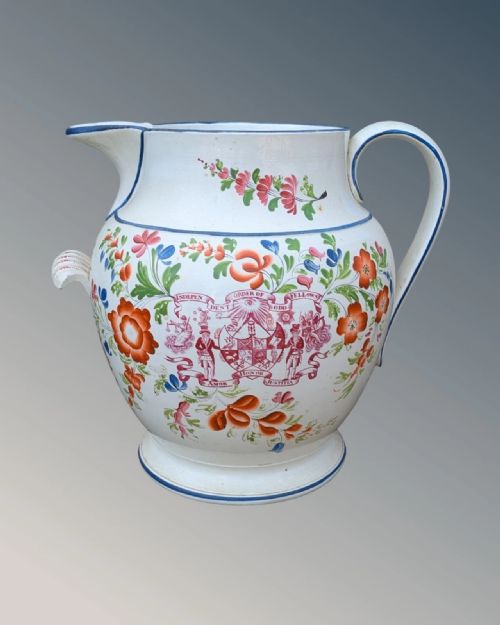


Georgian Staffordshire Jug
A georgian staffordshire jug brings bold pottery forms and transfer prints to a table, combining utility with early ceramic artistry.
Georgian Staffordshire Jug
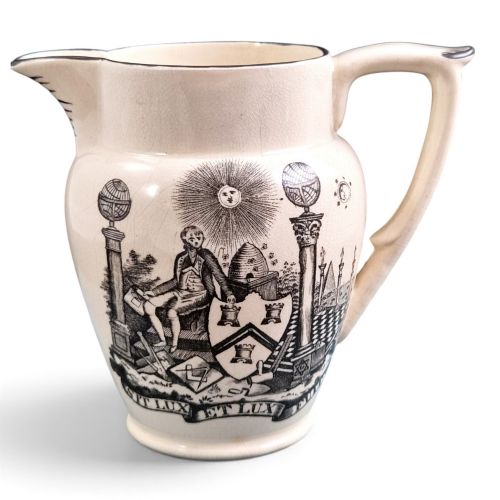
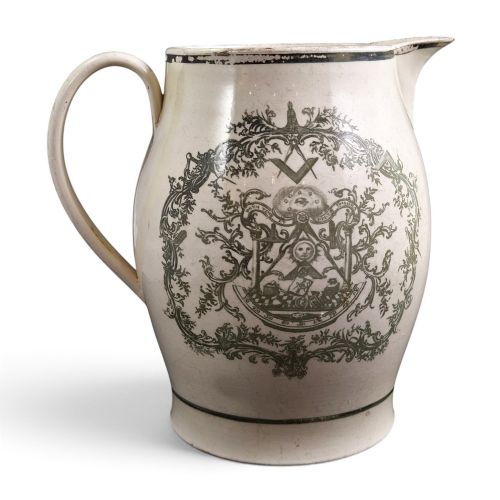
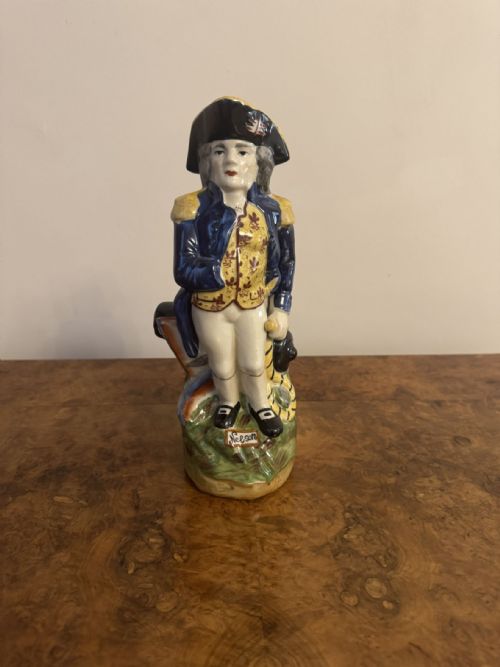
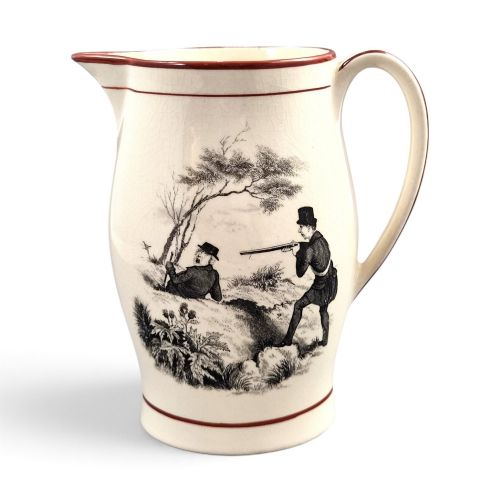
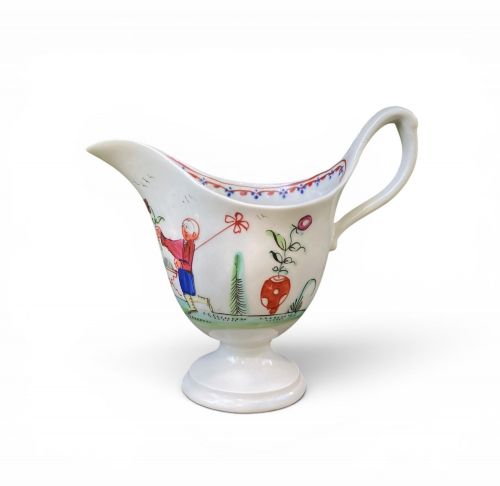
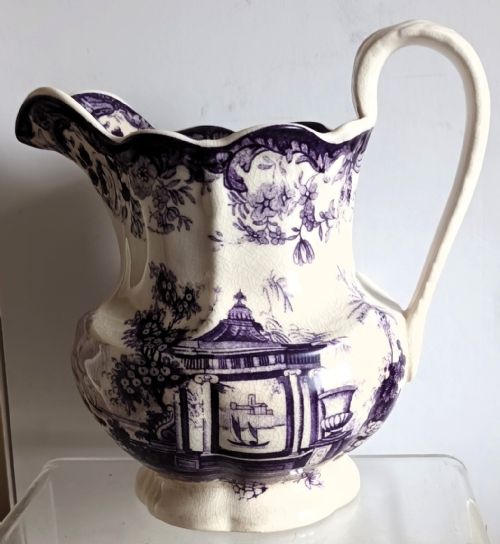
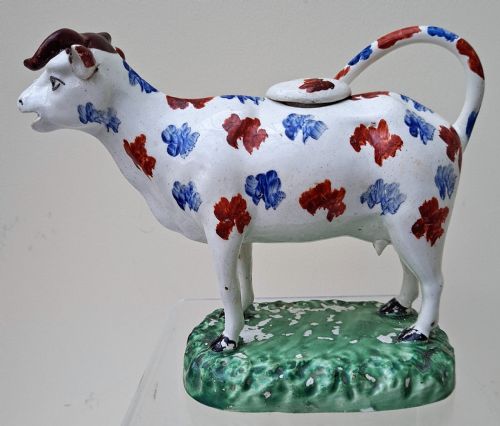
A georgian staffordshire jug encompasses earthenware, creamware, and pearlware vessels created during the Georgian and Regency periods. These pieces range from large transfer-printed pitchers depicting historical scenes to sculptural toby jugs and figural cow creamers.
Moulded decoration is common, including cabbage leaf motifs, faceted sides, and figural models such as Bacchus frog mugs and Masonic emblems. The designs reflect the robust domestic pottery output of Staffordshire and Yorkshire potteries during the late 18th and early 19th centuries.
What varies in quality
The clarity and crispness of transfer-printed scenes distinguish finer examples, as does the precision of hand-painted enamel colours and lustre details. Blurry print lines or uneven glaze pooling indicate standard utilitarian production rather than masterwork output.
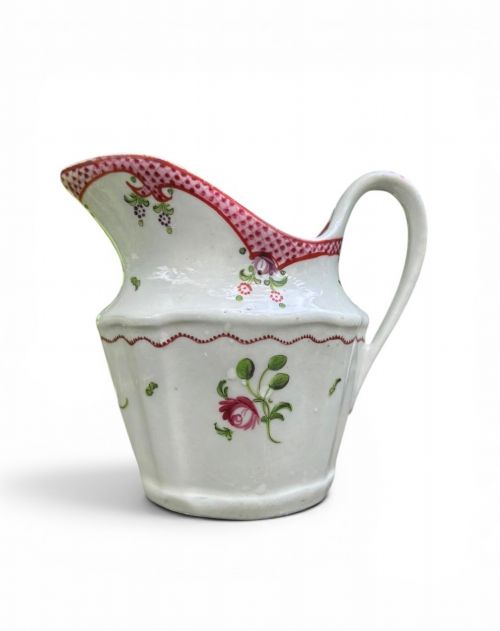
Listings feature earthenware, pearlware, creamware, and porcelain, spanning the Georgian, Regency, and 19th-century periods.
New Hall porcelain·H and R Daniel·Mayer and Newbold
The Georgian Staffordshire Jug Glossary
- Creamware
- A refined earthenware with a pale yellowish-white lead glaze, developed in Staffordshire during the 18th century. It became the dominant domestic ceramic before pearlware took precedence.
- Pearlware
- An earthenware body containing a small amount of cobalt in the glaze to produce a bluish-white tint that emulated Chinese porcelain. It was widely used for transfer-printed jugs from the late 18th century onwards.
- Transfer printing
- A decoration technique where an engraved copper plate transfers a design onto tissue paper, which is then stamped onto the ceramic body before firing. This allowed for intricate repeating patterns and historical scenes on pottery.
- Copper lustre
- A metallic glaze technique that imparts a reflective, coppery sheen to the surface of earthenware jugs. It was particularly popular during the Regency period.
- Toby jug
- A pottery jug modelled in the shape of a seated, stout 18th-century gentleman holding a mug of beer and a pipe. They often serve as characterful examples of Staffordshire folk art.
Georgian Staffordshire Jug: Frequently Asked Questions
What is a frog mug?
A frog mug is a drinking vessel featuring a small ceramic frog modelled inside the base, designed to surprise the drinker as the liquid diminishes.
Potters in Staffordshire produced these novelty items around 1800 as drinking jokes for taverns and social gatherings.
How do I date a creamware jug?
Dating relies on the shade of the cream glaze, the weight of the ceramic body, and the style of any transfer-printed motifs present.
Earlier pieces from the late 18th century tend to feature lighter, thinner potting and delicate handles compared to heavier 19th-century examples.
Are cow creamers functional?
Cow creamers were designed as tabletop milk or cream containers, filled through a hole in the back and poured via the animal's mouth.
While functional in origin, most examples from the Georgian period now serve as decorative cabinet pieces.
How should I clean antique earthenware?
Cleaning requires only warm water and a mild detergent applied gently with a soft cloth to protect the historic glaze.
Immersing porous antique earthenware in water for extended periods or using abrasive scrubbers can damage the ceramic body.