
Antique Staffordshire Ceramic Jug
An antique staffordshire ceramic jug brings domestic utility and figurative colour into a room through earthenware and transfer-printed scenes.
Antique Staffordshire Ceramic Jug
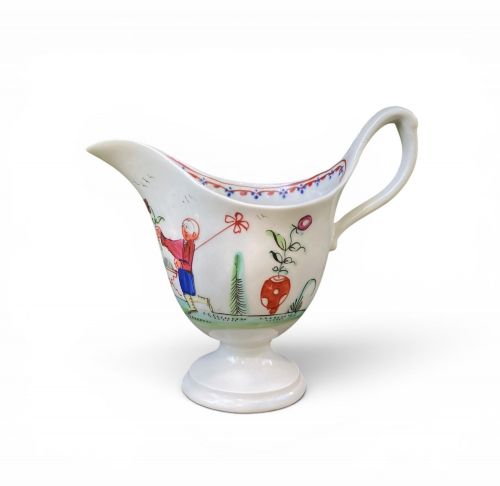
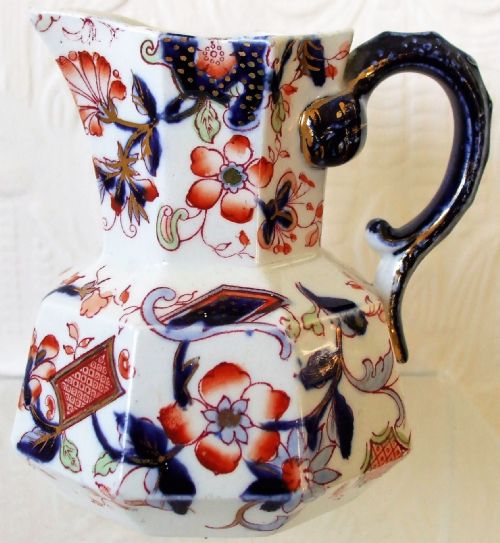
An antique staffordshire ceramic jug is a domestic pouring vessel produced across the eighteenth and nineteenth centuries, taking forms from simple creamers to large water pitchers and characterful figures. The pieces on this page span Georgian, Regency, and Victorian periods, reflecting shifting domestic tastes and regional pottery traditions.
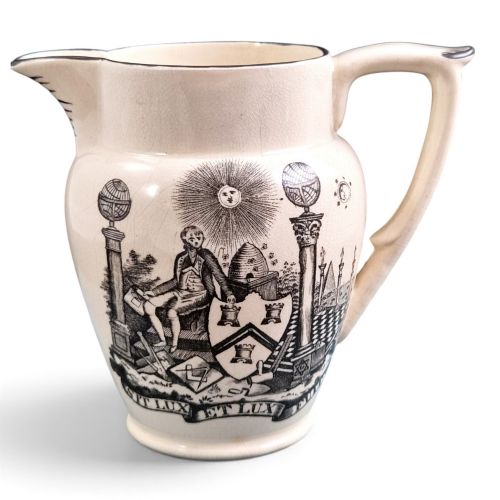
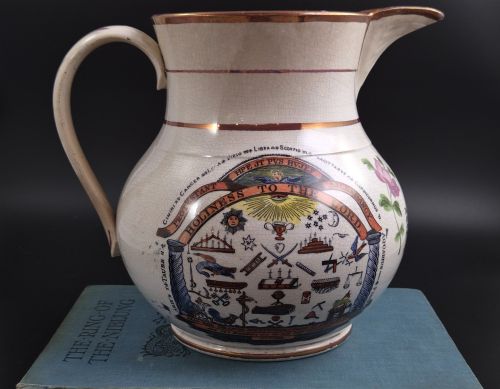
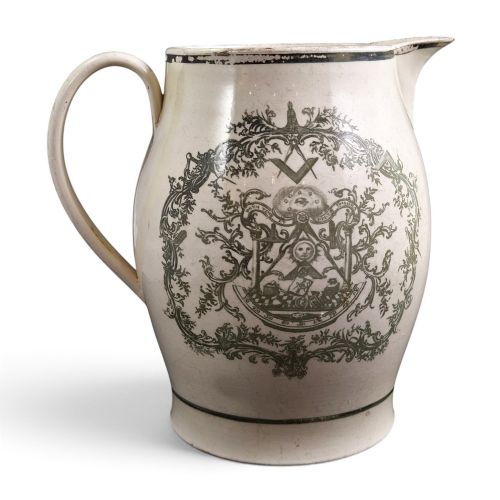
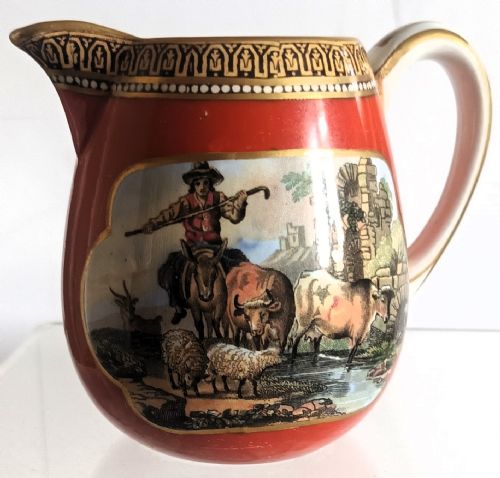
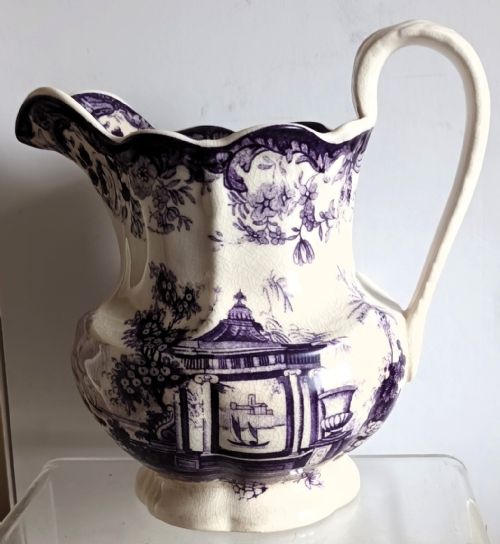
Buyers encounter earthenware, creamware, pearlware, and porcelain examples shaped as jugs, pitchers, and Toby jugs. Many display transfer printing, enamel decoration, or moulded relief work depicting commemorative themes, Masonic symbols, and pastoral subjects.
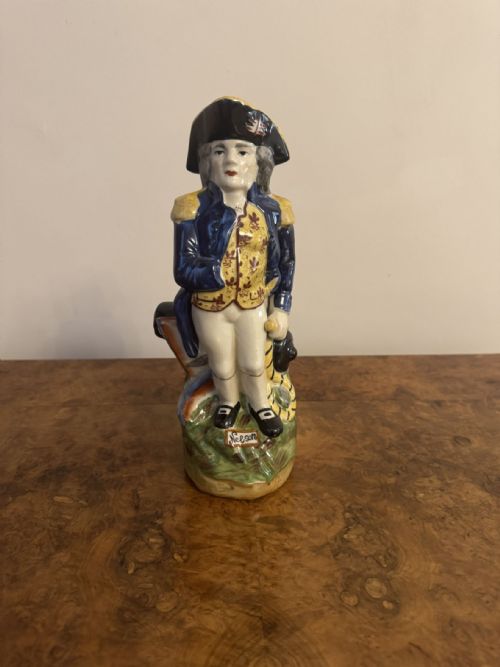
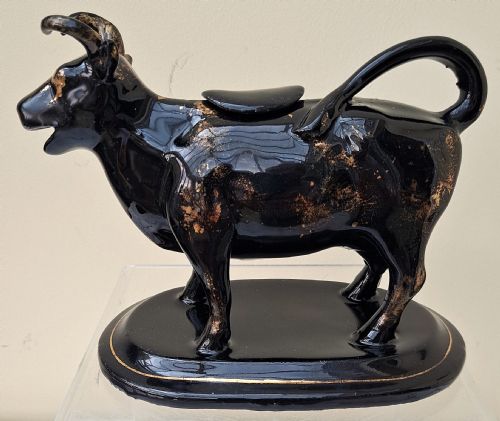
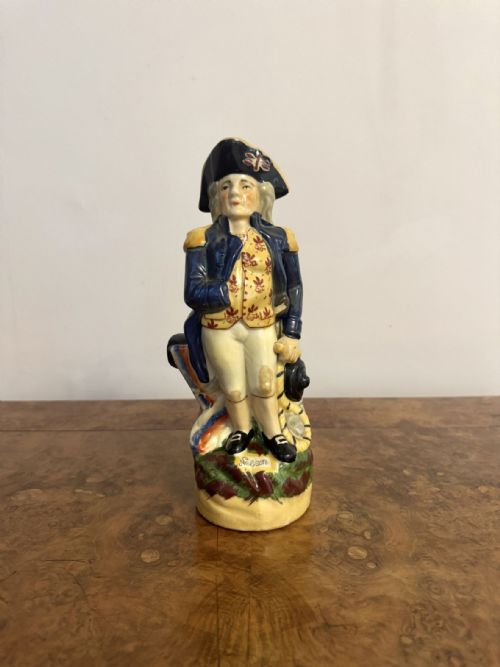
The selection includes specialised vessels such as cow creamers, puzzle jugs, and commemorative pieces dedicated to figures like Lord Nelson. These functional objects served everyday dining and dairy tasks before becoming cabinet pieces.
How they were made
Potters shaped these vessels using earthenware, creamware, and pearlware bodies, often finished with coloured glazes or tin-based enamel. Techniques involved throwing on a wheel or pressing clay into moulds to achieve cabbage leaf patterns, relief moulding, and figural Toby forms.
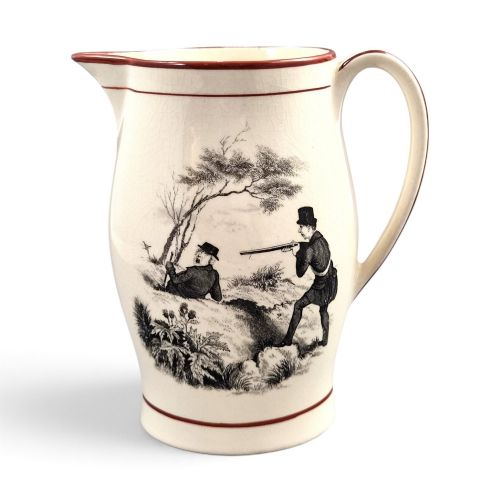
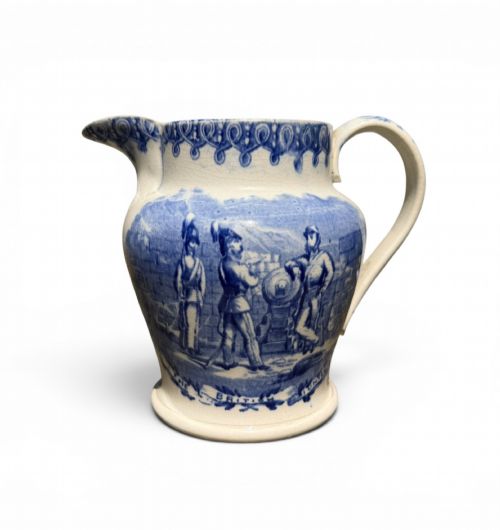
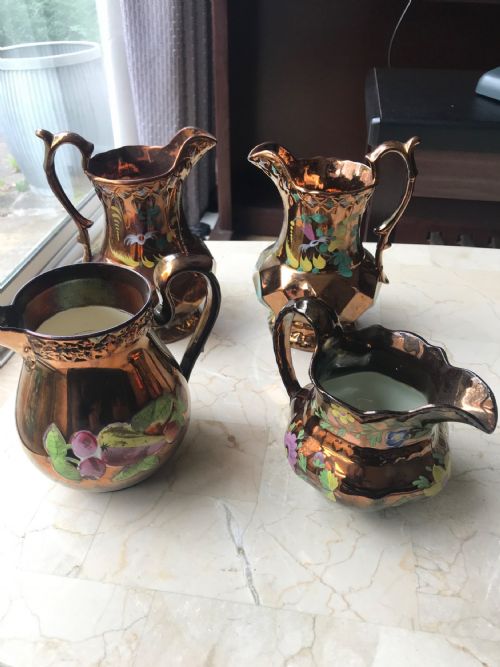
Decoration relied on hand-painting with polychrome enamels, copper lustre highlights, and black or blue transfer printing applied beneath or over the glaze. Firing in regional kilns set the pigments and vitrified the ceramic bodies to varying degrees of hardness.
Listings feature eighteenth and nineteenth-century earthenware, pearlware, and porcelain, spanning Georgian and Victorian periods.
What varies in quality
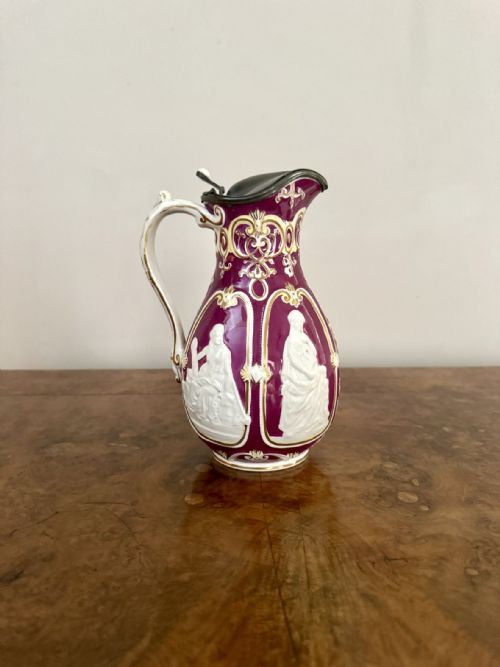
Quality rests in the crispness of the moulded relief and the alignment of transfer-printed details across the ceramic surface. Early pearlware and creamware bodies show fine potting and controlled glaze pooling, whereas later mass-produced items exhibit heavier casting and simpler hand-enamelling.
The artistic merit of the modelling separates standard utility jugs from expressive Toby figures and figural creamers. Superior pieces retain vibrant enamel colours, clear transfer definition, and minimal kiln distortion.
New Hall·Keeling and Co·H and R Daniel·Charles Meigh·Jones and Walley
The Antique Staffordshire Ceramic Jug Glossary
- Creamware
- A refined earthenware with a pale yellowish straw-coloured lead glaze developed in Staffordshire during the eighteenth century. Josiah Wedgwood perfected this pale body, which became a staple for domestic tableware.
- Pearlware
- An earthenware body containing a small amount of cobalt in the glaze to produce a bluish tint that mimics Chinese porcelain. It dates predominantly from the late eighteenth and early nineteenth centuries.
- Toby jug
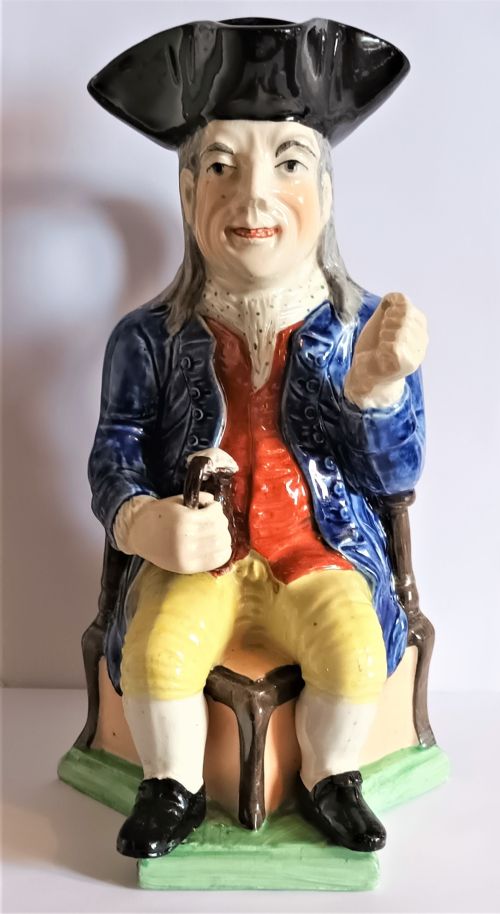
- A ceramic jug modelled as a stout, jovial person holding a mug and a pipe, typically wearing eighteenth-century attire. These figural pieces often served as drinking vessels in taverns.
- Transfer printing
- A decoration technique where an engraved metal plate transfers a design onto paper, which is then stamped onto the ceramic body before glazing. This method allowed complex pictorial scenes to be replicated consistently.
- Cow creamer
- A milk jug modelled in the form of a cow, often with a lid on the back and the tail forming the handle. These whimsical vessels were popular in Georgian and Victorian dairies.
Antique Staffordshire Ceramic Jug: Frequently Asked Questions
How do I date an antique Staffordshire jug?
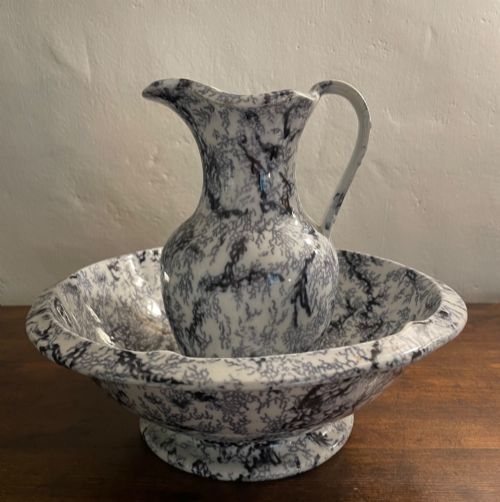
Dating relies on examining the ceramic body, glaze colour, and decorative style. Creamware and early pearlware point to the Georgian era, while flow blue and copper lustre are typical of the Victorian period.
Markings, if present, can identify specific potteries, though many domestic jugs remain unmarked and are attributed through stylistic comparison with documented pieces.
Were these jugs used for water or milk?
These vessels served various domestic functions depending on their size and shape. Smaller forms acted as creamers and milk jugs, while larger pitchers held water or ale for the table.
Specialist items like puzzle jugs and cow creamers fulfilled more decorative or entertaining roles during social gatherings.
How should I display ceramic jugs at home?
Displaying these pieces requires stable shelving away from direct sunlight to protect enamel colours and transfer prints. Grouping jugs by period or material highlights their varied glazes and forms.
Ensuring adequate support prevents tipping, particularly with heavy items like one-gallon water pitchers or figural Toby jugs.