




Georgian Spirit Decanter
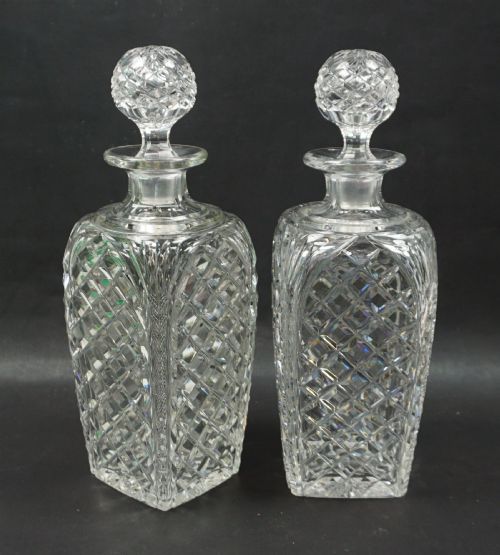
These Georgian spirit decanter vessels hold your finest liquor in lead glass and cut crystal.
Georgian Spirit Decanter
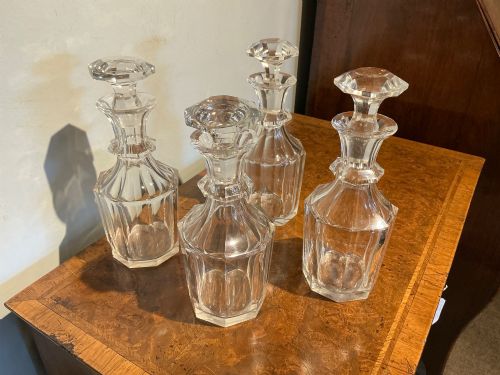
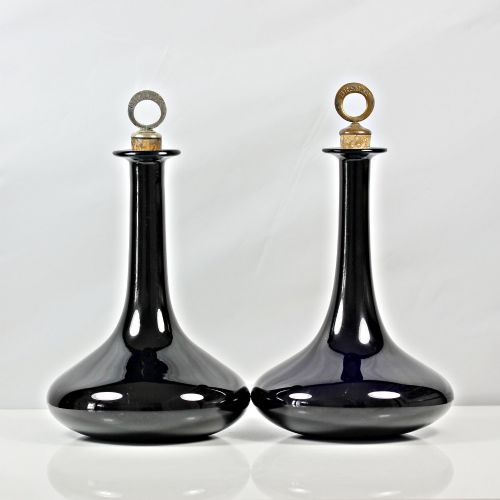
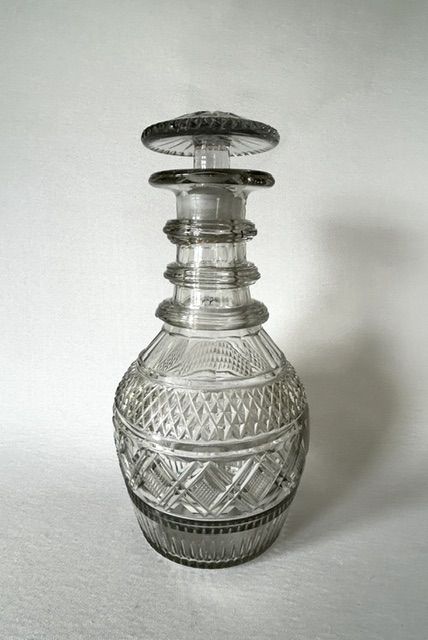
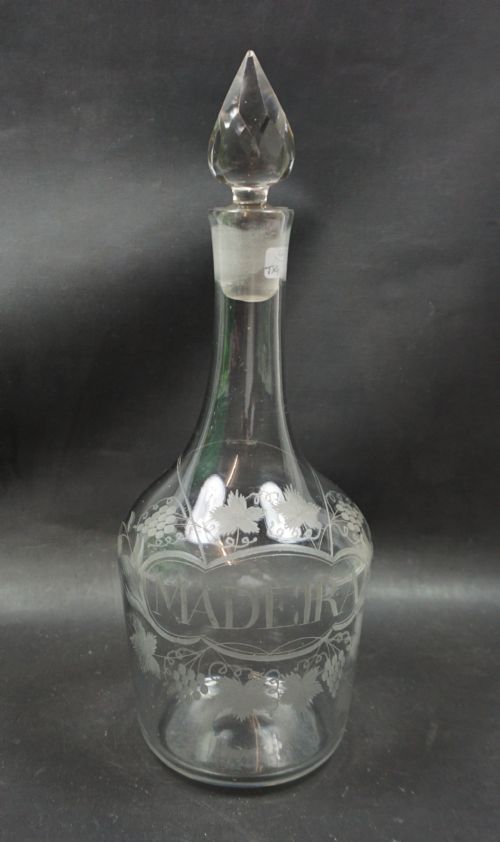
A Georgian spirit decanter brings heavy lead glass and cut crystal vessels into daily use for serving rum, brandy, and madeira. You will frequently find Prussian, mell, and ship's forms spanning the eighteenth and nineteenth centuries.
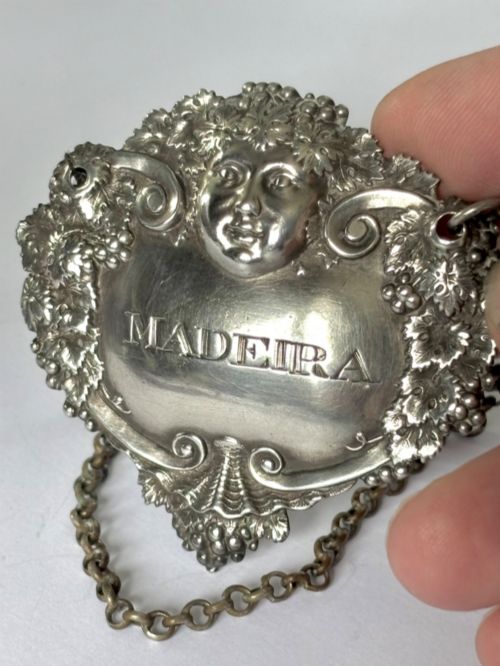
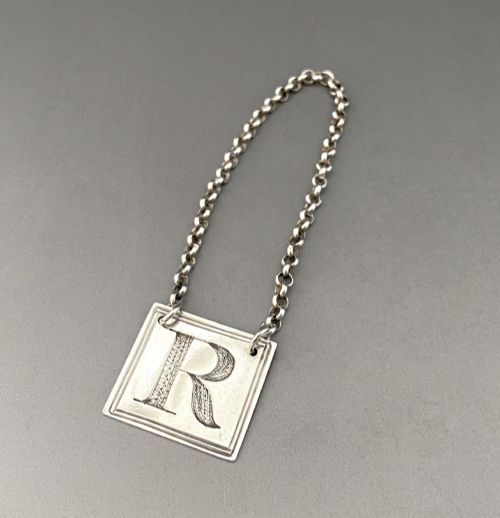
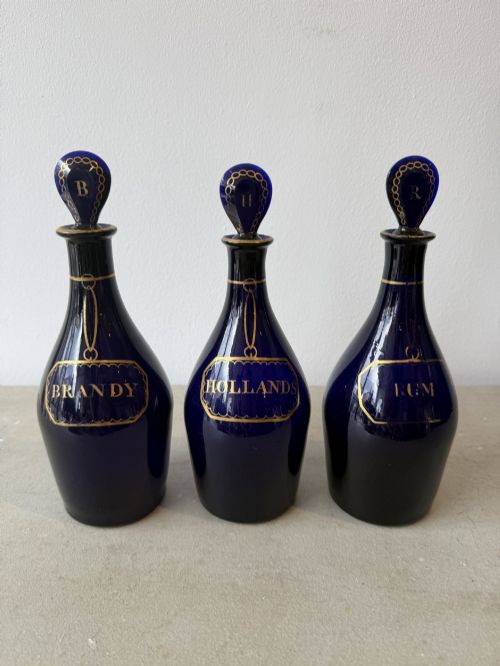
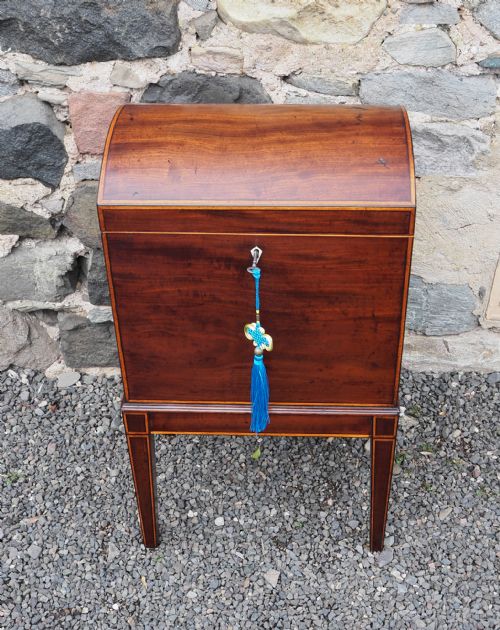
The category encompasses matching sets, miniature vessels, and amber or blue glassware paired with sterling silver labels. Cellarettes and mahogany boxes also appear to house these bottles safely.
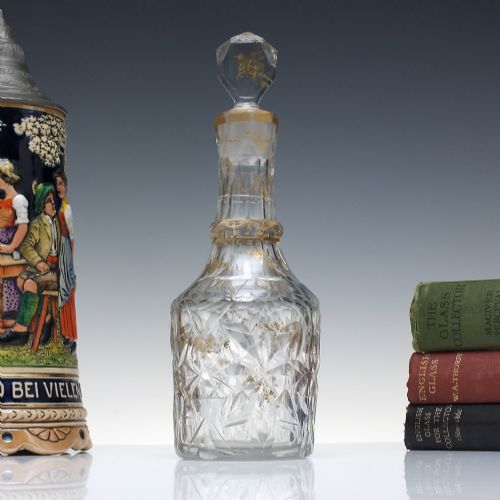
Makers ranged from Irish glasshouses to independent decorators working in Bristol and London. Pieces extend from plain utility vessels to gilded and enamelled collector items.
How They Were Made
Makers blew heavy lead glass and crystal into moulds or shaped them freehand before applying three-ring necks and pillar cutting. Engravers then added wheel-cut flutes, swag details, and painted enamel highlights.
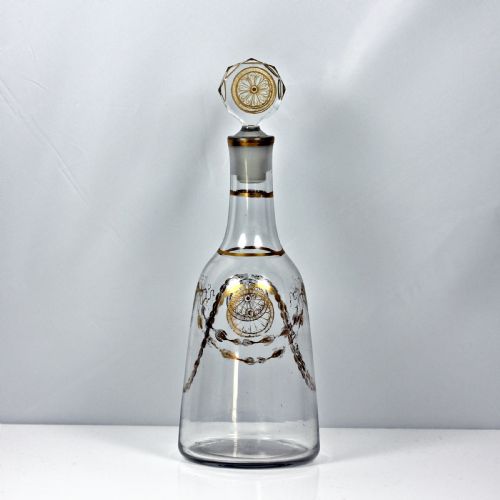
Atelier artisans gilded surfaces with gold leaf, while silversmiths hammered out matching sterling silver bottle tickets. Joiners constructed mahogany boxes and cellarettes lined to fit individual bottles.
Listings feature lead glass, sterling silver, mahogany, and brass across Georgian and Regency periods.
What Varies in Quality
Clarity of the lead glass and crispness of the wheel cutting separate ordinary production from workshop masterpieces. Heavy metal weight and sharp facet junctions indicate superior handling at the furnace.
The presence of original stoppers and matching silver labels alters the standing of a piece considerably. Finer examples retain intact gilding and hand-painted enamel details without rubbing.
James Giles·Digby Scott·Benjamin Smith·Elizabeth Morley·William Sharp
The Georgian Spirit Decanter Glossary
- Prussian style
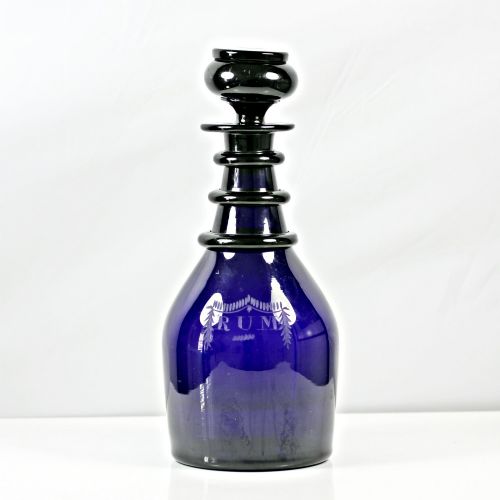
- A bottle form featuring three horizontal glass rings around the neck and a tapering body. This shape prevented slippage when pouring from a heavy vessel.
- Ship's decanter
- A wide-based bottle designed with a low centre of gravity to prevent tipping at sea. The broad base keeps the vessel stable on rolling dining tables.
- Mell decanter
- A mallet-shaped bottle with broad shoulders tapering toward the base. It provides a sturdy profile for serving spirits.
- Toddy lifter
- A small glass tube used to transfer liquor from a decanter to a drinking glass. Users placed a thumb over the top hole to hold the liquid in place.
- Old Sheffield Plate
- A fused composite material made by melting a thin sheet of sterling silver onto a copper base. This technique created durable tableware before electroplating became common.
Georgian Spirit Decanter: Frequently Asked Questions
How do I use them today?
You can fill them with your favourite spirits for dining room display or traditional serving.
Hand wash them carefully with warm water, avoiding harsh detergents that might damage old glass or gilding.
How do I date a decanter?
Look at the shape of the body, the cut rings on the neck, and the pontil mark on the base. Earlier eighteenth-century examples tend to have broader bases and gentler tapering.
Silver labels and stoppers matching the period style also help narrow down the decade of manufacture.
Why are some decanters blue?
Bristol blue glass became popular during the late eighteenth and early nineteenth centuries for holding specific liquors like rum and brandy. The deep cobalt colour protected contents from sunlight.
Makers often added gold leaf inscriptions directly onto the blue surface.