
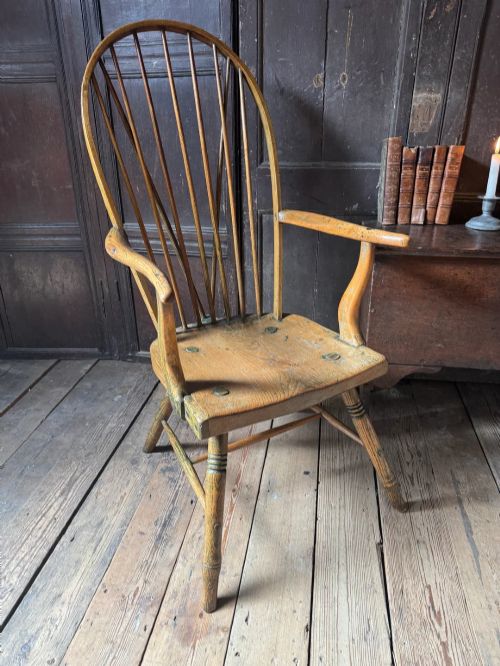
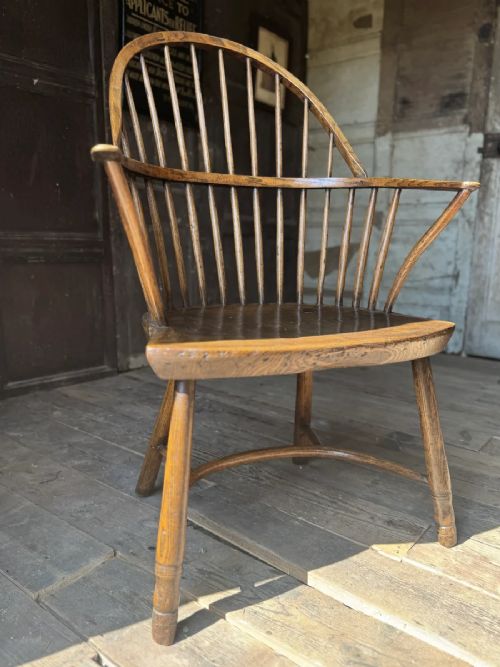
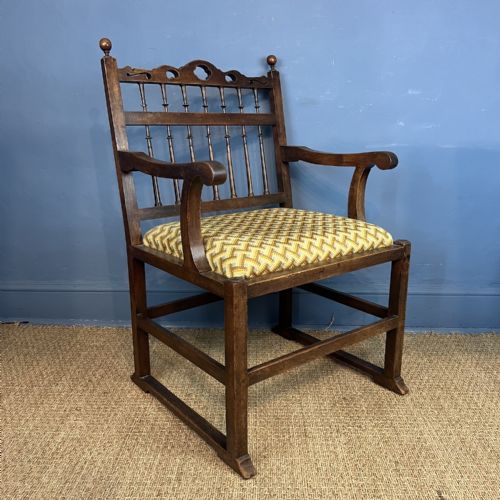
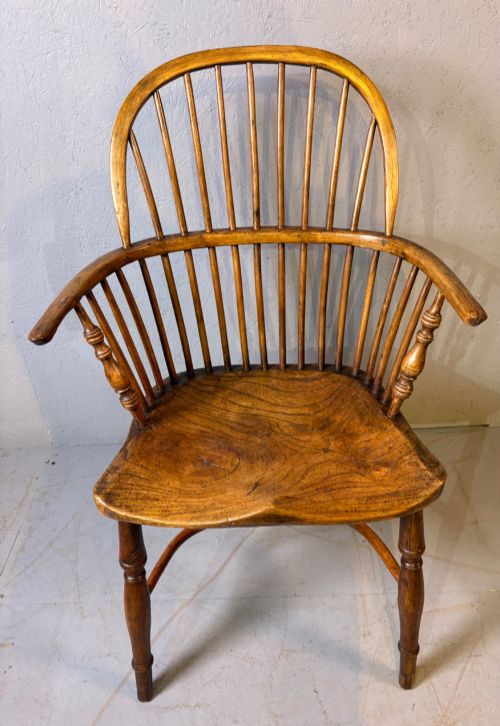
Georgian Spindle Back Chair
These chairs combine vernacular practicality with traditional timber construction, offering a sturdy seat that suits both country kitchens and modern interiors.
Georgian Spindle Back Chair
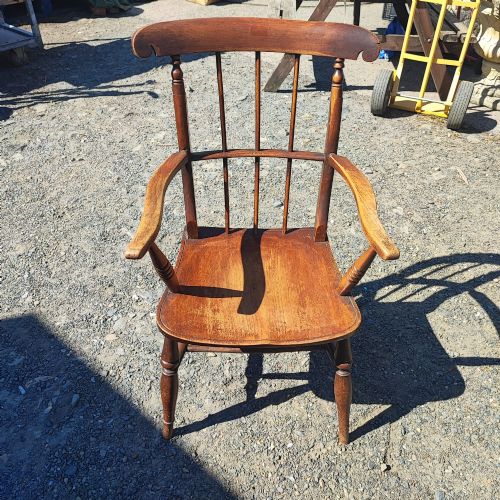
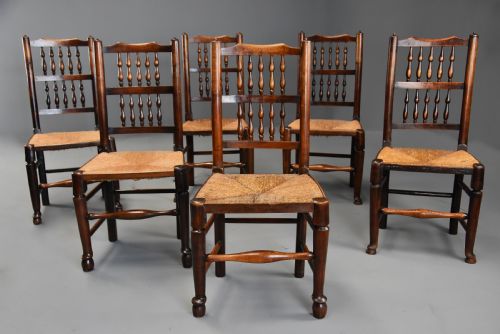
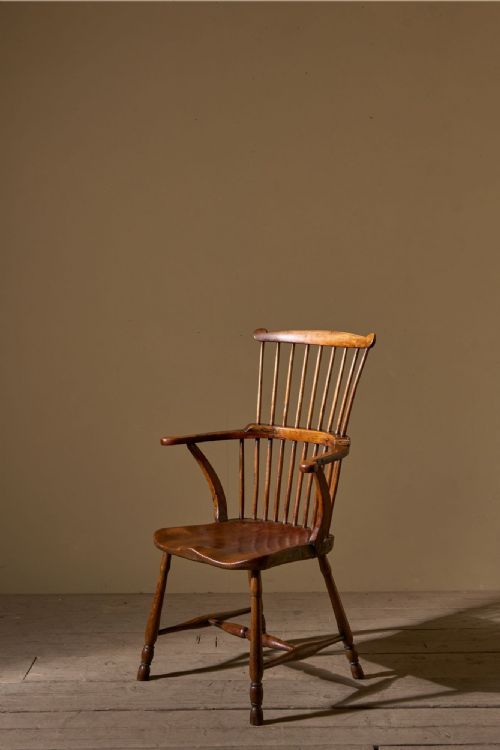
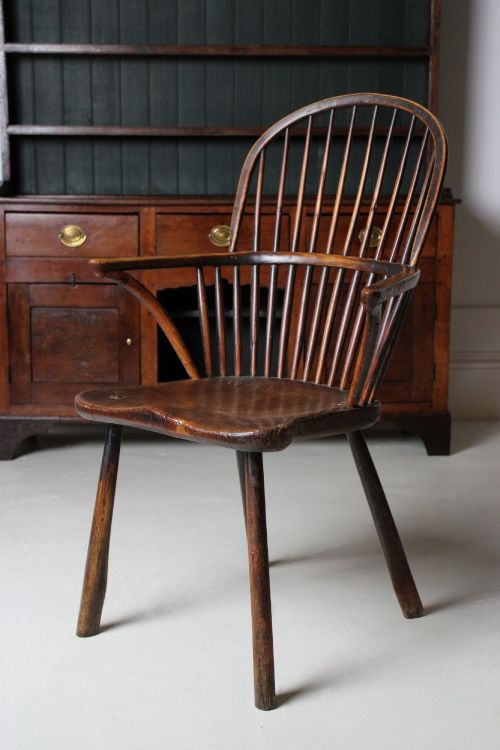
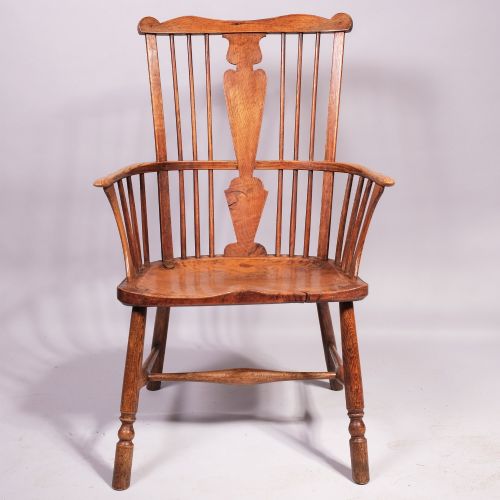
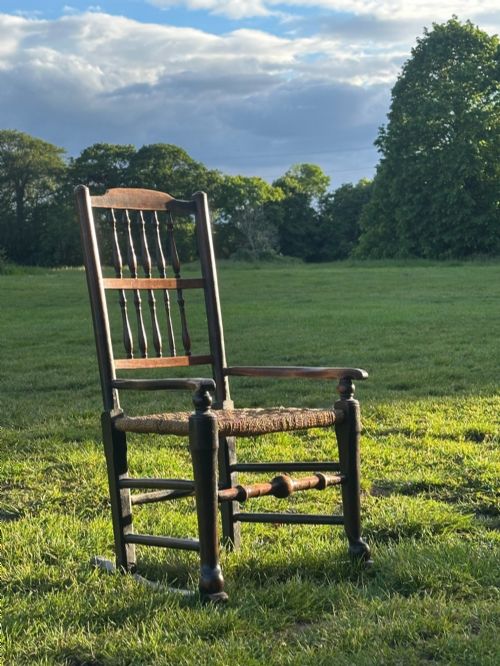
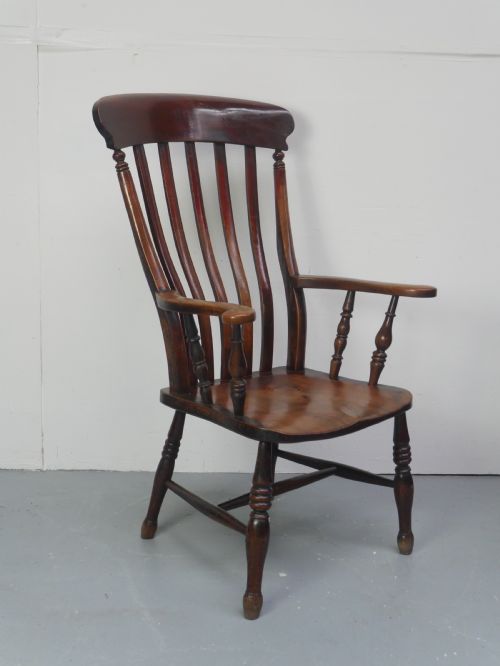
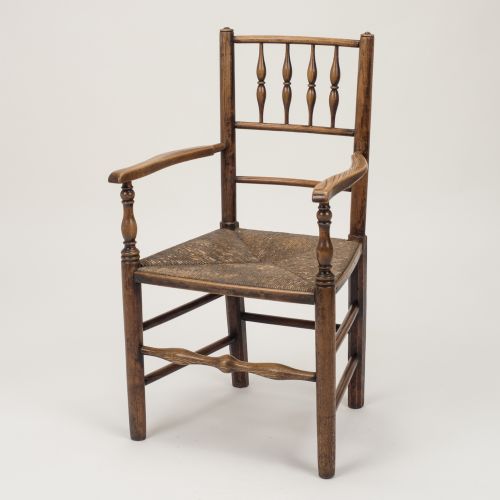
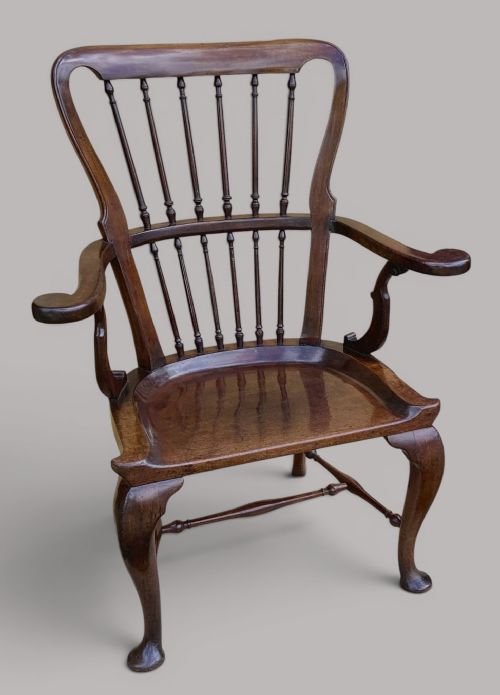
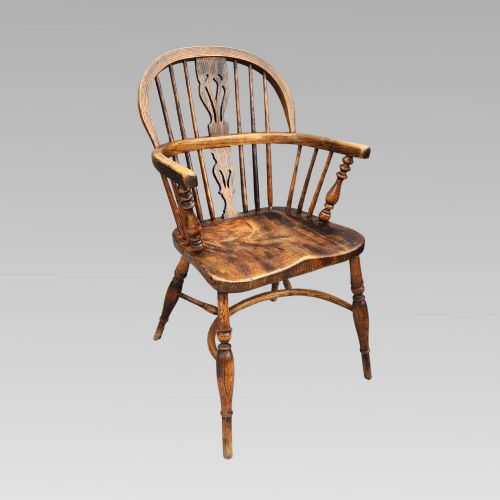
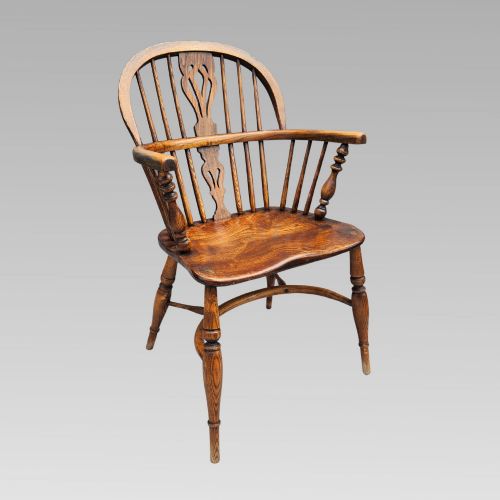
A georgian spindle back chair is a utilitarian wooden seat built by regional craftsmen, featuring slender turned vertical spindles supporting the backrest. You will frequently encounter elm and ash armchairs, dining sets, and Windsor forms originating from provincial workshops during the eighteenth and nineteenth centuries.
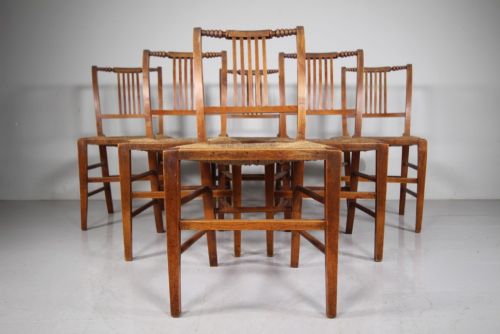
The selection ranges from single farmhouse side chairs to matched sets of six or eight dining chairs, alongside specialised forms like children's high chairs, rocking chairs, and low-back armchairs. These pieces reflect English country vernacular traditions, utilising local timbers shaped for everyday domestic utility.
How they were made
Cabinet makers and bodgers relied on a combination of woods, pairing strong ash frames and bentwood hoops with solid elm seats carved into deep saddles for comfort. Beech, fruitwood, and oak also appear in structural legs and spindles, secured through traditional mortise and tenon joints.
Surface finishes typically involve natural wax or original painted layers that build up a deep patina over decades of daily use. Turnery techniques created uniform spindles and stretchers, such as the characteristic crinoline stretcher found on West Country Windsor models.
Several examples include specialised children's potty chairs and low-backed drunkards chairs designed for leaning.
What varies in quality
The distinction between standard utility seating and finer examples lies in the harmony of the timber selection and the complexity of the turnery. Chairs featuring highly figured elm seats paired with balanced, slender ash spindles demonstrate superior craftsmanship from regional workshops.
Originality of surface finish and the retention of early components significantly influence the character of a piece. Sets that remain together with matching proportions and minimal timber replacement command greater interest than heavily restored equivalents.
The Georgian Spindle Back Chair Glossary
- Spindle back
- A chair back constructed from a series of thin, turned vertical wooden rods fitted between a top rail and the seat. This design offers lightweight strength.
- Windsor chair
- A wooden chair built with a heavy solid timber seat into which the legs, back spindles, and arms are separately jointed. They often feature bentwood hoops.
- Crinoline stretcher
- An arched underframe connecting the legs of a chair near the base, providing extra rigidity and acting as a footrest. It is commonly seen on West Country designs.
- Vernacular
- Everyday objects built by local craftspeople using traditional regional styles and native materials rather than adhering to formal high-style metropolitan fashions.
- Patina
- The surface sheen and softening of wood colour developed through decades of handling, polishing, and natural ageing.
Georgian Spindle Back Chair: Frequently Asked Questions
How do I care for a wooden seat?
Keep wooden furniture away from direct heat sources and sudden humidity changes to prevent the timber from splitting. Apply a neutral beeswax polish occasionally and buff gently with a soft cloth to maintain the surface.
Avoid using modern liquid silicone sprays or harsh chemical cleaners that can strip the historic finish. Regular dusting with a dry cloth is usually sufficient for daily maintenance.
Were these chairs used outdoors?
These pieces were built primarily for indoor domestic environments such as farmhouse kitchens, halls, and dining rooms. Their sturdy construction served heavy daily work rather than garden use.
Exposing antique timber chairs to outdoor weather conditions will quickly damage the glue joints, warp the elm seats, and ruin the antique finish.
Can I mix different chairs around a table?
Combining regional country chairs with similar woods and modest proportions creates a balanced, collected look. Many period dining sets started as matched groups or assembled over time.
Pay attention to seat heights and arm clearances to ensure guests can sit comfortably at the table together.
How do I tell regional styles apart?
Regional differences often appear in the shaping of the comb back, the curvature of the armrests, and the turning style of the legs and stretchers. West Country and Thames Valley makers developed distinct local forms using native elm and ash.
Examining the under-seat wedging and tool marks helps reveal the specific workshop traditions behind the construction.