




Georgian Sofa Table Drawers
Georgian sofa table drawers bring ingenious craftsmanship into sitting rooms, offering fitted compartments and drop leaves designed for needlework, writing and display.
Georgian Sofa Table Drawers
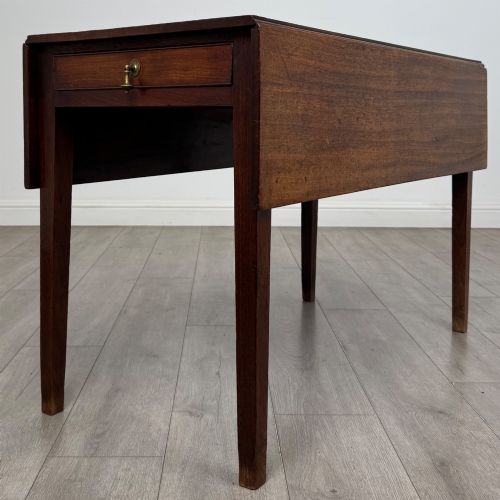
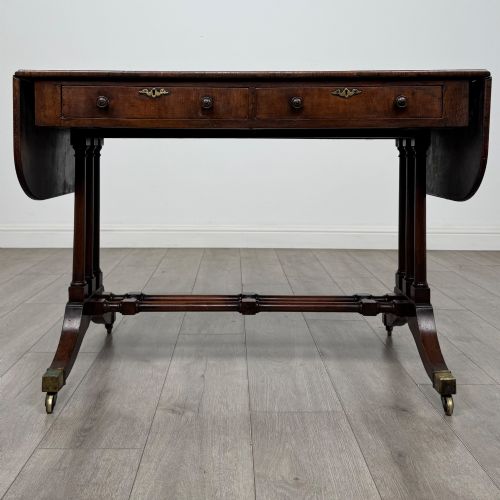
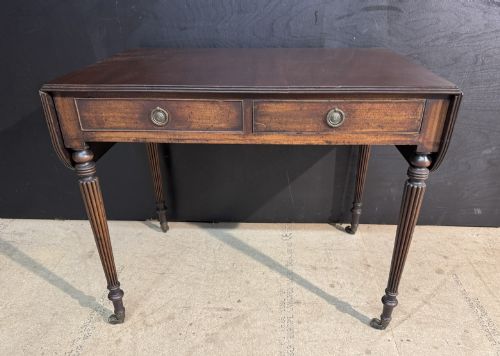
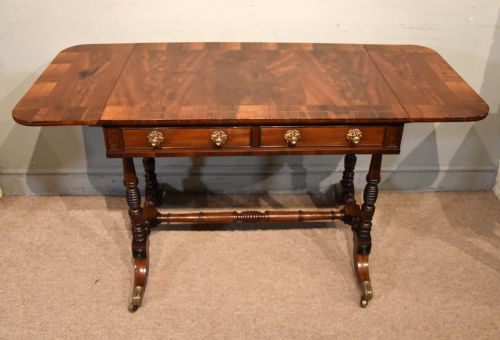
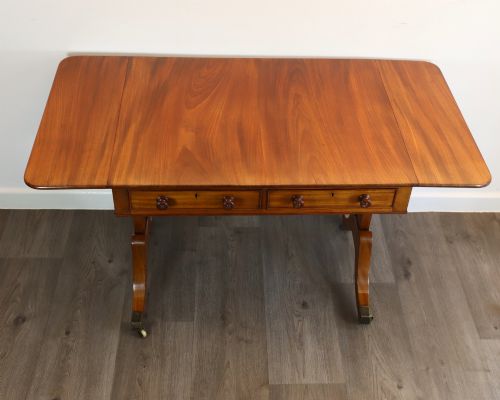
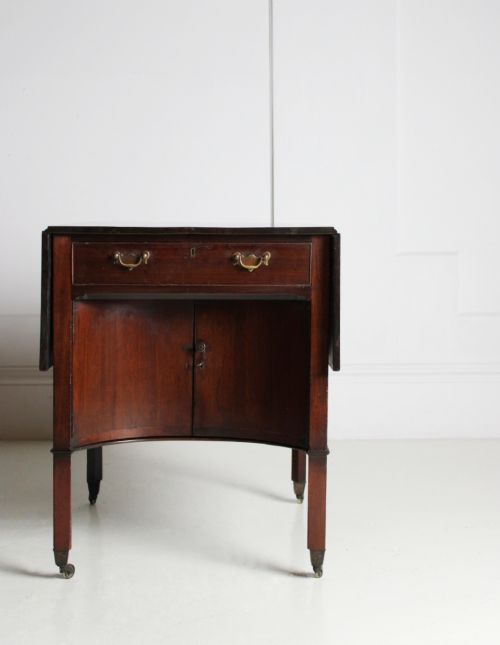
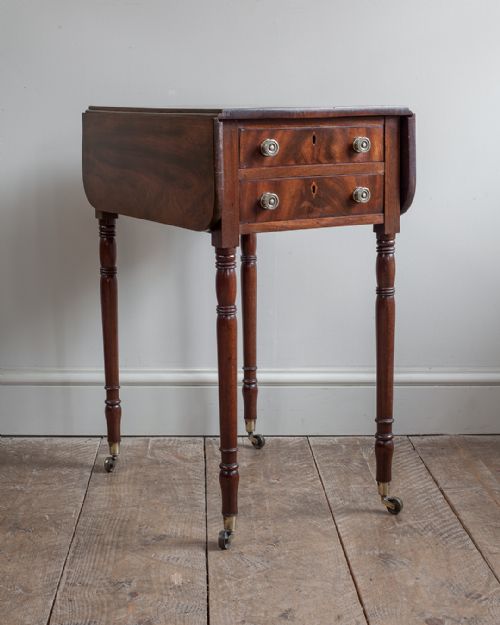
When you search for georgian sofa table drawers, you encounter a specialised form of antique furniture created to sit in front of sofas or float in the centre of rooms. These tables typically feature twin drop leaves supported by pull-out rule joints, alongside functional drawers integrated into the frieze.
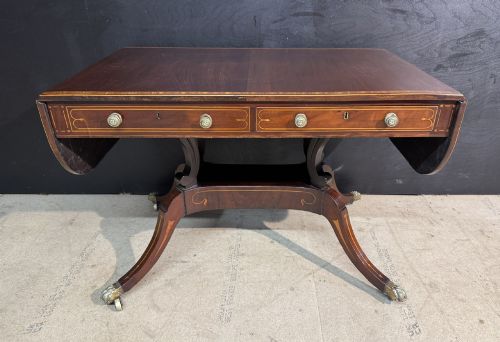
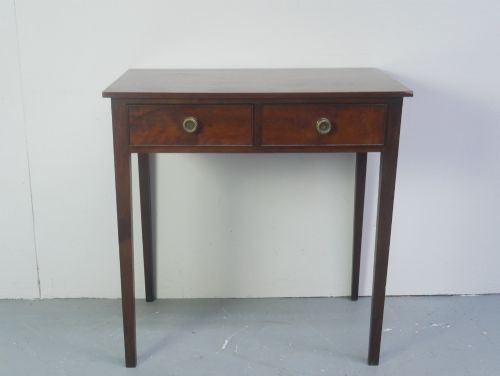
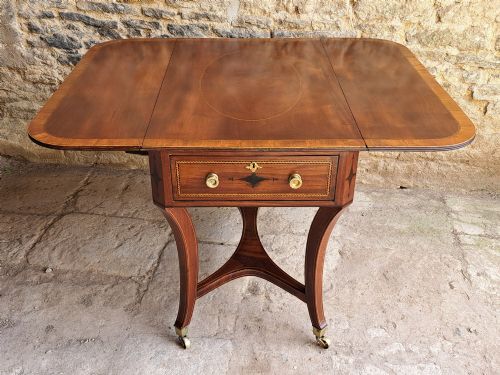
The selections span genuine Georgian and Regency examples through to later revivals, executed in forms such as sofa tables, work tables and pembroke variants. Mahogany, flame mahogany and rosewood dominate the listings, frequently paired with satinwood or wood inlay to accentuate the drawer fronts and borders.
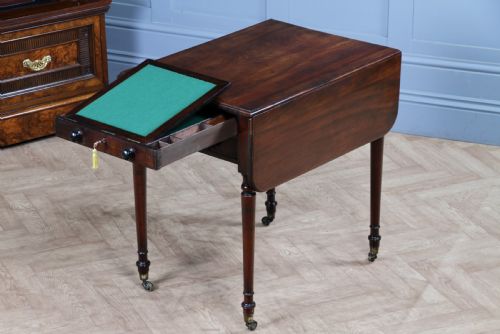
Makers and craftsmen of the period designed these pieces to be finished on all sides, allowing freestanding placement rather than pushing against a wall. The drawers often contain compartmentalised interiors intended for writing materials or sewing implements.
How they were made
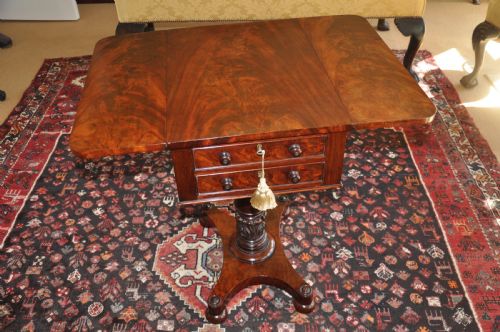
Cabinet makers relied heavily on dense tropical hardwoods like mahogany and rosewood, often selecting flame veneers or burr walnut to create striking figured surfaces on the table tops and drawer faces. Satinwood provided a contrasting pale timber for stringing and marquetry details.
Hardware played a functional and decorative role, with cast brass handles, escutcheons and sometimes inlaid brass lines defining the structural edges. Secondary timbers were joined with traditional cabinetry methods to ensure the drop leaves and moving drawer components remained stable over centuries of use.
Several tables include hidden compartments inside the drawers, once intended for private correspondence or sewing secrets.
What varies in quality
The standard of a piece depends on the choice of timber and the precision of the cabinet work, particularly around the drawer linings and the hinges of the drop leaves. Superior examples display continuous figuring across the drawer fronts and harmonious proportions in the underframe and pedestals.
Refinement shows in the crispness of the wood inlay, the quality of the cast brass mounts, and whether the back of the table receives the same veneering attention as the front for freestanding display.
The Georgian Sofa Table Drawers Glossary
- Sofa table
- A rectangular occasional table with drop leaves on either end and usually two small drawers in the frieze, originally designed to stand in front of a sofa. They typically measure longer than they are wide.
- Pembroke table
- A small, drop-leaf table with hinged flaps on two opposite sides, frequently fitted with a single drawer at one end. The design dates from the eighteenth century and served multiple domestic uses.
- Rule joint
- A moulding detail used on drop-leaf tables where the joint between the fixed top and the moveable flap forms a secure, dust-tight seal when raised. It conceals the knuckle of the hinge.
- Marquetry
- The art of applying pieces of veneer to a structural structure to form decorative patterns or pictures. Craftsmen used contrasting woods such as satinwood and mahogany to achieve this effect.
Georgian Sofa Table Drawers: Frequently Asked Questions
What is a sofa table used for?
These tables served various domestic tasks in polite rooms, including writing, reading, and needlework. The drawers held small personal items while the drop leaves expanded the surface area when needed.
Today, they function well behind sofas, as console tables in hallways, or as freestanding centre tables in living spaces.
How do I tell a Georgian table from a later copy?
Examine the secondary timbers inside the drawer boxes and the hand-cut dovetails joining the sides. Older pieces show tool marks and timber shrinkage consistent with age rather than uniform machine production.
Hardware placement and the method of securing the drop-leaf hinges also help distinguish eighteenth and early nineteenth-century work from later revivals.
Are all sofa tables finished on the back?
Many better-quality examples feature finished mahogany or rosewood veneers on the reverse side because they stood in the middle of a room. Simpler pieces made for domestic utility may have plain secondary woods on the back.
Checking the rear of the frieze and drawers reveals whether the maker intended the table to sit away from the wall.