


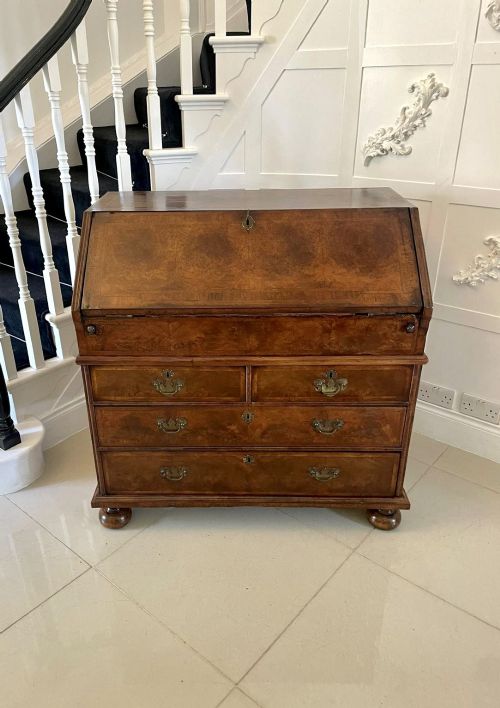
Georgian Slanted Desk
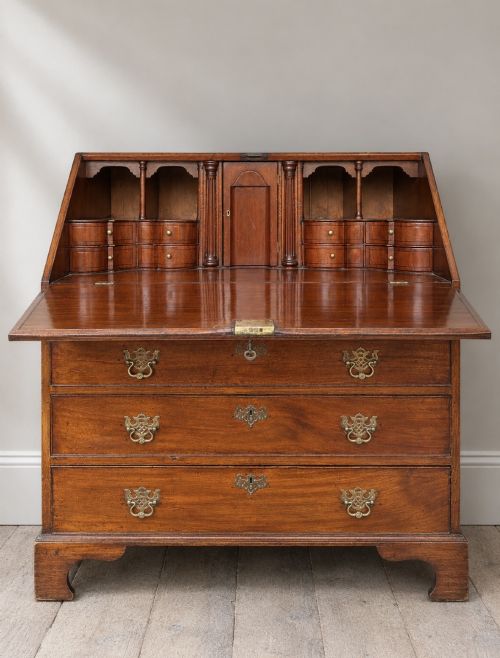
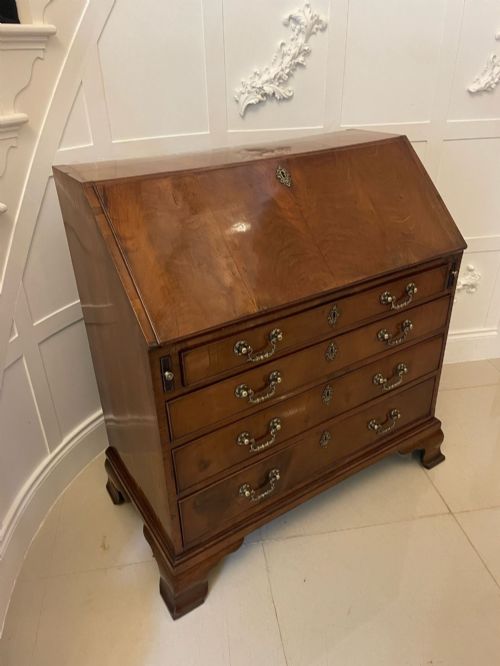
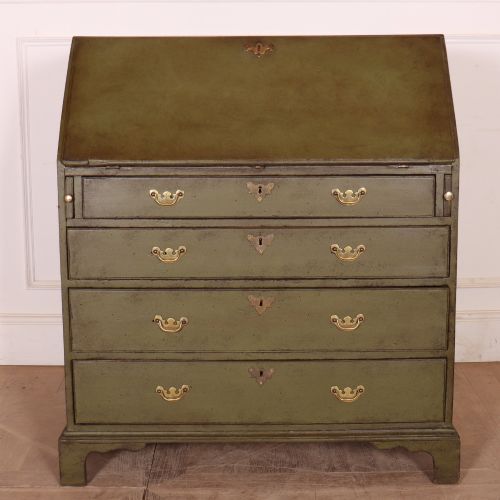
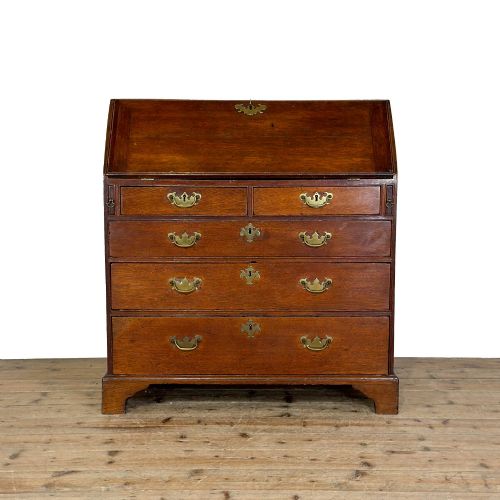
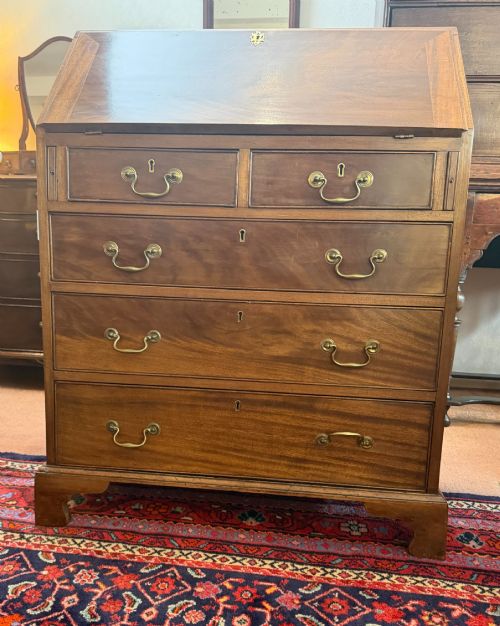
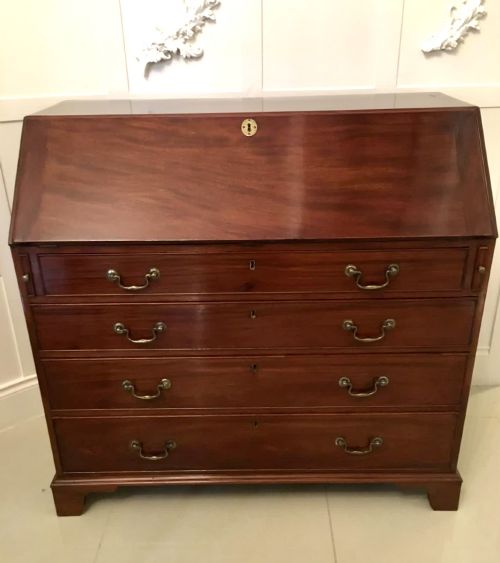
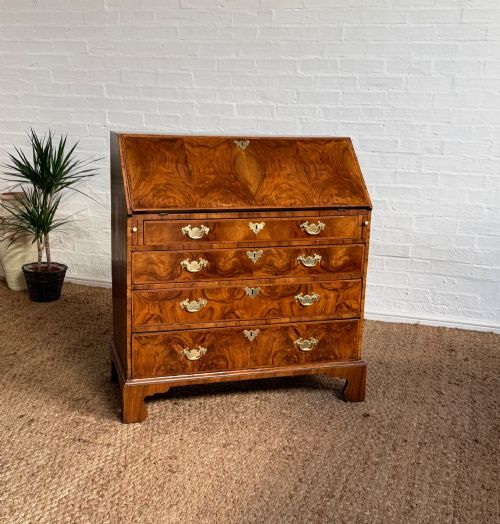
A georgian slanted desk is a writing cabinet with a sloping fall front that conceals a fitted interior, offering private workspace and neat storage.
Georgian Slanted Desk
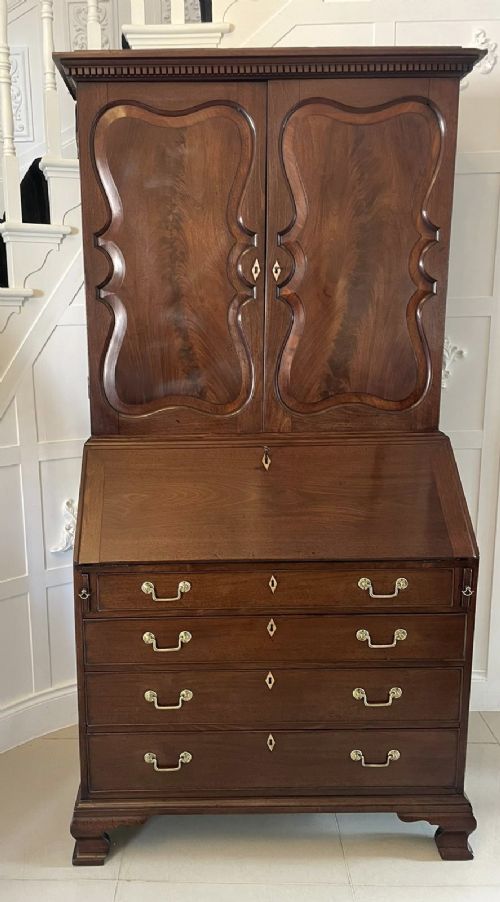
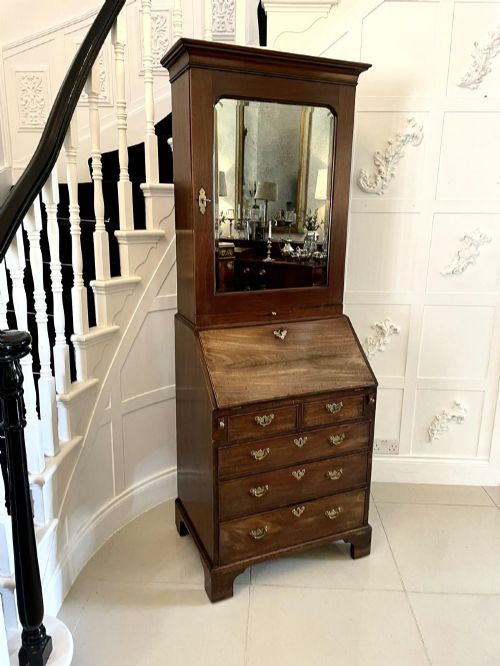
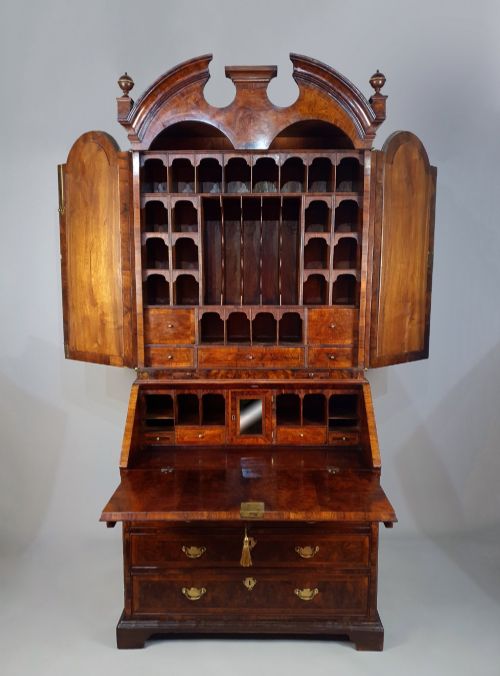
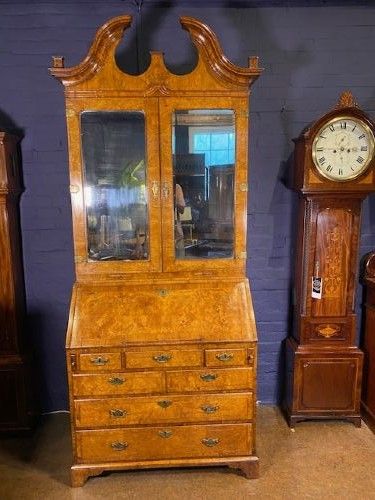
A georgian slanted desk takes several structural forms, spanning simple fall front writing desks on brackets to towering bureau bookcases with glazed upper sections.
Makers utilised native and imported timbers, producing compact bureau desks alongside larger two-part cabinets equipped with stepped interiors and secret compartments.
Materials and Techniques
Cabinetmakers constructed these writing pieces primarily using solid mahogany, figured walnut, and oak, frequently applying intricate burr veneers and herringbone inlay.
Writing slopes incorporated leather inserts, while brass handles, escutcheons, and bracket feet completed the exterior architecture of each cabinet.
Some bureau bookcases include concealed secret drawers inside the fitted interior designed for hiding family letters and hidden fortunes.
Judging Quality
The degree of figuration in the timber and the complexity of the internal configuration dictate the distinction between standard examples and superior pieces.
Refined cabinetwork shows in the precision of the pigeonholes, secret drawers, and the seamless movement of the fall front writing surface.
The Georgian Slanted Desk Glossary
- Bureau
- A writing desk with a sloping hinged lid or fall front that covers a fitted interior of small drawers and pigeonholes.
- Fall front
- The hinged sloping board that drops down to form the writing surface on a desk.
- Burr walnut
- A highly prized timber obtained from the gnarled growths of walnut trees, displaying swirling decorative grain patterns.
- Bracket feet
- Small architectural supports projecting from the bottom corners of a cabinet, commonly seen on eighteenth-century pieces.
Georgian Slanted Desk: Frequently Asked Questions
What is a georgian slanted desk?
A georgian slanted desk is a traditional writing cabinet featuring a hinged sloping front that opens to reveal a fitted interior with small drawers and pigeonholes.
These pieces typically sit on bracket feet or a dedicated stand, providing both a private writing surface and enclosed storage for papers.
How do I date a bureau bookcase?
Dating a bureau bookcase involves examining the secondary timbers, handle brasses, construction methods, and overall stylistic traits such as bracket feet or cornice moulding.
Earlier pieces from the seventeenth and early eighteenth centuries often display walnut veneers and candle slides, whereas later Georgian examples lean towards figured mahogany and string inlay.
How were these desks used originally?
These items served as private spaces for correspondence, household bookkeeping, and the storage of valuable documents.
The sloping lid doubled as a firm writing platform when closed, keeping personal papers concealed and protected from dust.
Where should I place a bureau in a room?
A bureau works well against a principal wall in a study, living room, or hallway, where its depth allows the fall front to open safely.
Ensure the writing surface receives adequate natural or task lighting while keeping the piece away from direct heat sources that could dry out antique timber.