

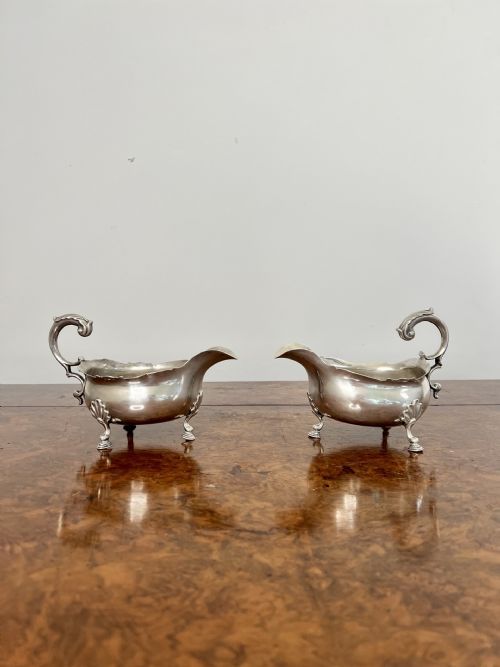


Georgian Silver Gravy Boat
Georgian silver gravy boat pieces are substantial dining silver vessels designed to serve sauces with elegance.
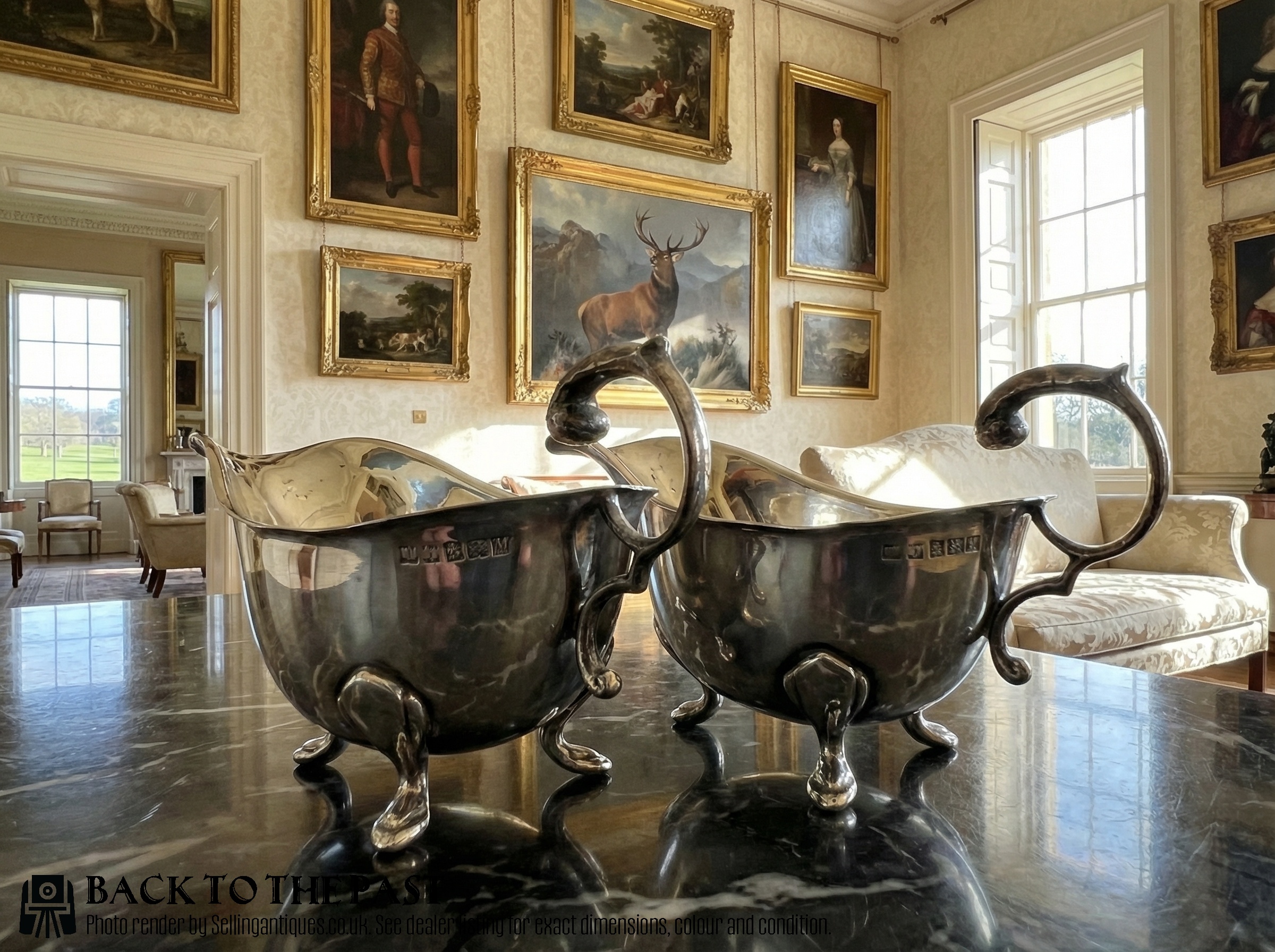
Identifying these pieces
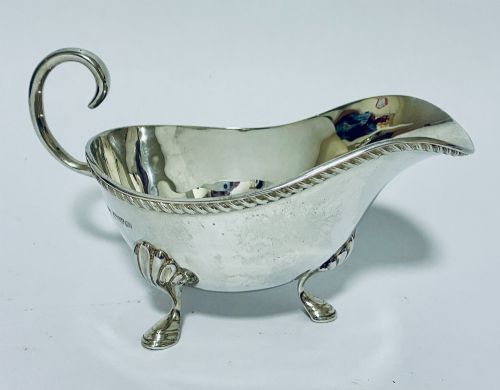
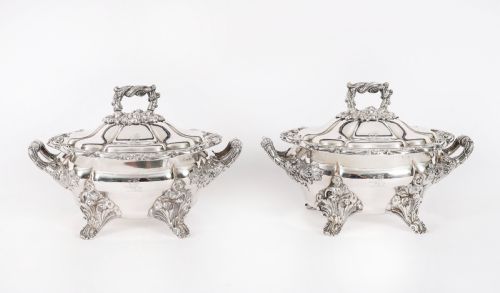
When you search for a georgian silver gravy boat, you are looking at hollowware designed for the formal dining table, predominantly encountered as matched pairs of sauce boats or sauce jugs.
The examples recorded in our archive and current inventory span the mid-eighteenth century through to the nineteenth century, alongside later revivals, and include both sterling silver and Old Sheffield plated copper.
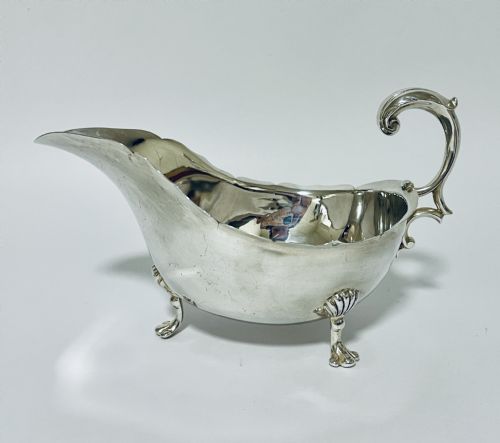
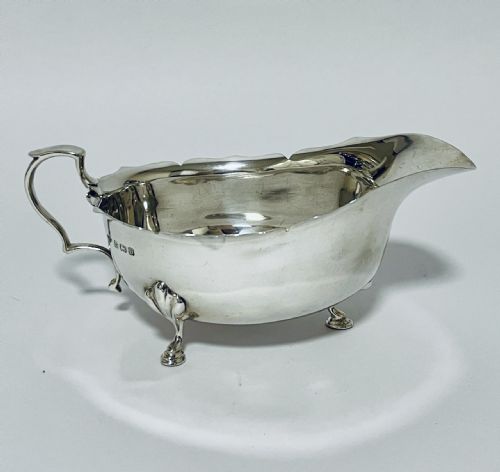
These vessels typically feature generous pouring lips, scrolled handles, and raised footed bases, fulfilling a practical function that defined elite dining rituals of the period.
Materials and construction
Construction relies upon traditional silversmithing techniques, shaping sterling silver or combining silver and copper through the Old Sheffield plating method.
Handles and borders often incorporate cast elements soldered to hand-raised bodies, demonstrating the technical skill of period workshops.
Assessing the range
Quality in these pieces is dictated by the crispness of chased or embossed ornamentation and the structural integrity of the handle attachment.
Superior examples maintain balanced proportions and clear hallmarks where applicable, separating everyday utility wares from exceptional decorative commissions.
The Georgian Silver Gravy Boat Glossary
- Sauce boat
- A small open vessel with a handle and spout, used at the table for gravies and sauces. These pieces form the primary focus of this category.
- Old Sheffield Plate
- A composite material made by fusing a thin sheet of silver to a thicker copper base. This technique creates durable plated wares found in nineteenth-century examples.
- Sterling silver
- An alloy containing a high proportion of pure silver combined with other metals to ensure durability. This material constitutes the standard for fine Georgian hollowware.
- George III
- The historical period spanning the latter half of the eighteenth century and early nineteenth century. Much of the finest surviving dining silver originates from this era.
Frequently Asked Questions
What is a gravy boat?
A gravy boat is an open-topped serving vessel specifically shaped with a lip for pouring sauces or gravies cleanly at the dining table.
They generally feature a sturdy handle and stand upon a raised foot or small cast legs.
How do I clean silver?
Cleaning sterling silver requires a gentle silver polish and a soft cloth to remove tarnish without abrading the surface.
Harsh chemical dips should be avoided on antique pieces to preserve the integrity of any chased or engraved details.
What is Old Sheffield Plate?
Old Sheffield Plate is an early method of fusing silver to a copper core by heat and pressure. This creates a durable material that predates electroplating.
Pieces made this way sometimes show subtle traces of copper along high-wear edges.
Are pairs more valuable?
Matched pairs of dining silver generally command greater interest due to the difficulty of assembling two identical serving vessels from the period.
Single pieces remain highly usable, but pairs offer a symmetrical presentation for formal dining settings.