
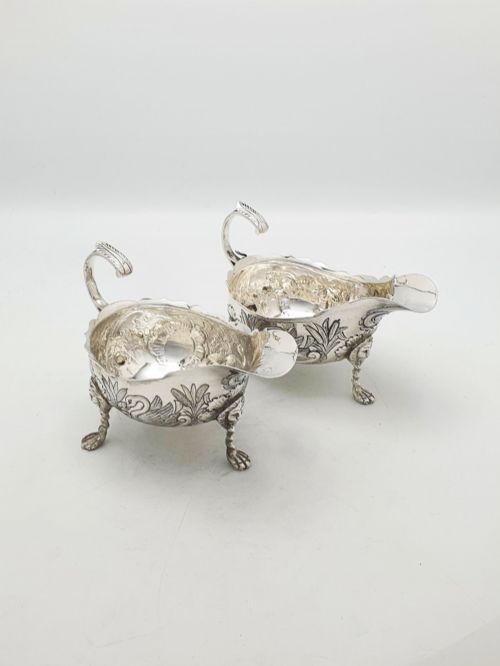
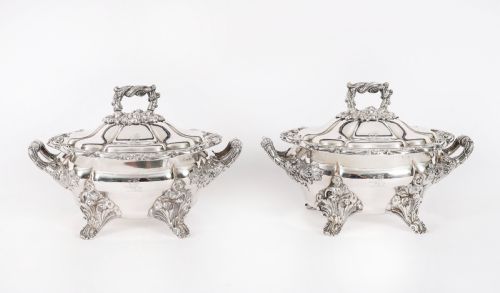
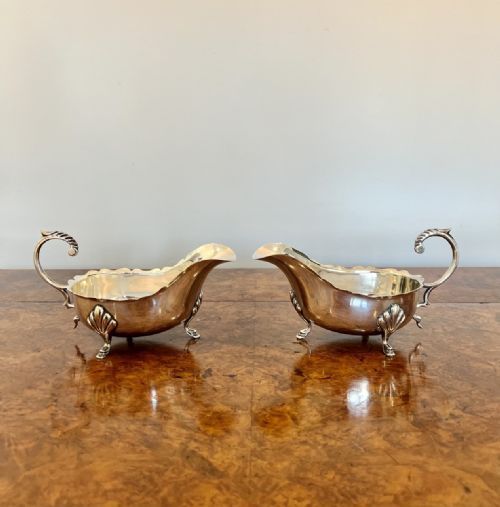
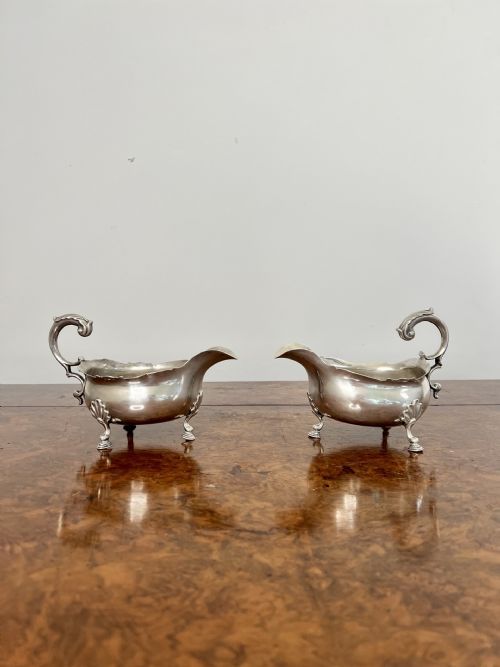


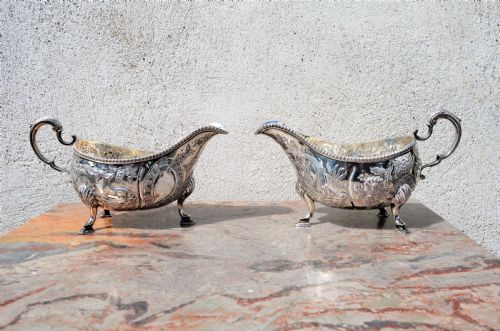

Pair Silver Sauceboats
These pair silver sauceboats bring undeniable presence to the table, offering both timeless utility and historical elegance for any discerning collector.
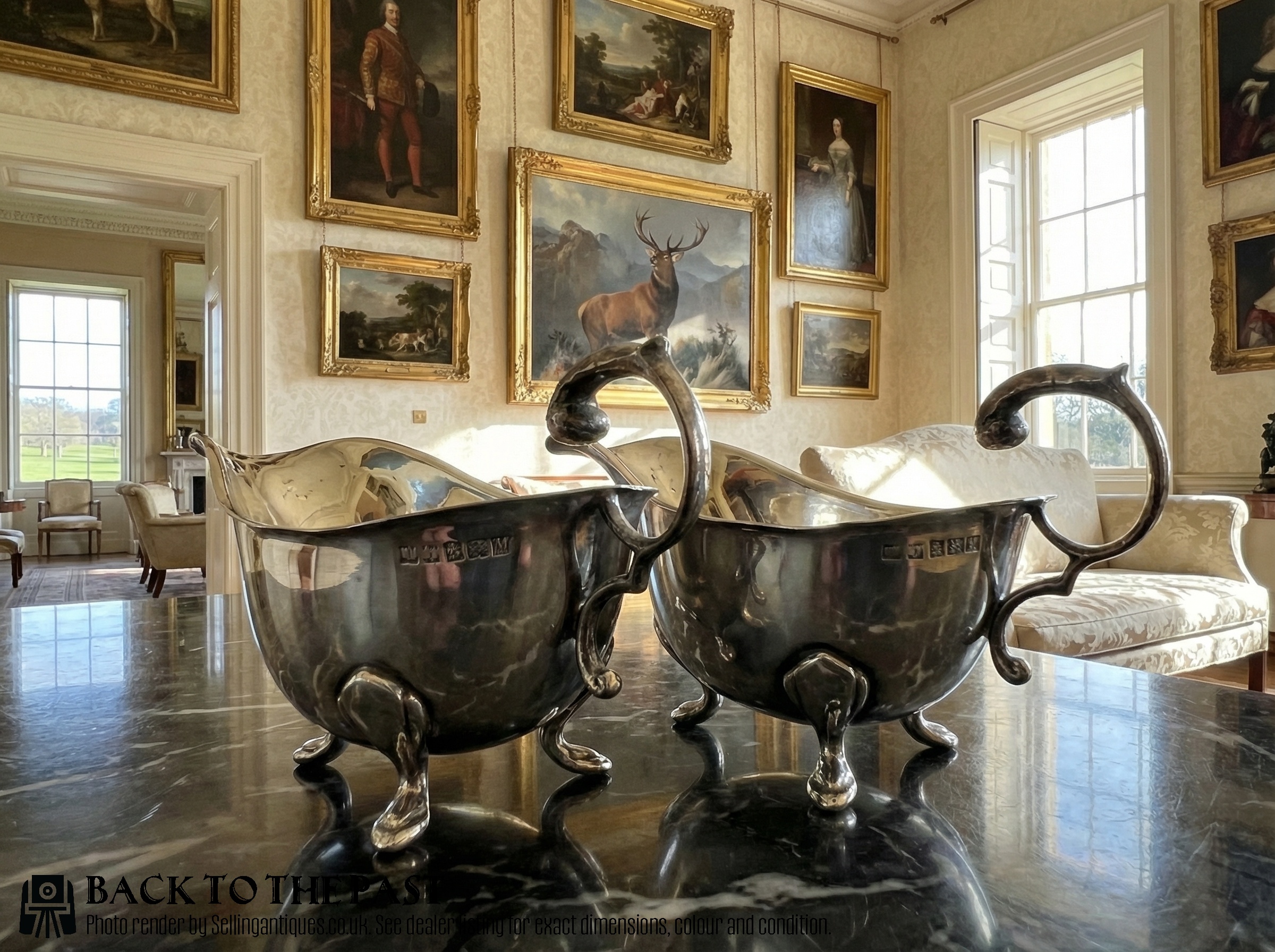
Pair Silver Sauceboats
When you search for pair silver sauceboats, you encounter dual serving vessels designed to hold gravies, creams and sauces during formal dining. These items span periods from the Georgian era through to the twentieth century, appearing in both solid sterling and plated variations.
The pieces on this page most frequently present as matching duos intended to balance the dining table symmetrically. You meet forms ranging from simple pedestals and oval lidded tureens to versions resting upon dedicated stands.
Origins stretch across English and Irish workshops, showing styles that encompass Regency elegance alongside Edwardian refinement and later twentieth-century interpretations.
Materials and construction
The construction relies heavily upon sterling silver and traditional silver plate, including Old Sheffield methods and electroplated nickel silver over copper cores. Metals are shaped, hammered and soldered to form the characteristic bodies, handles and lips of the vessels.
Decoration often involves delicate engraving upon the silver surface, while bases frequently feature pedestal feet or multiple supporting legs to elevate the vessel correctly. Lidded tureens and matching ladles demonstrate the comprehensive metalworking skill applied to these serving items.
The listings span from the mid-eighteenth century up to nineteen-sixty, including sterling silver, silver plate, and copper materials.
Distinctions in quality
Quality rests upon the weight of the metal and the crispness of the chased or engraved detail across the body and handle. Heavier gauge silver provides a substantial feel in the hand, separating superior examples from lighter production.
The integrity of the plating on silver-plated items determines longevity, where smooth, intact surfaces without base metal bleed signify superior manufacturing. Maker attribution and the presence of original fitted cases or matching ladles further elevate certain duos above standard domestic serveware.
Mappin and Webb·Emile Viner
The Pair Silver Sauceboats Glossary
- Silver plate
- A thin layer of silver applied to a base metal such as copper or nickel silver. This technique provides the visual appeal of solid silver at a different cost.
- Old Sheffield plate
- An early method of fusing a sheet of silver to a thicker copper core by heat and pressure. It produces a rich material often found on nineteenth-century pieces.
- Pedestal
- A raised foot or column supporting the main body of the sauceboat. This architectural feature lifts the vessel off the tabletop.
- Tureen
- A deep, bowl-like serving vessel often equipped with a matching lid. These items hold sauces or soups and frequently accompany ladles.
- Electroplated nickel silver
- A modern plating process where silver is electrically bonded to a nickel alloy base. This method became common in later manufacturing periods.
Pair Silver Sauceboats: Frequently Asked Questions
What were pair silver sauceboats used for originally?
These vessels held gravies, drawn butter and rich sauces at formal dining tables, allowing guests to serve themselves easily from both ends of a long board.
Because sauces cooled quickly, the dual format ensured that hot accompaniments remained accessible to all diners without requiring guests to pass a single dish across the table.
How do I clean and polish silver sauceboats safely?
Use a quality silver cream and a soft microfiber cloth, rubbing gently in straight lines rather than circles to preserve any delicate engraving. Avoid harsh dips that can strip patination.
Wash the pieces in warm soapy water immediately after use to remove acidic food residues, and dry them thoroughly with a lint-free cloth before storage.
Can I use antique sauceboats for modern dining?
Solid silver and sturdy plated versions handle everyday table service well, provided you avoid abrasive utensils and dishwashers. They bring historical character to contemporary meals.
Ensure acidic condiments like lemon juice or vinegar are not left sitting in the vessels for extended periods to protect the interior metal surfaces.
How do I distinguish Georgian silver sauceboats from later periods?
Georgian examples often display hand-beaten forms, distinct makers' marks and simpler, heavier casting without the mass-produced uniformity seen in later decades. Their handle attachments and foot mounts reveal manual assembly.
Later nineteenth and twentieth-century pieces frequently utilise mechanical rolling techniques for the metal sheets and adopt stylised revival motifs tied to Edwardian or later tastes.