



Georgian Silver Bottle Label
A georgian silver bottle label marks out the contents of a decanter or cruet, combining small-scale silversmithing with precise drink nomenclature.
Georgian Silver Bottle Label
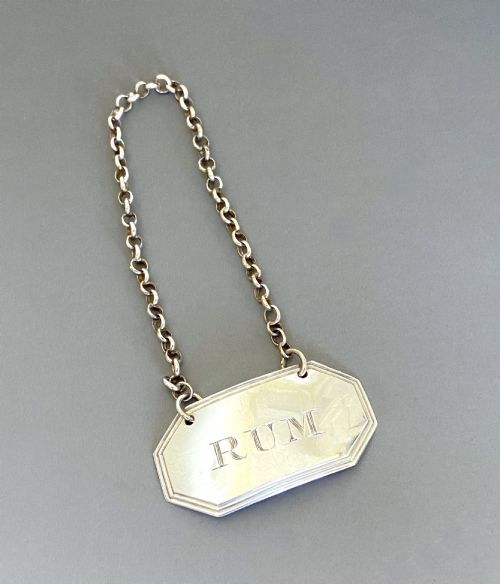
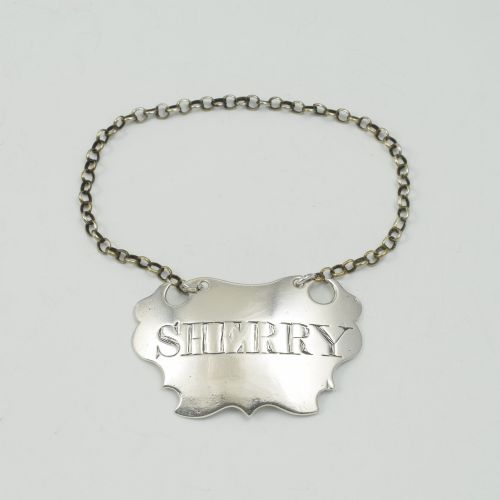
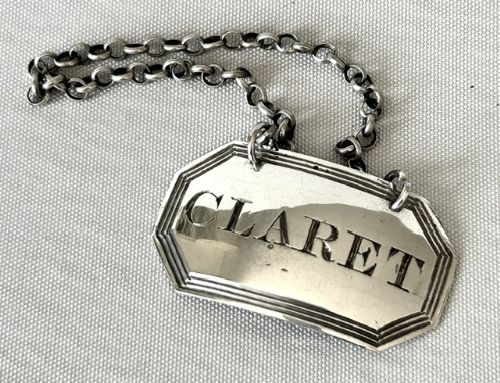
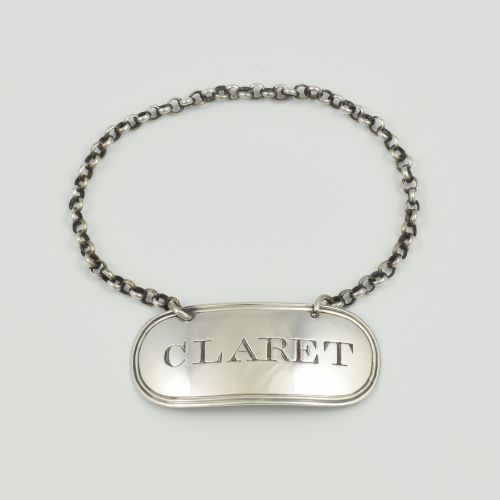
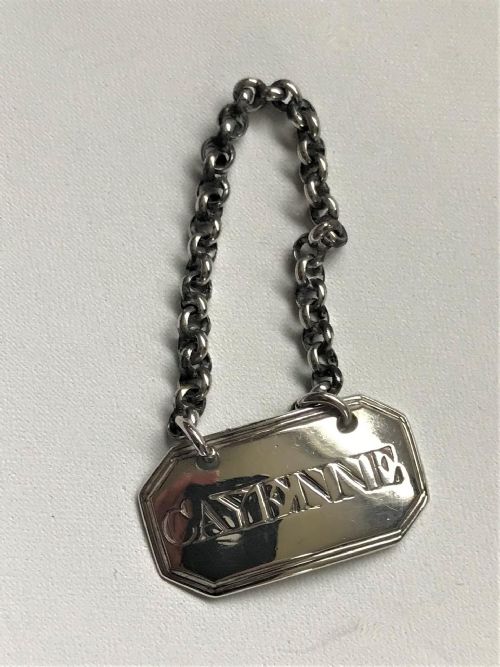
When you search for a georgian silver bottle label, you encounter small hanging tags designed to identify wines, spirits, and condiments on the dining table. The pieces on this page mostly span the Georgian, Regency, and William IV periods, taking forms such as escutcheons, vine leaves, and rectangular tickets.
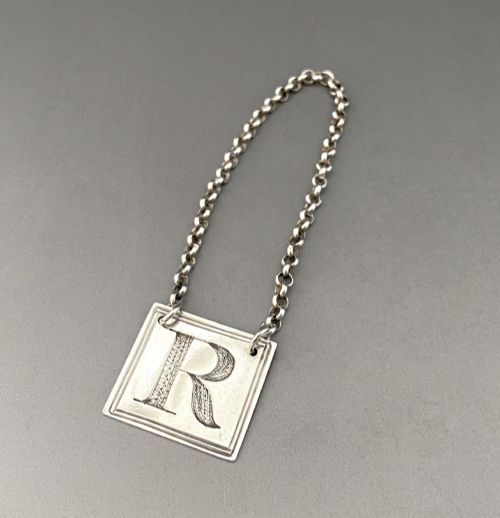
Makers identify specific contents ranging from traditional ports, sherries, clarets, and hocks to rarer spirits like rum, gin, cayenne, and Madeira. Many examples bear specific drink titles or single letters, while others accommodate sauces and condiments like Harvey and anchovy.
Geographic origin adds interest, with London hallmarks sitting alongside Scottish provincial items from locations such as Edinburgh and Peterhead. These objects functioned as practical table accessories that also displayed the host's taste and hospitality.
Materials and construction
Silversmiths constructed these pieces primarily from sterling silver, solid silver, and silver gilt, shaping the metal through piercing, stamping, and engraving. Many feature cast or pierced vine leaf motifs, grape clusters, and rococo revival borders that frame the incised or pierced drink names.
Suspension typically relies on a matching silver chain or a rigid collar designed to slip over the neck of a glass decanter or sauce bottle. The reverse surfaces often display maker marks, lion passant, leopard heads, and date letters that record the year and place of assay.
Materials across these listings span sterling silver, solid silver, and silver gilt.
Judging quality and character
The distinction between standard and exceptional pieces rests on the crispness of the piercing, the depth of the engraving, and the distinctness of the maker's mark. Pieces bearing the marks of known specialists or provincial makers hold particular distinction due to their scarcity.
Condition remains important, specifically the survival of the original suspension chain and the legibility of the drink title against decorative background motifs like vine foliage or rococo scrolls.
Elizabeth Morley·John Reily·Thomas Wallis II·William Sharp·Matthew Linwood·Peter and Anne Bateman
The Georgian Silver Bottle Label Glossary
- Escutcheon
- A shield-shaped form commonly used for early decanter labels, often featuring bright-cut engraving around the border. This shape provides a broad central field for naming the wine.
- Bottle ticket
- An alternative historical term for a decanter label or bottle label, referencing its function of ticketing the contents. These small silver tags hang from bottle necks by chains.
- Silver gilt
- Silver covered with a thin layer of gold, providing a rich yellow lustre. This technique appears on specific vine leaf labels in the collection.
- Scottish provincial
- Silver manufactured and hallmarked outside the main assay offices of Edinburgh or Glasgow, in towns such as Peterhead. These regional pieces often exhibit distinct local stylistic traits.
- Bright-cut engraving
- A faceted style of surface engraving created with a sharp V-shaped graving tool that catches the light. It frequently decorates the borders of Georgian wine labels.
Georgian Silver Bottle Label: Frequently Asked Questions
How were silver bottle labels used?
These labels hung around the necks of glass decanters, cruets, and sauce bottles using small silver link chains or rigid collars. They served to identify the contents for diners before wine poured from unmarked glassware.
Hosts used them on the dining table to distinguish between various ports, sherries, clarets, and spirits without needing to ask or inspect the bottle closely.
How do I date a Georgian bottle label?
Dating relies on the assay office marks, maker's marks, and annual date letters stamped directly into the reverse of the silver. Stylistic shifts also help, such as the heavy rococo revival curves of the nineteenth century versus earlier geometric escutcheons.
Provincial Scottish pieces often carry maker punches and town marks rather than standard London date letters, requiring reference to regional silversmith records.
What is the difference between a decanter label and a bottle label?
The terms are largely interchangeable, though bottle labels historically encompassed condiments, sauces like Harvey or anchovy, and dry spices such as cayenne alongside standard wines. Decanter labels specifically target beverage alcohol served at the table.
Both items perform the same fundamental identification role using precious silver and decorative metalwork.
How should I display antique silver labels?
Collectors often mount these pieces on specialist miniature stands or frame them on dark fabric backgrounds to highlight their pierced details and engraving. Alternatively, they can hang around the necks of vintage glass decanters in a traditional dining setting.
Keeping them away from damp environments prevents tarnishing and preserves the bright-cut engraving.