


Solid Silver Decanter Tag
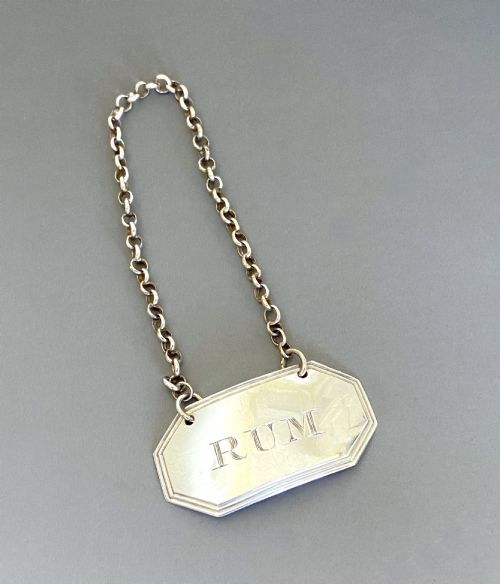
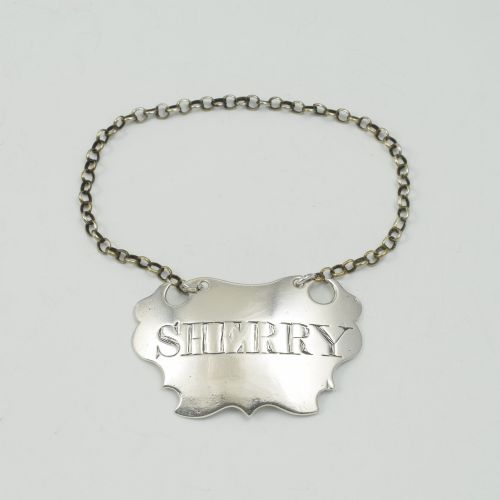
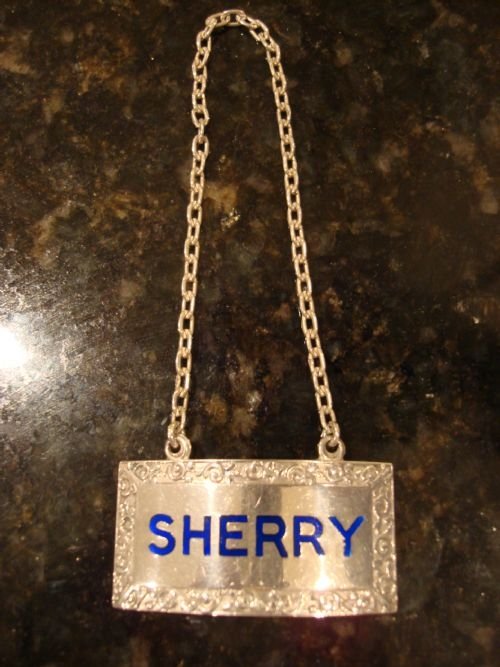
These solid silver decanter tag pieces identify the contents of your decanters in classic style, bringing authentic period charm to any dining table.
Solid Silver Decanter Tag
When you search for a solid silver decanter tag, you are looking at small inscribed markers designed to hang around the neck of a bottle or decanter to denote the wine or spirit within. The examples you are most likely to meet on this page span the Georgian, Victorian, and Edwardian eras, alongside mid-twentieth-century pieces.
The forms vary from simple escutcheon shapes to ornate vine leaf designs, often naming specific drinks like sherry, brandy, rum, hock, or champagne. Most pieces originate from traditional British makers and bear London hallmarks that help date their manufacture precisely.
These items serve both a decorative and practical function on the sideboard, maintaining the traditional presentation of fine drinks. The selection reflects styles ranging from early Georgian work to later revivals such as Rococo and William IV designs.
How they were made
Makers shaped sterling silver and solid silver using traditional smithing techniques, frequently employing piercing, stamping, and engraving to create the ornate outlines and lettered titles. Many pieces incorporate chased details such as trailing vines, grapes, and scrolling borders.
Enamel is occasionally used to highlight lettering or provide contrasting background colour within the silver framework. Hallmarks are stamped directly into the metal to certify the purity of the silver and record the assay office and year of production.
Materials recorded across the inventory include solid silver, sterling silver, and enamel highlights.
What varies in quality
The distinction between standard examples and superior work lies in the crispness of the engraving and the depth of the chased decoration, particularly on vine leaf motifs and heraldic escutcheons. Pieces produced by recognised silversmiths display cleaner lines and more substantial gauge silver.
The presence of clear, well-struck hallmarks and identifiable maker marks adds considerable interest for collectors. Simpler stamped labels contrast with heavily worked Rococo Revival pieces that require greater skill from the silversmith.
Elizabeth Morley·John Reily·William Sharp·MAPPIN AND WEBB
The Solid Silver Decanter Tag Glossary
- Escutcheon
- A shield-shaped plate used as the primary body for engraving the name of the wine or spirit. This form is frequently seen on Georgian silver labels.
- Hallmark
- An official stamp applied to precious metals indicating the standard of purity, the assay office, and the date of manufacture. British pieces typically show a lion passant and a date letter.
- Vine Leaf
- A popular decorative motif shaped like grapevine foliage, often pierced and chased around the perimeter of the label. This style is characteristic of nineteenth-century wine labels.
- Chasing
- A metalworking technique where the silversmith depresses the surface with a hammer and punches to create raised ornamental designs without removing metal. It gives texture to grape and leaf motifs.
- Sterling silver
- An alloy of silver containing ninety-two point five percent pure silver and seven point five percent other metals, usually copper, ensuring durability for items handled frequently.
Solid Silver Decanter Tag: Frequently Asked Questions
How do I hang a decanter tag?
Most tags suspend from a fine silver chain or collar that slips easily over the neck of the bottle. They hang loosely so they can be turned aside when pouring.
Ensure the chain length suits the specific width of your decanter neck to prevent the label resting awkwardly against the glass.
What drinks are usually named?
Traditional labels name fortified and aged spirits such as sherry, brandy, rum, hock, and champagne. These drinks were historically decanted from wood casks into crystal vessels for table service.
Matching the correct spirit name to the drink inside remains part of the traditional presentation.
How do I date an unmarked label?
Dating relies primarily on the overall style, the shape of the escutcheon, and the lettering font. Georgian pieces often feature brighter hand-engraving while Victorian examples lean toward heavier cast ornament.
Official hallmarks, when present, provide the exact year and assay office through specific date letters.
Can I polish antique silver labels?
Silver polish should be used sparingly with a soft cloth to preserve the dark detail within engraved letters and chased crevices. Excessive cleaning can remove the patination accumulated over centuries.
Avoid abrasive cloths that might scratch the thin silver surface of delicate vine leaf designs.