
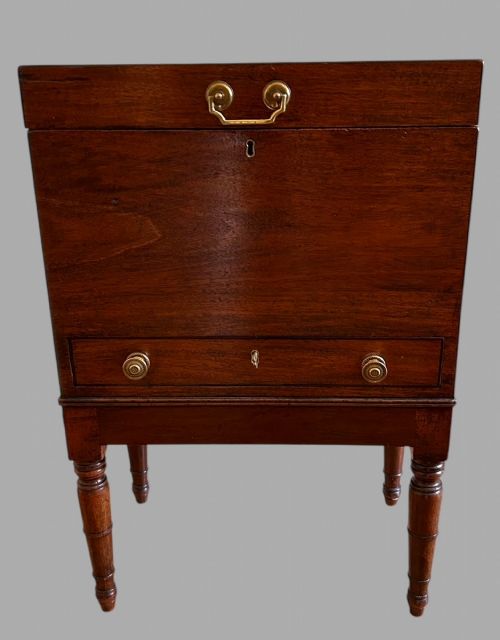
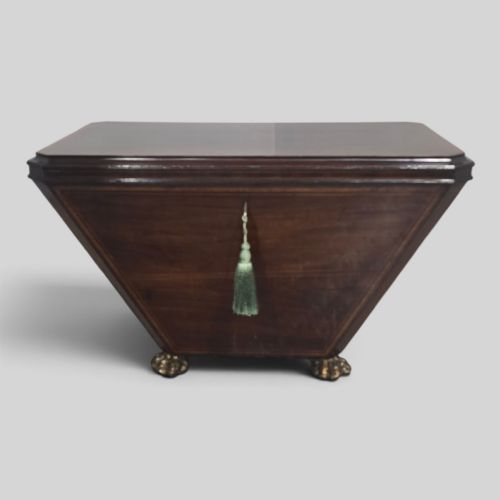
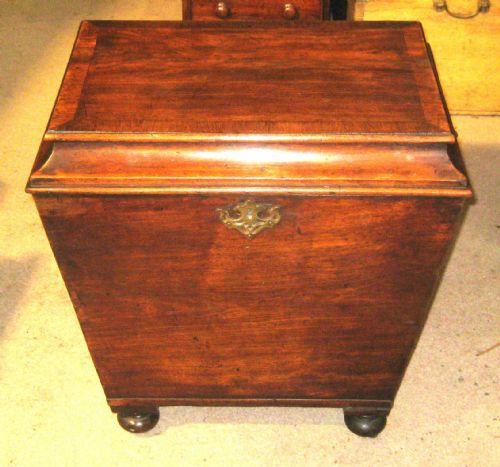
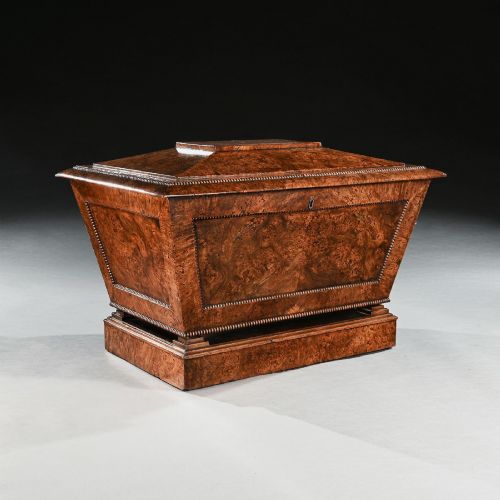
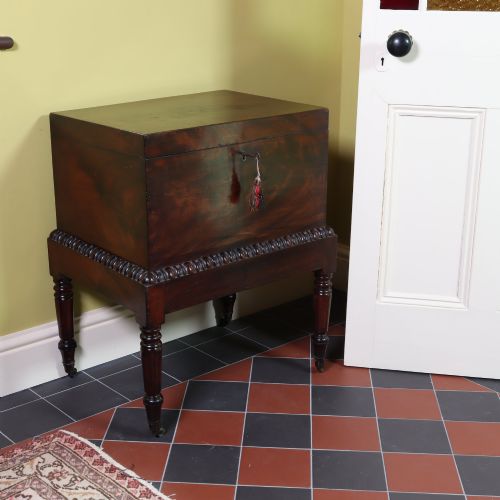

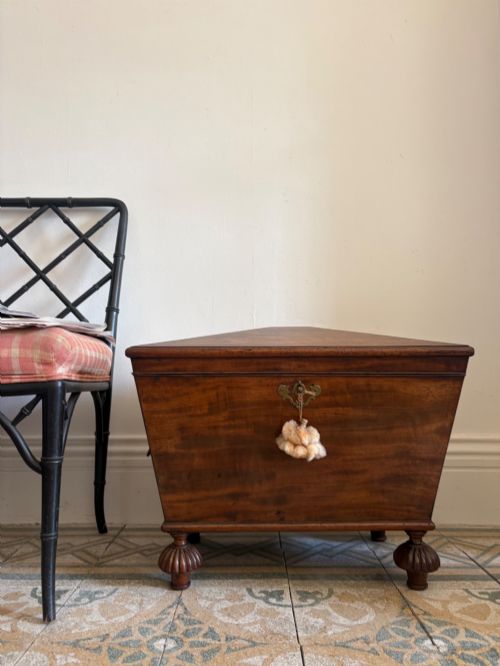

Georgian Sarcophagus Wine Chest
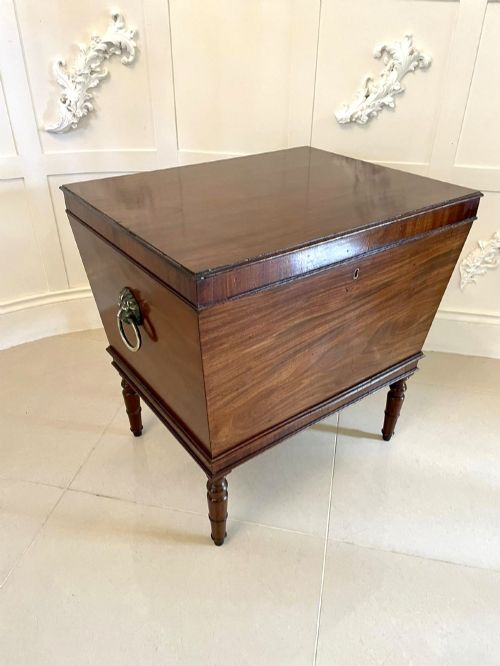
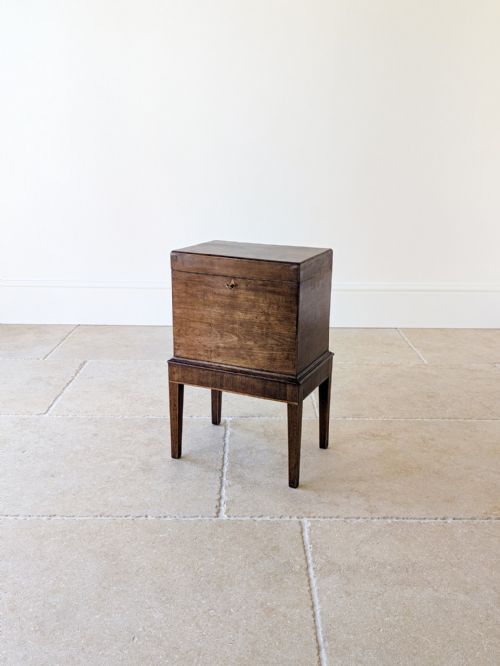
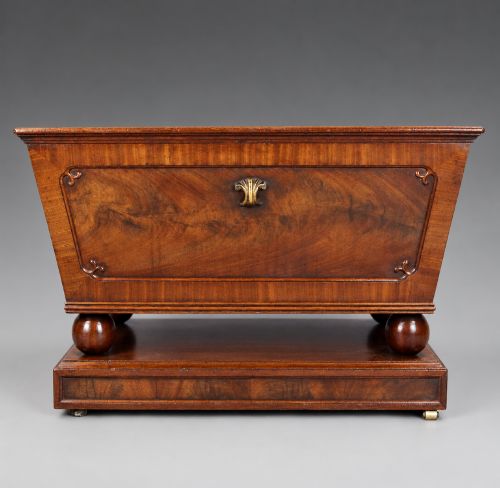
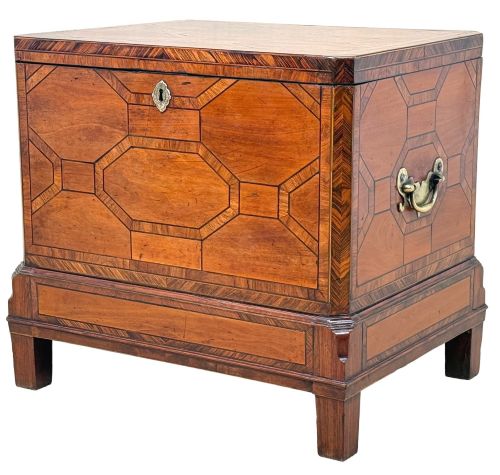
A georgian sarcophagus wine chest is a substantial timber storage piece designed to keep bottles cool at the dining table, combining classical architectural proportions with practical utility.

Materials and Construction
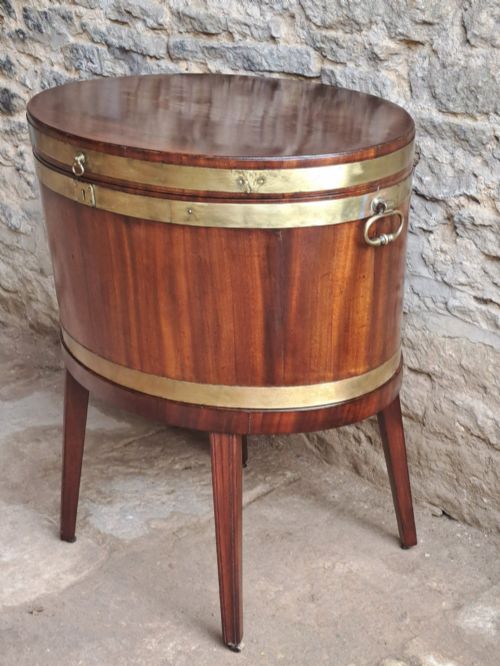
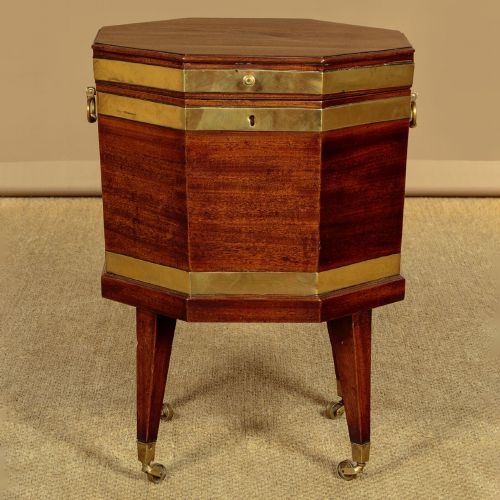
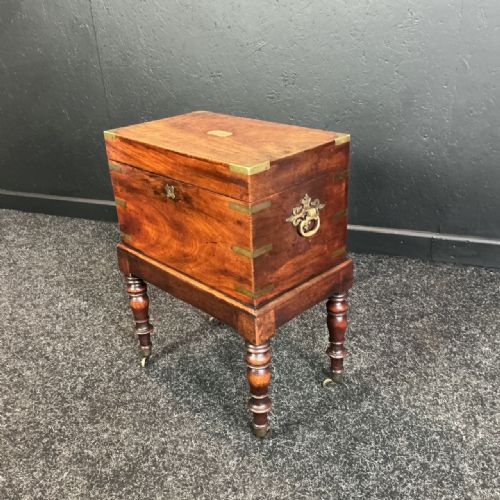
Cabinet makers utilised dense, durable hardwoods, predominantly selecting figured mahogany and flame mahogany for their striking grain patterns, alongside occasional use of satinwood, kingwood, and pollard oak. These timbers were expertly joined to form heavy, stable cases capable of holding wet ice and heavy glass bottles.
Metal components played a crucial functional and decorative role in construction, with brass bands providing structural reinforcement and ormolu mounts adding classical detail. Many interiors retain their original lead liners, which were soldered into place to hold water and ice for chilling bottles.
Distinctions in Quality
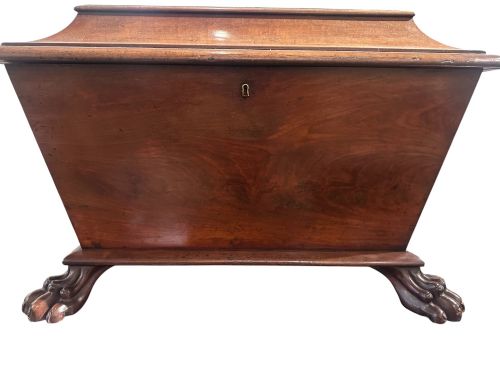
Proportion and architectural detailing set superior items apart from simpler utilitarian boxes. Finer pieces exhibit confident sarcophagus curves, well-executed carved paw feet, and intact original lead interiors that demonstrate the original maker's commitment to both form and function.
The listings span from the eighteenth century through the Victorian era, showcasing mahogany, pollard oak, and satinwood.
Edwards and Roberts·Gillows
The Georgian Sarcophagus Wine Chest Glossary
- Cellarette
- A lockable container or box designed to hold bottles of wine and spirits beneath the dining table. They frequently feature internal divisions and lead linings.
- Sarcophagus form
- An architectural case shape tapering toward the base, modelled after ancient stone coffins and popular during the Regency period. This silhouette gives these wine chests their monumental presence.
- Flame mahogany
- Timber cut from the fork of the mahogany tree, producing a distinctive ripple pattern resembling flickering flames. Cabinet makers prized this wood for principal display surfaces.
- Lead liner
- A fitted metal insert soldered inside the chest to hold ice and water for chilling wine safely. Original liners add significant historical interest to a piece.
- Pollard oak
- Timber taken from trees that have been pollarded, resulting in a dense, highly figured grain full of knots and swirls. It was utilised by Regency makers for high-status case pieces.
Georgian Sarcophagus Wine Chest: Frequently Asked Questions
How were these wine chests used?
Servants filled the internal lead compartments with ice and water to chill wine before it was served at the dining table. The lockable lids ensured that expensive vintages remained secure.
After meals, the chests served as handsome furniture items that displayed the homeowner's wealth through rich mahogany grains and classical ornament.
Where should I place one at home?
These substantial chests work well as freestanding focal points in dining rooms, living spaces, or hallways. Their flat tops make them suitable surfaces for displaying lamps or decorative objects.
Because they were built to command attention, they suit traditional interiors where their rich timber and architectural lines can be fully appreciated.
How do I distinguish Regency from Georgian pieces?
Georgian examples often favour simpler rectilinear proportions or understated bracket feet, reflecting earlier eighteenth-century tastes. Mahogany and subtle boxwood stringing typically dominate these earlier designs.
Regency pieces lean further into classical revival styles, introducing bolder sarcophagus curves, ornamental brass paw feet, and exotic veneers like pollard oak or ormolu mounts.