



Carved Mahogany Wine Box
A carved mahogany wine box brings architectural presence and formal proportion to a room, serving bottles in solid timber fitted for daily use.

Carved Mahogany Wine Box
When you search for a carved mahogany wine box, you encounter substantial lidded vessels designed to hold and cool wine bottles within domestic interiors. These objects appear primarily in sarcophagus, fluted, and pedestal forms dating across the Georgian, Regency, and Victorian periods.
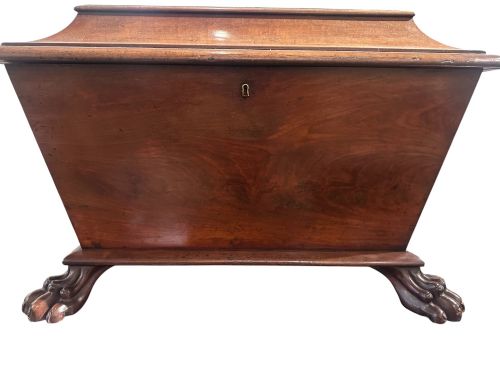
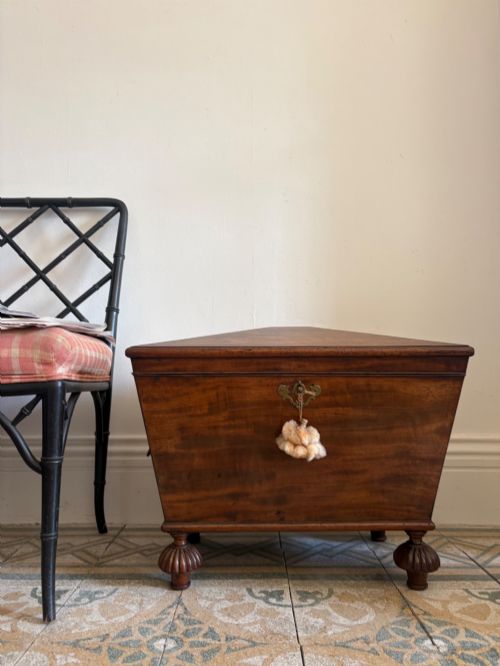
The version you are most likely to meet on this page is the sarcophagus form wine cooler or cellarette, typically fashioned from figured mahogany during the early nineteenth century. Such pieces often stand upon paw feet, display brass mounts, and reflect the classical architectural taste of Regency and Georgian makers.
How they were made
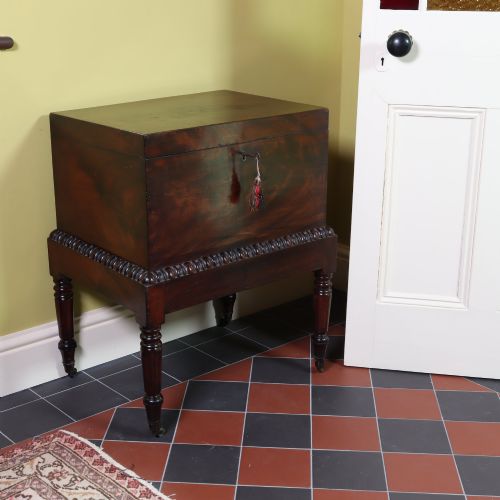
Cabinet makers constructed these containers from solid mahogany and wood veneer, frequently selecting flame or figured varieties of timber for prominent exterior surfaces. Interiors were often fitted with lead or zinc linings to hold ice and water, allowing bottles to chill safely without damaging the surrounding woodwork.
Metal components such as brass handles, castors, and paw feet were integrated to provide mobility and structural reinforcement to heavy bodies. Carved details, including fluted mouldings and giltwood accents, were applied by hand to define panels, plinths, and lids.
Several examples retain their heavy paw feet, ensuring your wine collection rests with the dignity of a small, timber-clad lion.
What varies in quality
The selection of timber grain largely distinguishes standard production from exceptional examples, with highly figured flame mahogany and dense, stable boards commanding greater visual depth. The precision of the joinery and the sharpness of carved architectural details indicate the tier of the workshop responsible for the piece.
Original interior fittings, such as lead or zinc liners and dividing grilles, preserve the utilitarian integrity of the vessel and elevate its historical interest. Furthermore, the presence of robust brass carrying handles, secure locks, and authentic feet contributes to the structural completeness of the item.
Thomas Hope·Freemans of Norwich·T.Feetham·Gillows
The Carved Mahogany Wine Box Glossary
- Cellarette
- A lockable container used for storing and cooling wine bottles in a dining room. These vessels appeared in various forms throughout the Georgian and Regency eras.
- Sarcophagus
- A monumental architectural box shape with a sloping lid, resembling an ancient stone coffin. This profile dominated Regency wine cooler design.
- Flame mahogany
- A decorative wood veneer pattern created by cutting across the branch junction of a mahogany tree. It yields dramatic, flame-like grain figures.
- Lead liner
- A protective metal insert placed inside a cellarette to hold melting ice and liquid. It prevented dampness from rotting the surrounding mahogany structure.
Carved Mahogany Wine Box: Frequently Asked Questions
What is a carved mahogany wine box used for?
These pieces served as portable cellars in grand dining rooms, where servants kept wine bottles chilled in ice or stored under lock and key.
Today, collectors use them as decorative floor-standing containers, side tables, or repository chests for household items.
How do I identify a Regency wine box?
Regency examples typically adopt a sarcophagus silhouette with classical motifs such as paw feet, brass drop handles, and bold mouldings.
They rely on dense mahogany timbers and often incorporate lead or zinc interiors designed to hold ice for cooling bottles.
Where should I place a wine box at home?
Their substantial proportions suit placement beside a dining table, in a hallway, or beneath a window as a freestanding accent.
Because many feature flat or slightly domed lids, they can also function as low display surfaces for books or decorative objects.
Did these boxes always have metal linings?
Many period examples contain lead, zinc, or metal liners to hold water and ice safely without rotting the timber.
Some interiors were divided into separate compartments or bottle slots to keep vintages organised during cooling.