


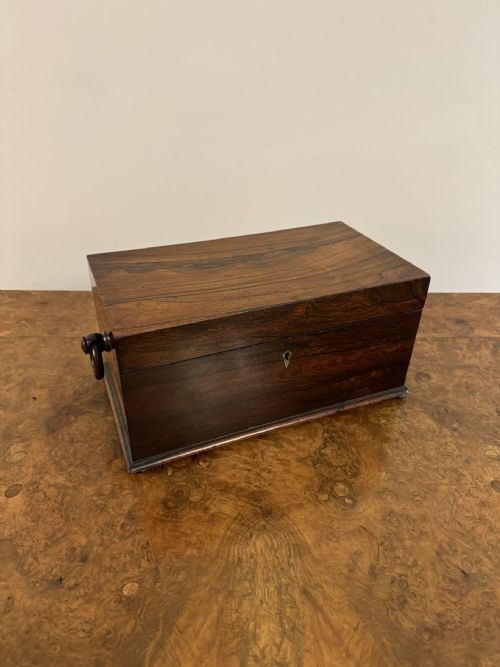

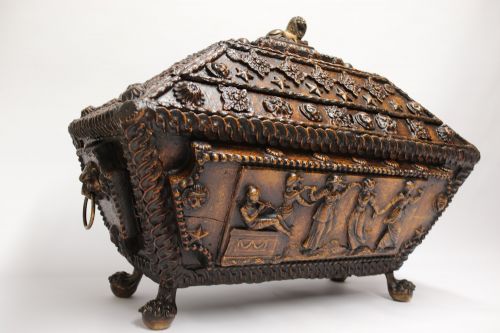


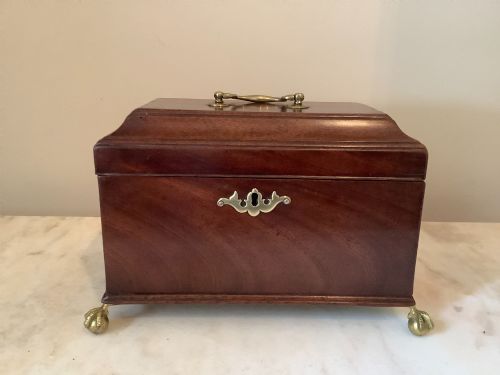


Georgian Sarcophagus Tea Box
These Georgian sarcophagus tea box examples combine architectural presence with functional design, offering collectors a refined receptacle for storing precious dry leaves.
Georgian Sarcophagus Tea Box
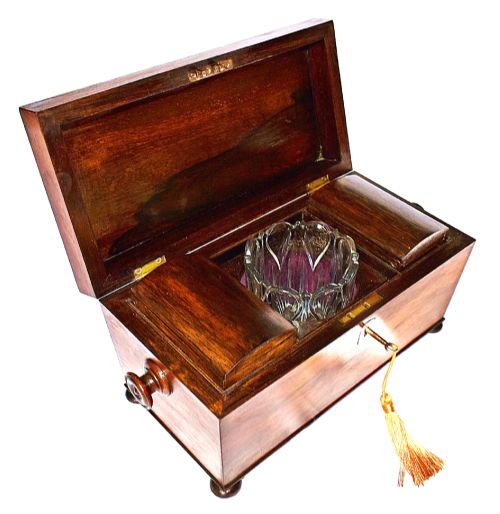
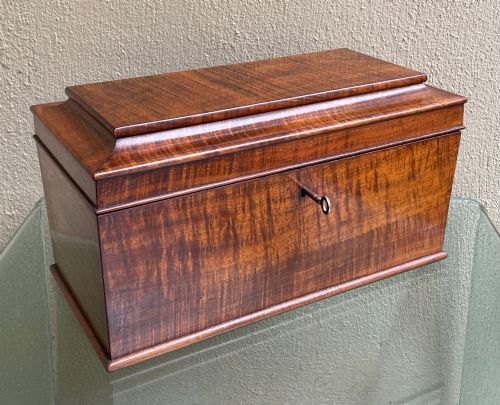
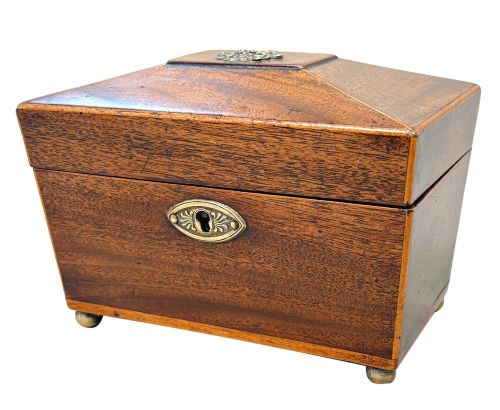
A georgian sarcophagus tea box takes its shape from classical monumental tombs, featuring a tapered body and a domed or stepped lid that rests upon carved or bracket feet.
The version most commonly encountered on this page originates from the Regency and George III periods, constructed primarily as mahogany or rosewood tea caddies with internal lidded compartments.
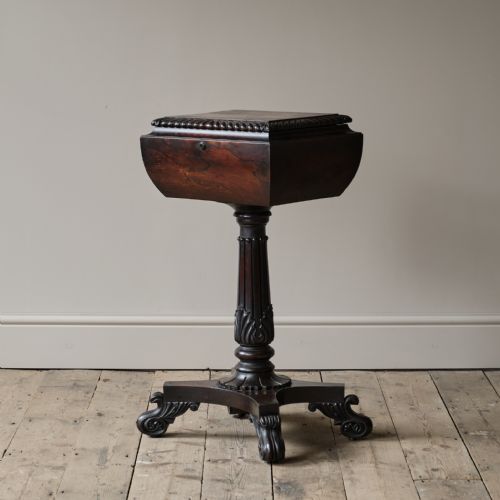
Beyond holding tea, these forms often served secondary roles as stationery or keepsake boxes, occasionally appearing as freestanding teapoys supported on central pedestals.
Materials and Construction
Cabinetmakers utilised dense timbers like mahogany, rosewood, and gonçalo alves, frequently applying veneers of burr yew-wood, satinwood, and amboyna to achieve rich surface figures.
Decoration relied heavily on precise brass inlay, boxwood and ebony stringing, penwork, and occasional mother-of-pearl or bone details set flush into the wooden carcass.
Internal arrangements typically featured fitted wooden canisters with individual lids, sometimes accompanied by a cut glass mixing bowl nestled centrally.
Georgian Sarcophagus Tea Box Retail Price Guide 2026
Typical asking prices for georgian sarcophagus tea box among the pieces listed under this phrase on Sellingantiques today, from the lower quarter to the upper quarter. They describe what is for sale here now, not the wider market.
The listings here span the eighteenth and nineteenth centuries, covering George III, Regency, George IV, and Victorian eras in mahogany, rosewood, and coromandel.
Judging Quality
Distinction across the range rests on the crispness of the architectural moulding and the harmony of the timber selection, particularly where book-matched veneers meet at corners and lids.
Higher-tier examples display intricate brass marquetry and well-executed interior compartments that retain their original bone knobs, escutcheons, and working locks with functional keys.
The integration of secondary decorative techniques, such as hand-painted panels or elaborate parquetry work, elevates an ordinary storage vessel into a piece of fine cabinet furniture.
The Georgian Sarcophagus Tea Box Glossary
- Teapoy
- A pedestal table designed specifically to support a tea caddy or serve tea from in a drawing room.
- Escutcheon
- A small plate surrounding a keyhole, often fashioned from brass or bone to protect the surrounding wood.
- Sarcophagus form
- A container style mimicking an ancient stone coffin, characterised by a flared body and heavy plinth base.
- Stringing
- Thin lines of contrasting wood inlay used to define the edges and geometric panels of a box.
- Parquetry
- Geometric patterns formed by fitting small pieces of veneer together across a wooden surface.
Georgian Sarcophagus Tea Box: Frequently Asked Questions
How were these tea boxes originally used?
Tea was an expensive commodity in the eighteenth and nineteenth centuries, kept locked away to prevent theft by household servants. The mistress of the house would use the key to unlock the caddy, measure out the loose leaves into the interior canisters, and mix them using the central glass bowl.
Inside, separate compartments kept black and green teas distinct from one another. The boxes lived in the formal drawing room rather than the kitchen, signalling hospitality and status to visiting guests.
How do I tell a Regency box from a George III one?
George III pieces tend to lean towards classical architectural restraint, favouring straight lines, flame mahogany, and subtle stringing. Regency and George IV examples introduce bolder classical revival motifs, such as lion mask handles, heavier brass inlay, and exotic veneers like rosewood and coromandel.
Proportions also shift, with Regency boxes often displaying more pronounced sarcophagus curves and bolder plinth bases. Examining the interior fittings and secondary woods helps confirm the manufacturing era.
Are the interior mixing bowls usually original?
Finding a box with its original cut glass bowl is uncommon, as glass was easily broken during daily household use. Many surviving caddies have replacement bowls or retain empty central recesses where the original vessel once sat.
When a matching cut glass bowl does survive, it matches the contours of the wooden aperture precisely. Collectors do not penalise replacements heavily, provided the surrounding timber and foil linings remain undisturbed.
Where should I place a tea box in my home?
These boxes function well on side tables, chest tops, or dedicated display cabinets where their figured grain and brass work catch natural light. Keep them away from direct sunlight and strong heat sources to prevent timber shrinkage and veneer lifting.
Using them to store small modern items, such as keys or jewellery, keeps them functional while protecting their historic wax-polished surfaces from unnecessary daily wear.