



Georgian Rush Seat Carvers
Georgian rush seat carvers are sturdy regional seating built from native timbers like elm and ash, offering tactile woven seats that bring immediate warmth to an interior.
Georgian Rush Seat Carvers
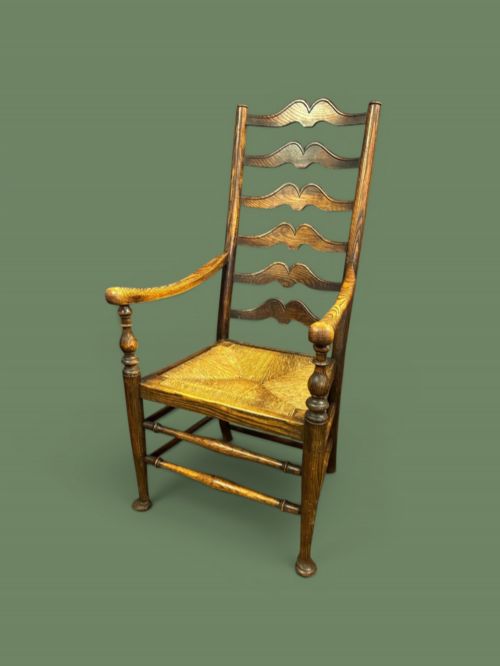
When you search for georgian rush seat carvers, you encounter robust country seating originating primarily from the Georgian era and the broader nineteenth century. These armchairs and carvers combine vernacular forms with practical woven seating designed for everyday farmhouse and dining use.
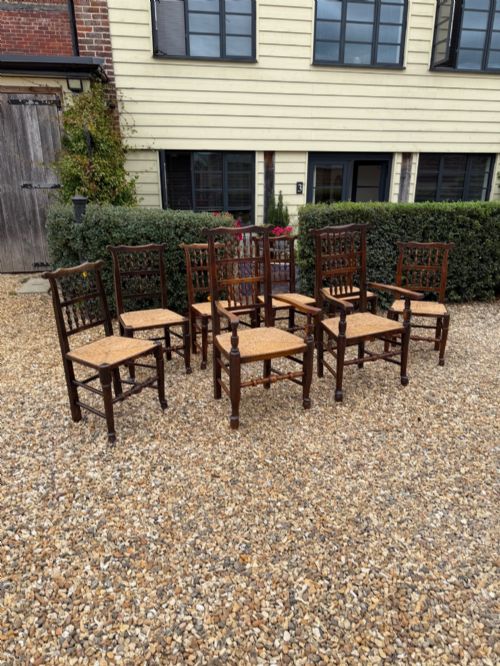
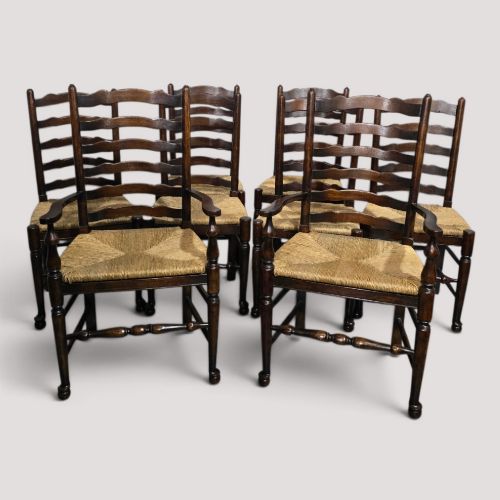
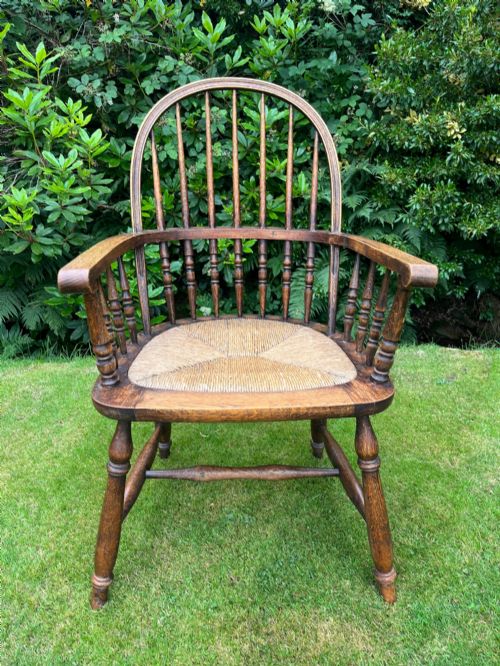
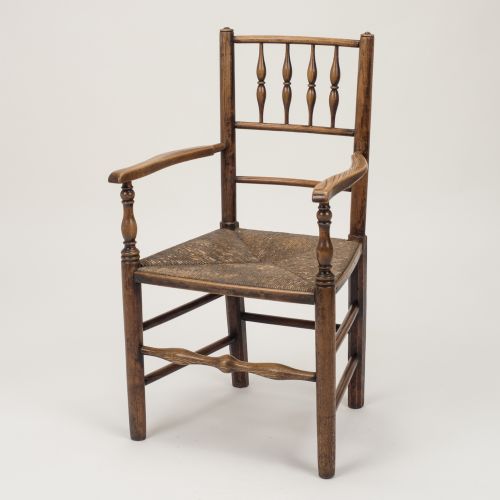
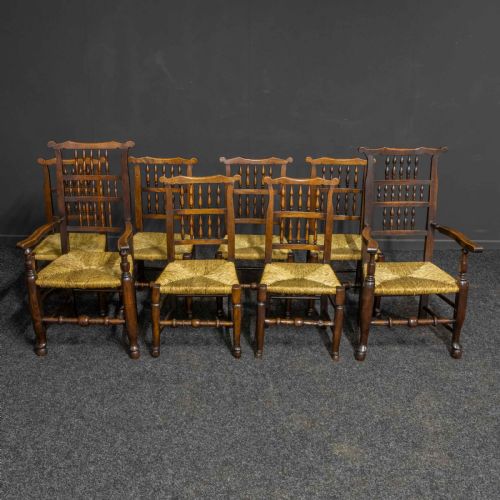
The versions you meet most frequently on this page span styles such as English country, Georgian vernacular, and rustic farmhouse. They typically feature ladder backs or spindle backs paired with sturdy wooden frames in elm, ash, or fruitwood.
Makers working in regional traditions produced these armchairs as functional seating rather than grand parlour showpieces. Their enduring appeal lies in honest construction, comfortable proportions, and the distinct character that comes from decades of rural use.
How they were made
Makers constructed these carvers using strong native hardwoods, most commonly turning to elm for seats, ash for spindles and frames, and fruitwood or beech for contrasting elements. This combination provided the necessary structural rigidity to support daily use while remaining workable with traditional hand tools.
The defining characteristic of these pieces is the woven rush seat, tightly interlaced around the chair frame to create a resilient and supportive surface. Frames were frequently joined using traditional mortise and tenon joints, sometimes secured with wooden pegs rather than metal fasteners.
Listings feature periods spanning the Georgian era and the nineteenth century, utilising native timbers like elm, ash, and fruitwood.
What varies in quality
The standard of a carver is determined by the balance of its proportions and the integrity of its timber. Superior examples display carefully turned spindles or well-shaped ladder backs that demonstrate a maker's practiced eye for regional design.
Survival of original surface finishes, whether patinated bare wood or early paint, significantly shapes the character of each piece. Tighter, more uniform rush weaving and minimal structural replacement separate finer examples from heavily repaired utility chairs.
The Georgian Rush Seat Carvers Glossary
- Carver
- An armchair, usually designed to sit at the head of a dining table or to be used as a substantial single chair in a room. These pieces feature supportive armrests integrated into the upper frame.
- Rush
- Marshland plants twisted into strong cords and hand-woven to form durable, textured chair seats. This traditional material gives a springy and comfortable surface.
- Ladderback
- A chair back constructed with horizontal slats or rails positioned between two upright posts. This regional style was widely used in country furniture.
- Spindleback
- A chair back featuring a series of thin, turned wooden uprights rather than solid slats. This construction method offered lightweight strength.
- Vernacular
- Furniture made by local craftsmen following regional traditions rather than high-style metropolitan fashions. These pieces prioritise practical utility and local materials.
Georgian Rush Seat Carvers: Frequently Asked Questions
What is a rush seat?
A rush seat is a woven seating surface made from dried marsh grasses twisted into durable cords. Craftsmen weave these strands directly around the chair rails to create a supportive and flexible pad.
Over decades of use, these natural fibres develop a smooth sheen and warm tone. They require gentle care and protection from excessive moisture to preserve their strength.
How do I care for rush seats?
Keep rush seated chairs in stable indoor environments away from direct sunlight and damp conditions. Natural fibres respond poorly to excessive humidity and drying heat sources.
Clean the woven surface gently with a soft brush or dry cloth to remove dust. Avoid using water or liquid cleaners, which can cause the plant fibres to become brittle.
Are these chairs comfortable?
The woven rush surface yields slightly to the body, offering a comfortable and supportive seat for dining or relaxing. Their proportions reflect domestic requirements of past centuries.
Many people use a loose squab cushion on the seat for added height and softness. The supportive arms on carver chairs add to their relaxed seating posture.
Where were these chairs made?
Country workshops across regional England produced these chairs, utilising local timber and traditional woodworking techniques. Areas like Lancashire and Cheshire developed distinct regional variations in ladder backs and spindle arrangements.
Craftsmen relied on nearby woodlands for elm, ash, and fruitwood. This local sourcing resulted in chairs suited to rural homes and farmhouses.
How do I identify a carver?
A carver is distinguished by its arms, which extend forward from the back posts to frame the seat. These chairs were traditionally paired with armless side chairs around a dining table.
Their sturdier construction and wider proportions set them apart from standard dining chairs. They often served as principal seating by the hearth or at the head of the table.