

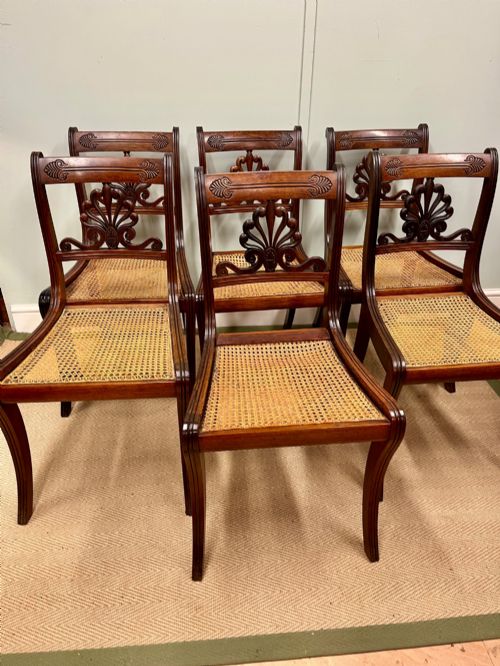
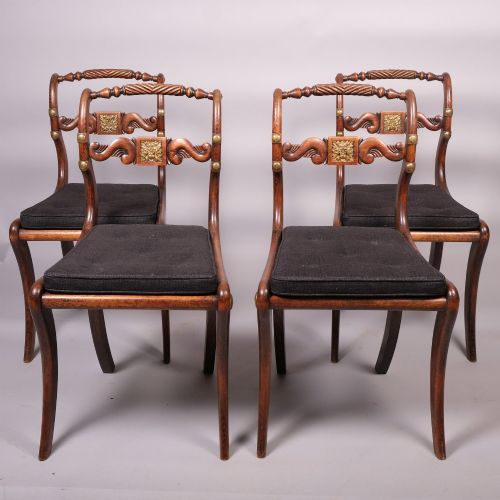
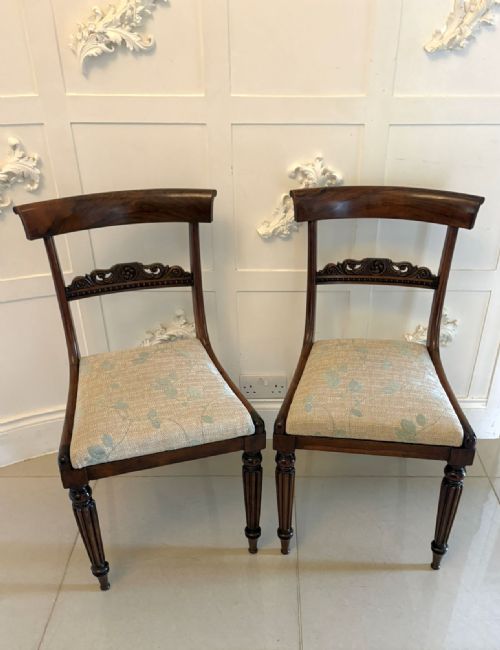
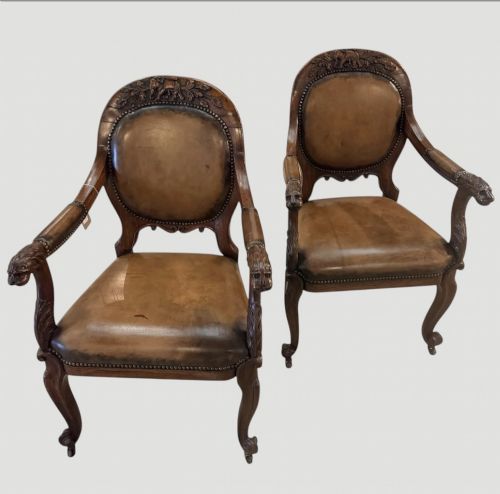


Georgian Rosewood Side Chairs
Georgian rosewood side chairs are classic seating options that bring rich timber grain and period elegance to a room.
Georgian Rosewood Side Chairs
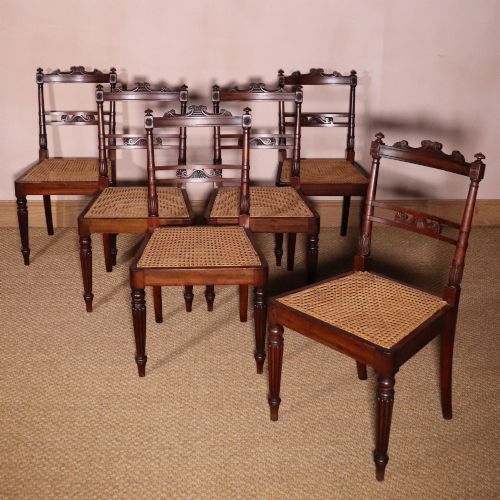
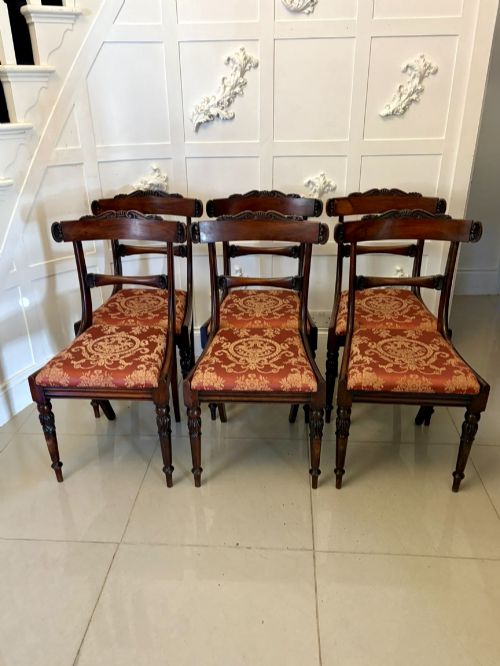
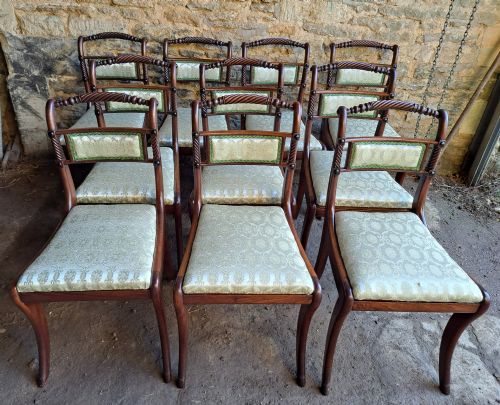
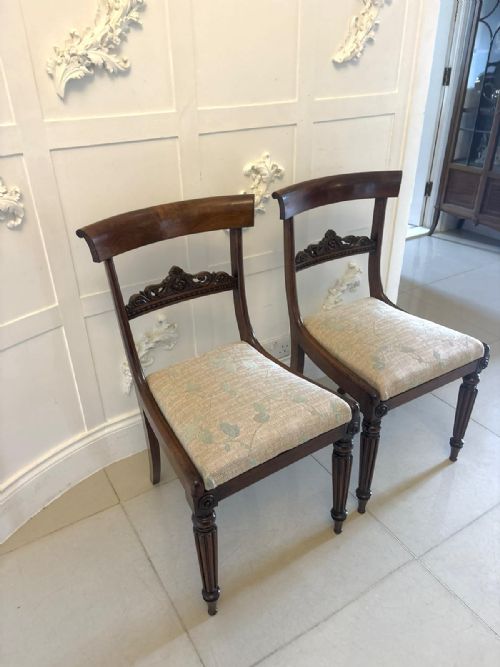
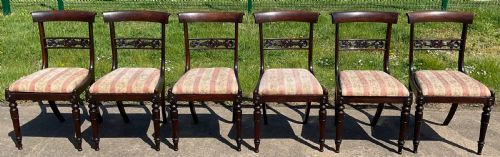
When you search for georgian rosewood side chairs, you enter a field dominated by Regency period seating made during the early nineteenth century. These pieces appear as individual items, pairs, and matched sets ranging from four up to ten or twelve chairs.
The forms span side chairs, dining chairs, library chairs, and bar back designs. Many examples originate from English workshops, while Anglo-Indian variations also emerge within the records.
Makers such as John Gee and Munro are noted among the inventory, alongside numerous unmarked dining chairs and rope twist variations. Simulated rosewood surfaces and brass inlay frequently appear alongside solid timber construction.
Materials and Construction
Makers utilised solid rosewood and simulated rosewood finishes to achieve the dark, figured aesthetic typical of the period. Brass inlay was frequently embedded into the timber to create contrasting decorative lines along the top rails and crossbars.
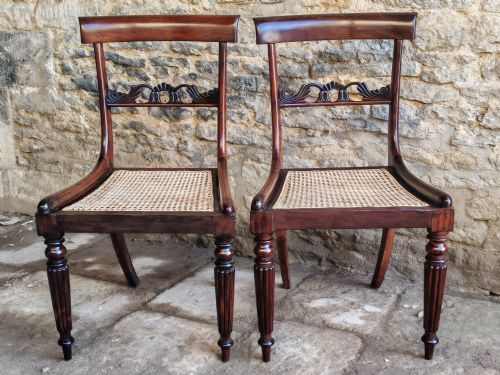
Seating portions were finished with materials such as leather, cane, and upholstery fabric. Wood framing employed traditional joinery techniques suited to the sturdy demands of dining and library use.
Object forms on this page include dining chairs, side chairs, library chairs, and armchairs.
Judging Quality
Quality rests upon the crispness of carved details, the precision of brass inlay work, and the structural integrity of the timber frame. Sets that remain together in larger numbers demonstrate greater consistency in design and material selection than assembled groupings.
The depth of the natural wood grain or the execution of the simulated rosewood finish distinguishes standard output from finer workshop productions.
John Gee·Munro
The Georgian Rosewood Side Chairs Glossary
- Rosewood
- A dense, heavily figured timber valued for its dark colour and distinct grain patterns. It served as a primary material for high-end furniture during the Regency era.
- Simulated rosewood
- A painted or stained finish applied to a secondary wood to imitate the appearance of genuine rosewood. This technique was common in the nineteenth century for decorative seating.
- Side chair
- A light, armless chair designed primarily for dining or placement against a wall. These pieces form the core of the available seating inventory.
- Bar back
- A chair design featuring a horizontal wooden slat across the upper backrest, often resembling the shape of a pub bar. This style appears frequently in Regency dining sets.
- Brass inlay
- The practice of embedding thin strips of brass into routed channels within the wood surface. It creates geometric or floral patterns across the back rails.
Georgian Rosewood Side Chairs: Frequently Asked Questions
How are these chairs dated?
Dating relies on stylistic markers such as Regency proportions, brass inlay patterns, and construction methods typical of the early nineteenth century. Comparative analysis with records from makers like John Gee helps narrow the timeframe.
Most pieces cluster around eighteen twenty to eighteen thirty, aligning with the broader Regency period and early nineteenth century production.
What is simulated rosewood?
Simulated rosewood is a painted finish applied to a less expensive timber to replicate the dark, figured look of genuine rosewood. Artisans used graining tools and glazes to mimic natural growth rings.
This technique offered a fashionable appearance without the full material cost of solid exotic timber.
Were these chairs used for dining?
Yes, many of these pieces functioned as dining chairs, often found in sets ranging from four up to twelve items. Their sturdy timber frames and supportive back designs suited formal dining rooms.
Library and side chair variants were also produced for general domestic seating around the home.
What seating materials were used?
Original seats incorporated materials such as leather, woven cane, and various upholstery fabrics. These materials were chosen for comfort and durability during daily use.
Many surviving chairs have undergone reupholstering to preserve their usability while maintaining period-appropriate aesthetics.