
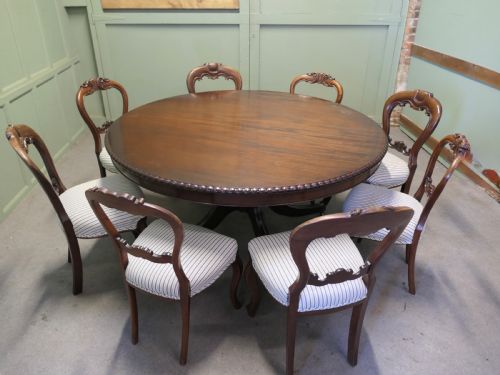


Antique Table Seating Set
An antique table seating set brings together matched tables and chairs spanning periods from the eighteenth century to Art Deco, offering both formal dining and garden utility.
Antique Table Seating Set
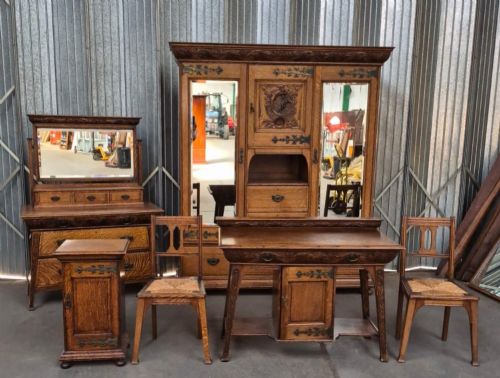
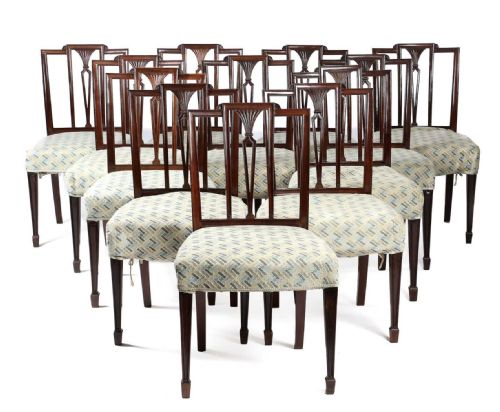
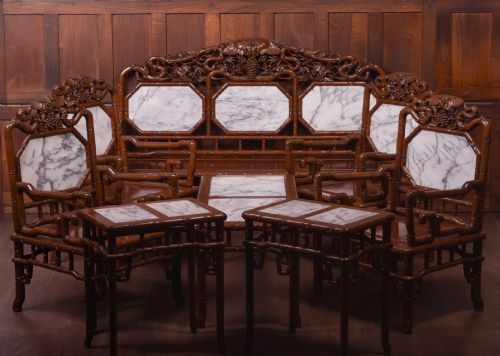
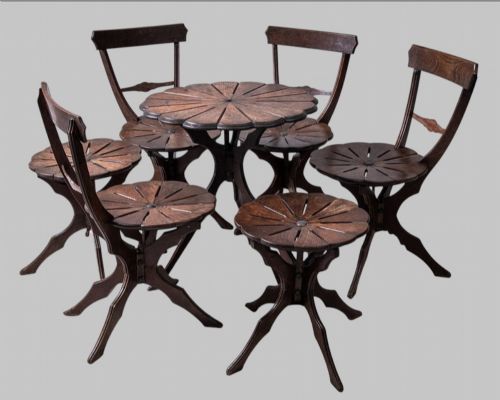
An antique table seating set comprises paired tables and chairs designed for dining, parlour use, or garden settings. These groupings range from formal mahogany dining suites and rosewood chairs to cast-iron and wirework garden furniture.
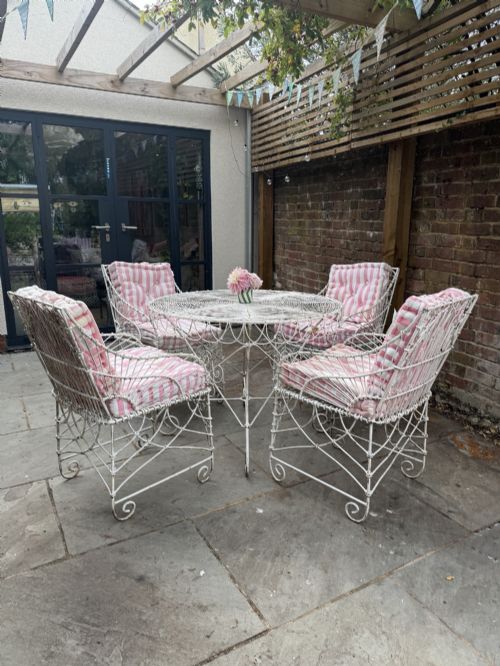
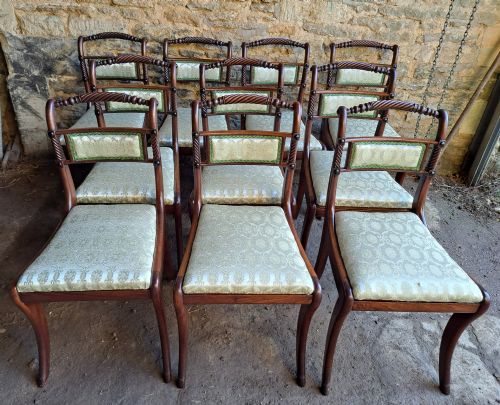
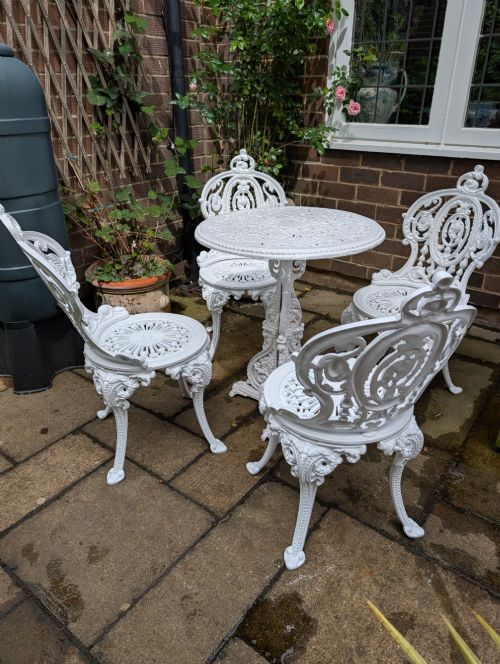
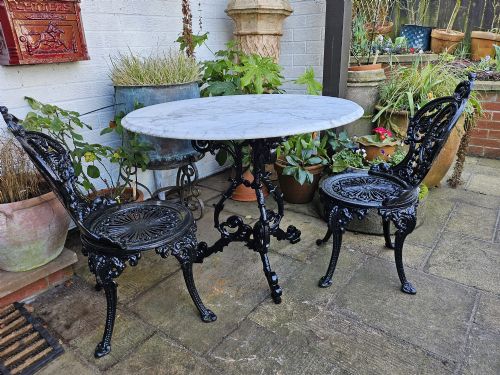
The version most commonly met on this page is the dining furniture set, often featuring sets of chairs matched to tables in mahogany, oak, or walnut. Garden sets involving cast iron, wirework, and marble tops also appear frequently alongside interior parlour suites.
Originating from periods such as the Regency, Victorian era, and Art Deco, these sets reflect the domestic requirements of their time. Buyers select them to anchor a dining room or garden with period character and practical seating capacity.
Evaluating Quality and Uniformity
The cohesion of the set largely determines its standing, as matching chairs originating from a single workshop command greater interest than assembled groups. Original surfaces, whether polished mahogany or weathered garden wirework, retain more integrity than heavily refinished examples.
The sophistication of the carving and the choice of primary timber indicate the level of craftsmanship involved. Pieces attributed to documented makers or incorporating superior materials like Cuban mahogany or rosewood represent the upper tier of the range.
Garden dining sets from the nineteenth century often survived outdoors entirely by accident, enduring decades of rain while looking politely gothic.
Christopher Dresser·Harry and Lou Epstein·James Shoolbred·Waring
The Antique Table Seating Set Glossary
- Carver
- An armchair, usually wider and with armrests, traditionally placed at the head of a dining table. Pairs of dining sets often include one carver alongside several standard side chairs.
- Parlour Suite
- A matched grouping of seating and occasionally tables designed for formal reception rooms. These suites often feature carved hardwood frames.
- Regency
- A stylistic period dating from the early nineteenth century characterised by classical restraint and neoclassical influences. Furniture from this era frequently utilises mahogany and rosewood.
- Wirework
- A technique of bending and joining metal wire to form lightweight yet sturdy garden furniture. Victorian examples often include intricate scrollwork patterns.
Antique Table Seating Set: Frequently Asked Questions
Can I use cast iron garden sets outdoors?
Cast iron garden tables and chairs are designed for outdoor use and withstand regular weather conditions well. Regular inspection for surface rust allows for prompt treatment before any structural deterioration occurs.
During harsh winter months, storing metal furniture under cover helps preserve the painted or natural iron finish. Applying a protective wax or rust-inhibiting coating further extends the longevity of garden pieces.
What is the difference between a dining suite and a parlour suite?
A dining suite typically comprises a dining table paired with multiple matching chairs intended for formal meals. These sets focus on functional seating arrangements around a central surface.
A parlour suite consists of upholstered or carved seating pieces designed for entertaining and reception rooms rather than dining. These groupings often emphasise decorative upholstery and ornate woodwork over table utility.
How can I identify Art Deco dining furniture?
Art Deco dining sets often feature geometric lines, streamlined silhouettes, and dark woods such as black walnut. Decoration is typically minimal, relying instead on the grain of the veneer and the architectural form of the pieces.
Manufacturing dates generally cluster around the interwar period, distinguishing them from earlier ornate Victorian or Georgian styles. Hardware and upholstery choices further reflect the modern aesthetic of the era.