




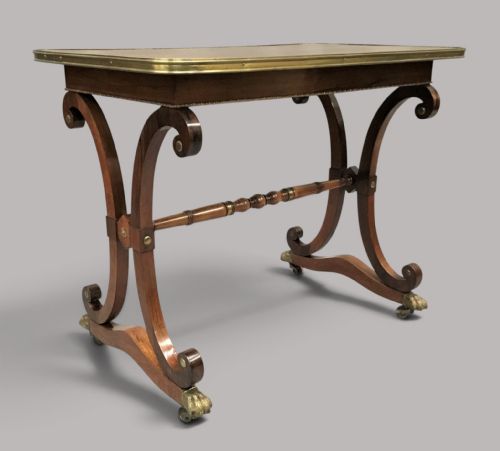


Georgian Rosewood Library Desk
A georgian rosewood library desk brings rich grain and practical workspace into a room, offering the classic forms valued by collectors of the period.
Georgian Rosewood Library Desk
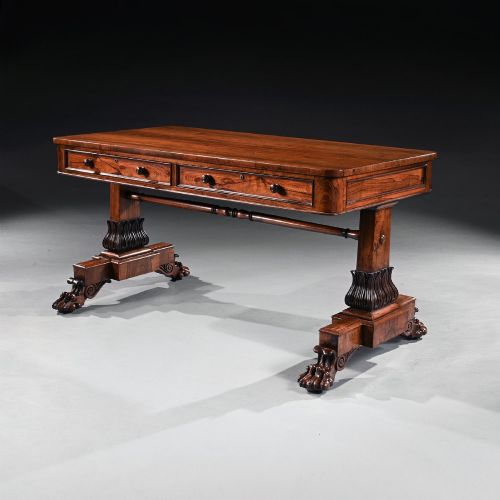
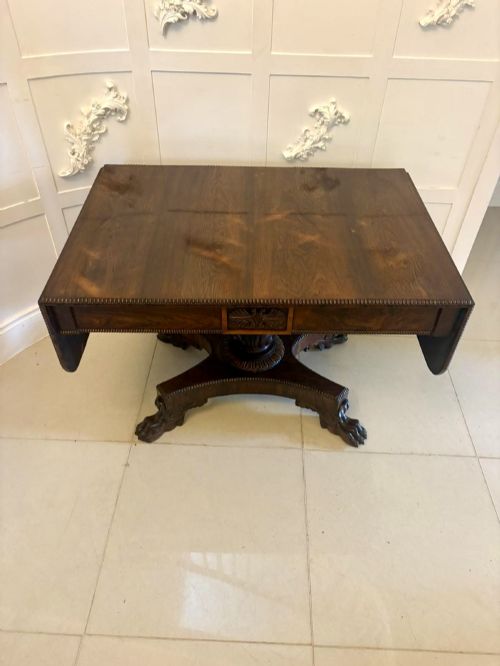
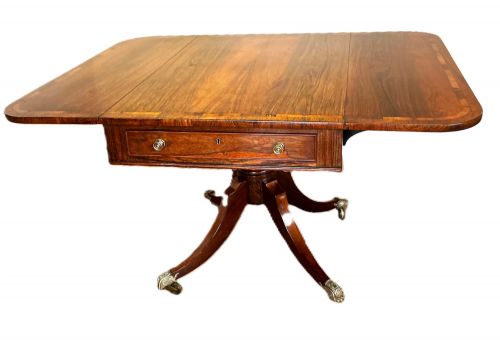
A georgian rosewood library desk encompasses several related forms designed for study and writing, including pedestal desks, writing tables, and sofa tables. These pieces date primarily from the Regency and George IV periods, spanning the late Georgian era into the nineteenth century.
Materials and construction
Makers utilised rich rosewood veneers over secondary timbers like oak, often selecting cuts to display striking grain patterns across large surfaces. Brass inlay, stringing, and mounts frequently accent the dark wood, adding linear definition to tabletops and drawer fronts.
Writing surfaces commonly incorporate inset leather panels, providing a durable and traditional medium for daily use. Marquetry, boxwood details, and wood inlay appear on specific examples to create contrast and decorative borders.
Georgian Rosewood Library Desk Retail Price Guide 2026
Typical asking prices for georgian rosewood library desk among the pieces listed under this phrase on Sellingantiques today, from the lower quarter to the upper quarter. They describe what is for sale here now, not the wider market.
A magnifying glass listed alongside the desks ensures readers can inspect the fine wood grain up close.
Assessing quality and execution
Quality reveals itself in the selection of the rosewood veneer and the precision of the brass inlay work. Finer examples maintain crisp carving on wooden mounts and solid structural integrity in the pedestals and legs.
The sophistication of the internal drawer construction and the presence of original secondary woods distinguish superior pieces. Proportions and the integration of functional elements like drop flaps or revolving tops also signal the level of craftsmanship.
Gillows of Lancaster·Plumbly and Tupman
The Georgian Rosewood Library Desk Glossary
- Rosewood
- A dense, heavily figured timber prized for its dark colour and dramatic grain patterns. Cabinet makers utilised it extensively for high-status furniture during the Regency period.
- Sofa table
- A rectangular table designed to stand in front of a sofa, featuring drop leaves on either side and usually two drawers. These tables are fully finished on all sides for placement in the centre of a room.
- Drum table
- A circular library table with a deep top containing drawers, supported on a central pillar and platform base. The top often rotates to allow access to all sides.
- Marquetry
- Decorative patterns formed by the insertion of different coloured woods and materials into a veneered surface. Craftsmen used this technique to create intricate floral or geometric designs.
- Brass inlay
- The technique of embedding thin strips of brass into channels cut into the wood surface. It creates geometric borders and highlights the structural lines of the furniture.
Georgian Rosewood Library Desk: Frequently Asked Questions
What is a georgian rosewood library desk?
A georgian rosewood library desk is a refined antique writing surface produced during the Regency and George IV eras. These tables utilise dense rosewood timber and often feature brass mounts or leather writing inserts.
They served as functional furniture for writing and study in affluent homes. Today, collectors value them for their cabinet-making quality and rich wood grain.
How do I identify a Regency period desk?
Regency period desks typically display classical proportions, dark rosewood veneers, and restrained brass ornamentation. They often incorporate pedestal bases or slender sabre legs with brass capped toes.
Construction methods inside the drawers, such as hand-cut dovetails and oak linings, help confirm the period manufacture. The presence of specific hardware styles also guides identification.
Where should I place a library table?
Library tables work best freestanding in the centre of a room rather than pushed against a wall. Because cabinet makers finished all sides of these pieces, they present well from any angle.
Ensure the room maintains stable humidity and temperature to protect the rosewood veneer and leather inserts. Keep the timber away from direct sunlight to prevent fading.