


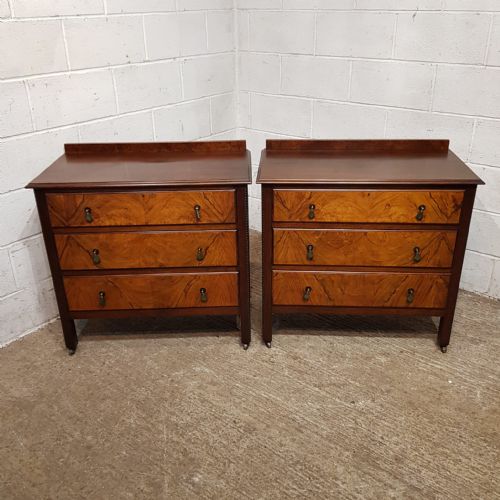


Georgian Revival Bedroom Furniture
Georgian revival bedroom furniture brings the formal grace of eighteenth-century design into twentieth-century sleeping quarters through finely proportioned timber pieces.
Georgian Revival Bedroom Furniture
When you search for georgian revival bedroom furniture, you encounter items built primarily during the early twentieth century, spanning from nineteen hundred to nineteen thirty, alongside Edwardian examples and nineteenth-century work. These pieces recreate earlier cabinet-making traditions, translating classic eighteenth-century aesthetics into domestic storage and seating for the bedroom.
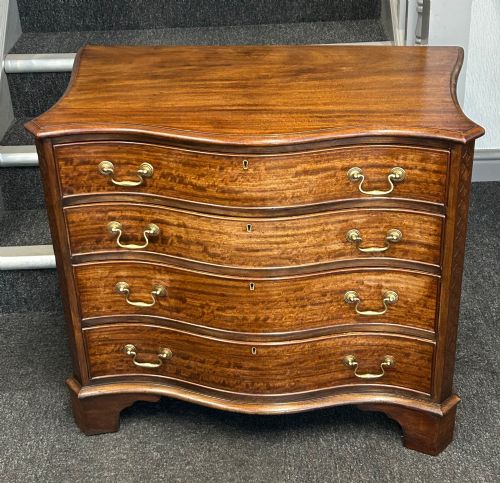
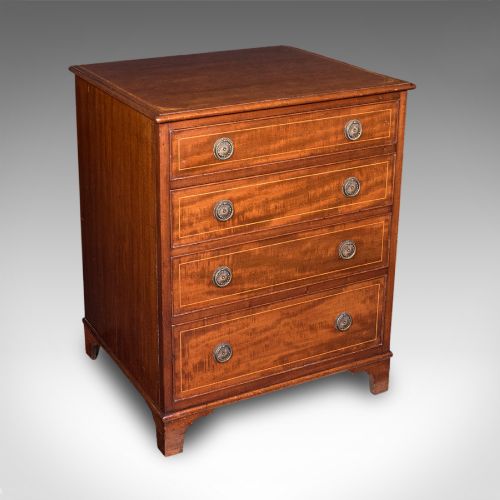
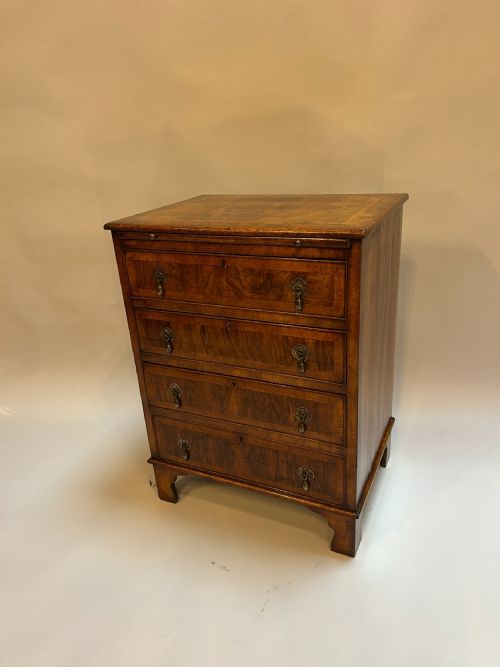
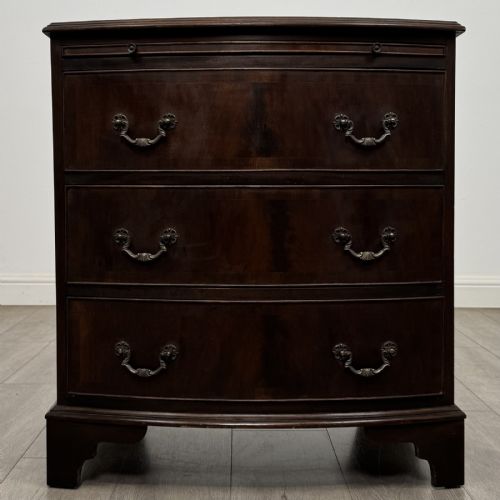
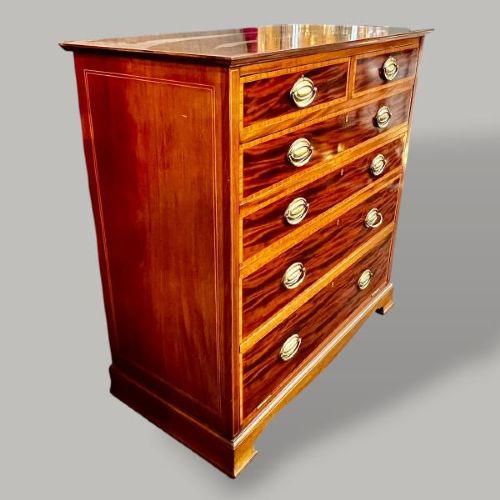
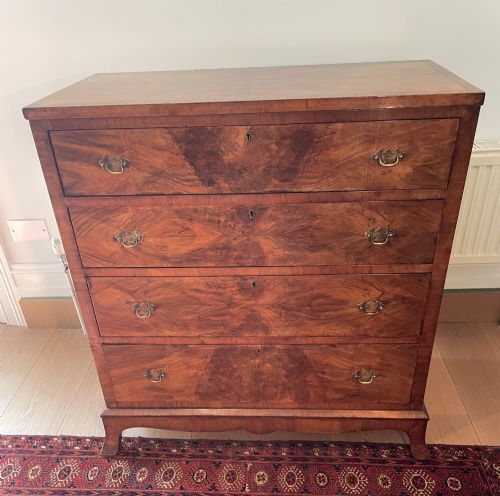
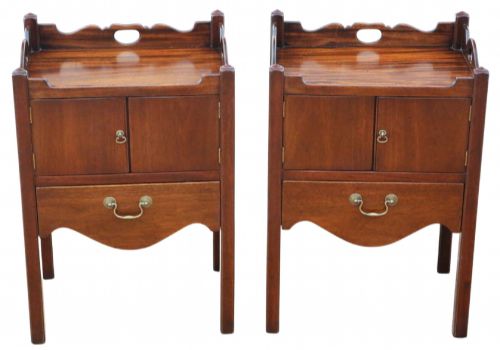
The selection centres heavily on chests of drawers, including tallboys, bow front models, and block front variations, often complemented by bedside cabinets, bedside tables, dressing chests, and benches or stools. Mahogany and walnut dominate the forms, frequently enhanced by burr walnut, figured walnut, satinwood, and hand-painted detailing.
Stylistic influences draw directly from specific periods within the Georgian umbrella, notably Queen Anne revival, Sheraton revival, and Chippendale revival. Pieces range from compact bedside cupboards to substantial five-height chests, offering period presence combined with the practical utility required for modern rooms.
What varies in quality
The selection of timber sets the baseline for quality, distinguishing straightforward mahogany from highly figured walnut, burr walnut, and choice satinwood veneers. Artisanal execution in the shaping of serpentine and block fronts separates standard production from finer workshop output.
Subtleties in brass mounts, hand-painted detailing, and the crispness of carved mouldings determine the overall distinction of a piece. Coherence between the chosen revival style and the underlying structural integrity completes the hierarchy.
Georgian Revival Bedroom Furniture Retail Price Guide 2026
Typical asking prices for georgian revival bedroom furniture among the pieces listed under this phrase on Sellingantiques today, from the lower quarter to the upper quarter. They describe what is for sale here now, not the wider market.
A duet walnut window seat waits quietly to host four hands on one piano bench.
Edwards and Roberts·Whytock and Reid
The Georgian Revival Bedroom Furniture Glossary
- Tallboy
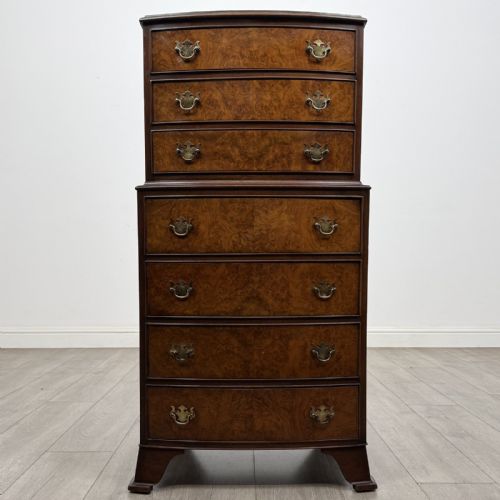
- A tall chest of drawers, often consisting of a smaller chest stacked upon a larger base, designed to maximise vertical storage. These pieces provide substantial drawer space while occupying a modest footprint on the floor.
- Caddy top
- A moulded tabletop with raised or rounded edges resembling the lid of a tea caddy, frequently found on formal chests of drawers from this period. This detail adds a sculptural edge to the piece.
- Serpentine
- A curved line of furniture front that bows outward in the centre and concaves inward at the sides, requiring considerable skill to veneer and construct. It creates a fluid, organic movement across the elevation.
- Block front
- A cabinet front divided vertically into three sections, where the outer sections project slightly and the central section is recessed. This technique adds depth and architectural shadow to the piece.
- Burr walnut
- Timber taken from the abnormal growth of a walnut tree, producing swirling, intricate grain patterns prized for decorative veneering. It creates a rich visual texture across flat surfaces.
Georgian Revival Bedroom Furniture: Frequently Asked Questions
What is georgian revival bedroom furniture?
This category encompasses early twentieth-century and Edwardian chests, bedside tables, and seating built in Britain to replicate eighteenth-century designs.
Craftsmen drew on Chippendale, Sheraton, and Queen Anne styles, utilising mahogany and walnut to create functional bedroom pieces with classical proportions.
How do I identify a tallboy?
A tallboy is characterised by its height, typically combining multiple drawer tiers to offer vertical storage capacity.
These pieces function well in bedrooms where floor space is limited but storage requirements remain high.
Where were these pieces made?
The items originate primarily from English workshops and cabinet-making firms operating during the early twentieth century.
They reflect a strong domestic market for traditional craftsmanship during the Edwardian and George V eras.
How do I care for walnut furniture?
Walnut and burr walnut surfaces require stable indoor humidity and protection from direct sunlight to preserve the timber and veneer.
Regular dusting with a soft cloth maintains the finish without the need for heavy chemical polishes.