


Georgian Porcelain Tea Set
A georgian porcelain tea set brings the elegance of the eighteenth and nineteenth centuries straight to your table.
Georgian Porcelain Tea Set
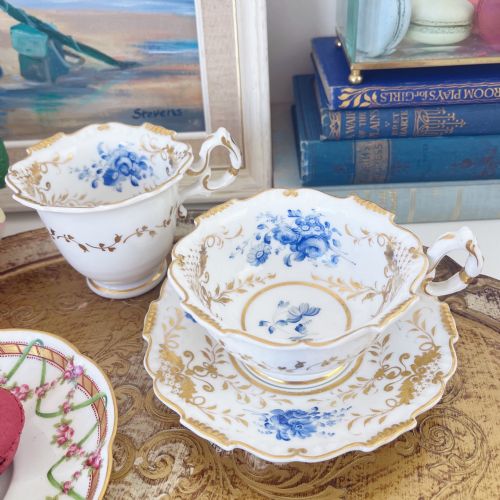
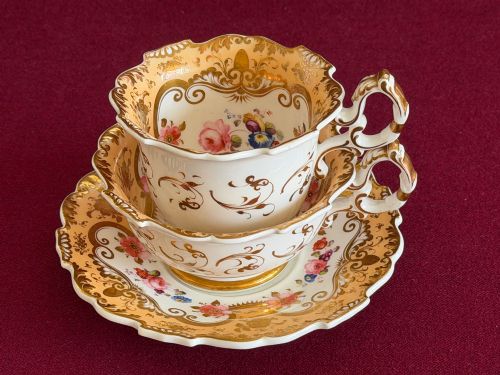
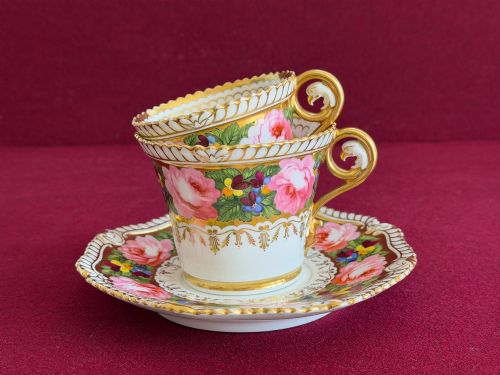
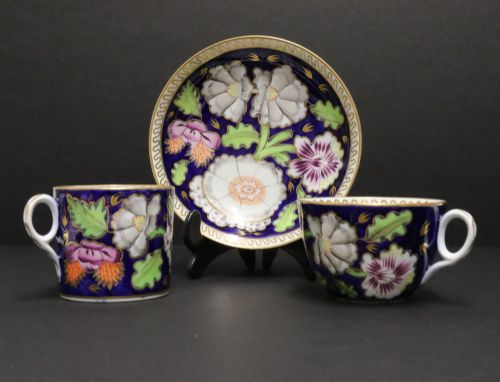
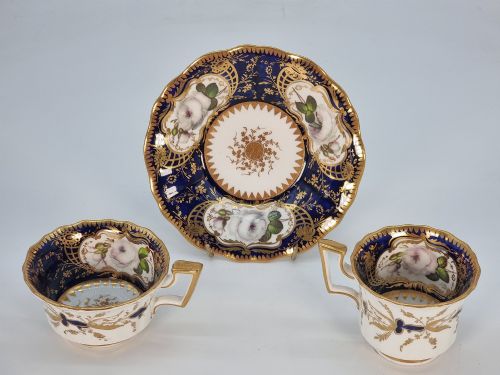
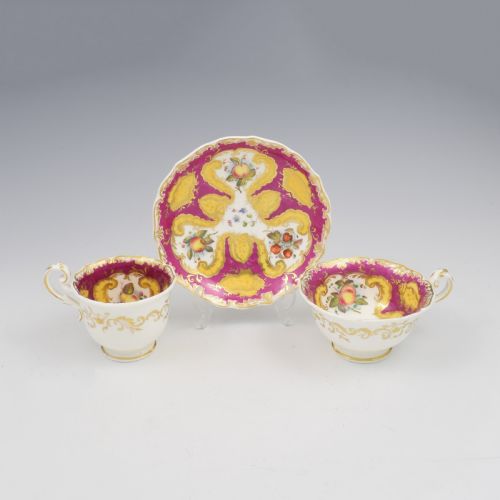
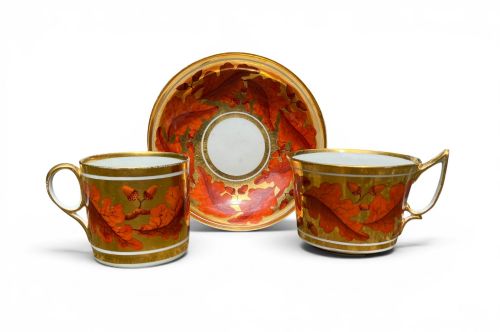
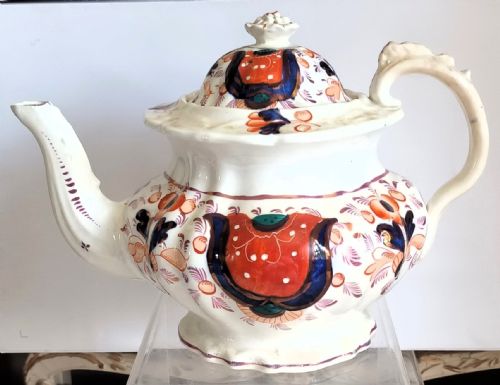
A georgian porcelain tea set encompasses an array of delicate teacups, saucers, teapots, and sugar boxes originating from the eighteenth and early nineteenth centuries. These services reflect the social rituals of tea drinking during the Georgian and Regency eras, often appearing as matched trios or larger grouped settings.
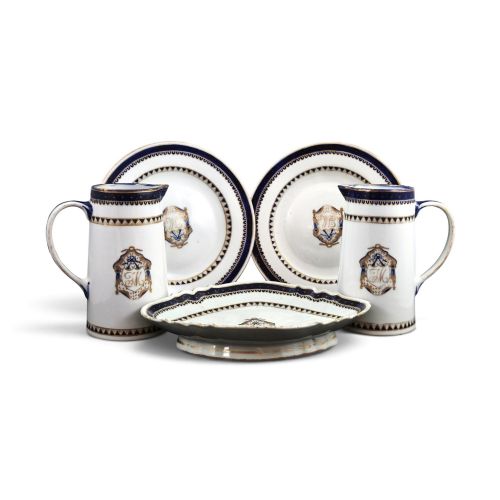
Most pieces encountered on this page date from the late eighteenth century through to the Regency period and the early nineteenth century. Makers span notable English potteries alongside Chinese export workshops, offering a diverse view of domestic and international production from the period.
How they were made
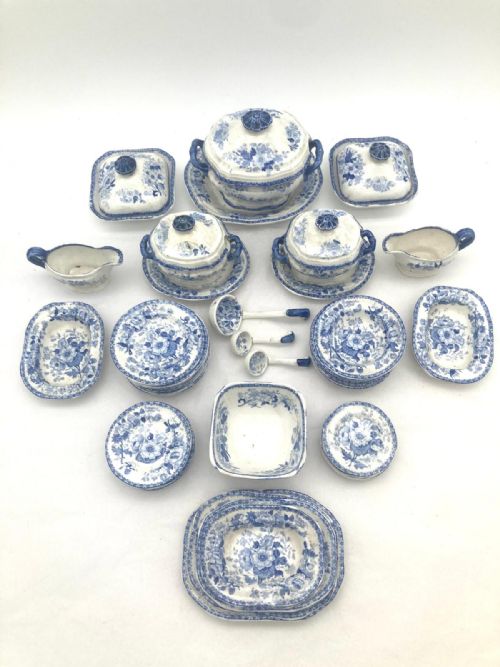
Potters utilised soft-paste porcelain, bone china, and earthenware, shaping vessels by hand or moulding them into specific forms like the Shrewsbury shape. Artisans then applied intricate handpainted designs, transfer printing in blue and white, and detailed enamel work.
Finishing touches frequently involved rich gilding and the application of gold leaf to highlight rims, handles, and moulded motifs. These decorative techniques required precise kiln firings to fuse the enamels and metallic accents to the porcelain body.
Object forms span teacups and saucers, teapots, sucriers, and miniature dinnerware decorated with handpainted motifs and transfer printing.
What varies in quality
The sophistication of the handpainting and the precision of the enamel work distinguish finer examples from standard production. Services featuring elaborate patterns like Fancy Birds, dragon motifs, or detailed floral sheets display a higher degree of artistic skill.
The crispness of the moulding and the preservation of the original gilding and gold leaf also define the upper tier of these wares. Pieces retaining their matching components as a complete trio or service demonstrate greater integrity and historical value.
H & R Daniel·Chamberlain Worcester·Newhall·Minton·Flight Barr & Barr·Hicks Meigh & Johnson·Ridgway·Spode·Davenport
The Georgian Porcelain Tea Set Glossary
- Trio
- A matched set consisting of a teacup, a coffee cup, and a saucer. This combination was popular in English porcelain production during the Georgian and Regency periods.
- Soft-Paste Porcelain
- An artificial ceramic paste composed of clay and glass frit, fired at lower temperatures than hard-paste porcelain. It is characteristic of many eighteenth-century English factory wares.
- Bone China
- A type of soft-paste porcelain that incorporates bone ash into the ceramic body. This addition increases strength, translucency, and whiteness.
- Gilding
- The application of gold or gold leaf to the surface of porcelain for decoration. It is frequently found accenting the rims and handles of Regency teawares.
- Sucrier
- A covered vessel designed to hold sugar as part of a tea service. These sugar boxes often match the pattern of the accompanying teacups and saucers.
Georgian Porcelain Tea Set: Frequently Asked Questions
What pieces make up a standard tea set?
A standard service typically comprises teacups, coffee cups, and saucers, sometimes forming a trio alongside larger serving vessels like teapots and sugar boxes. Individual pieces were often produced together to maintain a unified aesthetic across the table.
Over time, many original sets became separated, which is why individual trios and paired cups and saucers appear frequently today.
How do I identify a Georgian tea set?
Identification relies on observing the characteristic styles of the period, such as Georgian Neoclassical, Regency, and Rococo forms. Examining the paste, glaze, and handpainted or transfer-printed patterns also helps narrow down the manufacturing era.
Maker marks and specific pattern numbers recorded on the underside further assist in dating the porcelain accurately.
What is the difference between soft-paste and bone china?
Soft-paste porcelain is an early ceramic body made from clay and glassy materials, fired at lower temperatures to produce a warm, slightly creamy tone. Bone china includes bone ash in the mixture, yielding a brighter, harder, and more translucent material.
Both types were utilised by English potteries during the transition into the nineteenth century.