
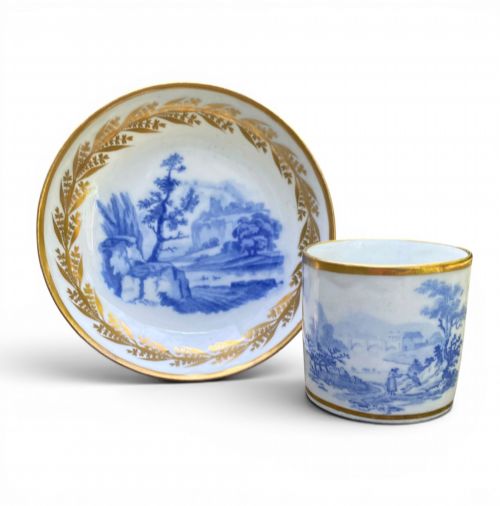
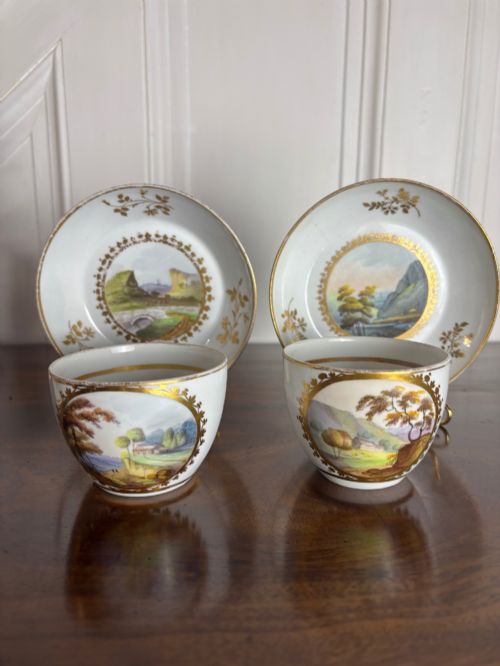


Antique English Teacup Saucer
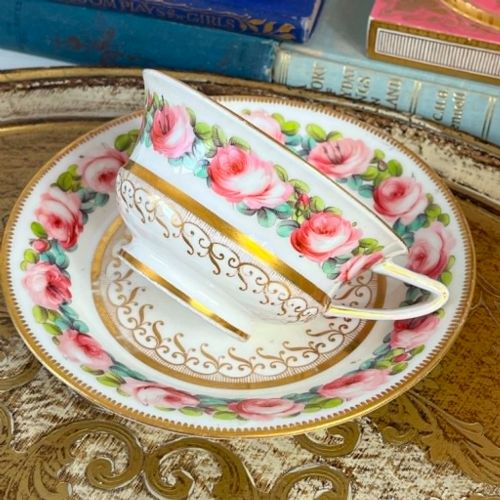
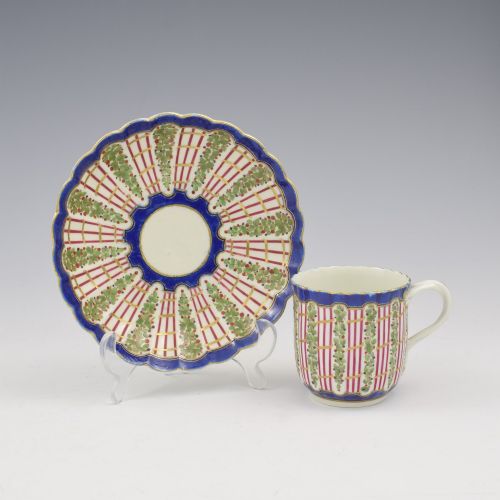
These antique English teacup saucer sets span the delicate hand-painted Worcester porcelain of the eighteenth century to the floral bone china services of the 1930s.
Antique English Teacup Saucer
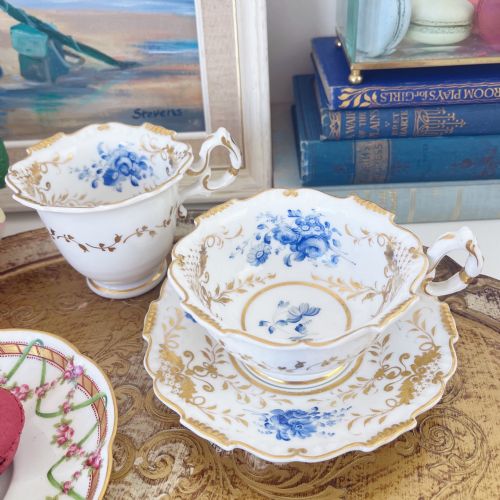
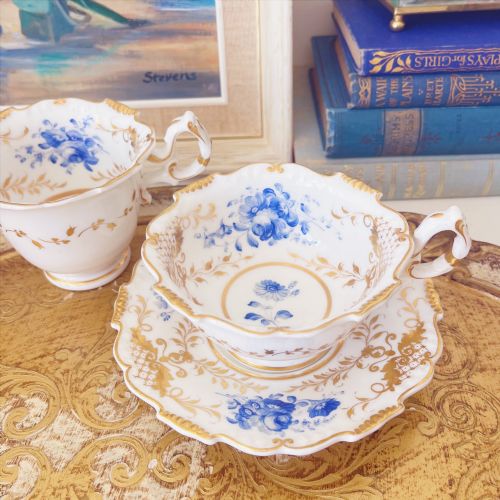
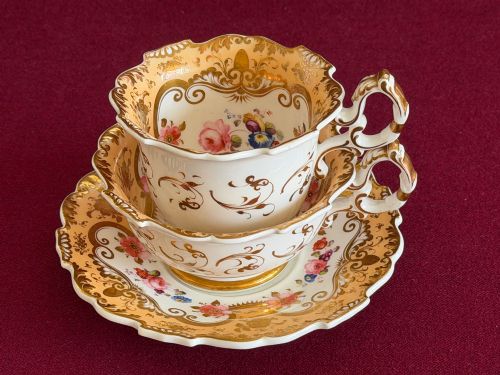
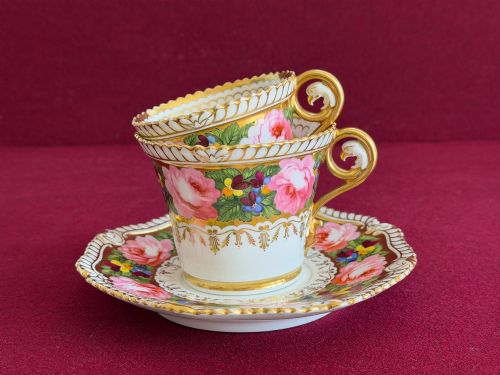
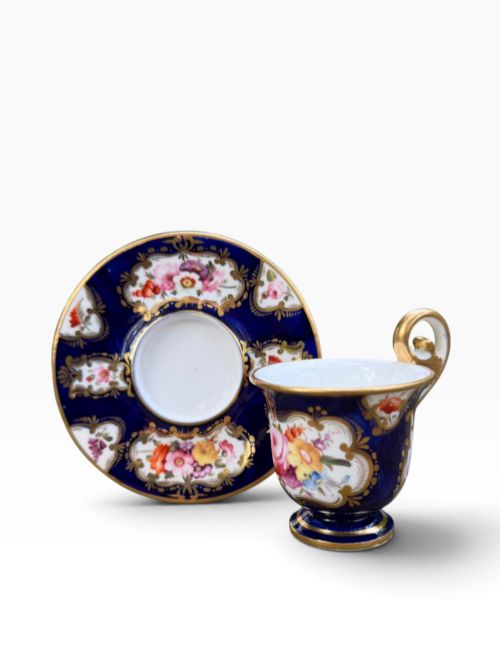
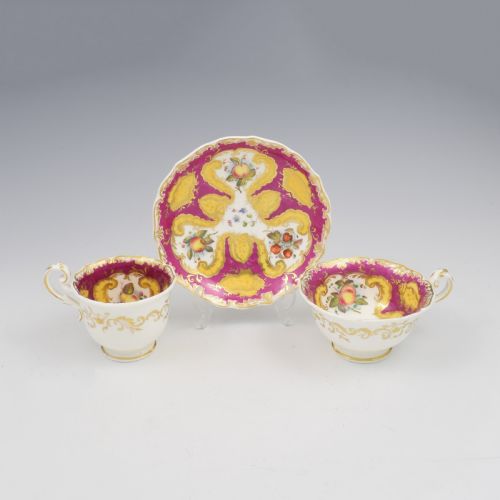
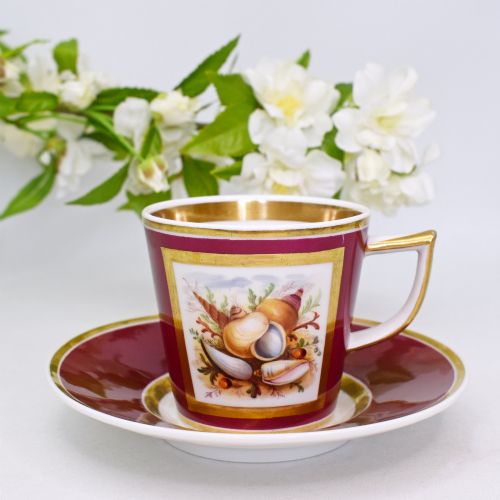
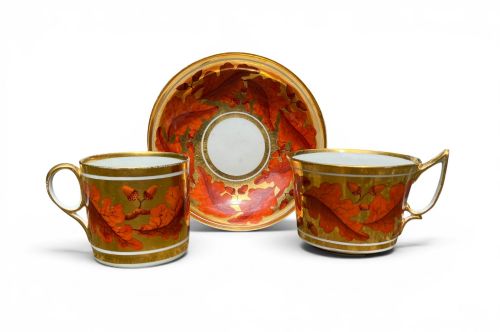
When searching for an antique English teacup saucer, a buyer encounters domestic drinking vessels produced across several centuries of British ceramic manufacturing. The selection on this page ranges from early eighteenth-century tea bowls and saucers to nineteenth-century cabinet trios and twentieth-century afternoon tea services.
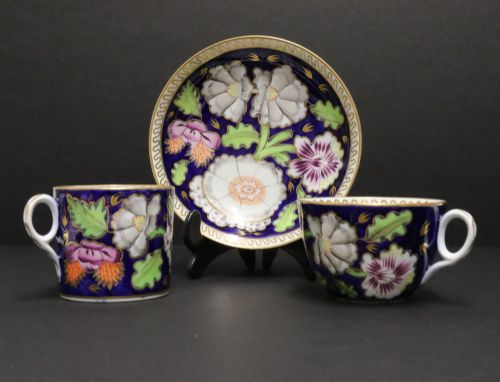
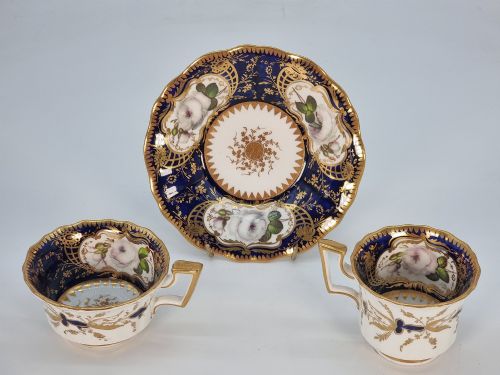
The most frequent pieces met here originate from Georgian and Regency workshops, alongside later Victorian and Edwardian productions. These encompass individual duos and trios comprising a teacup, coffee cup, and saucer, as well as larger multi-person sets.
Forms span standard teacups, coffee cans, and handleless tea bowls paired with their matching saucers. Makers utilised traditional shapes that shifted from delicate Oriental-inspired tea bowls to pedestal cups and flared cabinet pieces as dining habits evolved.
Materials and production methods
Potters constructed these pieces using hard-paste porcelain, soft-paste porcelain, bone china, and creamware pottery. Early compositions often relied on soft-paste porcelain formulas that yielded a creamy body and soft glaze, while later nineteenth-century factories adopted bone china for its durability and brighter white ground.
Decoration relied heavily on hand-painted enamels, gilding with gold leaf, and transfer printing. Artisans applied intricate motifs including landscape scenes, botanical studies, and Japanese-influenced patterns by hand or through copperplate transfers before firing the glaze.
Listings span eight distinct periods, reaching from Georgian and Regency eras through to 1930s bone china.
Distinctions in quality and execution
The standard of a piece depends on the crispness of the porcelain body and the precision of the hand-painting. Superior examples display finely brushed polychrome enamels, meticulous gilding, and well-balanced forms without kiln distortion or heavy warping.
Provenance and factory attribution elevate a piece significantly. Items originating from renowned periods such as First Period Worcester or specific documented makers like Flight, Barr & Barr or H & R Daniel demonstrate higher artistic ambition in their painted borders and moulded details.
H & R Daniel·Chamberlain Worcester·Davenport·Coalport·New Hall·Minton·Royal Worcester·Flight Barr & Barr·Royal Albert·Doric China
The Antique English Teacup Saucer Glossary
- Tea bowl
- A handleless drinking vessel used for tea before the widespread adoption of handled teacups in the late eighteenth century. These forms reflect early Chinese porcelain imports.
- Cabinet trio
- A matching set consisting of a teacup, coffee cup, and saucer designed primarily for display in a cabinet rather than everyday use. They often feature elaborate hand-painted landscapes or floral reserves.
- Soft-paste porcelain
- An artificial ceramic paste fired at lower temperatures than hard-paste porcelain, common in eighteenth-century English factories. It produces a warm, luminous body under the glaze.
- Coffee can
- A straight-sided cylindrical cup intended specifically for drinking coffee, frequently found paired with a matching saucer in Regency and Georgian trios.
- Gilding
- The application of gold leaf or gold paint to the rims, handles, and borders of ceramics. Higher quality pieces utilise burnished solid gold rather than flat bronze washes.
Antique English Teacup Saucer: Frequently Asked Questions
How do I date an old teacup?
Dating relies on identifying factory marks stamped or painted on the underside, stylistic cues, and the composition of the ceramic body itself. Early pieces from the eighteenth century typically feature hand-painted worker marks or crescent symbols rather than printed factory names.
The shape of the handle and the presence of a matching coffee cup or saucer also provide clear chronological markers. Soft-paste porcelain and delicate tea bowls generally point toward earlier Georgian periods, while bone china and printed transfer marks indicate nineteenth-century production.
Were these cups meant for daily use?
Many of the surviving eighteenth and early nineteenth-century pieces were luxury items reserved for formal drawing-room tea ceremonies rather than robust daily dining. Wealthy households displayed them on mahogany tea tables or kept them secure in glazed cabinets.
Cabinet trios and finely gilded sets were manufactured primarily to showcase status and artistic taste. By the Victorian and Edwardian eras, however, larger tea services became standard fixtures for afternoon gatherings across middle-class homes.
What is the difference between a teacup and a coffee cup?
Traditional breakfast and teacups were usually wider and shallower, designed to allow hot tea to cool quickly. Coffee cups of the Georgian and Regency periods were taller, narrower, and often cylindrical in shape to retain the heat of the coffee.
Trios from this era typically combined both cup styles with a single shared saucer. This allowed drinkers to switch between beverages during formal morning or afternoon repasts.
Can I use antique tea sets today?
While these ceramics remain structurally sound, collectors generally advise against regular dishwasher use or heavy daily service. The delicate enamels and gold leaf applied over two centuries ago can wear down under abrasive washing conditions.
Gentle hand washing in lukewarm water preserves the painted surfaces and fragile handles. Many owners prefer to reserve these cups for occasional special gatherings or gentle display.