


Georgian Porcelain Candlesticks
Georgian porcelain candlesticks bring sculptural elegance and glowing candlelight to a room, uniting functional lighting with delicate ceramic artistry.
Georgian Porcelain Candlesticks
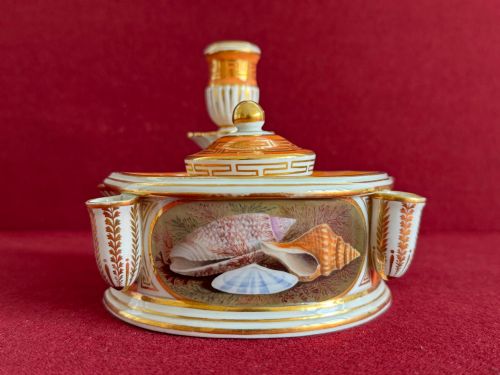
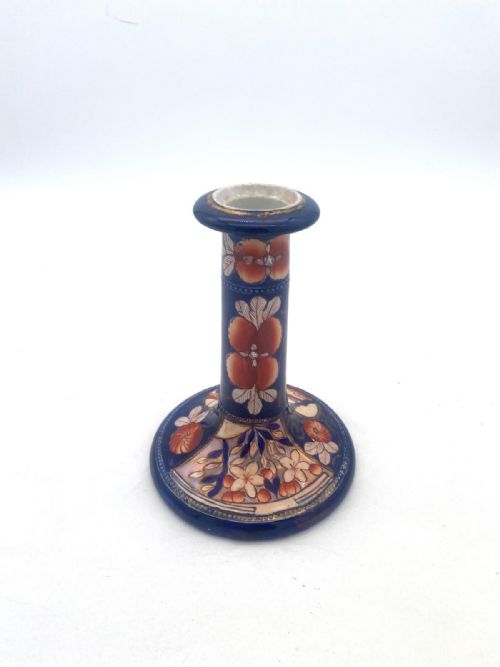
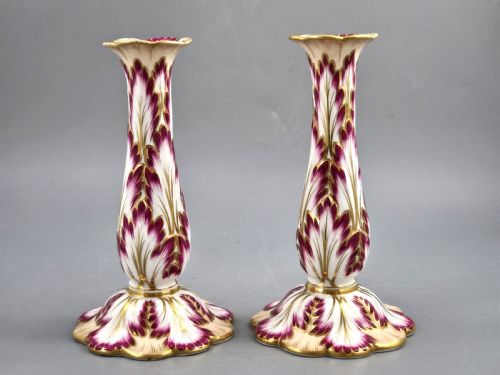
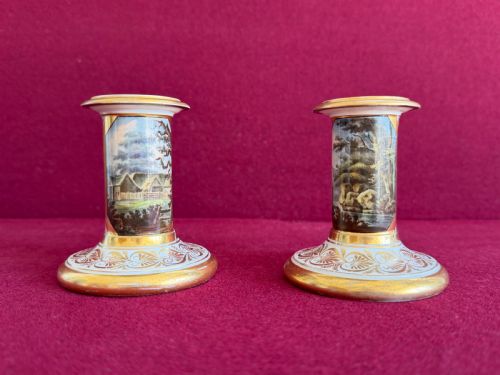
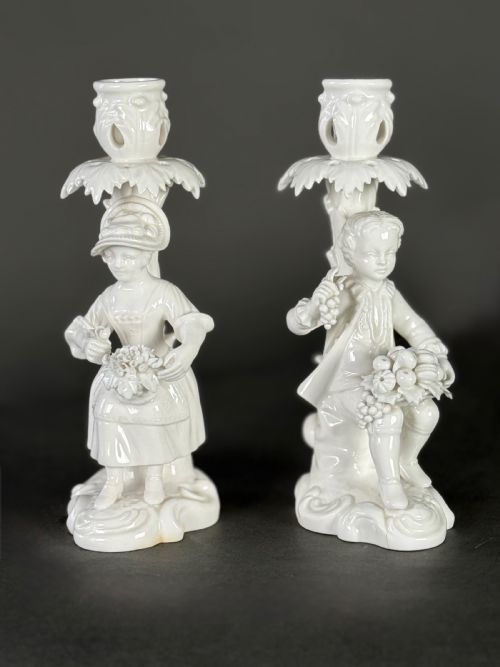
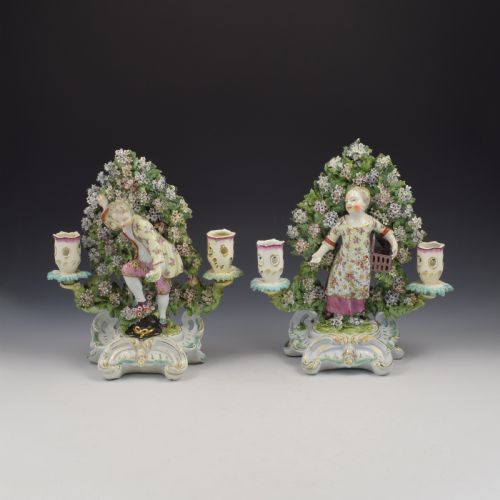
Georgian porcelain candlesticks encompass a variety of utilitarian and decorative lighting forms, including simple shafts, figural groups, and branched candelabra. When searching for georgian porcelain candlesticks, collectors most frequently encounter examples shaped as figures, musicians, or allegorical representations framed by elaborate foliage.
The objects span production periods from the mid-eighteenth century through the early nineteenth century, drawing upon Georgian, Regency, and Rococo design vocabularies. Makers across England and continental Europe utilised soft-paste and hard-paste bodies to construct these candleholders, often integrating sconces and detailed sculptural modelling.
Forms range from intimate chambersticks and go-to-bed pieces to substantial pairs adorned with bocage backgrounds. These pieces reflect the shift from practical domestic lighting towards highly ornamental cabinet objects during the Georgian era.
What Varies in Quality
Completeness of original components, such as matching sconces and intact bocage work, elevates an example. The reputation of the factory, from prominent English manufactories to continental workshops, heavily influences the standing of individual pairs within the broader range.
Georgian Porcelain Candlesticks Retail Price Guide 2026
Typical asking prices for georgian porcelain candlesticks among the pieces listed under this phrase on Sellingantiques today, from the lower quarter to the upper quarter. They describe what is for sale here now, not the wider market.
Object forms span standard candlesticks, figural groups with bocage, chambersticks, and multi-branch candelabra.
Mason·Ridgway·Barr Flight And Barr·Derby·Spode·Chelsea·Minton·Bow·Meissen
The Georgian Porcelain Candlesticks Glossary
- Bocage
- Applied ceramic foliage and floral background work surrounding figures on eighteenth-century porcelain. This decorative backdrop mimics natural shrubbery and requires delicate hand-assembly.
- Soft-paste porcelain
- An artificial ceramic paste fired at lower temperatures than hard-paste porcelain during the eighteenth century. It produces a warm, creamy glaze texture favoured by early English factories.
- Chamberstick
- A low-profile candleholder fitted with a loop handle and a drip pan for carrying around a house. These functional pieces often feature small decorative figures or holders for matches.
- Enamel
- Vitreous coloured decoration fused to the porcelain surface through subsequent kiln firings. Enamels provide the palette for painted garments, faces, and floral motifs.
- Sconce
- The metal or ceramic cup at the top of a candlestick designed to catch dripping wax and hold the candle securely. Original matching sconces contribute to the integrity of a pair.
- Ormolu
- Gilded bronze mounts used to frame or support porcelain bodies, particularly on continental candelabra. This technique combines metalworking craftsmanship with ceramic forms.
Georgian Porcelain Candlesticks: Frequently Asked Questions
How do I identify a chamberstick?
A chamberstick is a short, portable candlestick equipped with a loop handle and a wide saucer base designed to catch wax. They were used for carrying light through dark rooms at night.
Many examples include small figural attachments or match holders integrated into the saucer design.
What distinguishes soft-paste porcelain?
Soft-paste porcelain is an early ceramic composition fired at lower temperatures than hard-paste porcelain. It has a distinctive warm texture and interacts differently with glazes.
English factories relied on this formula during the eighteenth century before transitioning to refined bone china and hard-paste bodies.
Why are figures often paired?
Figural candlesticks were frequently modelled as matching pairs representing allegorical themes, seasons, or dancers. Displaying them together maintained symmetrical balance on mantelpieces.
Subjects like the four seasons or musical couples were standard paired compositions in Georgian interior decoration.