


Georgian Pierced Back Chair
A georgian pierced back chair brings architectural restraint and carved clarity to a room, offering sturdy utility paired with refined joinery.
Georgian Pierced Back Chair
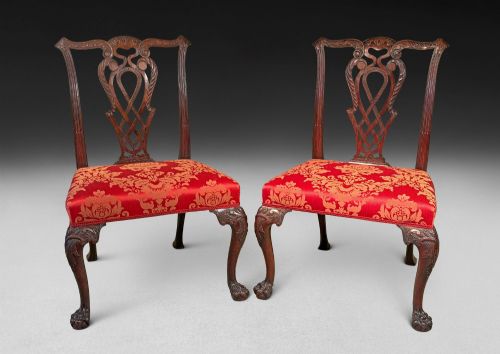
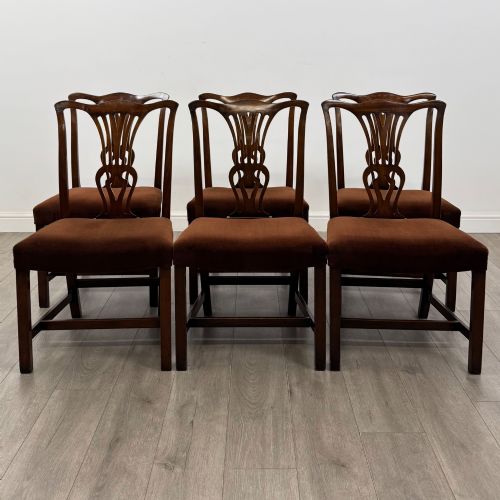
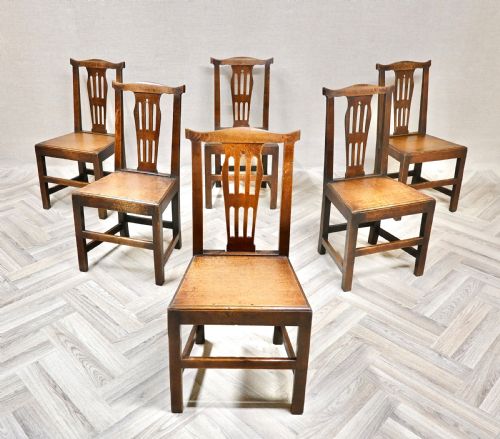
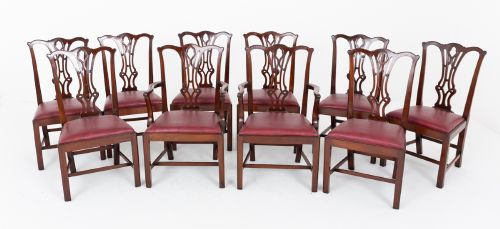
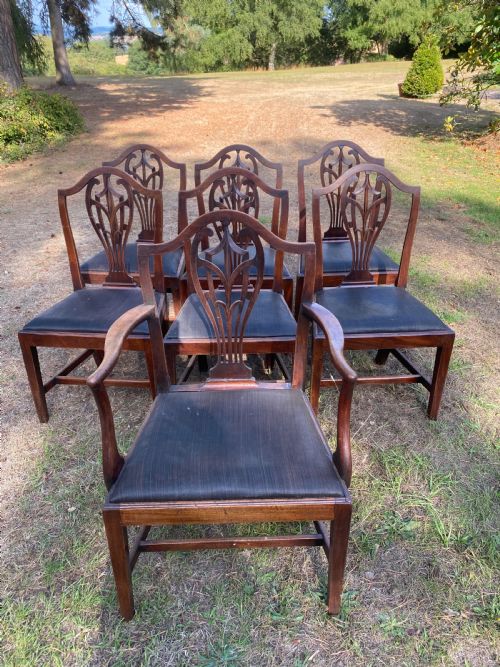
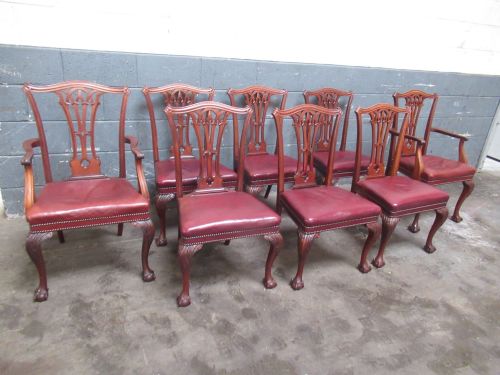
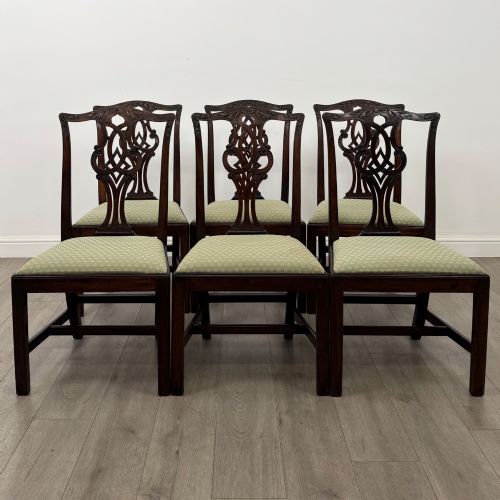
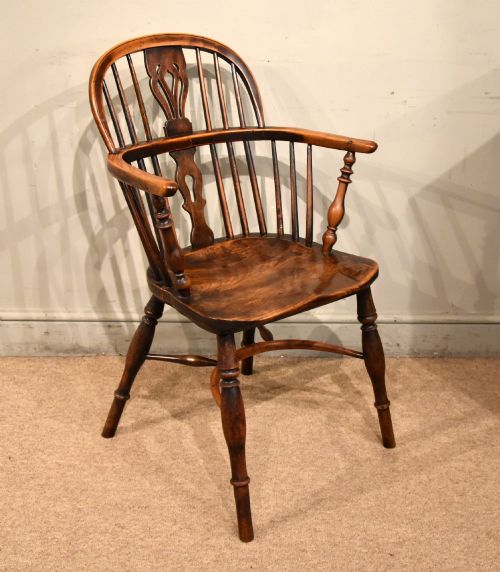
A georgian pierced back chair encompasses dining chairs, side chairs, and armchairs produced across the eighteenth and nineteenth centuries, often showing the influence of Chippendale or country vernacular traditions. The forms include mahogany examples with carved splats and upholstered drop-in seats alongside robust country windsors in yew, elm, and ash.
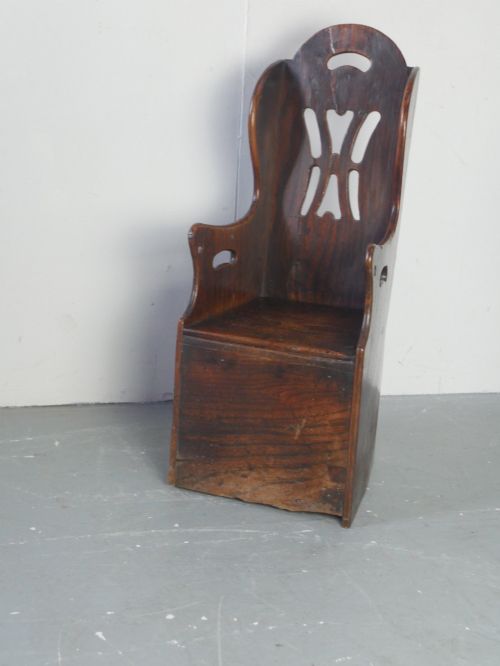
Buyers will encounter formal mahogany dining sets from the Georgian period alongside later revival iterations, as well as country kitchen chairs and comb-back or hoop-back windsor armchairs. These pieces function primarily as seating around dining tables or desks, though smaller child variants and individual elbow chairs appear frequently.
The regional variety ranges from urban cabinet-makers working in polished mahogany to rural makers utilising native timber such as beech, oak, and yew wood. Sets appear alongside pairs and single side chairs, reflecting domestic arrangements from grand country houses and modest farmhouses alike.
How They Were Made
Makers constructed these seats using a combination of dense imported hardwoods like mahogany and native timbers including elm, ash, yew, and beech. Urban pieces relied on precise cabinet-making techniques for joined frames and pierced splats, while country makers employed Windsor construction methods with turned spindles and steam-bent hoops.
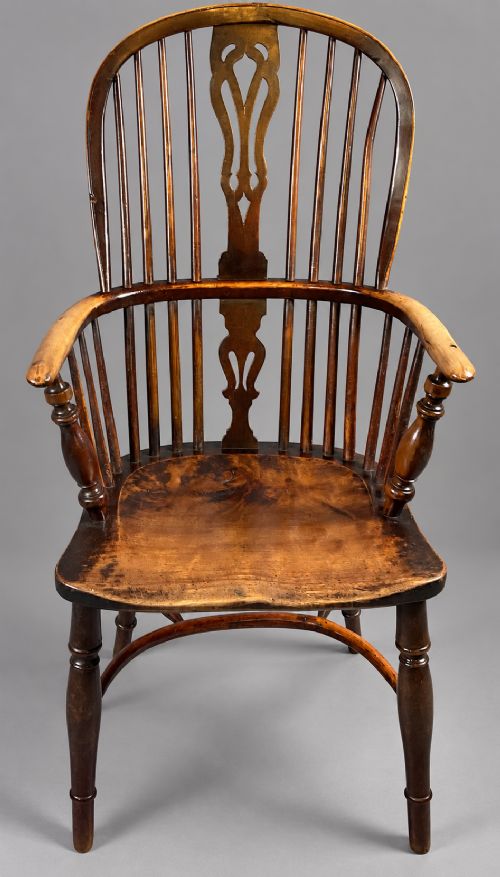
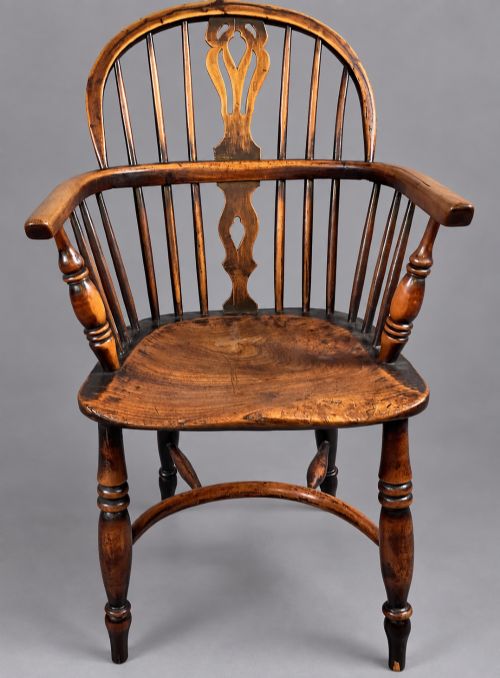
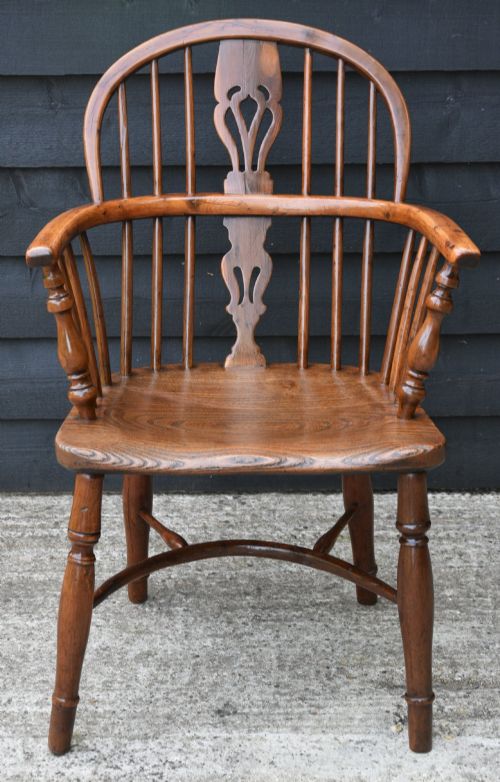
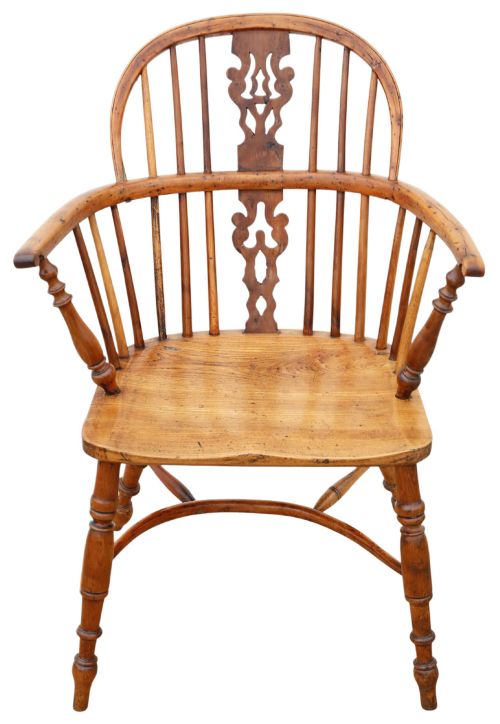
Joinery methods involved mortise and tenon joints, pegged frames, and shaped solid wood seats hollowed for comfort. Windsor armchairs integrated cleft legs into thick saddle seats, secured with wedged tenons and reinforced by crinoline or horseshoe stretchers.
Surface finishing ranged from polished mahogany to waxed fruitwood and unpainted timber, occasionally accompanied by drop-in seats covered in fabric or needlework.
Several armchairs proudly retain their crinoline stretchers, offering seventeenth-century styling revived for nineteenth-century sitters.
What Varies in Quality
The calibre of a georgian pierced back chair rests upon the crispness of the carved splat and the selection of timber grain, particularly in figured mahogany and yew wood. Superior examples display balanced proportions, harmonious timber matching across sets, and robust original structural framing without excessive replacement parts.
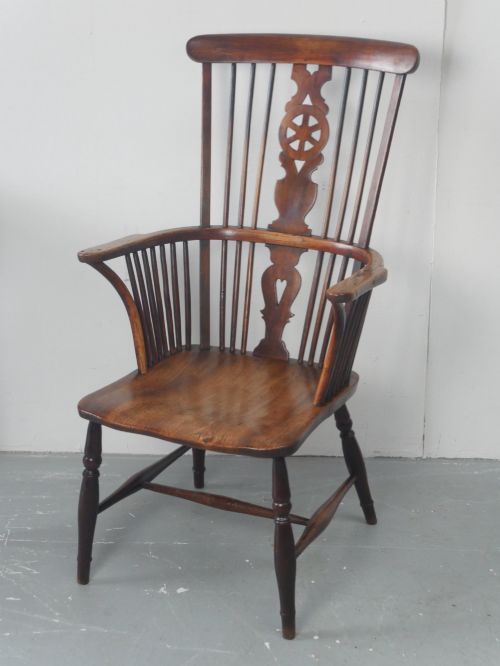
Country pieces derive their merit from the complexity of the spindle arrangement, such as comb-back designs or crinoline stretchers, and the depth of the sculpted elm seat. Finer urban dining chairs demonstrate intricate fretwork and disciplined joinery that withstands centuries of daily use.
The Georgian Pierced Back Chair Glossary
- Pierced splat
- The central vertical slat of a chair back pierced with decorative cut-outs. This ornamental feature defines the silhouette of formal dining and side chairs.
- Windsor armchair
- A chair built with a solid wooden seat into which the legs and back spindles are directly fitted. These country seats often combine yew, elm, and ash timbers.
- Drop-in seat
- A removable frame upholstered in fabric or needlework that rests within a rebate in the chair rails. It allows for easy reupholstering without altering the main frame.
- Crinoline stretcher
- A curved stretcher connecting the legs of a Windsor chair in a continuous loop. It provides lateral stability while offering a rest for the feet.
- Comb-back
- A Windsor chair design where the upper back resembles the upright teeth of a comb set atop a low spindle back. This regional form appears frequently in eighteenth-century ash and elm.
Georgian Pierced Back Chair: Frequently Asked Questions
How do I date a Windsor chair?
Dating a Windsor chair involves examining the timber combinations, turning styles of the legs, and the construction of the seat and back hoop. Earlier examples often utilise ash and elm with comb-back profiles.
Nineteenth-century versions frequently incorporate yew wood and feature hoop backs with shaped arm supports. Tool marks and construction wear provide further clues to age.
Are these chairs suitable for daily dining?
These chairs were built for daily domestic use and remain entirely practical for contemporary dining tables. Solid timber construction and sturdy joinery ensure they handle regular sitting.
Care should be taken with antique upholstery on drop-in seats and maintaining stable indoor humidity. Many survive precisely because their original construction was exceptionally durable.
What is the difference between a country and formal chair?
Formal chairs utilise imported mahogany with refined carved details, square or cabriole legs, and upholstered drop-in seats. They reflect urban Georgian interior taste.
Country chairs employ native timbers like yew, elm, and ash, focusing on turned spindles, steam-bent hoops, and solid wooden seats. They originate from rural workshops and vernacular traditions.