

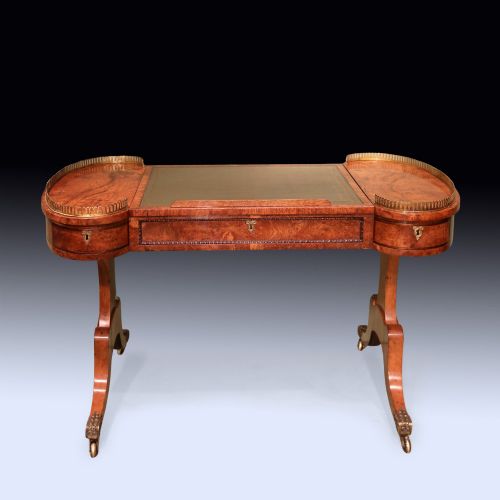
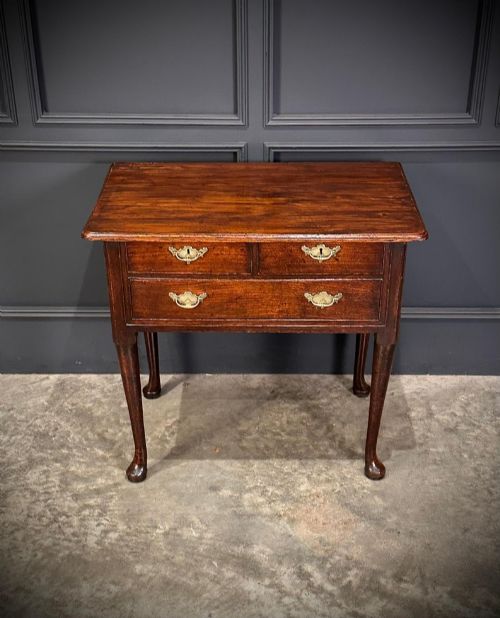
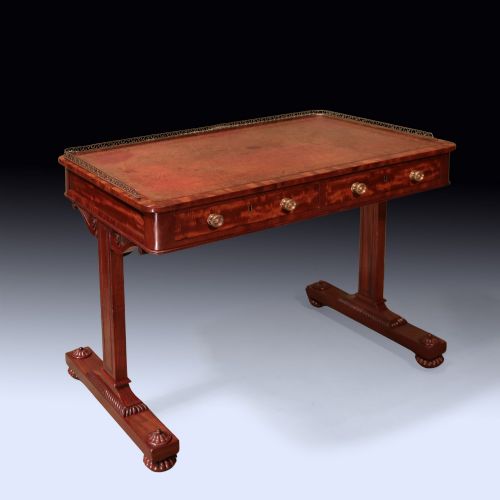
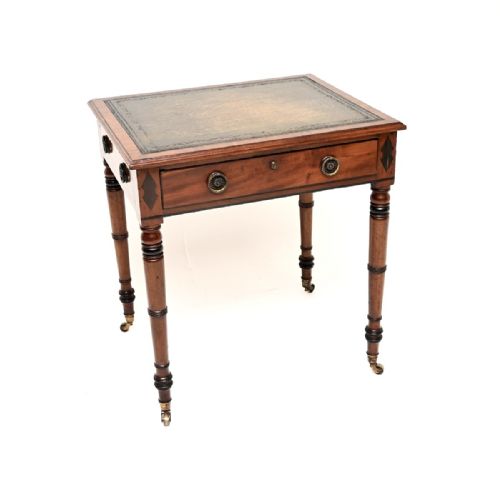

Georgian Period Writing Table
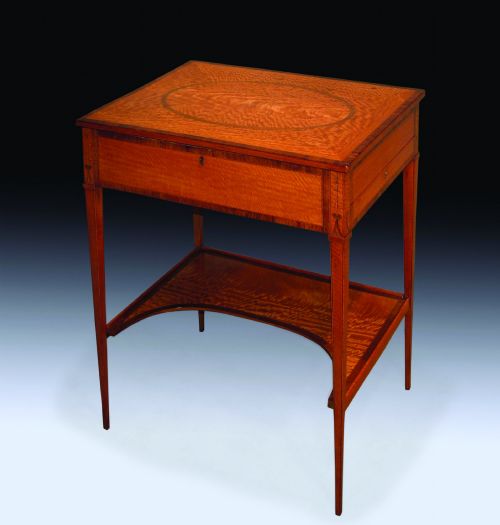
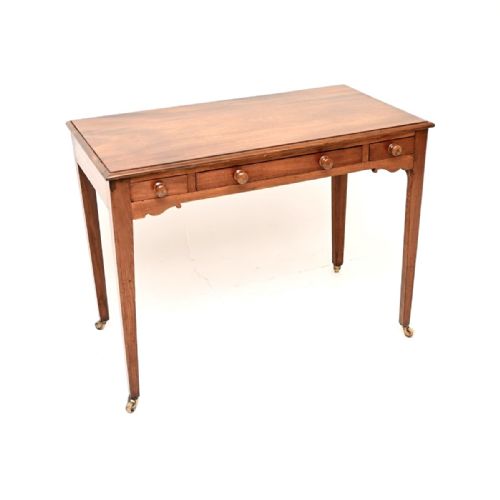
A georgian period writing table is a sturdy, timber-built piece designed for correspondence, bringing reliable domestic workspace and period craft into a room.
Georgian Period Writing Table
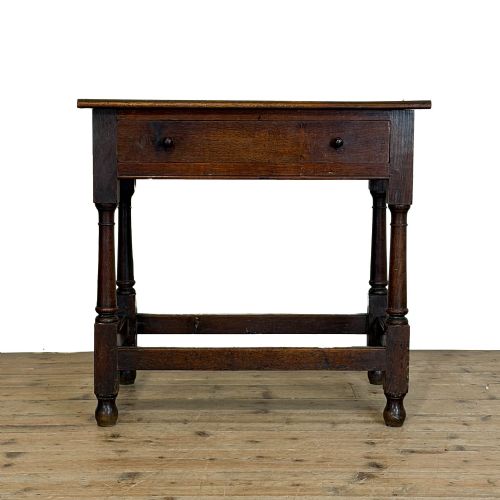
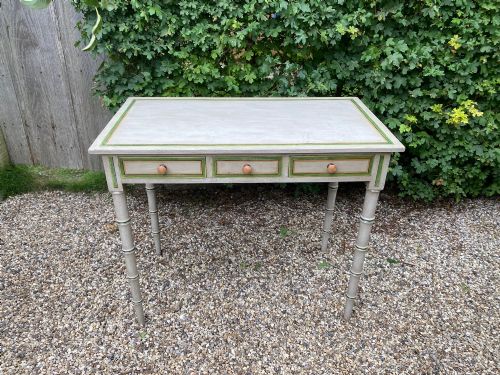
When you search for a georgian period writing table, you encounter practical domestic desks and side pieces made across the eighteenth and early nineteenth centuries. The selection spans straightforward oak and mahogany designs from the Georgian era alongside refined Sheraton and Regency examples.
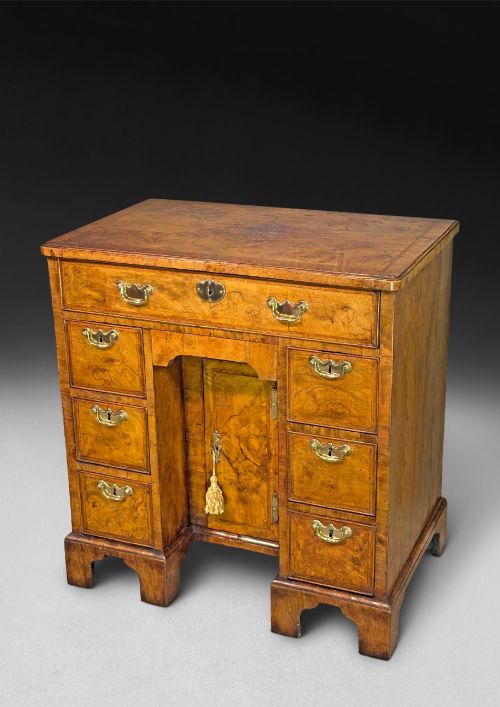
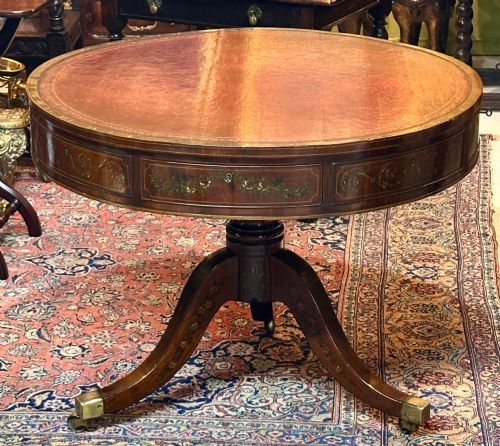
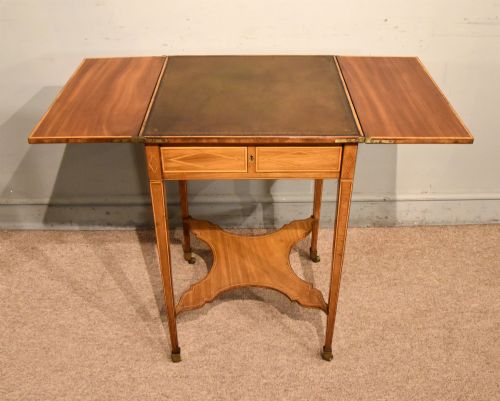
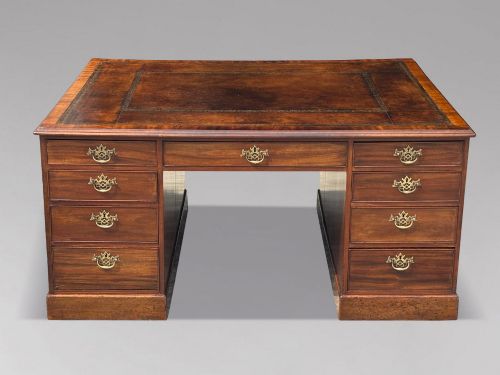
You meet various formats on this page, ranging from compact lowboys and kneehole desks to partners desks and drum tables. Many pieces integrate writing surfaces with drawers or drop leaves for storage.
How they were made
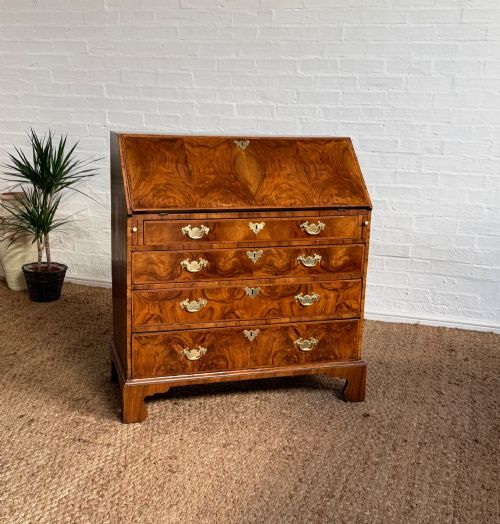
Cabinetmakers built these tables primarily in mahogany and oak, frequently incorporating decorative veneers of walnut, satinwood, burr oak, and partridgewood. Selected pieces feature inlay work in boxwood or mountings in brass.
Surfaces often incorporate inset leather writing areas, while specialised forms utilise tambour shutters, drop leaves, or pedestal bases.
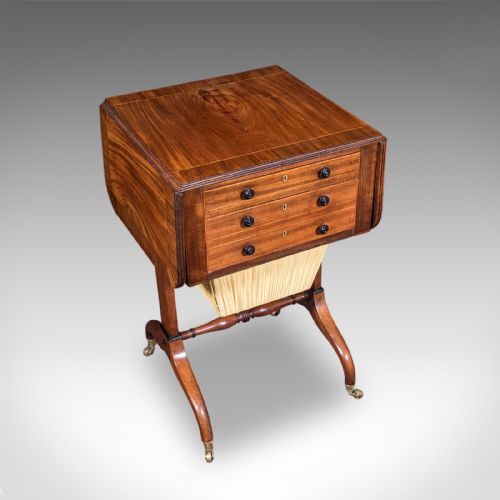
Several writing tables double as chamber furniture, sewing tables, or architect stations with rising mechanisms.
What varies in quality
Quality rests upon the choice of timber and the execution of figured veneers like walnut or satinwood. Superior examples display careful grain selection and crisp inlay work.
The sophistication of the construction distinguishes standard side tables from complex partners desks, drum tables, and tambour-fitted writing pieces.
Gillows of Lancaster
The Georgian Period Writing Table Glossary
- Lowboy
- A small table with drawers, typically used as a side table or dressing surface. These pieces often feature cabriole or straight legs supporting an oak or walnut top.
- Drum table
- A circular library or writing table featuring a revolving top above a frieze of drawers. These are supported on a central pillar and splayed legs.
- Partners desk
- A large double-sided desk designed for two people to work opposite one another. They incorporate banks of drawers and cupboards beneath the writing surface.
- Tambour
- A sliding shutter formed of narrow strips of wood glued to canvas backing. This mechanism conceals pigeonholes and small drawers in desks.
- Kneehole desk
- A compact desk with a recessed central opening beneath the writing surface, flanked by pedestals of drawers.
Georgian Period Writing Table: Frequently Asked Questions
What is a georgian period writing table?
A georgian period writing table is a timber desk or side table produced during the eighteenth or early nineteenth centuries. These pieces were built for correspondence and study in domestic and professional settings.
They appear in various timber species, including mahogany, oak, and walnut, often featuring fitted drawers and specialised writing surfaces.
How do I identify a Sheraton table?
Sheraton style pieces date from the late eighteenth century and generally display straight lines, geometric proportions, and contrasting veneer inlays. Satinwood and mahogany are common timbers for this aesthetic.
These tables frequently feature delicate tapered legs and decorative stringing rather than heavy carving.
What timber was used most?
Mahogany and oak form the structural foundation for the majority of these listings. Oak appears frequently in earlier pieces and country house furniture.
Walnut, satinwood, and rosewood were utilised for decorative veneers and finer cabinet work.
How are partners desks different?
Partners desks are large double-sided tables designed with drawers and cupboards accessible from both faces. They allowed two individuals to sit and work opposite each other.
These pieces typically date from the George III period and require substantial floor space.
Where did lowboys go?
Lowboys functioned as small side tables or dressing tables in domestic rooms. Their modest scale allowed placement in bedrooms, halls, and parlours.
They provide surface space and drawer storage without dominating a room.