

Georgian Period Server
A georgian period server brings formal dining architecture into a room, offering robust timber surfaces designed for staging meals.
Georgian Period Server
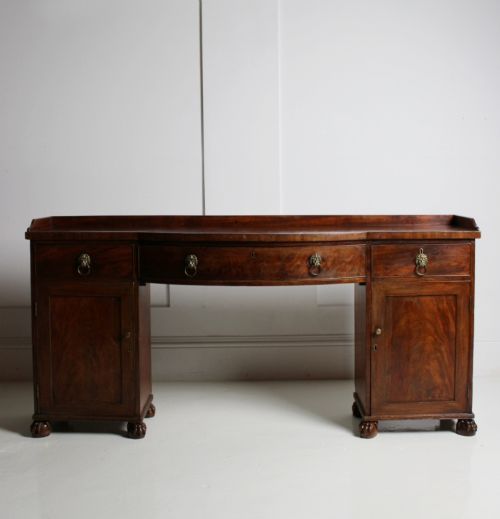
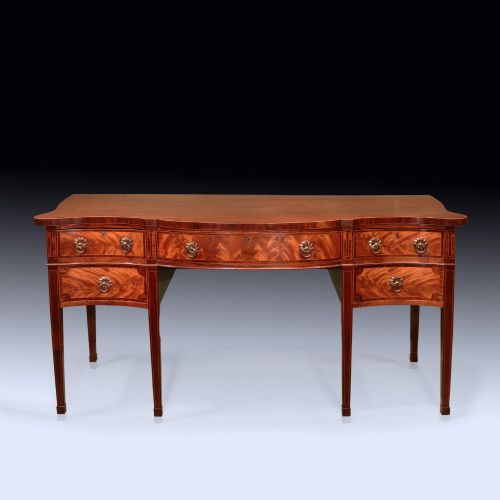
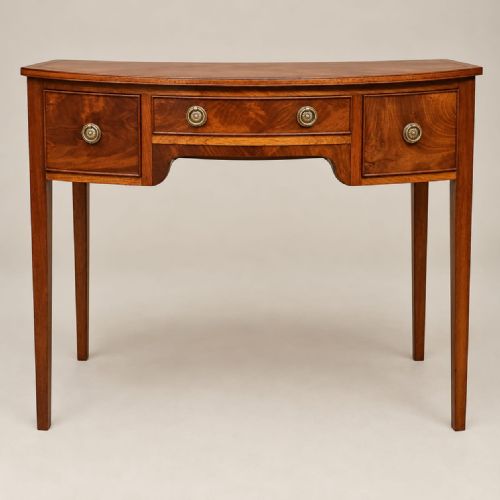
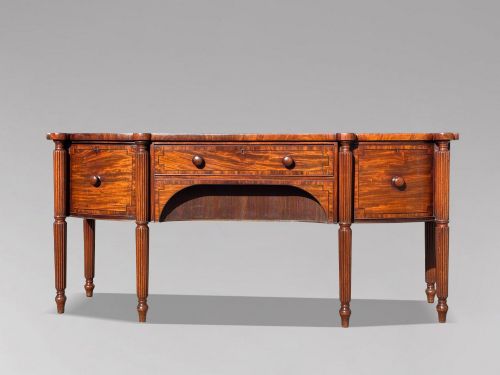
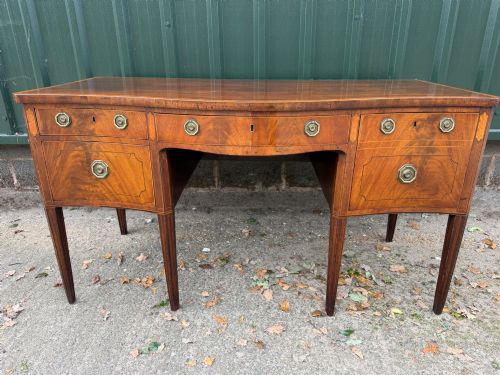
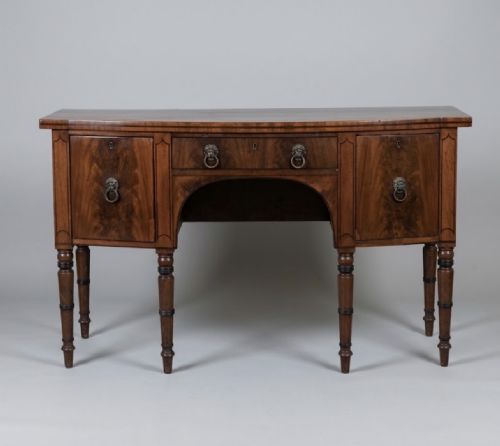
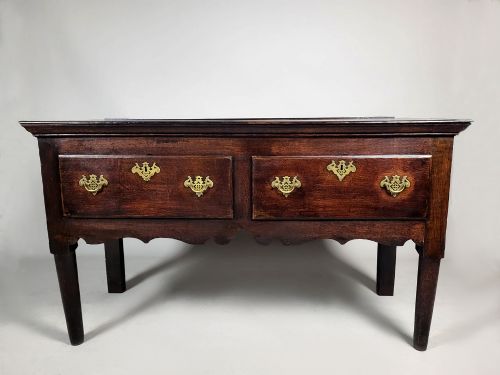
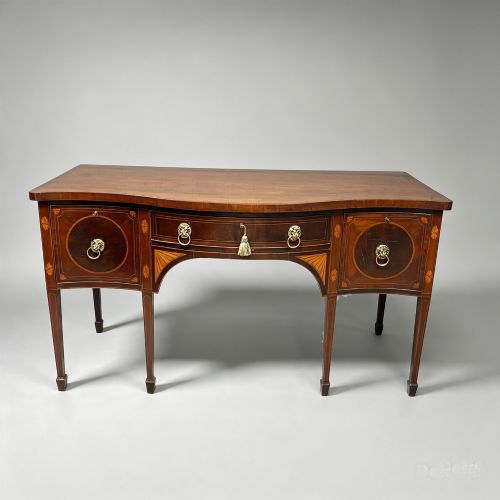
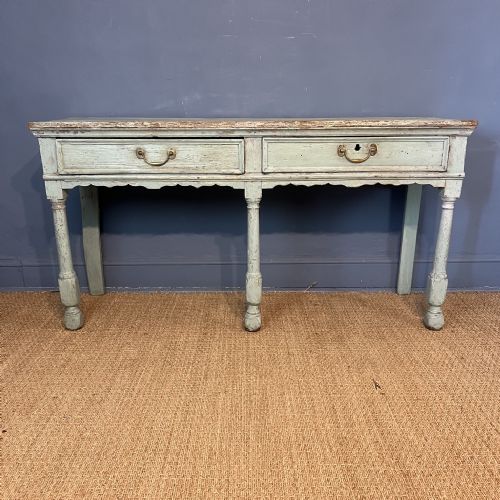
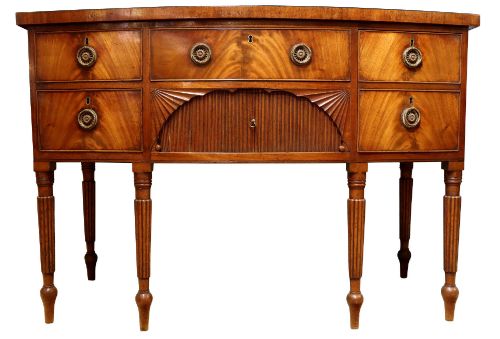
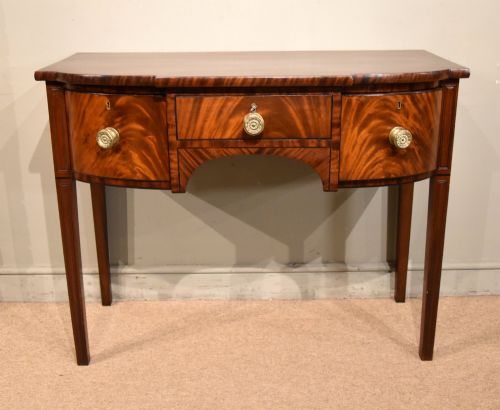
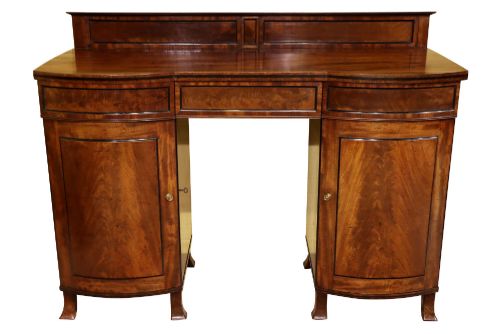
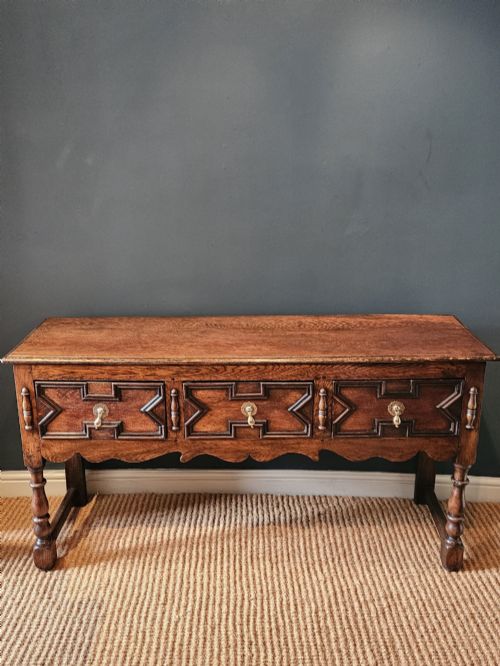
A georgian period server encompasses large dining room furniture designed for food preparation and display, spanning sideboards, side tables, and serving tables. Buyers seeking a georgian period server most commonly encounter mahogany bowfront and serpentine sideboards alongside oak dresser bases from the eighteenth and nineteenth centuries.
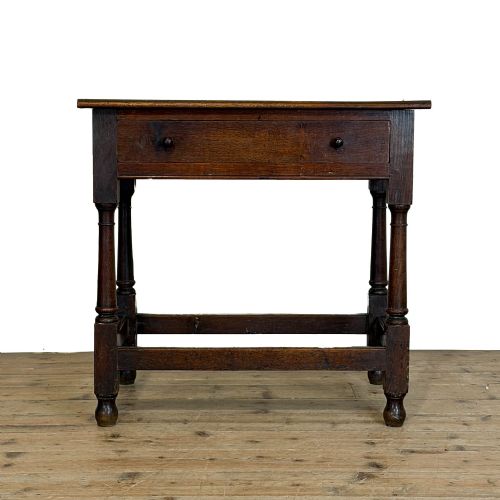
The form developed across the reigns of George I, George II, and George III, evolving from simple oak lowboys and potboard dressers into sophisticated pedestal sideboards and console tables during the Regency era.
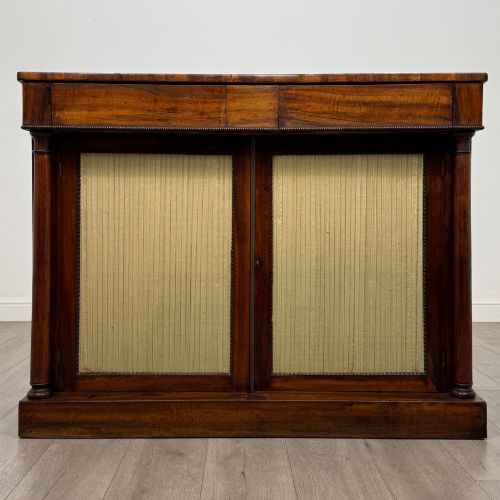
Makers utilised various forms including chiffoniers, dumb waiters, and side cabinets, reflecting the changing domestic requirements for serving food and storing dining utensils within elite households.
Materials and construction
Cabinet makers built these pieces predominantly using solid mahogany and oak, often applying flame mahogany veneer and boxwood inlay to create decorative surface contrasts. Timber selection dictated the structural integrity, with dense hardwoods supporting heavy carved mouldings and serpentine profiles.
Secondary woods such as pine appear in concealed areas like drawer linings and carcases, whilst brass handles and original brasses punctuate the darker timber surfaces. Glaze and silk panels occasionally feature in associated cabinetry like cupboards and chiffoniers.
Georgian Period Server Retail Price Guide 2026
Typical asking prices for georgian period server among the pieces listed under this phrase on Sellingantiques today, from the lower quarter to the upper quarter. They describe what is for sale here now, not the wider market.
Current listings feature pieces spanning the 18th Century, Regency, Georgian, 19th Century, 1800, and Victorian periods.
Assessing quality in construction
Quality rests in the precision of the cabinet work, particularly where curved drawer fronts meet the frame and how veneer matches across symmetrical surfaces. Superior examples demonstrate careful timber selection, where flame mahogany grain flows naturally across multiple drawers and doors.
The refinement of carved details, such as crisp mouldings on a George I oak dresser or inlaid boxwood stringing on a Sheraton sideboard, separates standard utility furniture from high-status dining pieces.
Gillows
The Georgian Period Server Glossary
- Bowfront
- A curved cabinet front that swells outward in the centre, commonly seen on Regency and George III sideboards.
- Lowboy
- A small oak or walnut side table with drawers, typically raised on four legs and dating from the early eighteenth century.
- Serpentine
- A front profile characterised by a convex centre flanked by concave curves, requiring advanced woodworking skill.
- Dumb waiter
- A tiered revolving stand used to hold dishes and utensils beside a dining table without requiring servant attendance.
- Potboard dresser
- An oak dresser featuring an open lower shelf traditionally used for storing pots and kitchen domestic vessels.
Georgian Period Server: Frequently Asked Questions
How do I identify a genuine georgian period server?
Examine the timber species, construction joints, and secondary woods used in the drawer linings and backboards. Authentic pieces exhibit period-appropriate hand-cut dovetails and timber movement consistent with age.
Compare the proportions and decorative motifs against documented examples from the reigns of George I through to the Regency period. Original brass hardware and patination provide further confirmation of age.
Where should I place a georgian period server in my home?
These pieces suit dining rooms, hallways, and living spaces where their long proportions anchor the wall space. Ensure adequate clearance around the piece to accommodate opening drawers and doors without obstruction.
Keep wooden items away from direct heat sources and strong sunlight to protect vulnerable mahogany veneers and historical finishes from drying out.
How should I care for antique mahogany and oak furniture?
Maintain a stable indoor humidity and temperature to prevent the solid timber and veneers from splitting or warping. Dust regularly with a dry, soft cloth and avoid silicone-based polishes that build up over time.
Apply a traditional beeswax sparingly to nourish the wood surface and preserve the historic patina developed over centuries of use.