
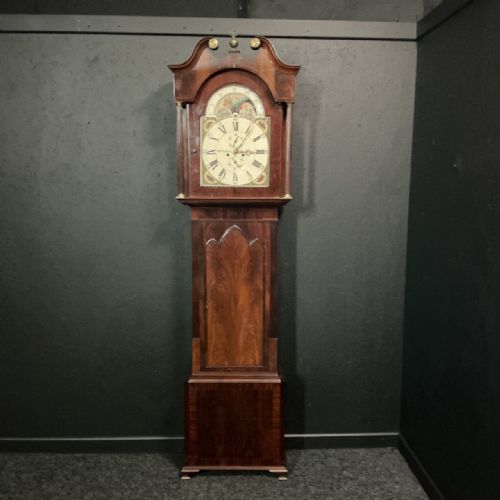


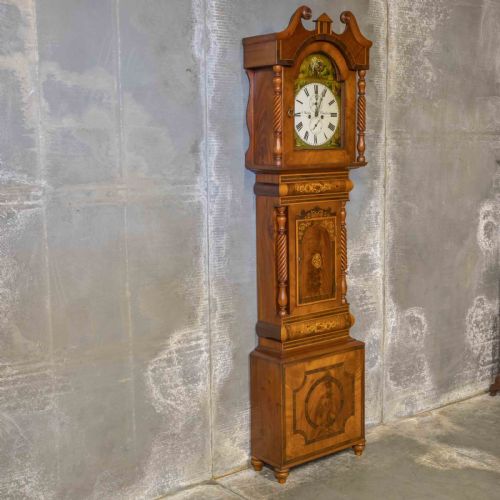


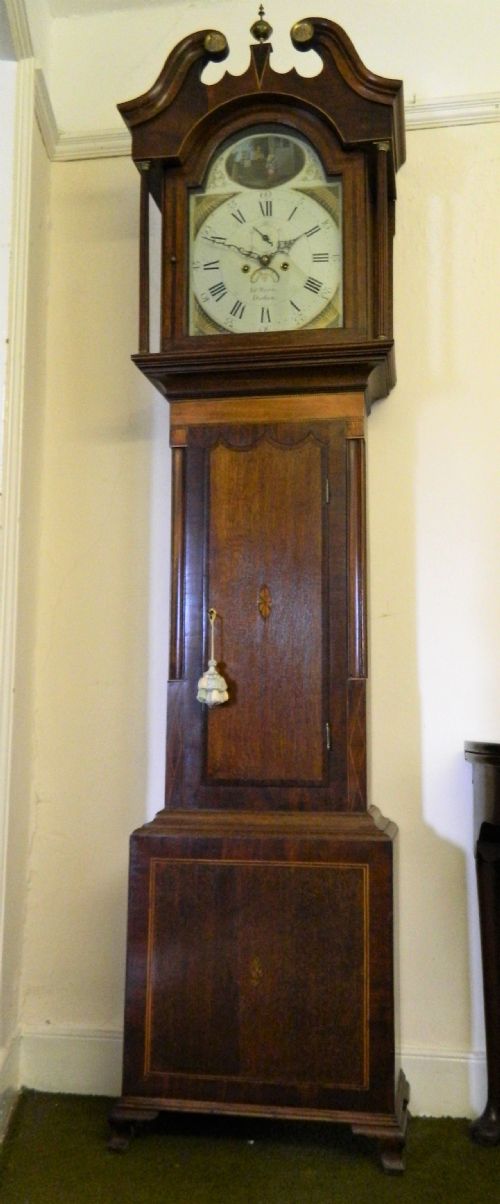


Georgian Period Longcase Clock
These georgian period longcase clock examples measure time through brass dials and stately wooden cases, offering an enduring presence for any hallway.
Georgian Period Longcase Clock
A georgian period longcase clock stands tall as a focal point in a room, enclosing weighted movements within a fitted wooden housing. These timepieces embody the domestic architecture of the eighteenth century and the early decades of the nineteenth.
The versions most frequently met on this page are constructed from mahogany or oak, often displaying the regional character of provincial makers. Examples range from modest cottage proportions to more elaborate architectural designs featuring lancet tops or chequered inlay.
The overarching style spans the Queen Anne transition through to George III and later nineteenth-century interpretations. Each piece reflects the aesthetic preferences of its period, from simple country timbers to figured urban veneers.
Materials and construction
Cabinetmakers utilised solid timbers such as oak and mahogany, alongside walnut and ebonised wood, to build the protective trunks and hoods. Selected examples incorporate burr veneers and intricate chequered inlay to enrich the primary surfaces.
Dial construction typically combines engraved brass with painted iron, protected behind glass panels fitted into the hood door. Inside these enclosures, mechanical brass gear trains regulate the passage of time through falling weights and swinging pendulums.
Listings feature mahogany, oak, walnut, and painted iron materials across the Georgian period and the eighteenth century.
Distinctions in quality
The refinement of the timber selection and the sophistication of the cabinetwork separate the standard examples from the exceptional. Richly figured mahogany and well-executed burr veneers indicate a higher grade of commission.
The legibility and artistry of the dial, whether through crisp brass engraving or detailed painted ironwork, reflect the skill of the horologist. Cases with balanced proportions and harmonious decorative details command greater attention.
Williams·Raine of Durham·Burton of Kendal·Rule of Portsmouth·Halifax
The Georgian Period Longcase Clock Glossary
- Longcase clock
- A tall pendulum clock enclosed in a wooden case designed to stand upright on the floor. These pieces are also frequently referred to as grandfather clocks.
- Hood
- The upper section of the case that encloses and protects the dial and movement, usually featuring a glass door. This part often lifts off or opens forward to allow access to the clock face.
- Trunk
- The long central body of the clock housing the falling weights and the swinging pendulum. It provides the primary vertical line of the piece.
- Ebonised wood
- Timber treated with a finish to imitate the dark, dense appearance of ebony. This material creates a striking contrast against brass dial components.
- Painted iron
- A dial material introduced to replace traditional brass faces during the later eighteenth century. These surfaces often feature delicate floral motifs or painted spandrels.
Georgian Period Longcase Clock: Frequently Asked Questions
What is a georgian period longcase clock?
A georgian period longcase clock is a tall mechanical timekeeper housed in a wooden trunk, produced during the eighteenth and early nineteenth centuries. These instruments combine cabinetmaking and horology into a single upright furnishing.
They served as the primary timepiece for domestic households, keeping accurate time through weights and pendulums while anchoring the decor of a room.
How do I tell different periods apart?
Distinguishing between periods relies on observing shifts in timber choice, dial design, and overall cabinet proportions. Early pieces often utilise walnut or oak with square brass dials, while later examples frequently incorporate mahogany and painted iron dials.
Details such as lancet tops and chequered inlay point toward specific stylistic preferences within the broader Georgian era.
What woods were used?
Cabinetmakers employed native and imported timbers, predominantly oak and mahogany, alongside walnut and ebonised wood. Choice often depended on the region of origin and the intended formality of the piece.
More elaborate examples featured burr mahogany veneers and decorative inlay work to enhance the visual depth of the grain.