
Georgian Pembroke Side Table
A georgian pembroke side table brings versatile drop-leaf proportions and refined cabinetwork into a room.
Georgian Pembroke Side Table
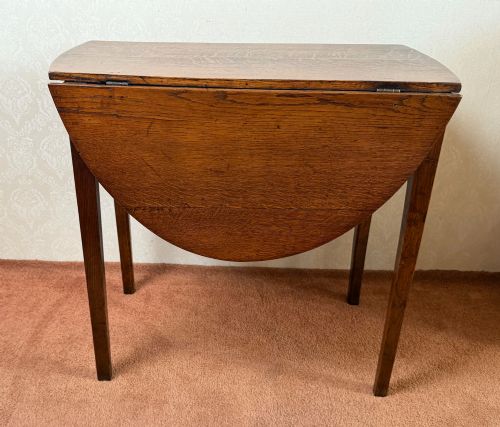
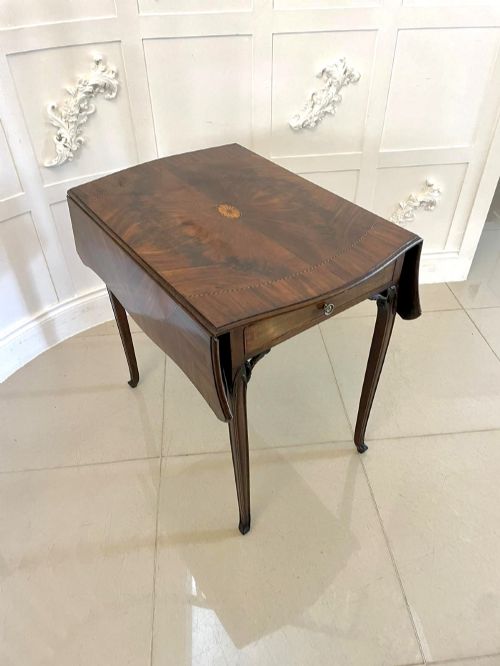
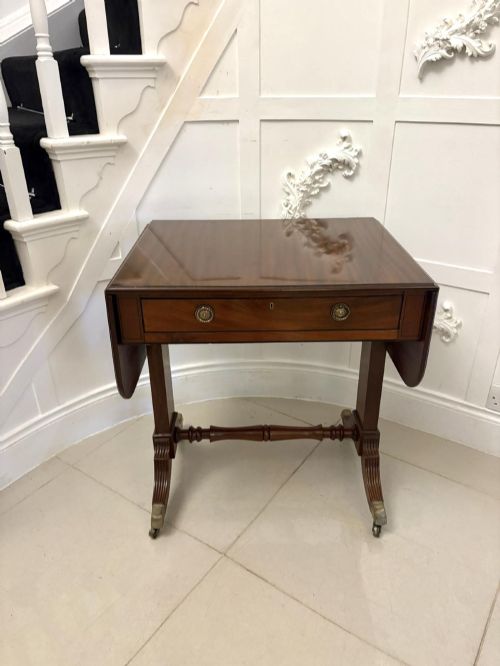
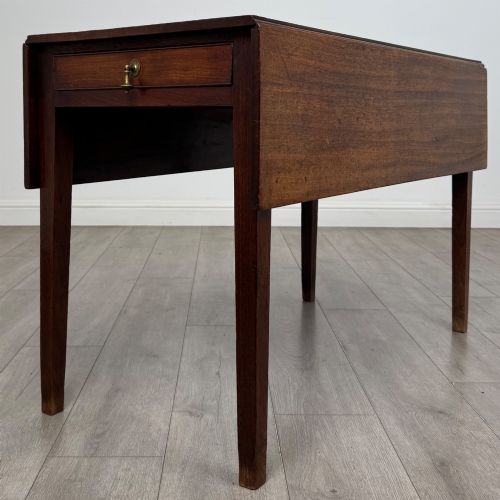
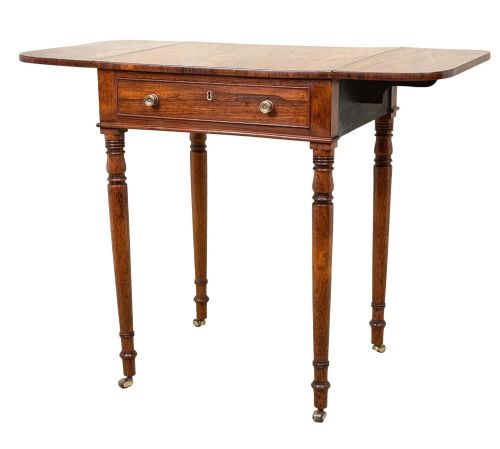
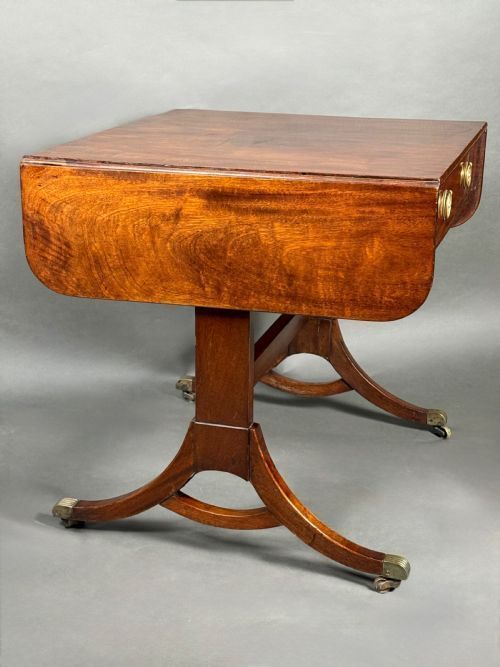
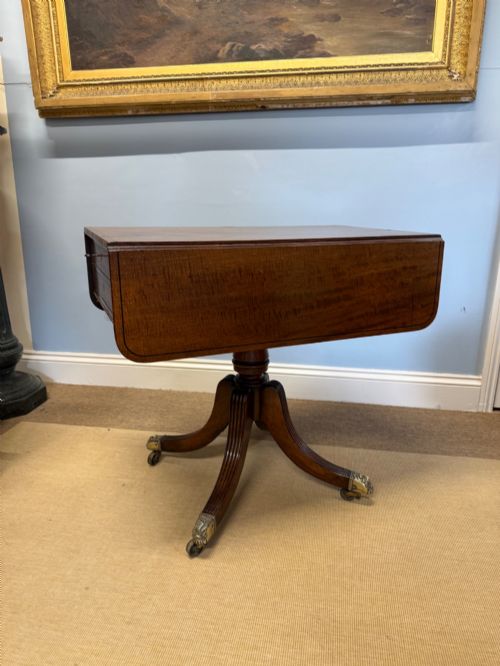
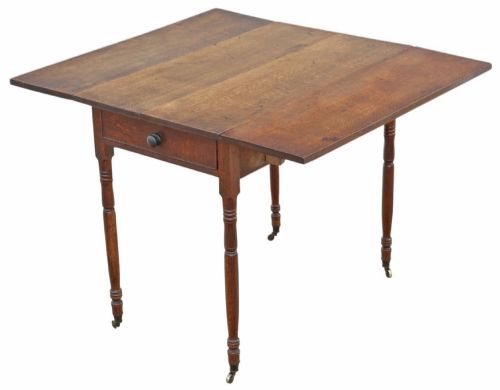
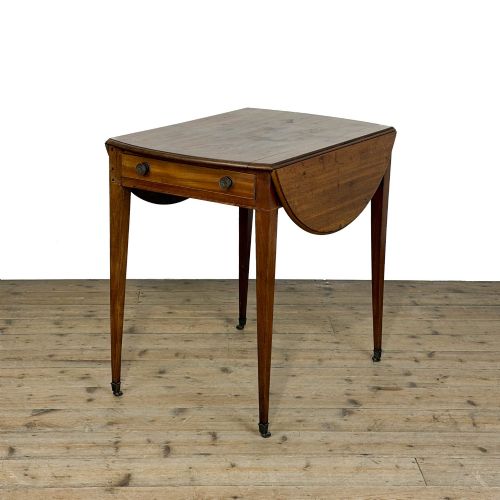
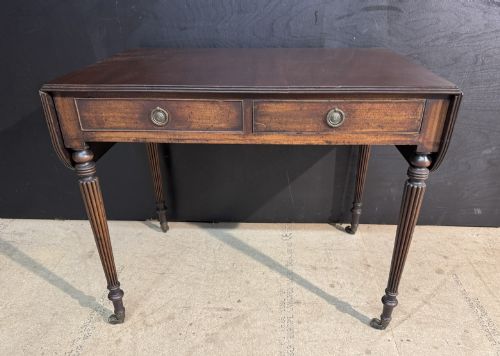
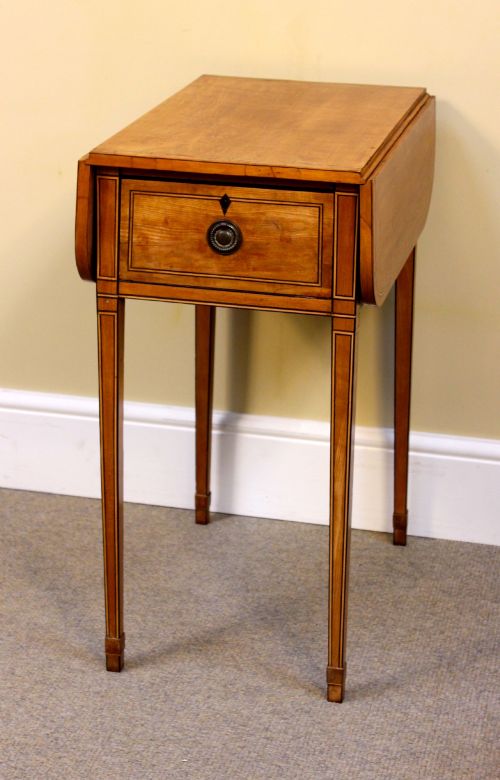
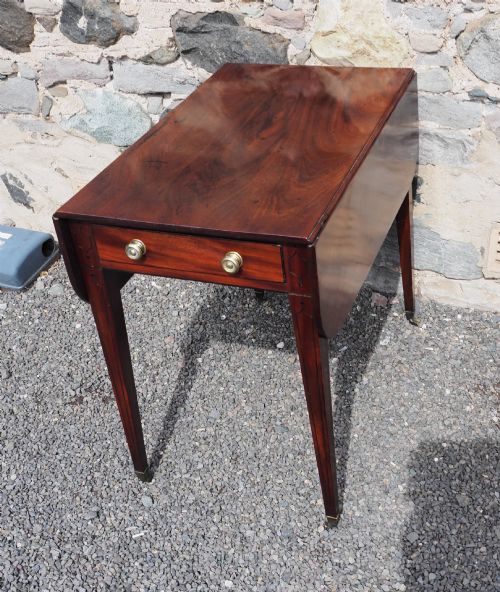
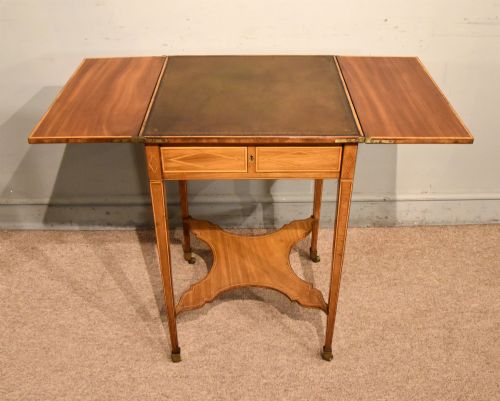
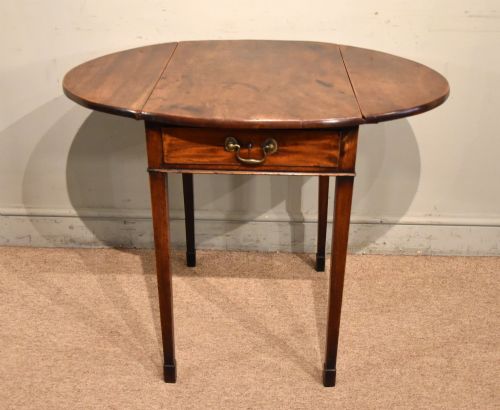
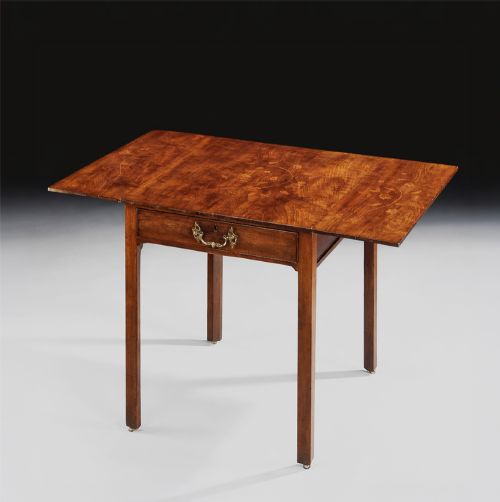
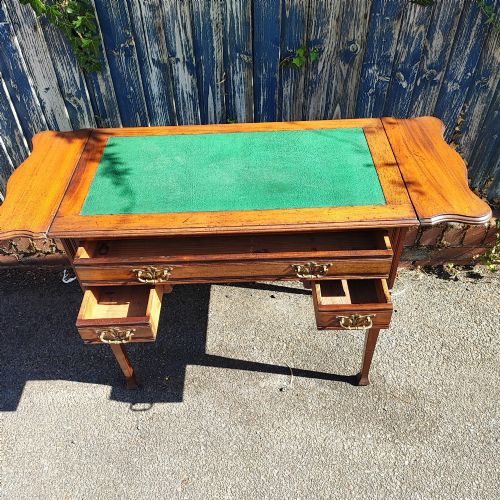
A georgian pembroke side table is a compact drop-leaf table designed with hinged flaps on either side to expand its surface when required. The pieces on this page span the eighteenth and nineteenth centuries, taking forms such as Pembroke tables, occasional tables, and writing tables.
Most examples appear in mahogany, often featuring cross-banding, boxwood inlay, or satinwood, alongside occasional pieces in oak, walnut, and sycamore. They function as side tables, lamp tables, and small writing desks within period and traditional interiors.
Materials and construction
Cabinetmakers built these tables primarily using solid and veneered mahogany, frequently selecting figured timber for the top and drawer fronts. Drop-leaf actions rely on hinged brackets or gate legs that swing out to support the extended flaps.
Inlay work incorporated boxwood, satinwood, and partridge wood, creating contrasting geometric borders or central paterae. Drawer construction typically utilised traditional dovetailed joints, sometimes housing fitted compartments for writing or storage.
Listings on this page include mahogany, satinwood, rosewood, and oak, spanning the Georgian, Regency, and Victorian periods.
Assessing craftsmanship
Quality rests in the choice of timber, where tightly figured flame mahogany or fiddleback sycamore elevates a piece above plain stock. The precision of the wood inlay and the crispness of cross-banding indicate the maker's level of skill.
Structural integrity appears in the smooth operation of the drop-leaf supports and the neatness of the joinery within the drawer box. Fine patination on the timber surface distinguishes untouched older examples from later restorations.
Edwards and Roberts·Gillows
The Georgian Pembroke Side Table Glossary
- Pembroke table
- A small occasional table featuring two hinged drop leaves on opposing sides. It typically includes one or two small drawers.
- Cross-banding
- A strip of veneer applied to the border of a table top so that the grain runs perpendicular to the central panel.
- Drop-leaf
- A hinged flap attached to the main surface of a table that folds down when not supported by a bracket or leg.
- Satinwood
- A durable, lustrous timber native to the West Indies and India, prized for its pale yellow colour and smooth finish.
- Patina
- The surface sheen and softening of tone developed on wood furniture through age, light exposure, and handling.
Georgian Pembroke Side Table: Frequently Asked Questions
How were pembroke tables originally used?
These tables served multiple functions in eighteenth and nineteenth-century rooms as movable surfaces for writing, serving tea, or placing beside seating. Their folding leaves allowed them to sit compactly against a wall until needed.
Over time, owners adapted them as lamp tables, bedside stands, or small breakfast surfaces depending on the room's layout.
Can I use a pembroke table as a desk?
Many examples feature single drawers fitted with compartments, inkwells, or writing surfaces designed specifically for correspondence. The drop leaves provide extra space for paper when extended.
For daily writing tasks, ensure the height and leg clearance match your seating requirements.
How do I tell an 18th-century table from a 19th-century one?
Eighteenth-century examples often display simpler, understated proportions with mahogany solids and subtle stringing. Nineteenth-century pieces frequently introduce bolder figure woods, more complex satinwood or boxwood inlay, and heavier turnings.
Examining the construction methods inside the drawer and the type of secondary wood used underneath helps clarify the date.
Where does the name pembroke come from?
Etymologists and furniture historians generally attribute the name to the Countess of Pembroke, who commissioned the first design of this style during the eighteenth century.
The convenient folding flaps quickly popularized the form among English cabinetmakers.