
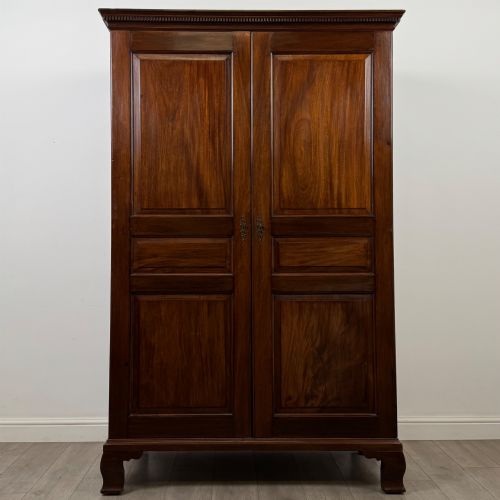

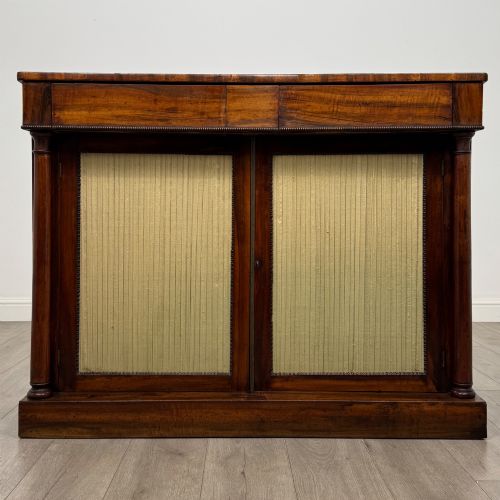
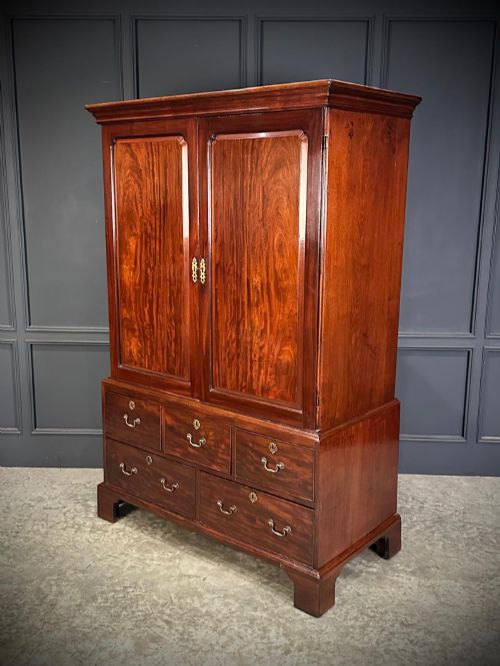
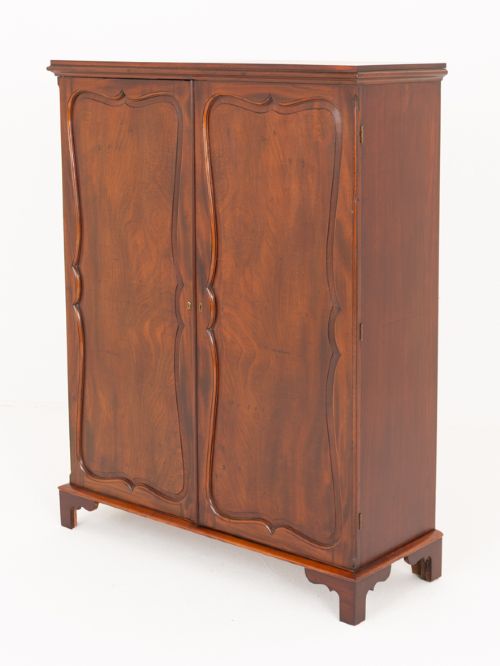
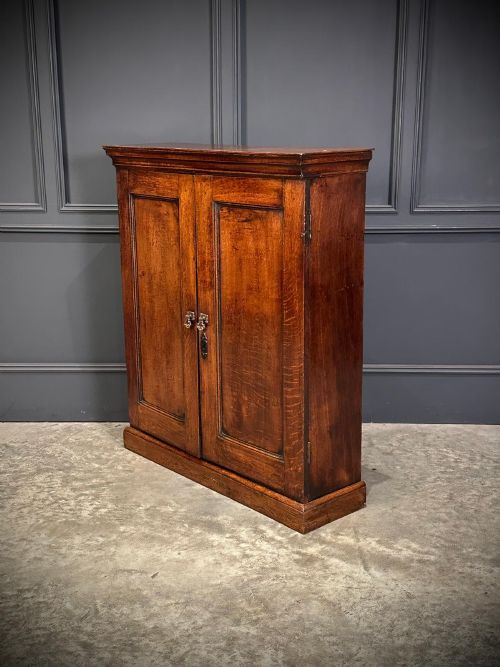
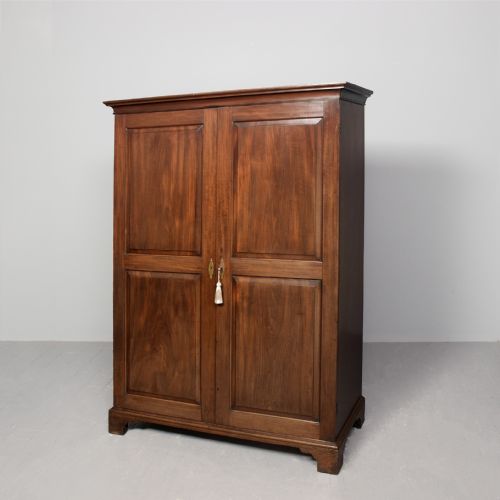
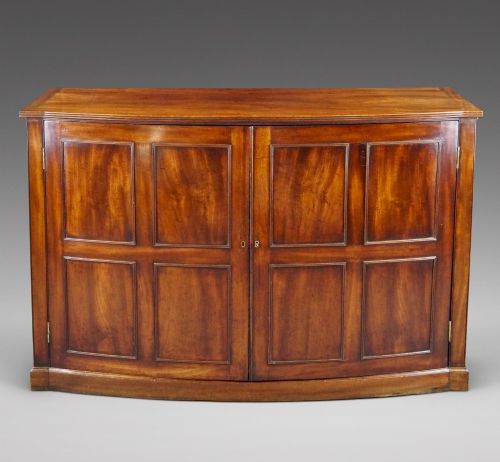
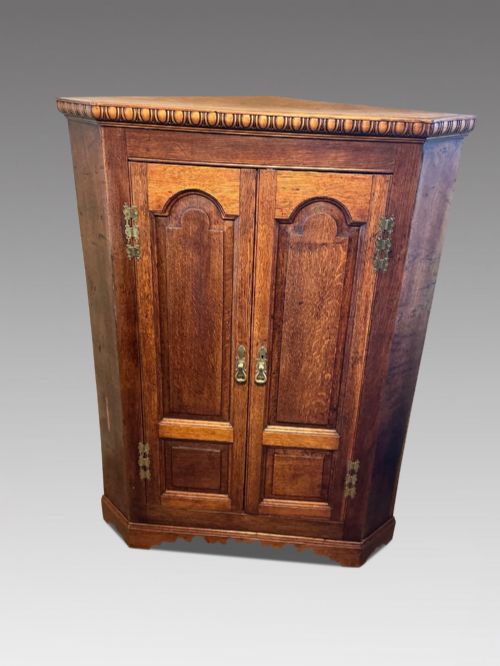

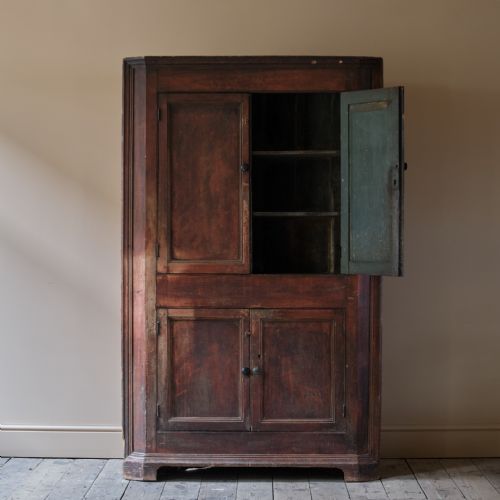
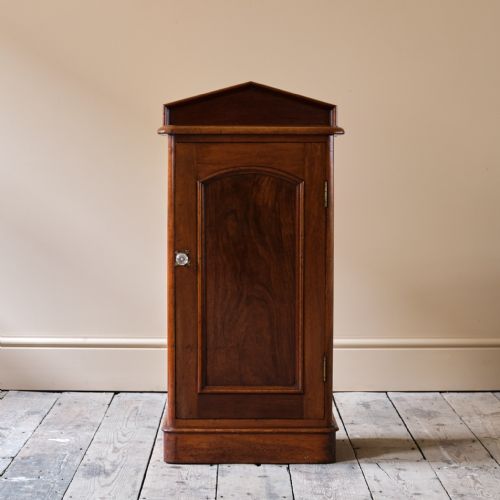
Georgian Panelled Door Cupboard
A georgian panelled door cupboard brings solid timber storage and period character into a room.
Georgian Panelled Door Cupboard
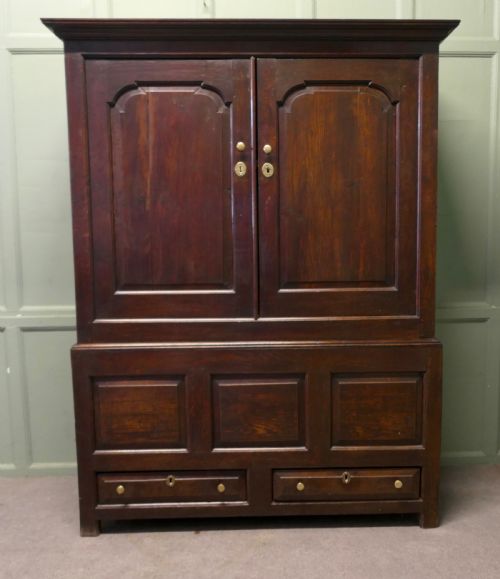
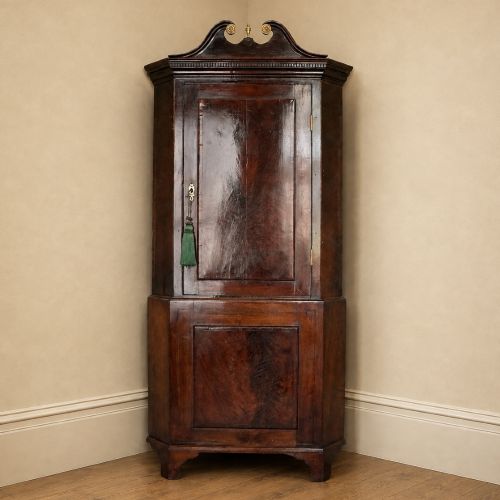
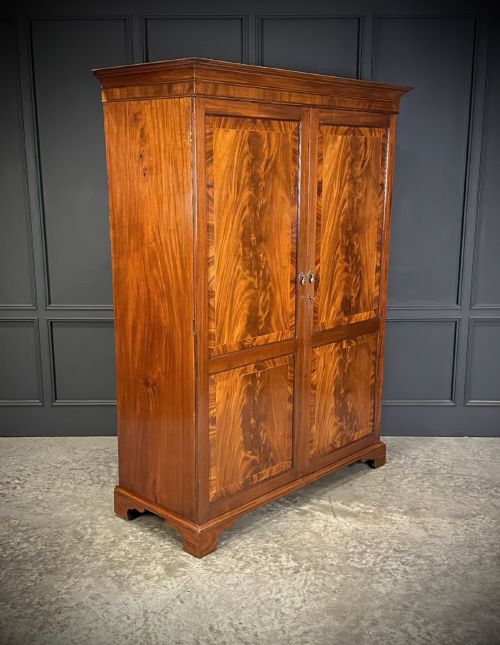
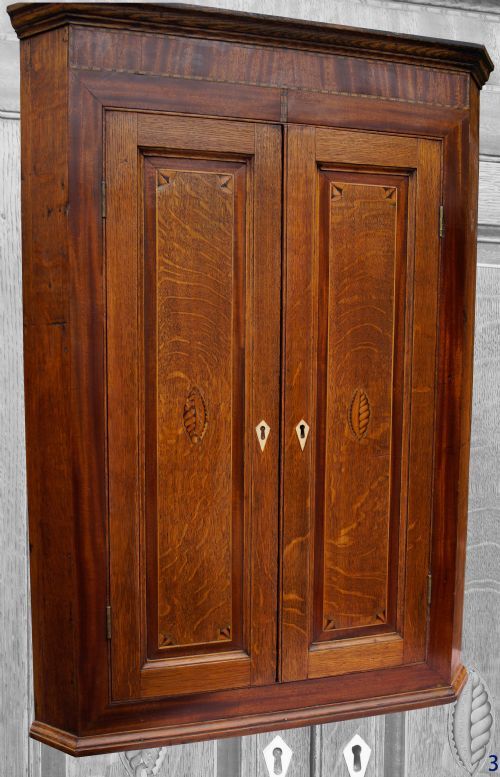
A georgian panelled door cupboard is a storage piece built during the 18th century, the Regency era, or later as a revival form. These cabinets appear as corner cupboards, side cabinets, linen presses, and larger wardrobes constructed for domestic storage.
The version most commonly met on this page is the oak or mahogany corner cupboard, alongside pine side cupboards and larger wardrobes. Pieces originate from English country houses, regional workshops, and the Channel Islands.
What separates the tiers
The division between standard and superior pieces rests on timber selection and joinery precision. High-grade items utilise dense, well-figured mahogany or quarter-sawn oak with crisp moulding profiles.
Proportion and secondary wood choice also separate regional vernacular work from formal cabinet-making. Original surface treatments and intact brass furniture elevate the standing of a piece.
Several pine wardrobes carry the label knockdown, proving that flat-pack furniture troubled our ancestors just as much.
The Georgian Panelled Door Cupboard Glossary
- Panelled door
- A door constructed with a central floating panel set within a wooden frame to prevent warping.
- Corner cupboard
- A triangular storage cabinet designed to fit neatly into the junction of two walls.
- Linen press
- A tall cabinet featuring upper sliding trays or shelves above a lower bank of drawers.
- Flame mahogany veneer
- A thin decorative slice of mahogany cut from the branch junction to produce a distinctive rippled grain pattern.
- Knockdown wardrobe
- A large piece of furniture designed to be dismantled into flat sections using pegged or bolted joints.
Georgian Panelled Door Cupboard: Frequently Asked Questions
How do I date a georgian panelled door cupboard?
Dating relies on timber species, construction methods, and hardware styles associated with the 18th and 19th centuries. Secondary woods and tool marks inside the carcass provide further clues.
Changes in moulding profiles and hinge types help distinguish pieces made around 1800 from later Victorian or 1920s revivals.
Where were these cupboards placed originally?
Smaller corner cupboards hung in dining rooms or parlours to display glassware and ceramics. Larger wardrobes and housekeepers' cupboards stood in bedrooms or hallways.
Side cabinets and linen presses served private family quarters for storing clothing, textiles, and household provisions.
How should I care for an antique pine or oak cupboard?
Keep wooden furniture away from direct heat sources and sudden humidity shifts to prevent timber splitting. Maintain the surface using traditional beeswax rather than modern silicone sprays.
Allow the wood to breathe and gently buff the finish with a soft cloth to preserve the patina.
What is the difference between a press and a wardrobe?
A press traditionally contains internal sliding trays or shelves behind its upper doors for flat linens. A wardrobe is primarily designed for hanging garments on rails or hooks.
Many period examples combine both functions within a single multi-door carcass.