
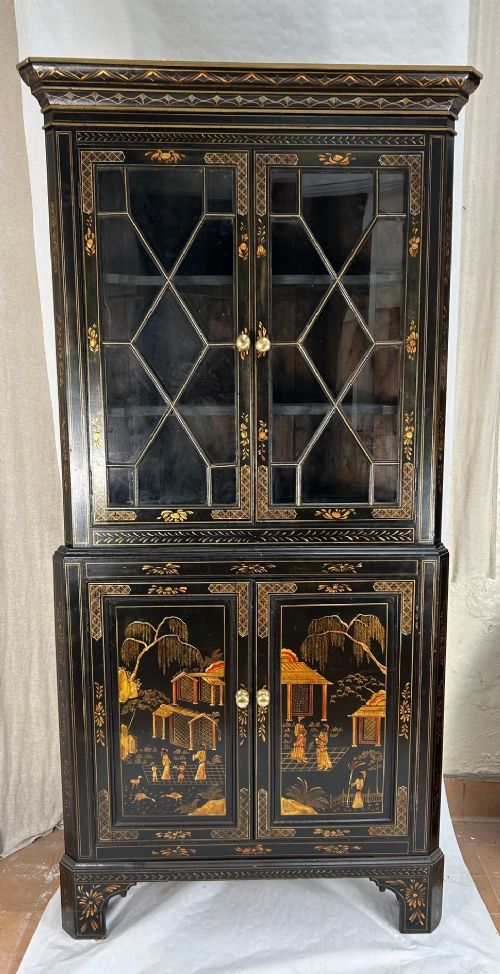
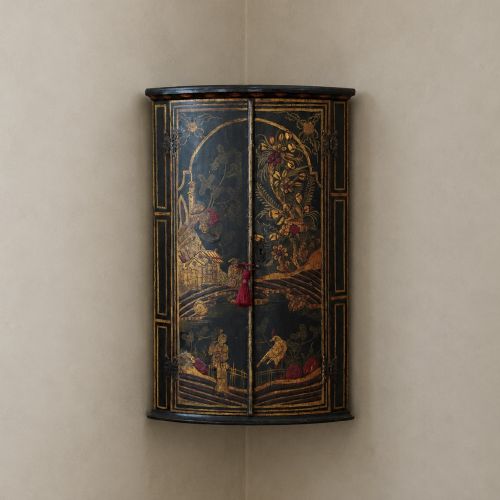
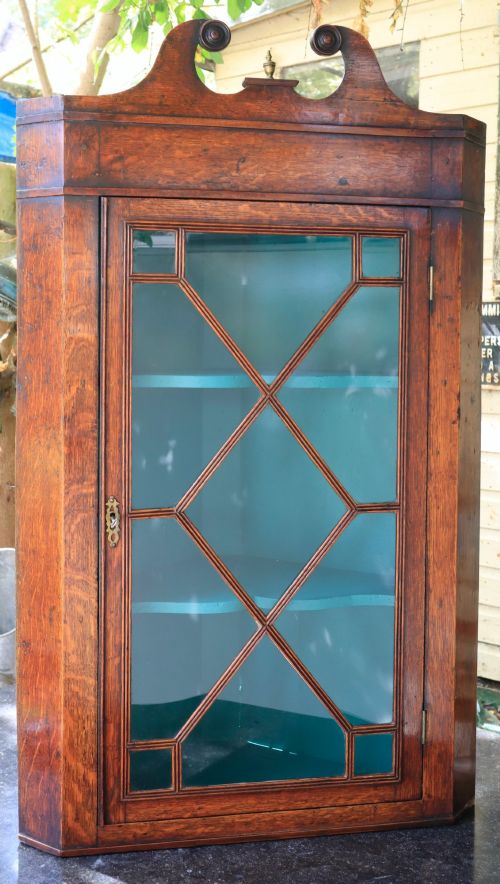
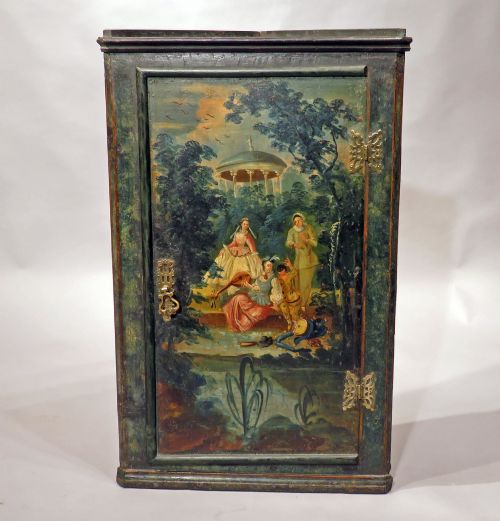
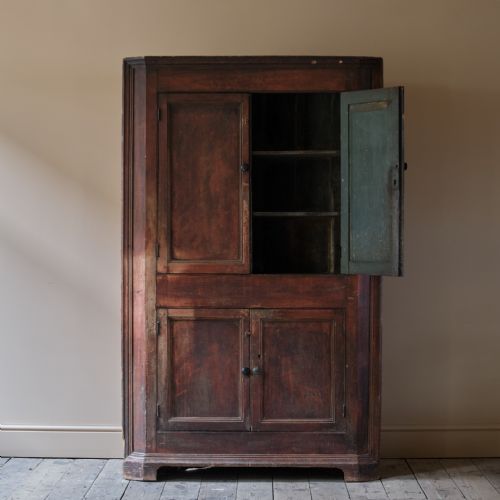
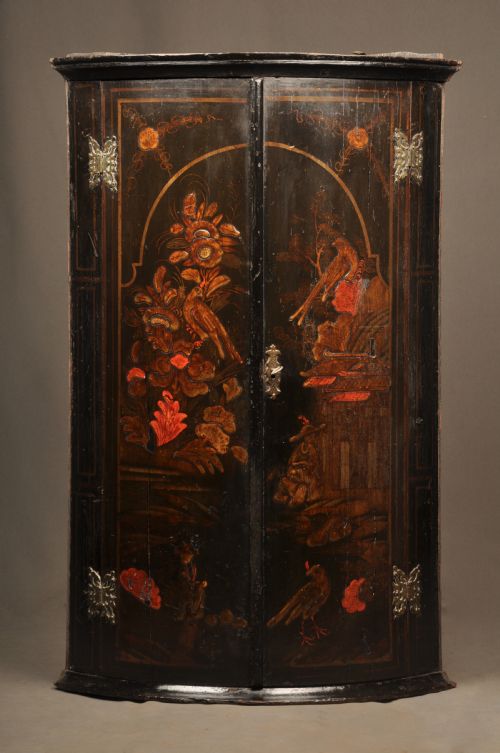
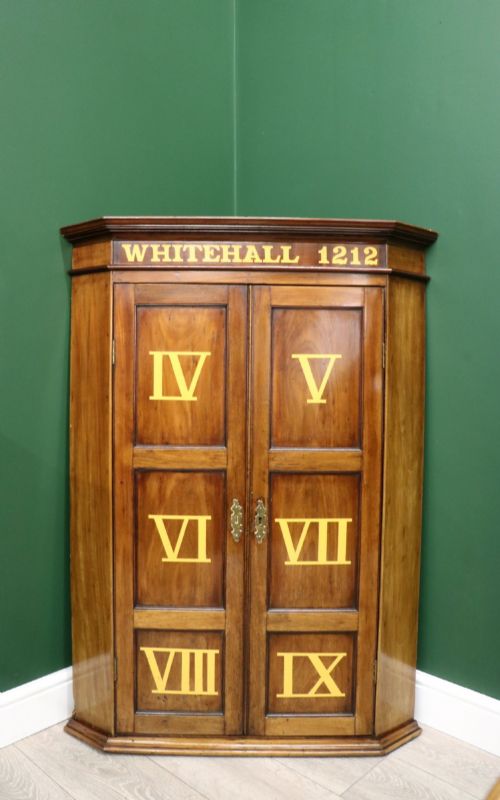
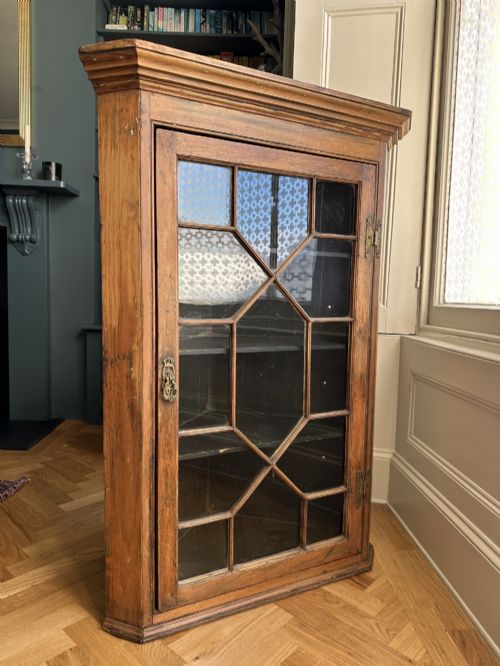
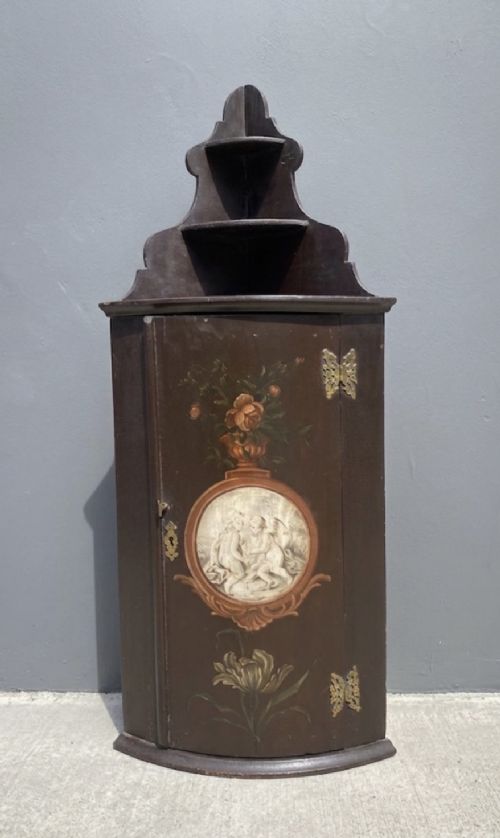


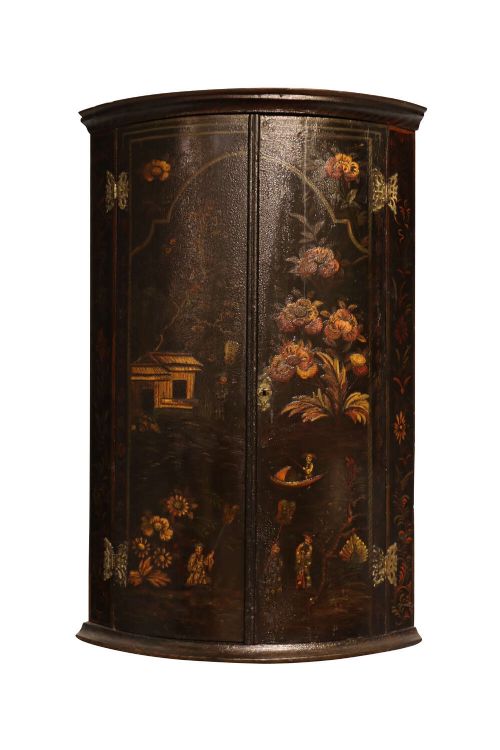


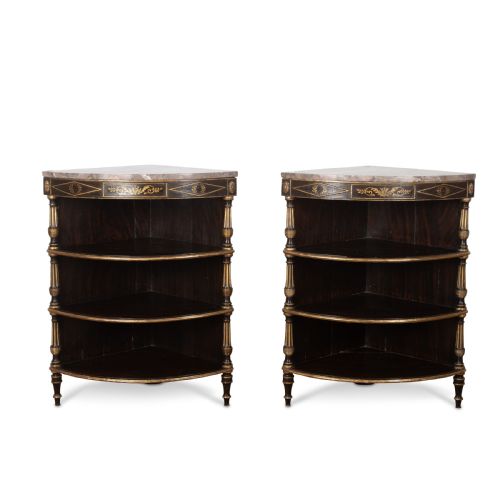
Georgian Painted Corner Cupboard
A georgian painted corner cupboard fits neatly into an unused room angle while offering striking surface decoration.
Georgian Painted Corner Cupboard
A georgian painted corner cupboard is a fitted or freestanding storage unit designed to occupy the junction of two walls, making efficient use of awkward domestic spaces. These cabinets take the form of single door hanging models, two part storage units, or bow fronted variants with internal shelving.
The pieces appearing in this category span the eighteenth century and the georgian era, alongside later interpretations from the nineteenth and twentieth centuries. Buyers frequently encounter pine or oak carcases finished with period paint schemes, lacquer, or chinoiserie decoration.
Materials and construction
Construction relies primarily on timber carcases of pine or wood, often utilising brass hinges, escutcheons, and door hardware. Cabinets designed to hang on walls feature sturdy internal bracing to support the weight of the timber and stored contents.
Surface treatments include layers of paint, gilt, and black or red lacquer applied in imitation of oriental styles. Many examples retain an original painted interior, contrasting with the exterior finish of the cupboard doors.
Several cupboards hide brightly painted teal or red interiors behind sombre black lacquer doors, offering a cheerful splash of hidden colour.
Qualities of craftsmanship
Quality rests in the survival of original decorative surfaces, such as early paint finishes or chinoiserie motifs that have not suffered aggressive overpainting. The crispness of the gilt detailing and the stability of the timber carcase also dictate the standing of an individual cabinet.
Proportion and form separate standard utilitarian storage from finer pieces, particularly in bow front models and two part standing corner cupboards. The integration of glazed doors or original interior shelving further elevates the sophistication of the piece.
The Georgian Painted Corner Cupboard Glossary
- Chinoiserie
- European decorative style emulating Chinese artistic traditions. It frequently appears on lacquer furniture with raised figures and landscape scenes.
- Bow front
- A convex curved cabinet front popular during the georgian period. This shape softens the sharp angles typical of corner furniture.
- Japanned
- European work mimicking Japanese and Chinese lacquerware through layered varnishes and metallic dust. This finish is characteristic of eighteenth century decorative pieces.
- Hanging corner cupboard
- A wall mounted cabinet designed to be secured directly to intersecting walls. These pieces free up floor space while providing eye level storage.
Georgian Painted Corner Cupboard: Frequently Asked Questions
How do I hang a wall cabinet?
Hanging corner cupboards require secure fixing to solid wall studs or masonry using appropriate brackets. The heavy timber construction means structural support is essential before loading the interior shelves.
Professional installation ensures the weight distributes evenly across the corner angles without placing strain on the antique fixings.
Are these cupboards freestanding?
Many examples are designed to hang directly on the wall, while others are standing or two part models that rest on the floor. Standing versions often combine a lower cupboard with upper display shelving.
Buyers should check dimensions to determine whether a specific cabinet requires floor space or wall anchoring.
What is chinoiserie decoration?
Chinoiserie is a western interpretation of east asian design motifs, featuring figures, pavilions, and floral scenes in gold against dark lacquer. This style was widely applied to eighteenth century furniture.
Surviving examples exhibit meticulous hand painted detail that defines the aesthetic of the period.
How do I clean painted surfaces?
Painted and lacquered antiques require gentle dusting with a dry, soft cloth to prevent moisture damage. Avoid modern chemical cleaners that can strip historic finishes.
Preserving the original paint surface maintains the historical integrity and visual appeal of the cupboard.