

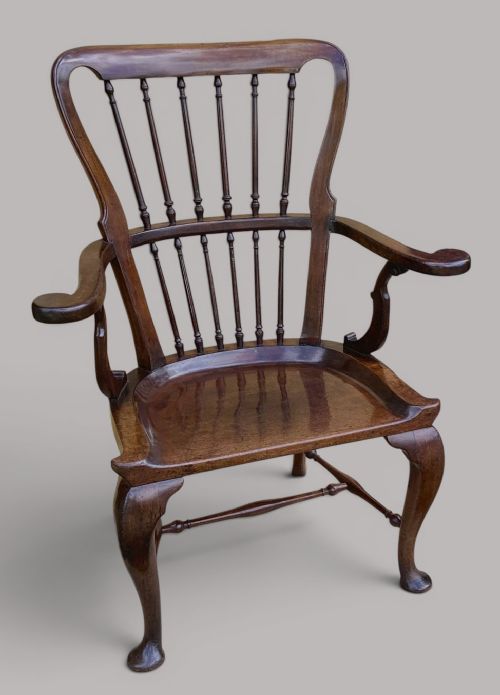


Georgian Pad Foot Chairs
Georgian pad foot chairs bring substantial timber frames and historic seating design into a room, offering genuine eighteenth-century character.
Georgian Pad Foot Chairs
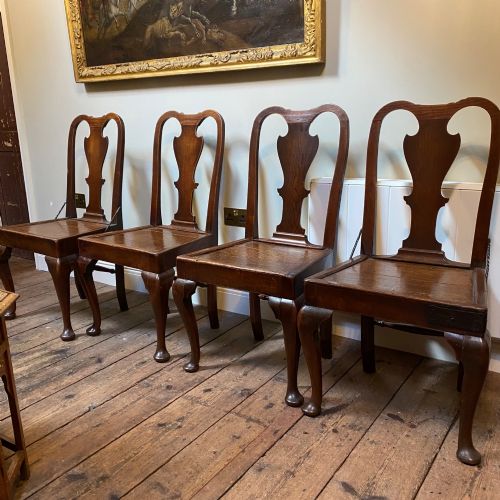
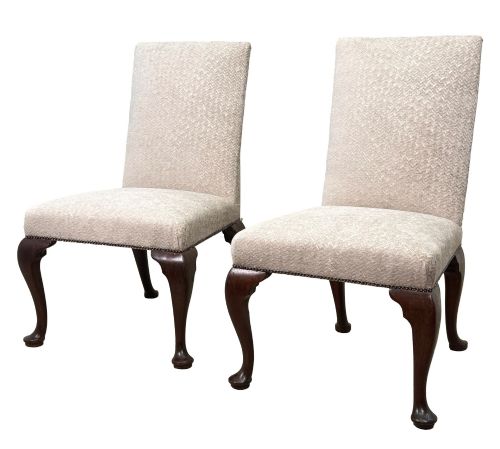
Georgian pad foot chairs encompass dining chairs, side chairs, and armchairs produced across the eighteenth century, alongside later revival pieces. Buyers searching for georgian pad foot chairs encounter examples originating from the George I, George II, and Queen Anne periods, plus nineteenth-century Irish works and twentieth-century revival sets.
The material palette of these pieces relies heavily on walnut, mahogany, and oak, often paired with textile, fabric, wool needlepoint, or general upholstery. Walnut and mahogany dominate the mid-eighteenth-century items, while oak appears in sturdy regional dining chairs and study armchairs.
Form and proportion vary between single side chairs, sets of matching dining seats, and robust armchairs designed for study spaces. Surviving items demonstrate how domestic seating evolved from early century walnut frames toward heavier mahogany construction and specific regional interpretations.
Construction and materials
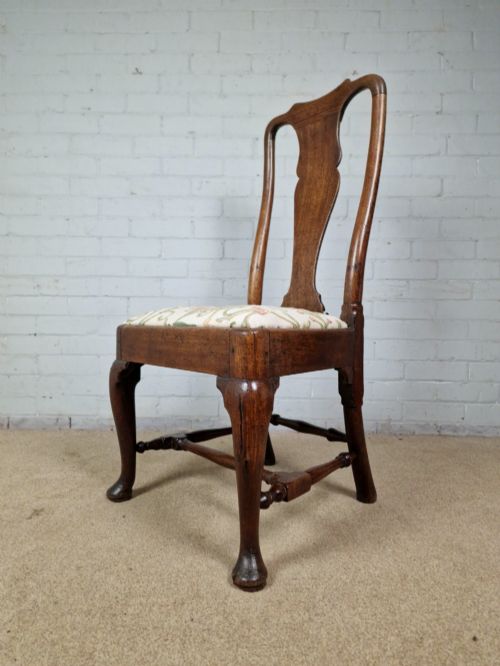
Cabinetmakers constructed these frames using solid hardwoods such as walnut, mahogany, and oak, selecting timber for density and grain pattern. Joinery relied on traditional methods to ensure structural stability across dining chairs, side chairs, and armchairs without relying on modern adhesives.
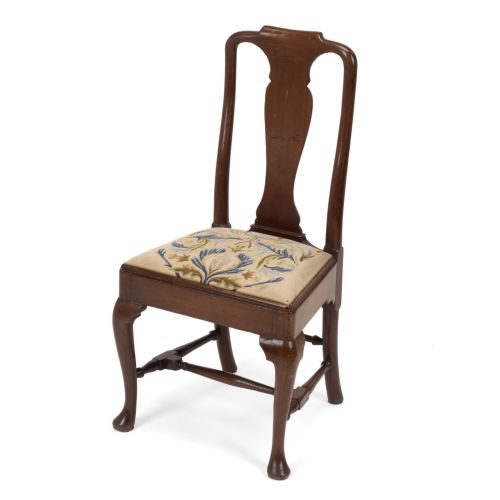
Seating portions integrated fabric, textile, wool needlepoint, or standard upholstery directly into the wooden framework. Needlepoint inserts often featured floral motifs, executed by hand to fit the specific contours of walnut and mahogany seat rails.
Georgian Pad Foot Chairs Retail Price Guide 2026
Typical asking prices for georgian pad foot chairs among the pieces listed under this phrase on Sellingantiques today, from the lower quarter to the upper quarter. They describe what is for sale here now, not the wider market.
Current listings feature walnut, mahogany, and oak pieces spanning the eighteenth and nineteenth centuries, including specific George I and George II items.
Evaluating quality and execution
Distinction across these chairs rests in the crispness of the timber carving, the integrity of the original wood grain, and the harmony of the overall proportions. Superior examples retain their original structural timber without extensive replacement of primary structural members.
The sophistication of the timber selection, such as figured walnut or rich red walnut, separates standard regional output from more ambitious urban commissions. Upholstery execution and the preservation of historic needlepoint likewise influence the standing of an individual piece.
The Georgian Pad Foot Chairs Glossary
- Pad foot
- A simple, rounded foot profile resting flat on the floor, frequently seen on eighteenth-century cabriole legs. This terminal shape provides a stable base while maintaining a clean, understated aesthetic.
- Cabriole leg
- A furniture leg that curves outward at the knee and tapers inward toward the foot, mimicking animal limbs. It represents a defining characteristic of furniture design during the early eighteenth century.
- Wool needlepoint
- A type of stitched textile work utilising wool yarn on a canvas mesh, often applied to historic chair seats. It provides a durable and decorative surface texture.
- Side chair
- An upholstered or wooden chair built without arms, intended primarily for dining or occasional use around a room. These pieces form the majority of surviving historic seating sets.
Georgian Pad Foot Chairs: Frequently Asked Questions
What defines a pad foot?
A pad foot is a rounded, circular foot resting at the base of a cabriole leg, common in early eighteenth-century seating design.
This form provides a smooth termination to the leg without the ornamentation of claw and ball feet.
How do I date these chairs?
Dating relies on timber choice, such as early walnut versus later mahogany, alongside stylistic markers like leg curvature and joinery techniques.
Comparison with documented pieces from the George I and George II reigns helps establish a reliable timeline.
Were these used for dining?
Many examples function as dining chairs, while others serve as side chairs or study armchairs in domestic interiors.
Sets varied in size from pairs to larger groups depending on the household requirements.
Are replacement fabrics acceptable?
Historic seating frequently undergoes reupholstery to preserve utility, using textiles or wool needlepoint suited to the period.
Original needlework remains uncommon, so modern or later period fabric updates are standard practice.