
Georgian Open Shelves
Georgian open shelves bring immediate architectural order to a room, holding books and porcelain on accessible tiers.
Georgian Open Shelves
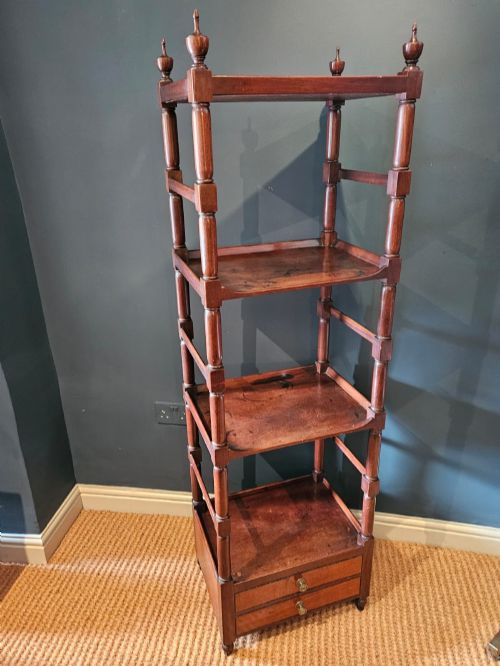
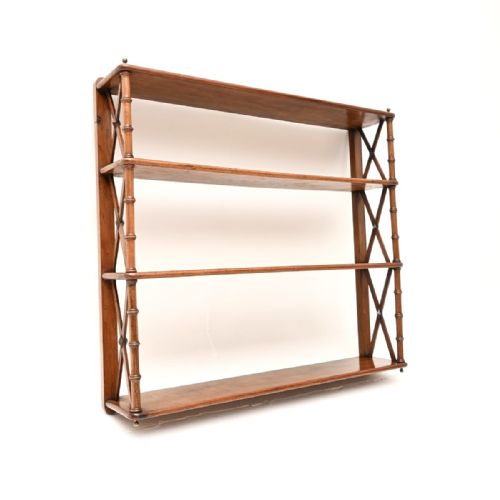
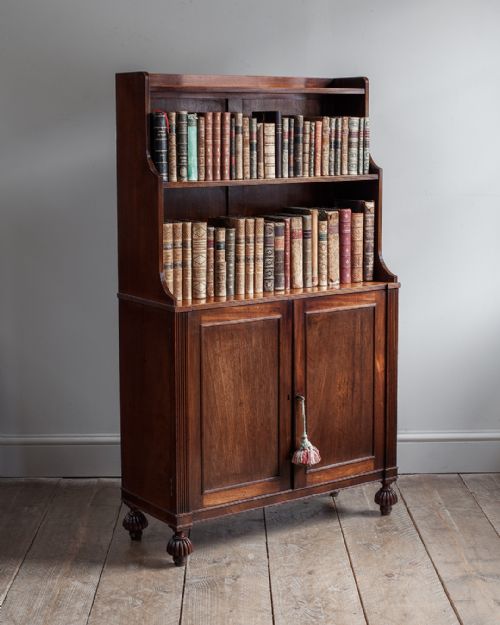
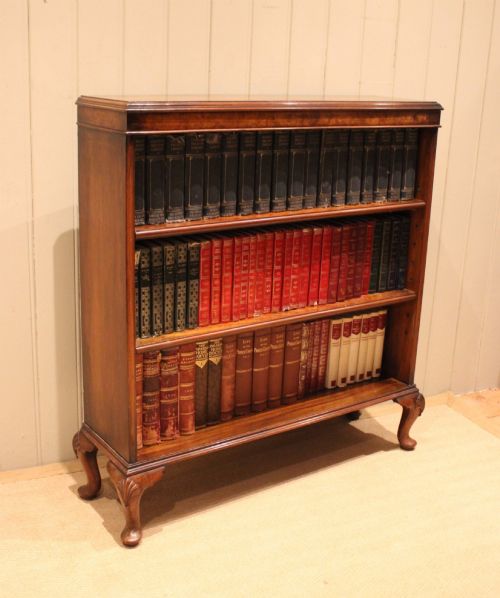
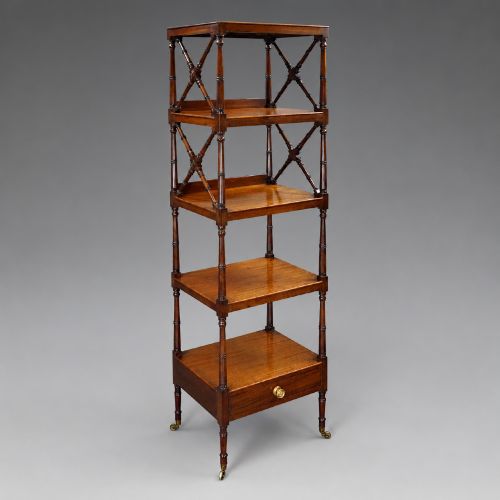
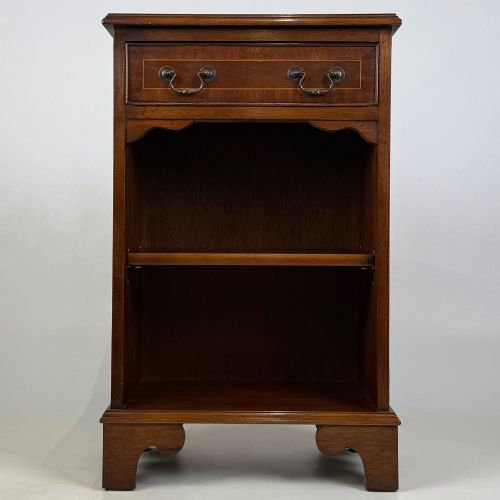
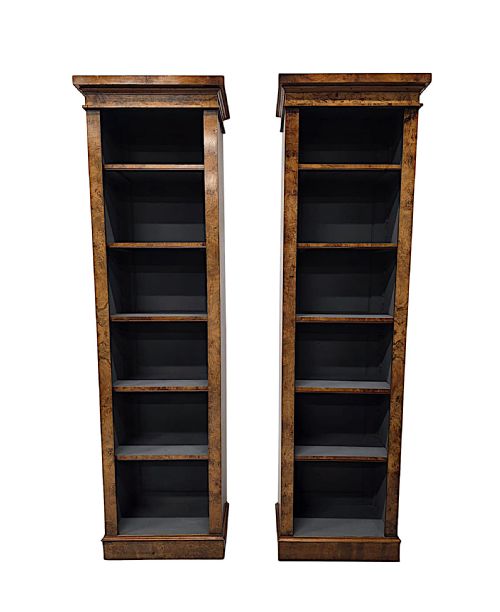
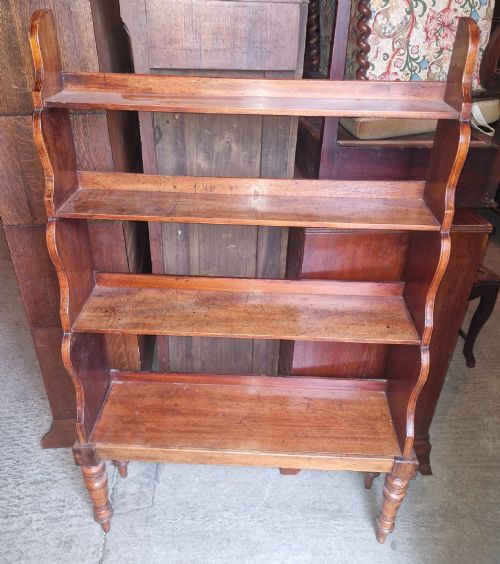
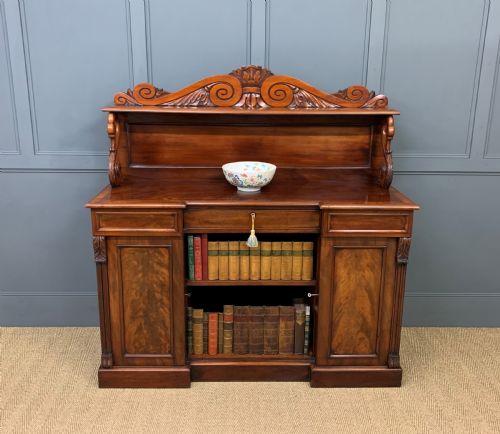
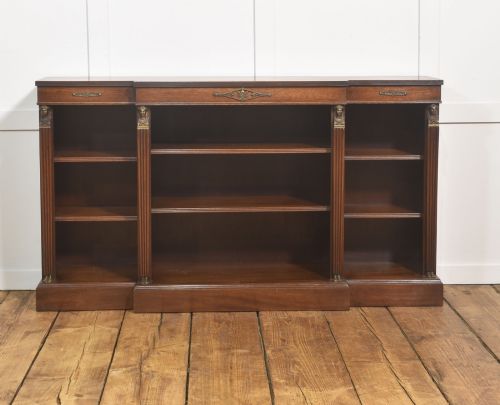
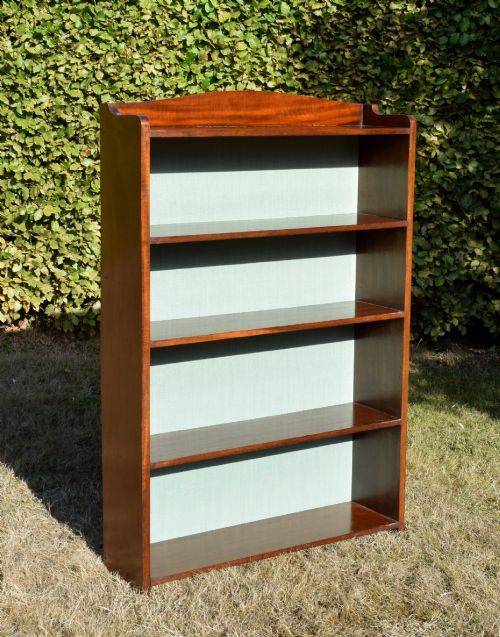
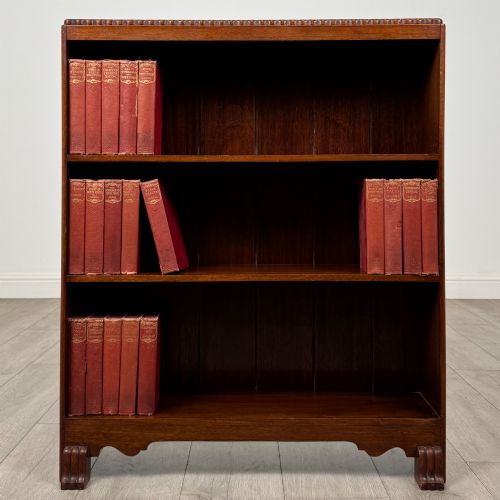
When you search for georgian open shelves, you encounter various timber shelving formats originating from the eighteenth century onwards. These pieces range from wall-mounted bookshelves and multi-tiered whatnots to freestanding breakfront bookcases and low dwarf units.
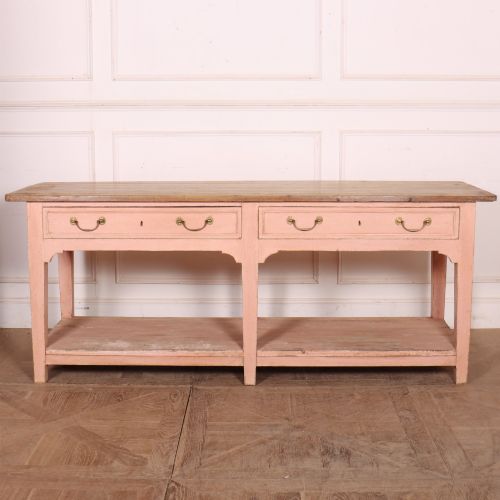
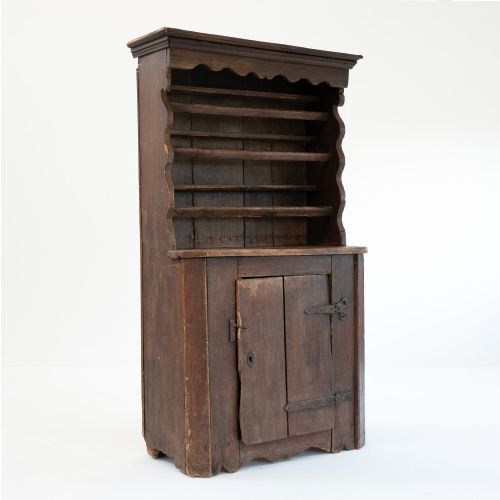
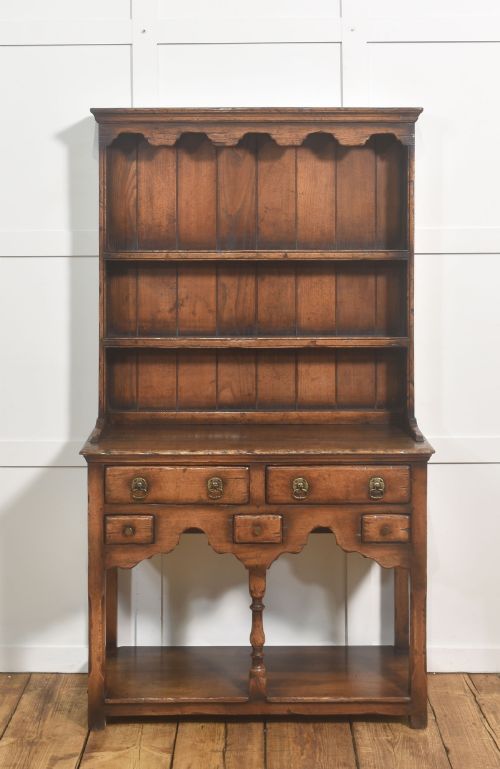
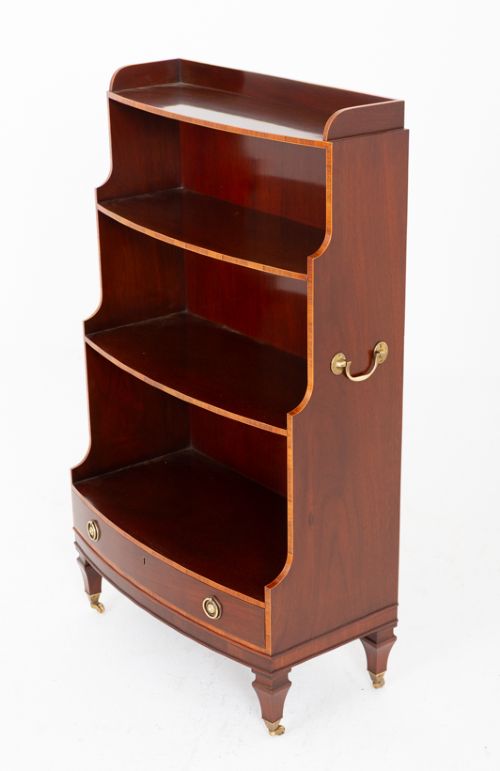
The most common forms on this page include mahogany waterfall bookcases, tiered bookcases, and country dressers with open plate racks. Materials span native oak and pine alongside imported timbers like mahogany, walnut, and satinwood.
Periods represented stretch from authentic Georgian and Regency eras through later revival movements, including Edwardian interpretations and twentieth-century reproductions.
How they were made
Joinery relies on solid hardwoods and figured veneers applied to secondary woods, with timbers such as flame mahogany, burr walnut, and satinwood chosen for their decorative grain patterns. Brass fittings, including casters and gallery rails, appear on portable or multi-tiered pieces like whatnots.
Surfaces receive traditional hand-finished polishes that accentuate the natural depth and colour of the wood. Painted finishes also occur on regional items, such as eighteenth-century Irish and Welsh painted dressers.
Music stands occasionally masquerade as bookshelves when someone decides symphonies belong beside novels.
What varies in quality
Distinctions in quality rest on the selection of timber and the precision of the cabinet work. Superior examples exhibit carefully matched veneers, finely turned supports, and well-proportioned tiers that maintain structural integrity without heavy reinforcement.
Design sophistication also separates standard storage from exceptional examples, seen in delicate fretwork, graduated shelf depths, and integrated cupboards or drawers that balance utility with proportion.
Gillows·Waring and Gillows
The Georgian Open Shelves Glossary
- Waterfall bookcase
- A tiered shelving unit where each successive shelf steps back from the one below it, creating a cascading profile.
- Whatnot
- A multi-tiered stand used for displaying ornaments, books, or small objects, popular during the Regency and Georgian periods.
- Breakfront
- A piece of furniture featuring a central section that projects forward from the flanking outer sections.
- Dwarf bookcase
- A low freestanding shelving unit designed to sit beneath dado height, keeping books within easy reach.
- Potboard dresser base
- A traditional kitchen or dining base featuring an open lower shelf historically used for storing earthenware.
Georgian Open Shelves: Frequently Asked Questions
Where were open shelves used?
These shelves served libraries, parlours, and dining rooms for holding working libraries and display pieces.
Country iterations like dressers functioned in kitchens and sculleries for everyday crockery.
How do I tell revival pieces apart?
Revival items from the Edwardian or twentieth-century periods utilise machine-sawn timbers and different internal construction markers.
Earlier Georgian pieces show hand-planed surfaces and timber handling specific to eighteenth-century workshop practices.
Are shelves adjustable?
Many open bookcases feature fixed shelves, though certain later versions incorporate adjustable tracking.
Fixed tiers remain characteristic of earlier wall-mounted and tiered formats.