

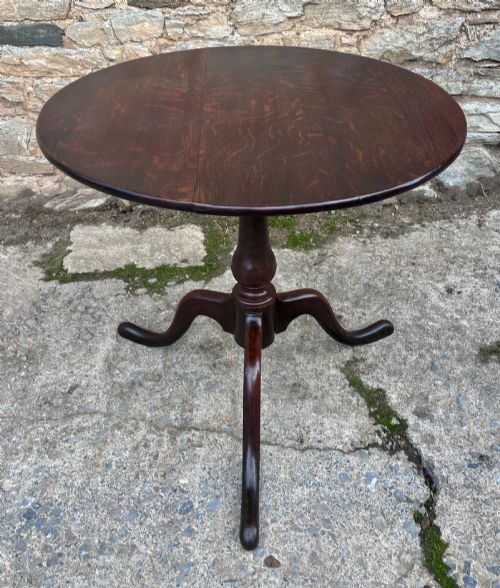
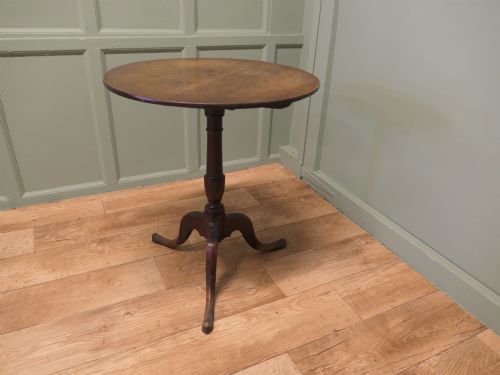
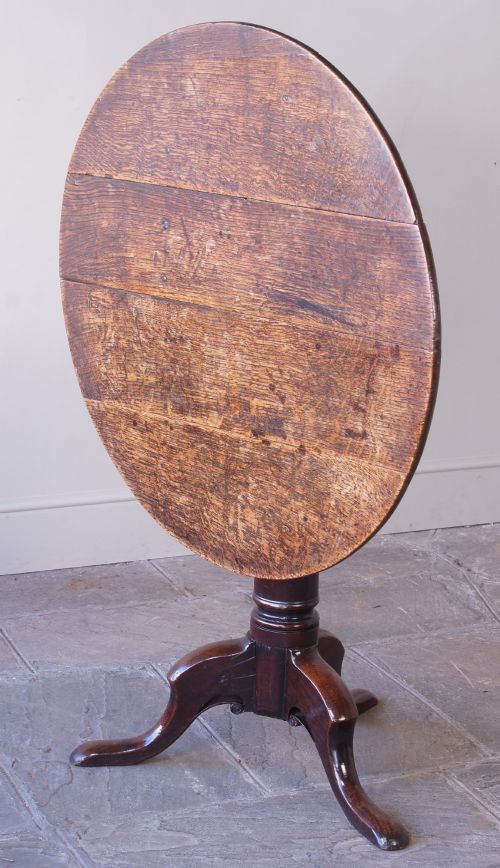
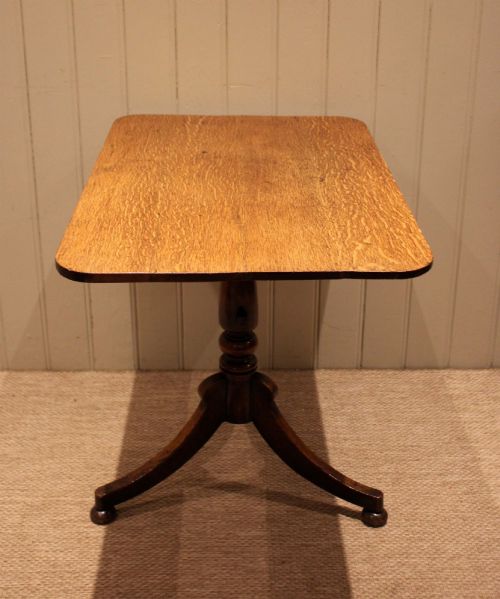
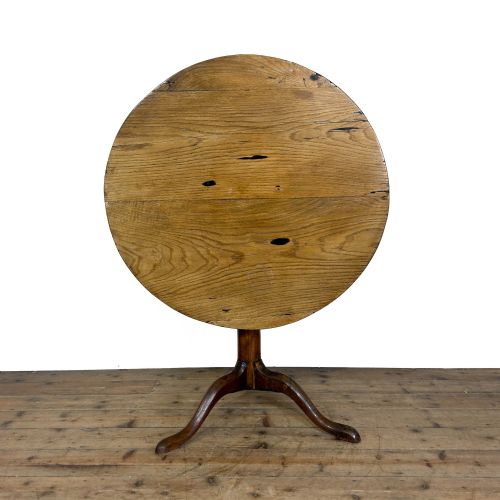
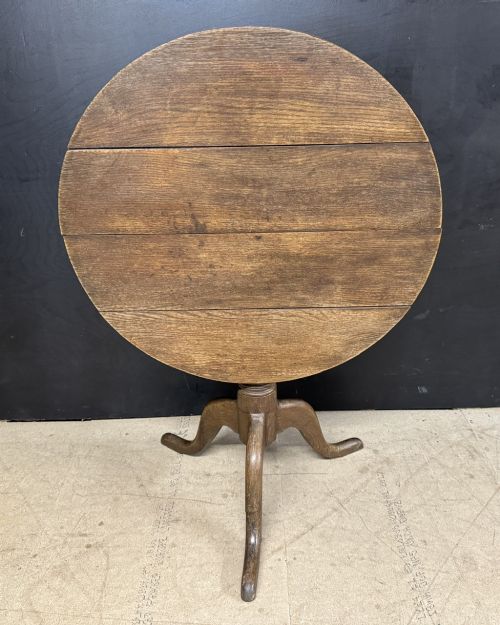
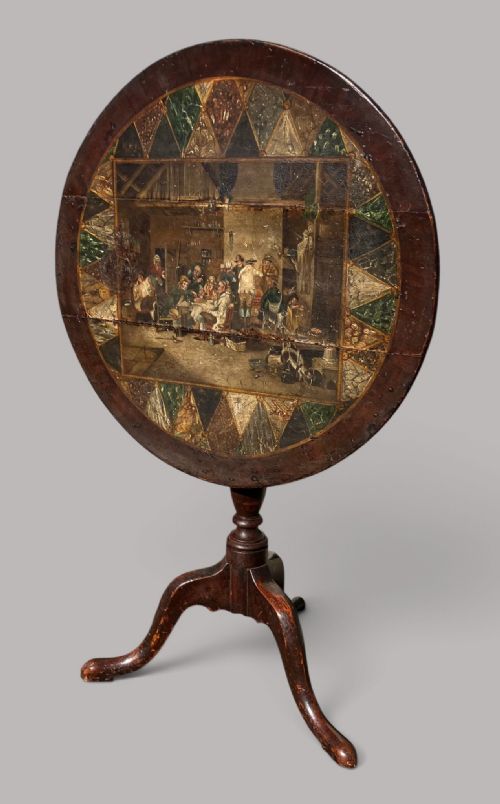
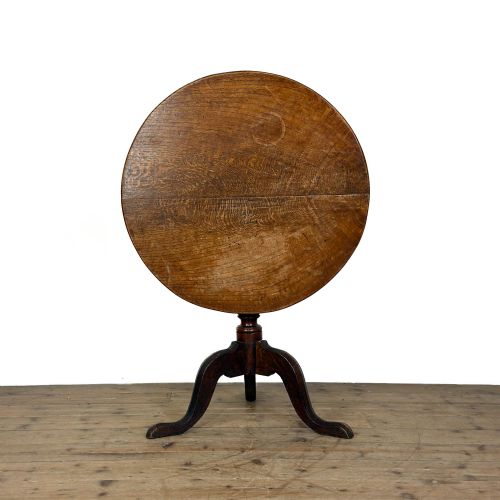
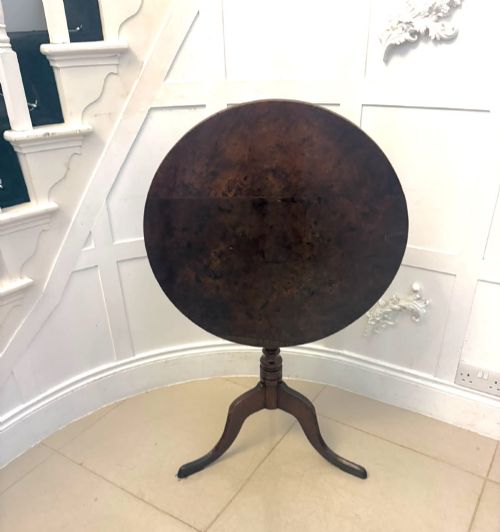

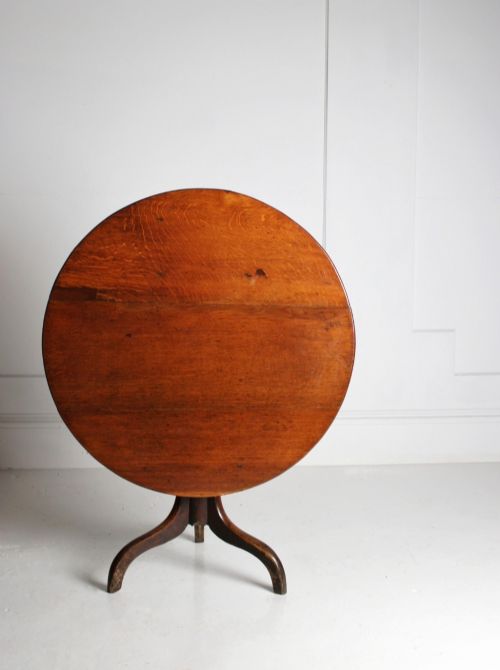


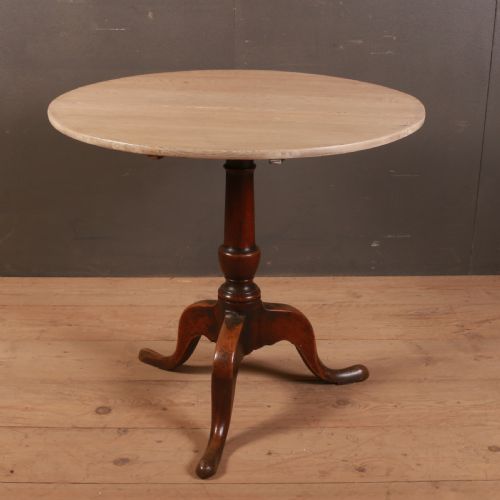
Georgian Oak Snap Table
A georgian oak snap table offers a practical surface that tilts away when not in use, bringing rustic utility and period character to any room.
Georgian Oak Snap Table
A georgian oak snap table combines a circular or shaped wooden top with a central pillar and a three-legged tripod base. These pieces belong primarily to the eighteenth century, spanning the Georgian period and incorporating related country furniture forms.
The defining feature is the tilting mechanism, often called a tilt top or snap top, which allows the surface to pivot upright. Examples on this page appear as occasional tables, side tables, lamp tables, and pedestal supper tables.
Makers working in this tradition utilised solid timber and straightforward construction methods suited to domestic spaces. Buyers encounter variations ranging from plain boards to figured burr timber and fruitwood combinations.
Materials and construction methods
Makers relied on native hardwoods, primarily oak, supplemented by fruitwood and occasionally burr oak for the top surfaces. Metal components such as brass catches and iron fixings provided the pivot mechanism that allowed the table to tilt and lock securely.
The top connects to a birdcage or pivoting block on a central pedestal, which in turn joins three legs forming a tripod base. Cabinetmakers shaped the timber using hand tools, resulting in pegged joints and turned shafts suited to daily use.
Georgian Oak Snap Table Retail Price Guide 2026
Typical asking prices for georgian oak snap table among the pieces listed under this phrase on Sellingantiques today, from the lower quarter to the upper quarter. They describe what is for sale here now, not the wider market.
Listings on this site show pieces spanning the eighteenth and nineteenth centuries, utilising oak, fruitwood, brass, and iron.
Assessing quality in period examples
Quality rests on the selection of timber and the harmony of proportions between the top, the central column, and the legs. Plain oak boards differ from figured burr oak or fruitwood highlights in visual impact and desirability.
The integrity of the tilting mechanism and the stability of the tripod base determine how well the piece functions. Finer examples display careful turning on the pedestal and well-balanced cabriole or tapered legs.
The Georgian Oak Snap Table Glossary
- Tilt top
- A table mechanism allowing the surface to pivot to a vertical position for storage. This clever design saved valuable floor space in period rooms.
- Tripod table
- A small stand supported by a central pillar resting on three legs. This configuration provided stability on uneven floors.
- Birdcage
- A timber framework beneath the table top that enables the surface to both rotate and tilt. It represents a more complex form of pivoting mechanism.
- Burr oak
- A specialised timber growth yielding highly figured, swirling grain patterns. Cabinetmakers utilised this material for decorative table tops.
- Occasional table
- A movable piece of furniture designed for specific, intermittent tasks such as holding a lamp or a cup.
Georgian Oak Snap Table: Frequently Asked Questions
How do I date a georgian oak table?
Dating relies on observing construction marks, timber characteristics, leg profiles, and the complexity of the turning on the central pillar.
Eighteenth-century examples typically display hand-pegged joinery, native oak or fruitwood timber, and traditional tripod bases without modern fixings.
Where were these tables used?
These pieces served as versatile furniture in parlours, bedrooms, and dining spaces for holding lamps, books, or supper items.
Because they could be tilted out of the way, owners moved them easily around the home to suit immediate daily needs.
Are all tilt top tables made of oak?
While oak remains a primary material in these listings, makers also utilised fruitwood, burr oak, and occasionally mahogany.
Regional country workshops often selected whatever local hardwoods were readily available to construct the top and tripod base.