

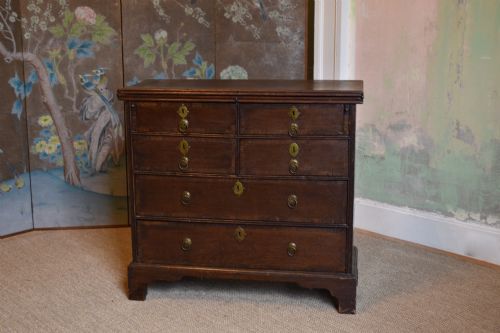
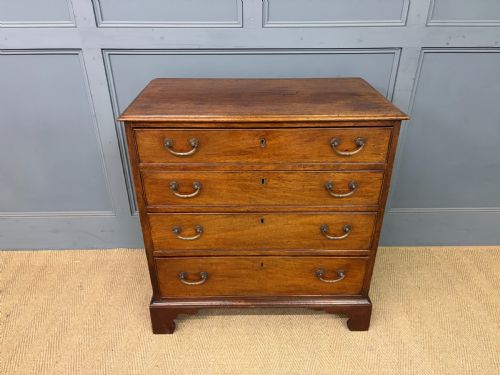
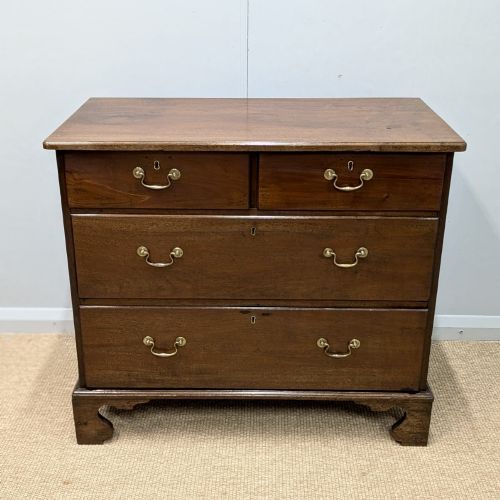
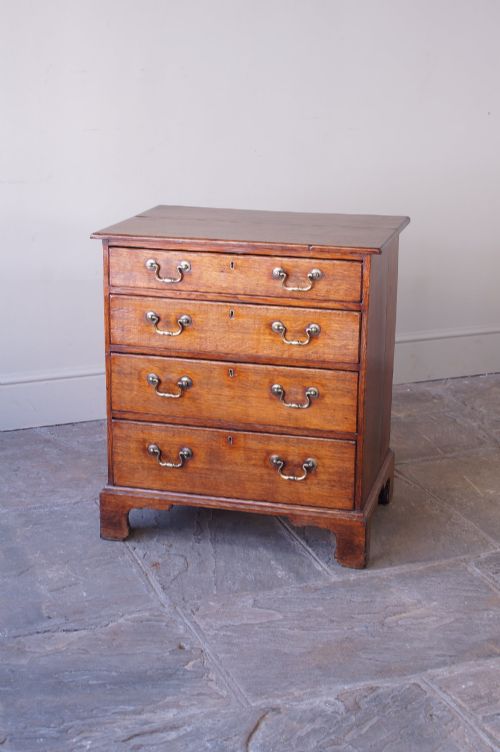
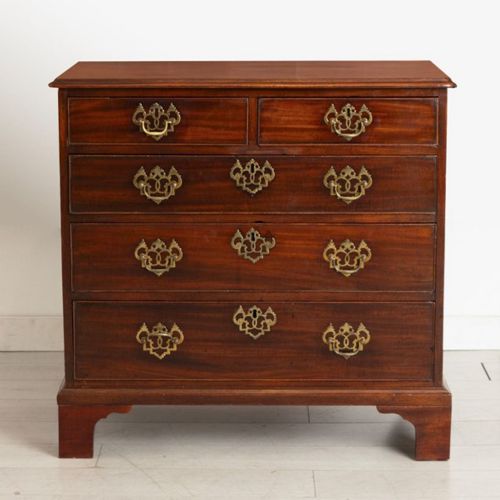


Georgian Oak Bachelor Chest
A georgian oak bachelor chest is a compact, highly functional 18th-century drawer unit featuring a pull-out writing slide that offers both historical charm and practical surface space.
Georgian Oak Bachelor Chest
A georgian oak bachelor chest is a compact drawer unit designed for smaller domestic spaces during the 18th century, distinguished by a pull-out wooden slide positioned just beneath the top surface. The pieces on this page span the Georgian and George I periods, alongside Georgian Country styles, reflecting the domestic furniture output of the era.
Most examples found here are constructed from oak, though some incorporate mahogany or yew wood, and a few feature cross-banding or brass hardware. The form typically manifests as a chest of drawers, often described as small or very small, suiting modern rooms just as well as they suited period interiors.
How They Were Made
Cabinet makers of the 18th century relied primarily on solid oak for these chests, utilising its strength to build sturdy carcases and drawer boxes that survive in daily use. Selected pieces incorporate mahogany and yew wood, sometimes enhanced with cross-banding to frame the timber grain.
Hardware such as original brass handles adds functional detail, while traditional bracket feet elevate the timber off the floor. Construction techniques focus on durability, evident in the tight joinery and the smooth operation of the central sliding board.
Georgian Oak Bachelor Chest Retail Price Guide 2026
Typical asking prices for georgian oak bachelor chest among the pieces listed under this phrase on Sellingantiques today, from the lower quarter to the upper quarter. They describe what is for sale here now, not the wider market.
Listings span the Georgian period and the 18th century, featuring oak, mahogany, and yew wood.
What Varies in Quality
Quality in a georgian oak bachelor chest rests on the selection of timber and the crispness of the cabinet work, from the dovetailing of the drawers to the fit of the sliding board. Pieces featuring richer secondary woods like mahogany or yew, alongside decorative cross-banding, generally represent a finer tier of craftsmanship.
The survival of original brass handles and well-proportioned bracket feet elevates an example above those altered or repaired over time. Proportion matters greatly, with smaller dimensions commanding attention for their neatness and domestic scale.
The Georgian Oak Bachelor Chest Glossary
- Bachelor chest
- A small chest of drawers equipped with a pull-out wooden slide used as a writing desk or temporary surface. This form became popular during the 18th century for domestic use.
- Cross-banding
- A decorative border of veneer laid around the perimeter of a drawer front or top surface, with the wood grain running perpendicular to the centre panel. This technique highlights the skill of the cabinet maker.
- Bracket foot
- A foot shape formed by two pieces of timber mitred together at the corner, resembling a shelf bracket. It supports the base of the chest with a clean architectural line.
- George I
- The period of British history spanning from 1714 to 1727, associated with early Georgian furniture designs. Pieces from this time show restrained ornamentation and robust timber construction.
Georgian Oak Bachelor Chest: Frequently Asked Questions
What is a bachelor chest?
A bachelor chest is a compact 18th-century drawer unit that includes a pull-out wooden board beneath the top surface. This slide served as a convenient writing desk in smaller rooms.
Today, these chests function well as bedside tables or bedroom storage where floor space is limited. Their small scale makes them versatile pieces for contemporary homes.
How do I use a slide?
The sliding board pulls straight out from the front of the chest, resting above the top row of drawers. It provides an immediate flat surface without requiring a full-sized desk.
Historically, people used this ledge for writing letters or laying out personal items. Modern owners often use it to hold a cup or small decorative objects.
What size are these chests?
These pieces are typically described as small or very small, reflecting their original purpose as compact furniture. They offer multiple drawers for storage while maintaining a low profile.
Because of their modest dimensions, they fit easily into alcoves and tight hallways. Their proportions remain balanced regardless of the specific wood used.