


Oak Bachelor Chest
An oak bachelor chest is a compact storage piece offering a convenient pull-out surface, prized for its clever domestic utility and rich timber grain.
Oak Bachelor Chest
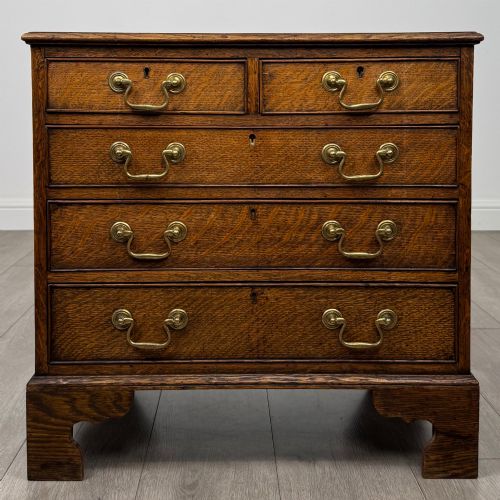
When you search for an oak bachelor chest, you are looking at small-scale case furniture designed for compact rooms, most frequently featuring a dedicated writing slide above graduated drawers. The examples seen here span the Georgian and Victorian periods, with pieces originating from the eighteenth and nineteenth centuries.
The forms on this page range from simple box chests to refined cross-banded designs drawing upon Queen Anne, George I, George II, George III, and English Country styles. You are most likely to encounter proportions that remain notably neat, housing multiple storage tiers within a remarkably small footprint.
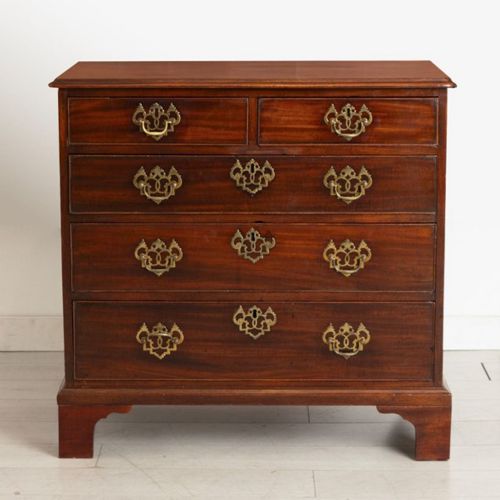
Makers utilised resilient native hardwoods, and while mahogany and yew wood appear among these listings, solid oak remains the defining material of the search phrase. These items function as versatile bedroom or study chests where surface space is at a premium.
Materials and Construction
Cabinetmakers built these chests using sturdy oak planks, frequently pairing the primary timber with mahogany cross-banding or drawer linings to create subtle contrast. The construction relies on traditional dovetailed joints for the drawers and bracket feet to support the weight of the case.
Metalwork played a functional role, with brass handles and escutcheons fitted to secure the drawer fronts. Selected pieces also incorporate caddy top mouldings that shape the upper edge of the timber with smooth curves.
Some eighteenth-century drawers retain faint traces of old scented paper lining left behind by past owners.
Judging Quality and Proportion
The distinction between standard examples and the finest pieces lies in the crispness of the timber figuring and the restraint of the proportions. Smaller scales and untouched patination elevate a piece, whereas heavy alterations diminish its character.
Integrity of the sliding shelf and the retention of original brass hardware further separate a well-preserved survivor from a heavily restored or assembled example.
The Oak Bachelor Chest Glossary
- Bachelor chest
- A small chest of drawers distinguished by a pull-out brushing slide used for writing or reading. This form became popular in domestic interiors during the eighteenth century.
- Brushing slide
- A pull-out wooden board mounted directly above the top drawers. It provides a temporary horizontal surface without requiring a full fall-front desk.
- Cross-banding
- A decorative border of veneer laid around the edges of a drawer front so the grain runs perpendicular to the main panel. This technique adds visual framing to the timber.
- Bracket foot
- A structural foot supporting the corners of a case piece, shaped in a simple ogee or mitred profile. It lifts the chest slightly off the floor.
- Caddy top
- A raised moulded top edge resembling the lid of a tea caddy, popular on case furniture from the Georgian period.
Oak Bachelor Chest: Frequently Asked Questions
What is a bachelor chest used for?
These pieces served as compact storage units for clothing and personal items in smaller chambers. The integrated pull-out slide offered a convenient writing surface when a full desk was impractical.
Today, they function well as bedside tables or hallway chests, providing practical surface area and deep drawer storage without dominating a room.
How do I spot an 18th century oak bachelor chest?
Look for pegged joints, hand-cut dovetails on the drawer interiors, and timber that shows deep patination from age. Eighteenth-century versions often feature simpler mouldings and native oak boards.
Examine the backboards and drawer linings, as period pieces exhibit consistent hand-tool marks and traditional timber shrinkage rather than modern mechanical precision.
Are these chests always made of oak?
While oak defines the primary material of the search phrase, cabinetmakers frequently combined timbers. Mahogany and yew wood appear in cross-banding or secondary drawer linings.
Some examples utilise oak for the primary structure while incorporating mahogany veneers on the primary facade to follow changing stylistic fashions.
How do I care for an antique oak chest?
Keep the timber away from direct heat sources and sudden temperature shifts to prevent the oak from splitting or warping. Natural beeswax applied sparingly helps nourish the grain.
Avoid harsh chemical cleaners and instead dust the surface gently with a dry, soft cloth to preserve the historic finish and accumulated patination.