


Georgian Nursery Furniture
Georgian nursery furniture comprises small-scale seating and cradles designed for children, offering domestic history and traditional craftsmanship in compact forms.
Georgian Nursery Furniture
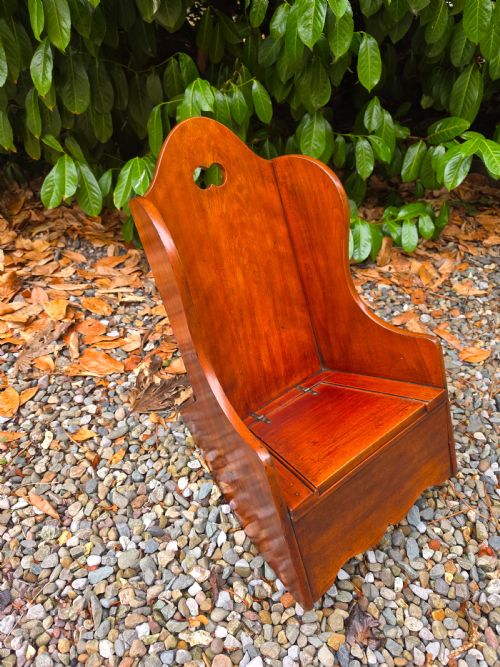
Georgian nursery furniture encompasses high chairs, rocking chairs, armchairs, cradles and chairs on stands intended for young children. These pieces bridge the gap between miniature utility and domestic antiques, showing the same stylistic evolution as adult furniture of the period.
Elm, oak, mahogany and fruitwood dominate the selection, appearing in forms from Windsor framing to caned bergères and metamorphic high chairs. The most frequent pieces on this page are Windsor chairs and high chairs spanning the eighteenth and nineteenth centuries.
How they were made
Local timbers such as elm, ash and oak provide the structural foundation for vernacular Windsor seating, often shaped with spindle backs and solid wooden seats. Cabinet makers utilised mahogany and walnut for more formal chairs, incorporating brass fittings and caned panels.
Joinery techniques include traditional mortise and tenon construction, steam bending for hoop backs, and turning for legs and spindles. Surface finishes rely on natural wax and polish to highlight the grain of the timber.
Listings span the Georgian period, Regency era, and nineteenth century, utilising mahogany, elm, oak, ash, walnut, cane and brass.
What varies in quality
The distinction between ordinary and superior pieces rests on timber selection, structural proportion and the retention of original components. Dense fruitwoods, figured mahogany and well-matched grain elevate a piece beyond standard utility.
Refined turning on spindles, intact cane work and original stands or rocking mechanisms separate domestic work from master cabinet making. The survival of an unaltered surface finish carries considerable weight.
The Georgian Nursery Furniture Glossary
- Windsor chair
- A wooden chair built with a solid seat into which the legs and back spindles are raked and wedged. This form provides robust seating suited to daily domestic use.
- Bergère
- An enclosed armchair with cane panels set into the wooden frame. It appears on formal children's seating from the period.
- Metamorphic
- Describing furniture designed to transform from one function to another, such as a high chair converting into a low chair and table combination. This engineering demonstrates ingenuity in period design.
- Spindle back
- A chair back constructed from a series of turned vertical wooden rods. These provide lightweight yet sturdy support.
- Potty rocker
- A low rocking chair fitted with a aperture or enclosed seat for toilet training. It combines nursery utility with a rocking motion.
Georgian Nursery Furniture: Frequently Asked Questions
Are these chairs safe for children?
These antiques are intended primarily for display, collection and historical appreciation rather than modern nursery use. Their construction reflects eighteenth and nineteenth-century safety standards, which differ significantly from contemporary requirements.
Buyers typically place these items as decorative focal points in a room or within specialist collections. Care must be taken with ancient joints and dry timber if handled frequently.
How do I identify a high chair on a stand?
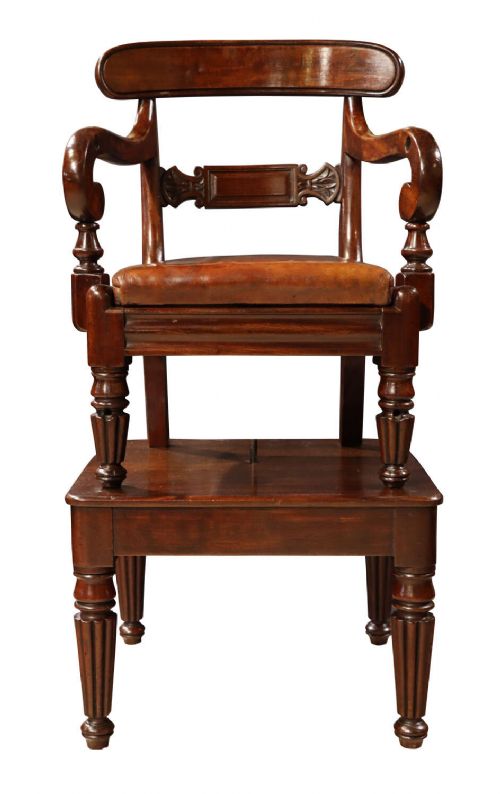
A high chair on a stand consists of a detachable seating unit mounted upon a separate wooden frame to elevate the child. The combination allowed the chair to be removed from its base for lower seating.
Examination of the joining points and timber wear reveals whether the chair and stand originated together. Matching patination across both components confirms their shared history.
What is a Windsor child's chair?
A Windsor child's chair is a scaled-down version of the adult classic, featuring a saddle-shaped wooden seat and a stick-back construction. These pieces often exhibit regional variations in turning and timber choice.
Makers utilised local woods like elm and ash, resulting in sturdy chairs designed to withstand robust domestic environments. Hoopbacks and low comb backs are common configurations.
How do I tell an 18th century chair from a 19th century one?
Dating relies upon timber characteristics, tool marks, construction methods and stylistic shifts from Georgian restraint to Regency or Victorian elaboration. Earlier pieces often display vernacular hand-carving and pegged joints.
Nineteenth-century examples may incorporate machine-turned components or imported hardwoods like mahogany. Comparing the wear patterns and secondary woods helps clarify the era of manufacture.