




Georgian Moon Dial Clock
A georgian moon dial clock is a substantial timekeeper that charts the lunar cycle alongside the hour, bringing kinetic movement and regional craft to a hallway.
Georgian Moon Dial Clock
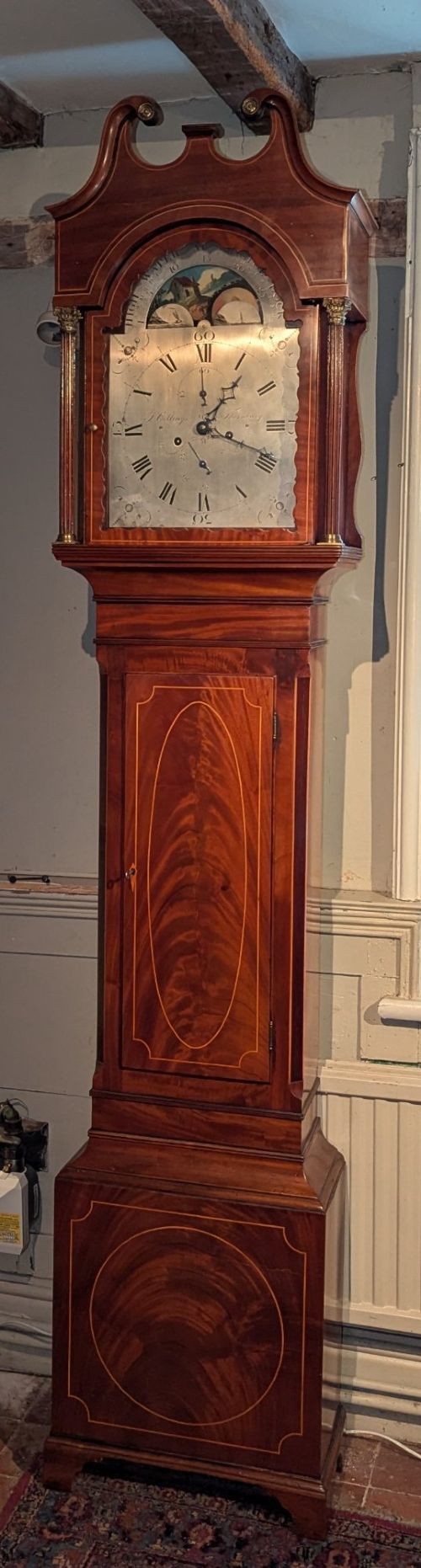
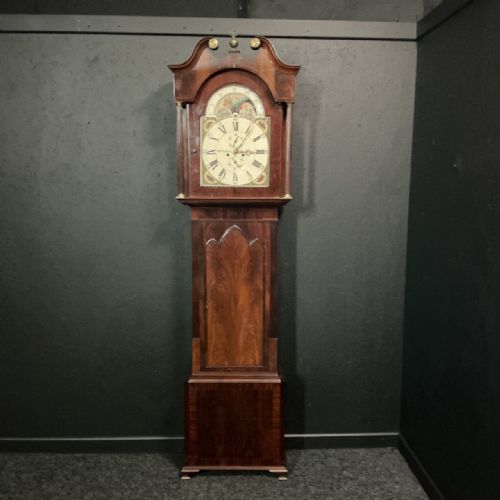
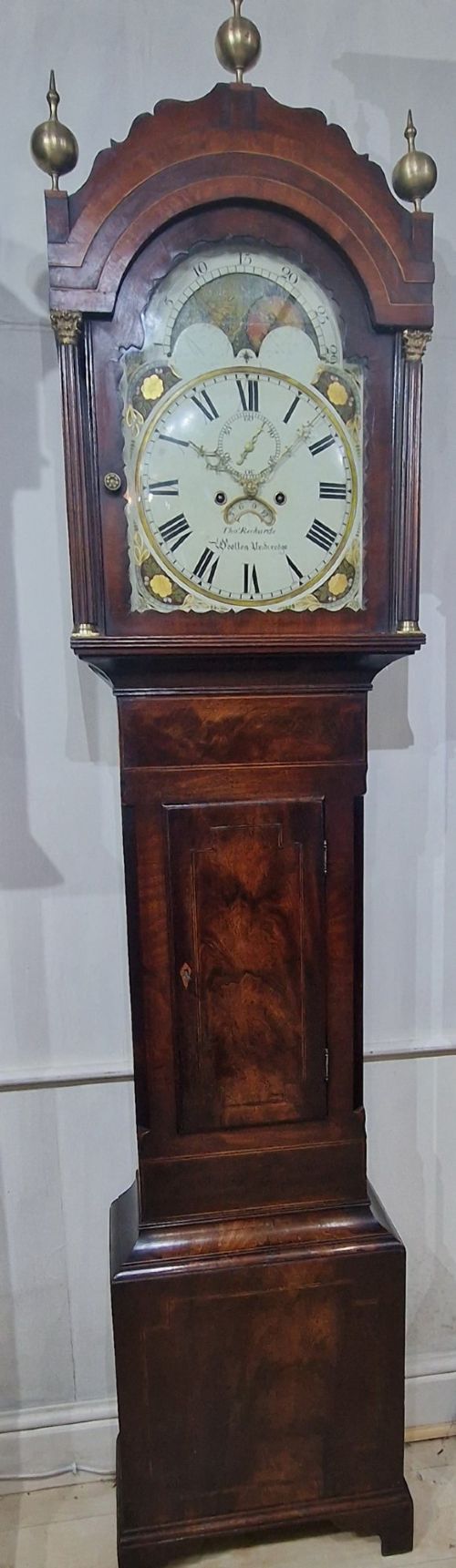
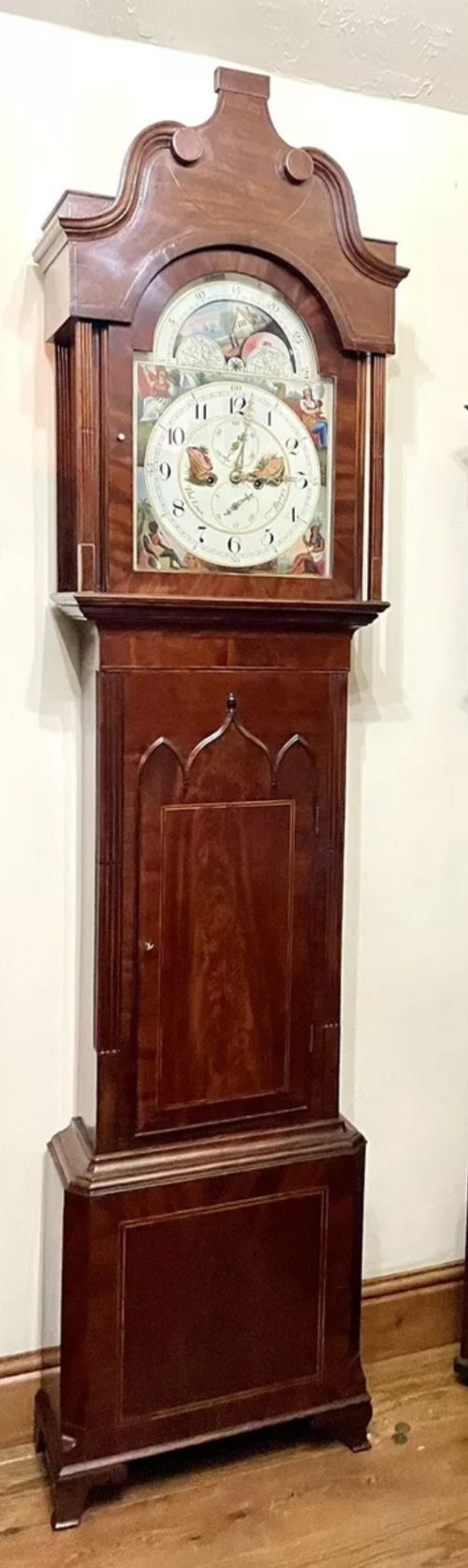
A georgian moon dial clock is typically housed in a tall wooden case designed to stand on the floor, uniting domestic utility with astronomical display. These pieces function as both timekeepers and mechanical calendars that track the phases of the moon through rotating painted discs.
The versions most commonly met on this page belong to the Georgian and nineteenth-century periods, often framed by provincial makers working across England, Scotland and Wales. Mahogany and oak dominate the construction, frequently accented with inlaid details or brass dial furniture.
Makers from northern towns and southern market boroughs alike signed these longcase instruments, creating regional variations in dial painting and case proportions. The inclusion of a moon roller mechanism transforms a standard tall clock into an engaging mechanical focal point.
How they were made
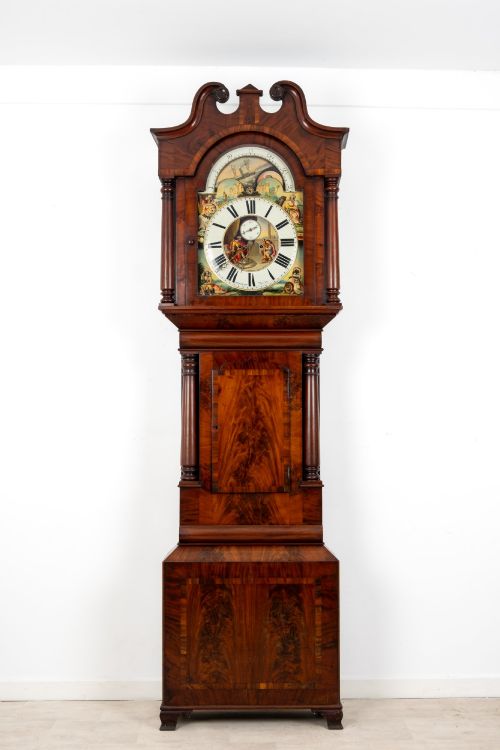
Cabinetmakers constructed the tall floor cases primarily from solid mahogany or oak, sometimes utilising figured flame mahogany veneers on the door panels and plinths. Brass and steel components formed the intricate gear trains of the eight-day movements, while glass protected the painted iron or brass dial faces.
Dial faces combined hand-painted lunar scenes with arabic or roman numerals, often executed by regional clockmakers who signed their work directly onto the iron sheet. The rotating moon roller mechanism operated behind twin hemispherical cutouts on the dial arch to display the waxing and waning lunar cycle.
Some moon rollers feature whimsical painted faces that gaze out from the dial arch.
What varies in quality
Quality rests upon the crispness of the cabinetwork and the artistic execution of the painted moon dial. Finer examples display carefully matched timber grains, sophisticated inlay work and delicately rendered lunar illustrations by named regional makers.
The sophistication of the mechanical movement also distinguishes higher tiers of production, particularly where gear trains show superior finishing and original components remain intact. A harmonious integration between the dial painter's art and the cabinetmaker's joinery defines the most successful pieces.
Parkinson Bros Batley·Edward Shepley of Manchester·Edward White Birmingham·Will Lassell of Toxteth Park·Thomas Lees Bury·John Banks Oldham·Thos Russell Lancaster·Furnival Oldham·Thomas Dean of Leigh·Grocott Holywell·Stanyer Nantwich·Richardson of Manchester·R Lawson Leigh·John Wood of Grantham·Edward Glase of Bridgnorth·James Rayner of Hull·Henry Smith·Robert Darling Melrose·William Mercer of Liverpool·David Griffith Carnarvon·John Wyat Altringham
The Georgian Moon Dial Clock Glossary
- Moon roller
- A rotating disc behind the clock dial that tracks the lunar month. It displays two painted moons to cycle through the phases over twenty-nine and a half days.
- Longcase clock
- A tall pendulum clock housed in a wooden floor-standing case designed to protect the weights and swinging pendulum.
- Penny moon
- A simple form of lunar display showing a single painted moon phase through a circular aperture rather than the twin moons of a roller dial.
- Axe moon
- A specific regional shape for the lunar display aperture, found on certain nineteenth-century dials.
- Flame mahogany
- A decorative veneer cut from timber fork joints, creating a fiery pattern across the door or base of the clock case.
Georgian Moon Dial Clock: Frequently Asked Questions
What is a moon phase dial?
A moon phase dial is a specialised clock face featuring a rotating painted disc that tracks the cycle of the moon. It moves in tandem with the internal gear train to show whether the moon is new, waxing, full or waning.
This mechanism was particularly valued before widespread artificial lighting, when lunar phases mattered for travel and evening work. On these clocks, it provides a colourful painted landscape beneath the dial arch.
How do eight day movements work?
An eight day movement is driven by two suspended heavy weights that require winding once a week via a key inserted through the dial. A long pendulum swings within the trunk to regulate the escape wheel and maintain accurate timekeeping.
These mechanical trains combine brass wheels, steel pinions and lead or iron weights housed safely inside the wooden trunk. The gear train also drives the motion works for the calendar and lunar display.
How can I tell different woods apart?
Georgian clock cases predominantly utilise mahogany or oak, each offering distinct visual and structural properties. Oak displays pronounced growth rings and a coarser grain texture, while mahogany exhibits a smoother reddish-brown tone.
Finer mahogany cases sometimes incorporate flame veneer, which produces distinctive rippling patterns across the flat surfaces of the door. Early pieces tend to favour solid timber construction before mahogany veneers became widespread.
Where were regional longcase clocks made?
Regional longcase clocks were produced by local horologists working in towns and cities across Britain, from Lancashire and Cheshire to Scotland and Wales. Each maker often signed their name directly onto the painted iron or brass dial.
These provincial workshops sourced timber locally and collaborated with specialised dial painters. Consequently, clocks bear the distinct stylistic traits and signatures of their specific geographic origin.