


Moonphase Dial Clock
A moonphase dial clock tracks both the passage of hours and the lunar cycle, bringing mechanical mastery and maritime utility into a room.
Moonphase Dial Clock
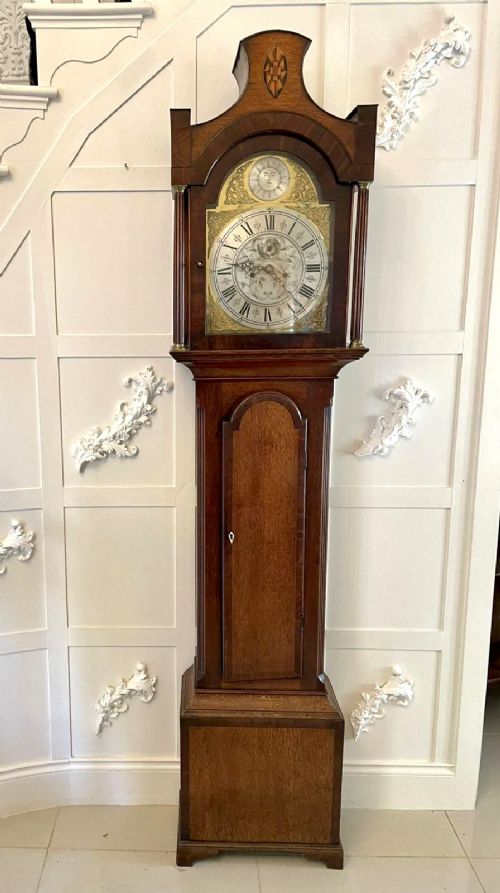
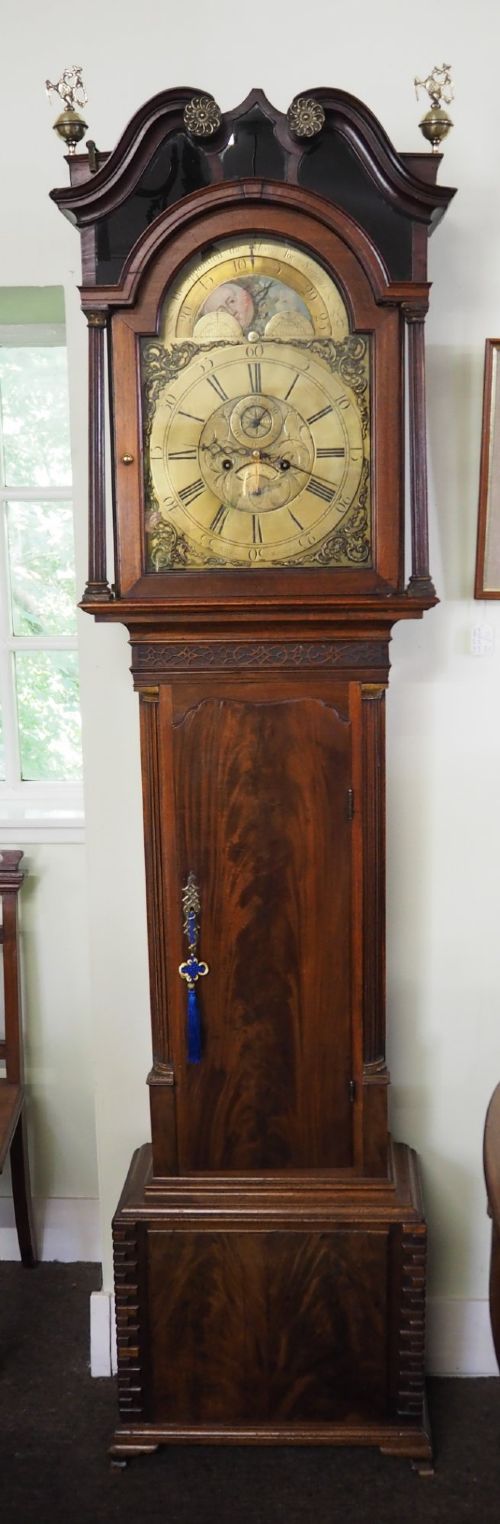
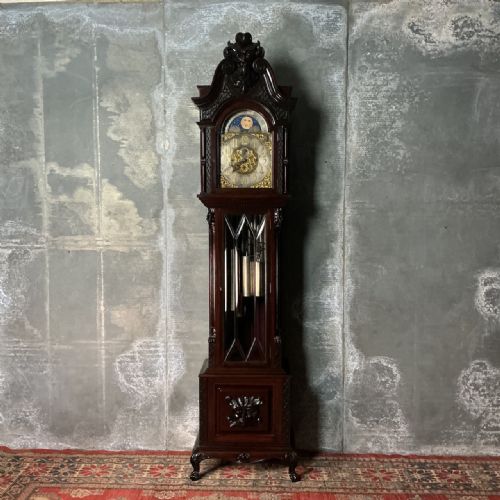
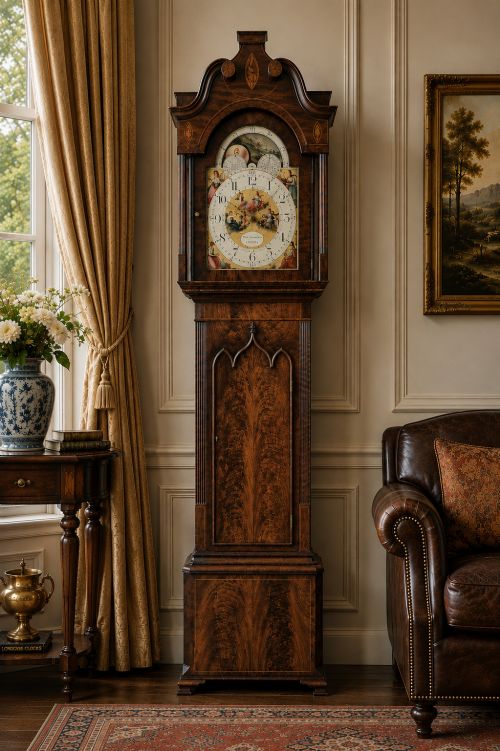
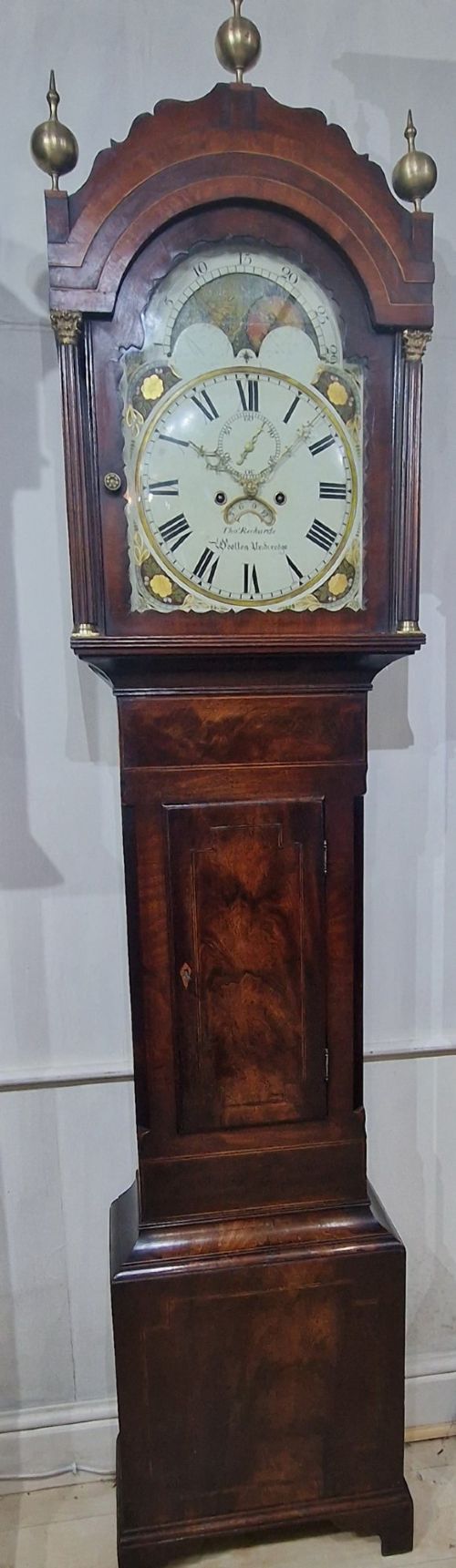
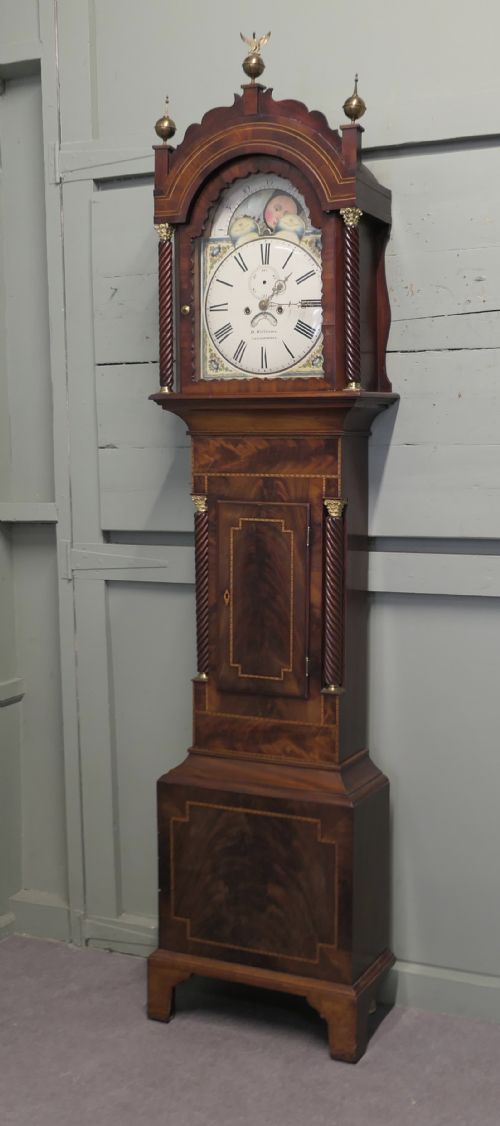
A moonphase dial clock displays the phase of the moon alongside standard timekeeping, combining mechanics with celestial observation. These pieces appear most frequently as tall case clocks, commonly known as longcase or grandfather clocks, housing complex movements within floor-standing wooden housings.
The selections span from the eighteenth century through the Victorian era, encompassing Georgian, Regency, and Edwardian periods. Alongside floor-standing models, smaller mantel clocks incorporate these lunar displays within French and Belgian designs.
Origins stretch across various regional workshops in Britain, featuring provincial makers from Bristol, Liverpool, Manchester, and London. Oak and mahogany serve as the primary woods for the long cases, often enhanced by walnut veneers or inlay work.
Materials and Construction
Cabinetmakers utilised timber such as oak, mahogany, and walnut to build tall cases that protected the weight-driven or spring-driven movements. Mahogany frequently received flame grain figuring or crossbanding, while oak provided sturdy structural framing for provincial models.
Clock faces combined brass, painted iron, and enamel to display roman numerals, subsidiary seconds, and calendar indicators. Skilled metalworkers painted the revolving lunar disks by hand, depicting the moon and stars against starry blue skies.
Listings feature movements housed in oak, mahogany, and walnut cases, spanning the eighteenth and nineteenth centuries.
Assessing Craftsmanship
The refinement of the dial painting and the complexity of the movement separate standard production from exceptional work. Finely executed lunar disks feature detailed hand-painted celestial motifs, while superior movements drive rolling moons smoothly alongside tidal or calendar functions.
Cabinet quality shows in the selection of timber veneers, such as figured mahogany or walnut, and the crispness of inlaid details. Case proportions and the integration of the hood glass and pillars reflect the skill of the regional maker.
Samuel Kellett of Bredbury·D Williams of Crickhowell·Charles Dowsett Of Canterbury·Thomas Vernon·John Banks Oldham·Furnival Oldham·Thomas Dean of Leigh·Wilshire and Link of Bristol·Nicholas of Birmingham·Richardson of Manchester·James Rayner of Hull·Thos Burchall of Nantwich·Robert Darling of Melrose·Thomas Hall of Romsey·Thomas Hutchison of Leeds·Iames Richards Liverpool
The Moonphase Dial Clock Glossary
- Longcase clock
- A tall, weight-driven pendulum clock housed in a wooden case that stands directly on the floor. These instruments are frequently called grandfather clocks.
- Moonphase
- A mechanical display on a clock face that tracks the lunar cycle through a rotating disk showing the visible shape of the moon. This mechanism typically completes one full revolution every twenty-nine and a half days.
- Dial
- The visible face of the clock where hours, minutes, and subsidiary functions are read. These surfaces utilise painted iron, brass, or enamel.
- Crossbanding
- A decorative technique where strips of veneer are laid across the grain of the primary wood, creating a contrasting border on furniture panels.
- Eight day
- A movement specification requiring the clock to be wound once every eight days rather than daily.
Moonphase Dial Clock: Frequently Asked Questions
Where were these clocks made?
Makers constructed these timepieces in workshops across England, Wales, and Scotland during the eighteenth and nineteenth centuries. Regional centres such as Bristol, Liverpool, and London produced notable examples.
Cabinetmakers and clockmakers often collaborated locally to house these complex movements.
What is the difference between oak and mahogany cases?
Oak cases appeared widely in earlier and provincial eighteenth-century pieces, offering a robust and visible grain pattern. Mahogany became preferred for later Georgian and Regency designs, allowing for polished surfaces and figured veneers.
Both timbers protected the brass movements effectively while reflecting prevailing furniture fashions.
How do I wind a longcase clock?
Winding involves inserting a key into the winding holes on the dial face to draw the weights upward. Care must be taken not to overwind the movement.
Doing this regularly ensures the pendulum maintains consistent motion and the moonphase tracks correctly.