
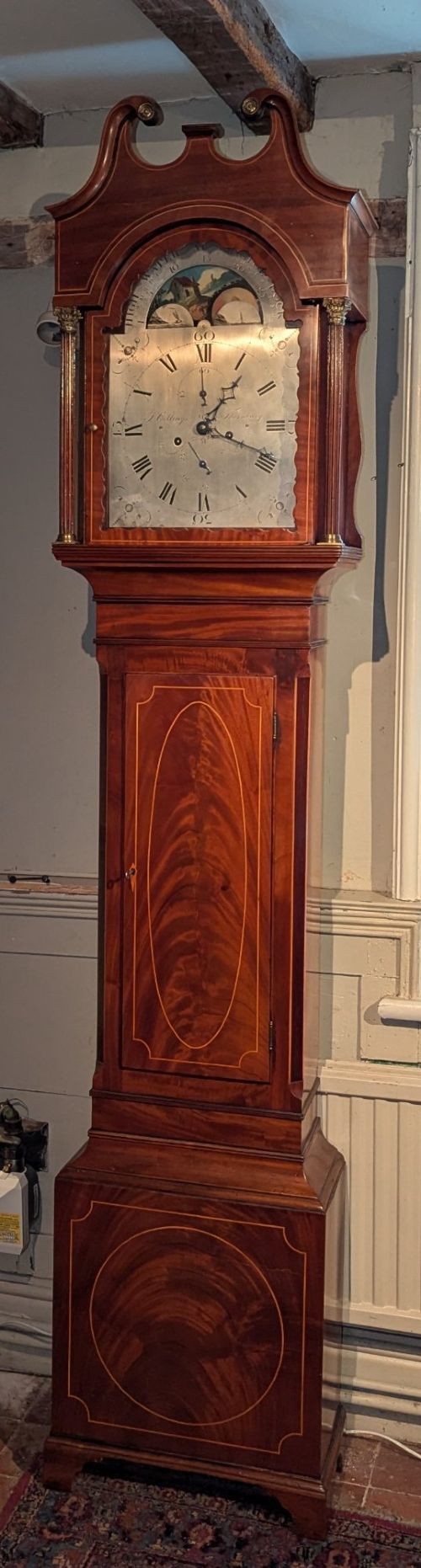


Brass Moon Phase Clock
A brass moon phase clock tracks both the time and the lunar cycle through a mechanical disc displayed on the dial.
Brass Moon Phase Clock
A brass moon phase clock appears primarily as a longcase clock, standing tall in mahogany or oak cases from the eighteenth and nineteenth centuries. These tall pieces house intricate brass movements and painted or engraved dials that show the phases of the moon alongside the standard hours and minutes.
Smaller examples also exist within the selection, notably French carriage clocks and regulators dating into the late nineteenth and twentieth centuries. These portable or mantel pieces incorporate the same lunar complication within gilt brass and glass housings.
The phrase encompasses various periods from early Georgian origins through to Edwardian and later twentieth-century interpretations. Collectors encounter regional British makers alongside continental French workshops within this grouping.
How they were made
Makers constructed the primary timekeeping and lunar mechanisms from brass and steel, employing gear trains to drive the rotating moon discs once every lunar month. Dials feature hand-painted enamel or engraved brass plates, often signed by the horologist in the arch or centre.
Cases rely on timber construction, utilising mahogany, flame mahogany, and oak, frequently enhanced with inlaid details. Glass panels protect the delicate dials of carriage clocks and regulators, while longcase versions utilise heavy hinged wooden doors to enclose the weights and pendulum.
Early clockmakers painted cheerful human faces onto the moon discs, watching over the passing hours with enduring optimism.
What varies in quality
Quality rests upon the sophistication of the movement and the artistry found on the dial, ranging from simple penny moon apertures to grand musical complications with date work. Finer examples display meticulous hand-engraving on the brass dial plates and superior cabinetwork with carefully selected timber veneers.
The integrity of the original components heavily influences the standing of a piece, particularly where movements and dial mechanisms have survived centuries of maintenance. Regional variations in case construction and the prominence of the maker's signature further distinguish standard production from exceptional horology.
STANYER NANTWICH·R LAWSON LEIGH·JOHN WOOD OF GRANTHAM·HENRY SMITH·WILLIAM MERCER OF LIVERPOOL·L EPEE
The Brass Moon Phase Clock Glossary
- Penny moon
- A simple lunar display showing a single painted moon phase through a semicircular aperture on the dial face. This mechanism provides a direct indication of the lunar cycle without complex gear calculations.
- Longcase clock
- A tall pendulum clock enclosed in a wooden case, commonly known as a grandfather clock. These housing structures protect the weighted movement and often feature a arched dial incorporating the moon phase.
- Carriage clock
- A small, portable spring-driven timepiece designed for travel during the nineteenth century. They typically feature brass frames inset with glass panels to display the inner workings and lunar dial.
- Grand sonnerie
- A complex striking mechanism that chimes both the hours and the quarters automatically. This high complication appears in advanced continental carriage clocks alongside moon phase indicators.
- Regulator
- A precision timepiece designed for high accuracy, often featuring a deadbeat escapement and a heavy pendulum. These clocks frequently occupy tall mahogany cases or glass-panelled mantel housings.
Brass Moon Phase Clock: Frequently Asked Questions
How does a moon phase dial work?
The mechanism uses a specialised gear train connected to the clock movement that rotates a disc twice every lunar month, completing a full cycle in approximately twenty-nine and a half days.
Two painted moons on the disc alternately appear beneath an arched aperture on the dial face to mirror the current phase in the sky.
How do I wind an antique longcase clock?
Winding requires raising the heavy lead or iron weights suspended inside the case by inserting a key into the winding holes on the dial face. Care must be taken to pull the cords or chains steadily without allowing the weights to drop suddenly.
Most traditional eight-day movements need this attention once a week, while thirty-hour versions require daily winding using continuous loop lines.
Where should I place a brass moon phase clock in my home?
Longcase clocks need a stable, dry interior wall with a firm floor surface to ensure the pendulum swings evenly and keeps accurate time. Placing them away from direct sunlight and heat sources protects the timber case and delicate dial finishes.
Smaller carriage clocks and regulators sit securely on mantelpieces or sturdy shelves where their glass panels remain protected from accidental knocks.
How do I identify the period of a longcase clock?
Dating relies on the evolution of case design, timber choice, and dial proportions, moving from square brass dials of the early eighteenth century to arched painted dials with moon phases later on. Regional variations in cabinetmaking and the style of the engraved signature also provide clear chronological clues.
Interior movement construction, such as the transition from brass-bound wooden pillars to cast brass pillars, further helps specialists confirm the era of manufacture.