
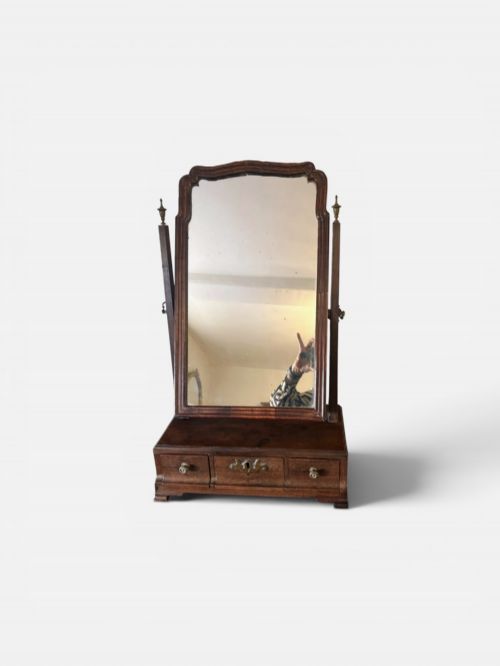
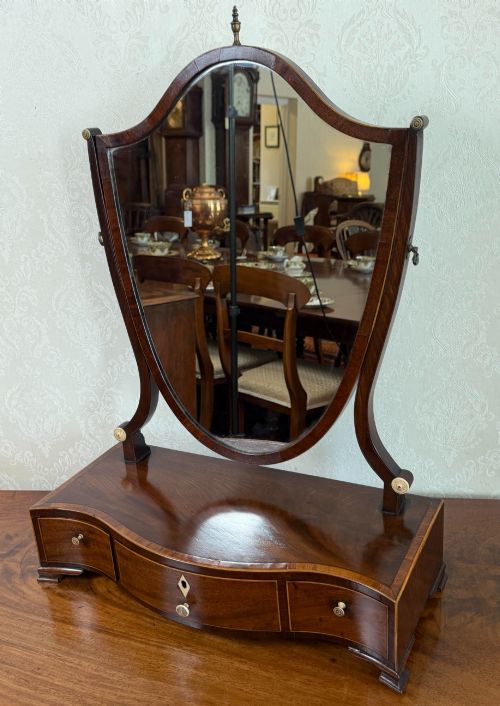

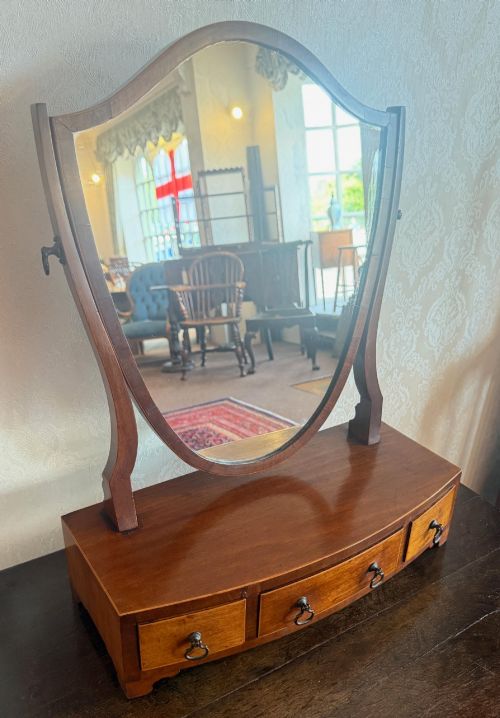
Georgian Mirror with Drawers
A georgian mirror with drawers provides a practical surface for reflection and small storage, combining a pivoting glass plate with a fitted base.
Georgian Mirror with Drawers
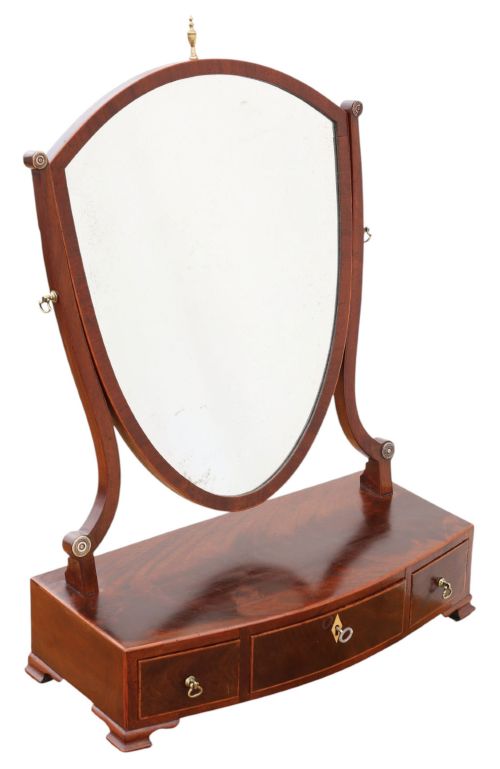
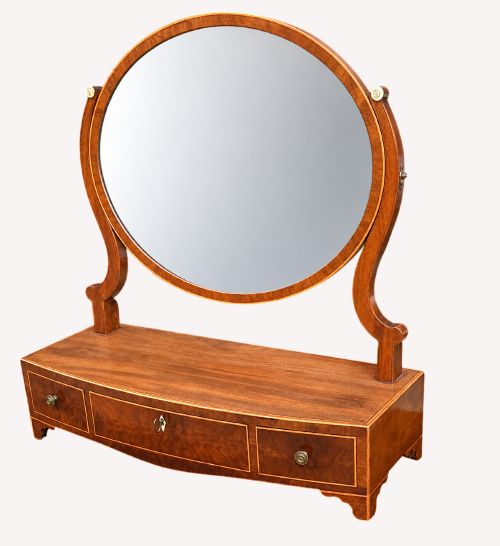
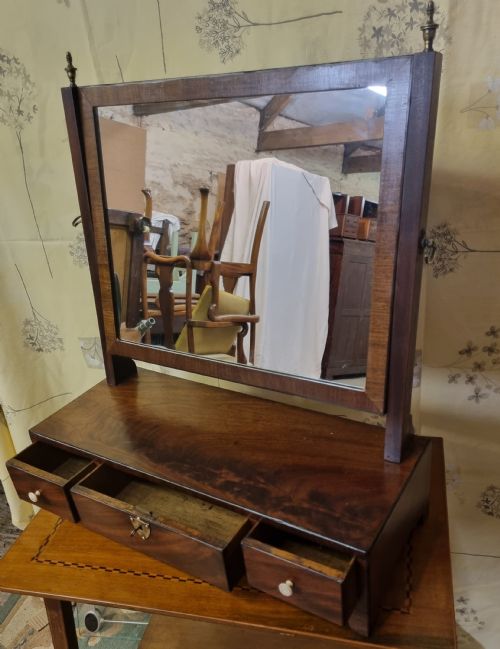
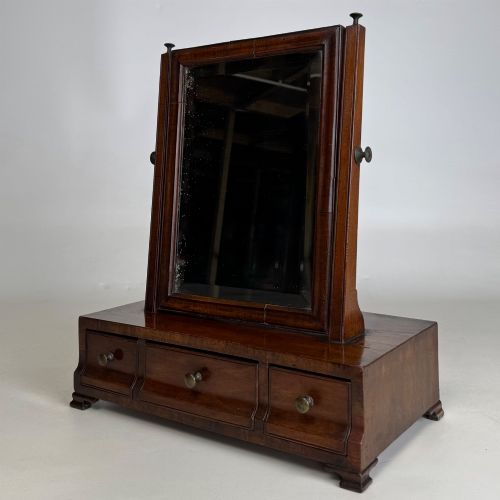
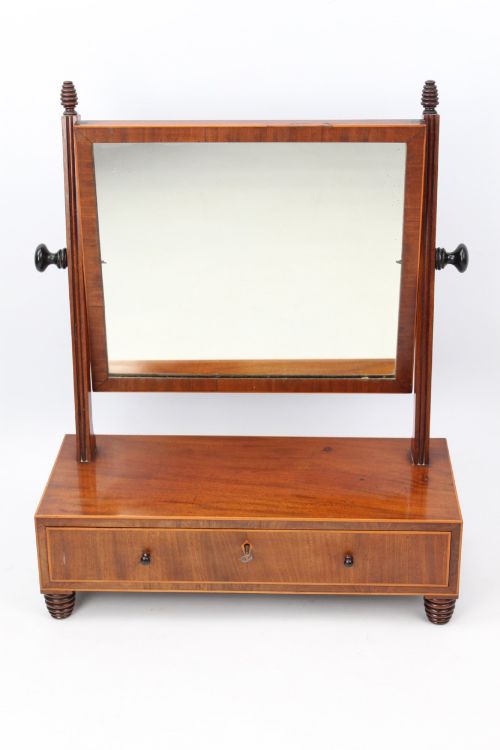
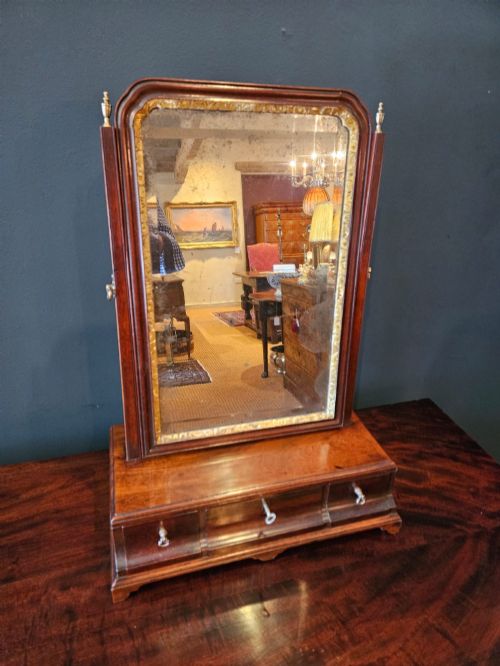
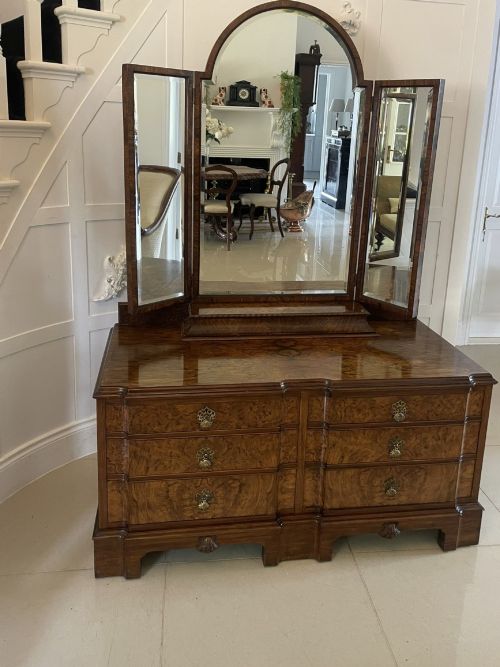
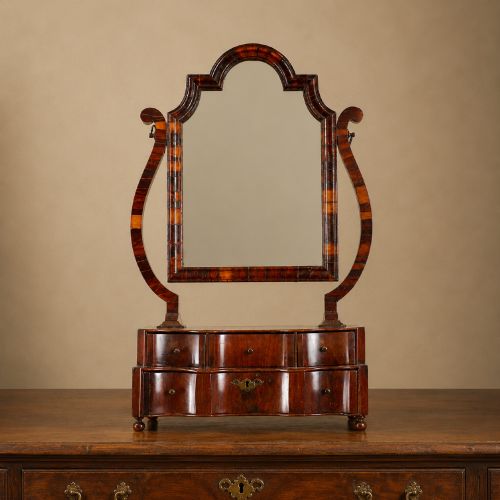
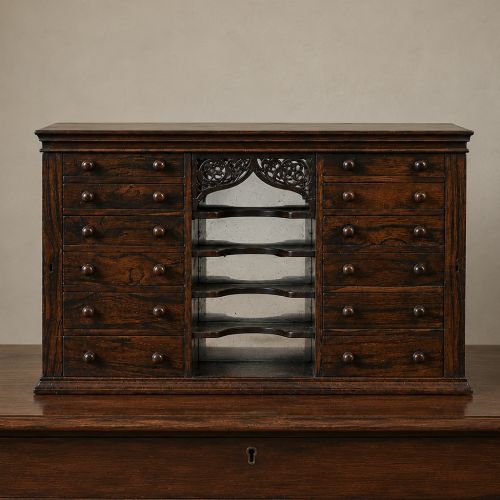
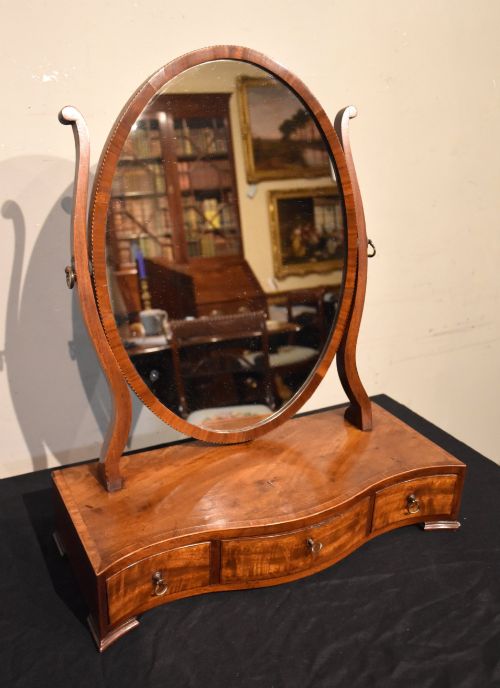
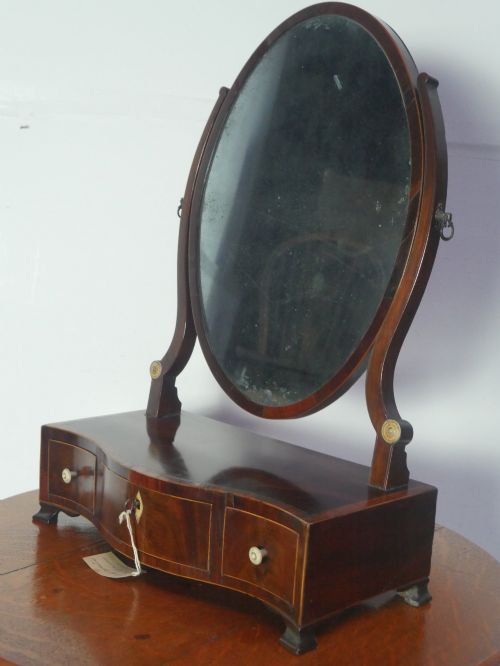
When you search for a georgian mirror with drawers, you encounter pieces designed for the dressing table, often described as toilet mirrors, dressing mirrors, or table mirrors. These objects sit upon a chest or table, offering an adjustable glass plate mounted on upright arms above a small plinth containing one or more drawers.
The majority of pieces seen here date from the eighteenth and nineteenth centuries, spanning periods from George II and George III through the Regency era and into later Victorian interpretations. Formats range from simple box bases to serpentine profiles and shield shapes, reflecting the domestic habits of dressing and grooming in past centuries.
How they were made
Cabinet makers utilised dense hardwoods such as mahogany and walnut, frequently selecting veneers with strong grain patterns like burr walnut or incorporating satinwood and ebony inlay for decorative contrast. Mirror glass is set within pivoting frames, secured by brass screw knobs or pins that allow the glass plate to tilt to the required angle.
The base construction typically takes the form of a small box or chest fitted with dovetail joints for the drawer carcases. Secondary timbers line the interiors, while bone escutcheons and brass feet occasionally accent the exterior design.
What varies in quality
The standard of timber selection largely dictates the distinction between everyday pieces and finer examples. Makers who chose highly figured mahogany veneers, burr maple, or intricate Dutch marquetry produced work intended for more affluent interiors.
Proportion and cabinet-making technique further separate the grades. Finely judged serpentine fronts, carefully matched grain across the drawer tiers, and well-executed boxwood or ebony stringing demonstrate superior workshop practice.
The Georgian Mirror with Drawers Glossary
- Toilet mirror
- A small mirror designed to stand upon a dressing table or chest of drawers. These pieces typically feature a box base fitted with small drawers for cosmetics or jewellery.
- Swing mirror
- A glass plate suspended within movable side arms that permit the frame to tilt forward or backward. This arrangement relies on threaded brass screw pins fitted into the upright supports.
- Serpentine
- A curved outline featuring a convex centre flanked by concave sides. This shape appears frequently on the front elevation of the drawer plinths.
- Shield shaped
- A glass plate cut into the outline of a heraldic shield. This profile became popular during the latter half of the eighteenth century.
- Box base
- The rectangular lower section of a table mirror that contains one or more small storage drawers. It provides stability for the pivoting frame above.
Georgian Mirror with Drawers: Frequently Asked Questions
Where were these mirrors placed?
These mirrors were designed to sit atop dressing tables, sideboards, or chests of drawers in bedrooms and dressing rooms. They offered a portable solution for personal grooming before fitted wall mirrors became standard.
Because they were not fixed to the wall, owners could move them to catch the best morning light near a window.
What went into the drawers?
The small drawers built into the base held daily necessities such as pins, cosmetics, rings, and small personal documents. The compartments kept these items organised and close to hand during dressing.
Deeper drawers occasionally accommodated small trinkets or letters, depending on the overall scale of the box base.
How do I date a mirror?
Dating relies on examining the timber species, construction methods, and overall silhouette. Eighteenth-century examples often display pegged joints, hand-cut dovetails, and lighter mahogany frames.
Later nineteenth-century and revival pieces frequently incorporate heavier mouldings, machine-cut elements, or alternative veneer selections characteristic of Victorian production.
Are the mirror plates original?
Many older pieces have replacement mirror plates because the original mercury or silver backing degraded over centuries of exposure. A replacement glass often appears noticeably clear and lacks the subtle distortions or foxing typical of antique glass.
When evaluating a piece, inspect the rear panel and the mounting putty to understand the history of the glass plate.