
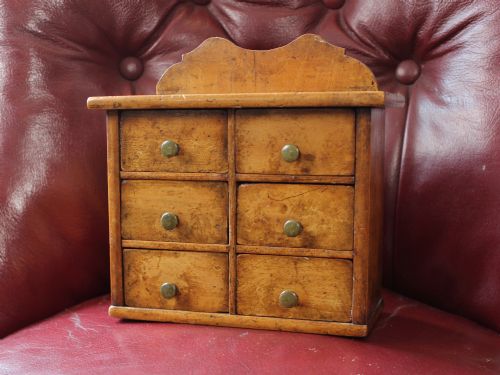


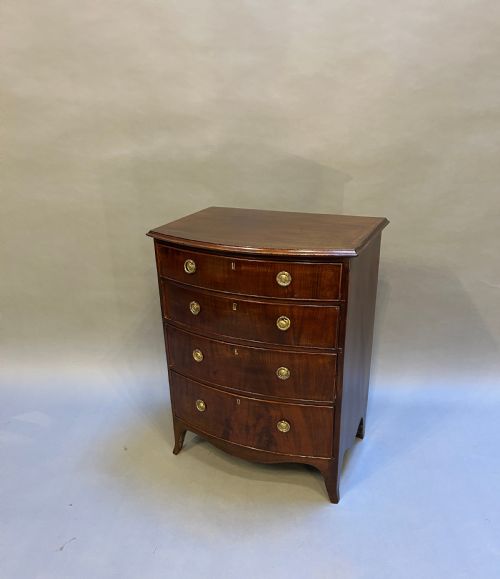


Georgian Mini Chest
A georgian mini chest condenses the scale and timber quality of full-size furniture into a charming miniature format built for domestic storage.
Georgian Mini Chest
A georgian mini chest encompasses diminutive chests of drawers, apprentice pieces, spice cabinets, and coffers originating mainly from the eighteenth and nineteenth centuries. These smaller forms served practical storage purposes or demonstrated a maker's skill on a reduced scale.
Mahogany and oak dominate the available selection, often appearing in bowfront or straight-front configurations alongside regional Welsh vernacular styles like the coffer bach. Buyers frequently encounter pieces displaying traditional dovetail construction and small brass drop handles.
Materials and construction
Cabinet makers utilised solid timbers such as mahogany, oak, fruitwood, and pine, sometimes enhancing surfaces with wood inlay, paint, or simulated wood finishes. Dense hardwoods provided stability for fine drawer construction, while softer pine served as secondary wood for drawer linings and backs.
Carpenters joined carcases using hand-cut dovetails and fitted small brass drop handles or drawer pulls to complete the miniature furniture. Selected examples incorporate intricate wood inlay or decorative painted schemes to emulate grander domestic pieces.
Listings feature pieces spanning the 18th century through the Edwardian era, constructed in mahogany, oak, pine, fruitwood, and walnut.
Assessing quality and craftsmanship
The standard of a georgian mini chest depends upon the precision of its joinery, particularly the tightness of the dovetails on drawer corners and the neatness of any wood inlay. Superior examples retain their original brass handles, feet, and backboards without excessive timber replacement.
Proportion and timber selection separate finer workshop output from simpler vernacular items, with well-figured mahogany or richly grained oak commanding attention. The crispness of the mouldings and the smooth operation of the small drawers indicate the original maker's competence.
The Georgian Mini Chest Glossary
- Coffer bach
- A small Welsh oak chest, often featuring a lidded compartment above drawers, traditionally made as a marriage or presentation piece.
- Bowfront
- A curved front profile that swells outward at the centre, frequently seen on miniature mahogany chests of drawers from the Georgian period.
- Apprentice piece
- A smaller item of furniture created by a craftsman to demonstrate mastery of skills before achieving full guild membership.
- Dovetail
- A traditional interlocking joint used to secure corners of drawers and carcases, prized for its mechanical strength and durability.
- Spice cabinet
- A small wooden cabinet fitted with multiple internal drawers designed for storing culinary herbs, spices, or small valuables.
Georgian Mini Chest: Frequently Asked Questions
What were mini chests used for?
These small chests served practical roles in period homes for organising valuables, documents, tea, or medicinal spices. Their reduced footprint allowed placement on tables or desks.
Craftsmen also produced them as trade samples, presentation pieces, or demonstrations of advanced woodworking skill.
How do I style a mini chest at home?
A mini chest fits comfortably on top of larger sideboards, desks, or chest of drawers to provide additional compartmentalised storage. Their compact dimensions suit display surfaces where full-scale furniture cannot fit.
Position them away from direct heat sources and strong sunlight to protect historic polished timber and painted surfaces.
How do I date a Georgian mini chest?
Dating relies on examining construction methods, timber species, and handle styles characteristic of the eighteenth and nineteenth centuries. Hand-cut dovetails, secondary softwood linings, and regional woods offer strong clues to the period of manufacture.
Comparing the proportions and decorative details like stringing or bracket feet against documented examples helps narrow down the decade.
Are these pieces fragile?
Solid hardwood construction makes these chests durable, but their miniature scale means components like thin drawer sides and small feet require careful handling. Regular maintenance involves gentle cleaning and occasional wax polishing to nourish the wood.
Avoiding heavy loading of the small drawers prevents unnecessary strain on historical joints and internal runners.