




Georgian Marble Table
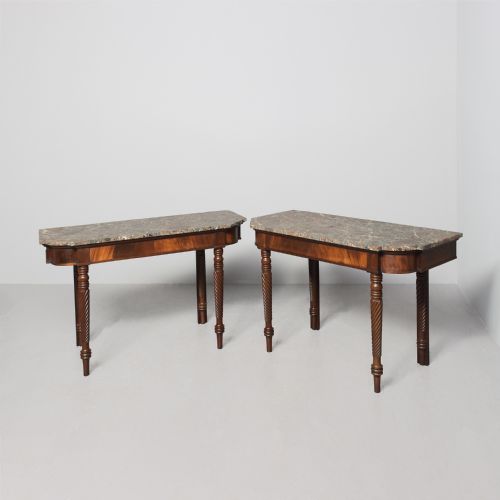
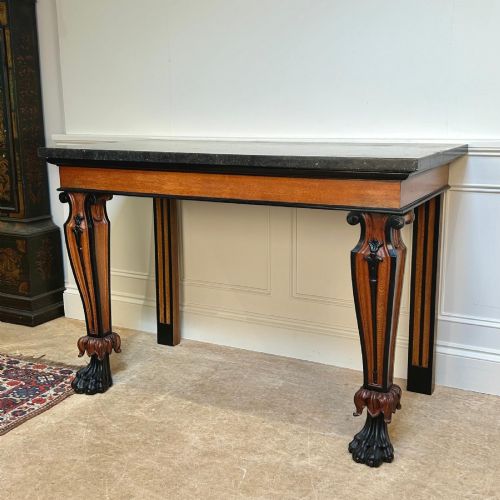
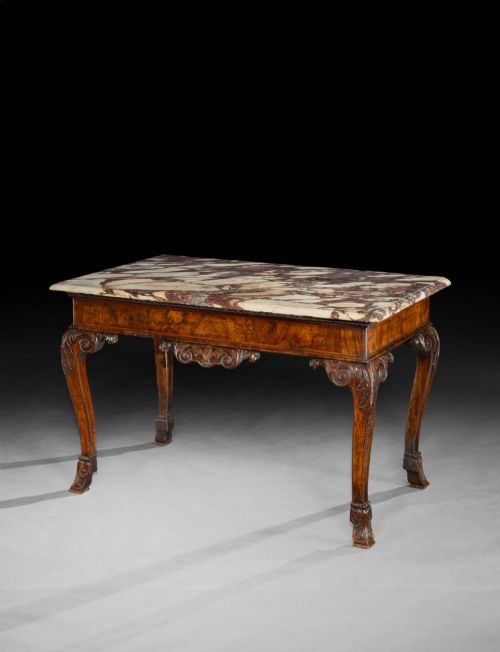
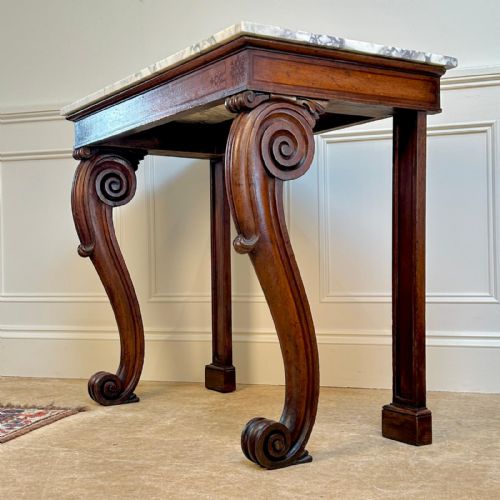
A georgian marble table brings together heavy stone tops and timber frames, offering a sturdy surface used for display in grand halls.
Georgian Marble Table
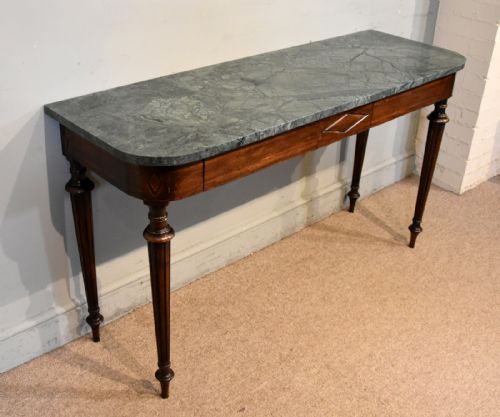
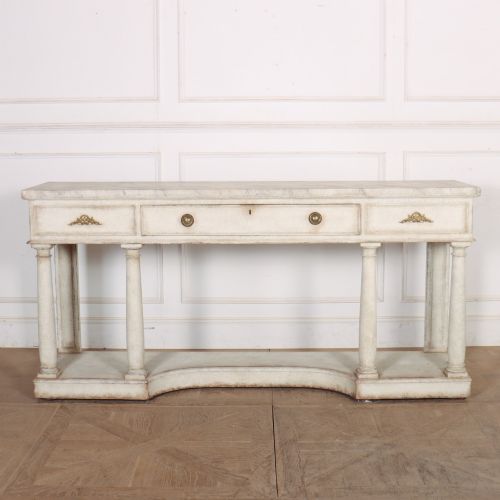
When you search for a georgian marble table, you encounter heavy stone slabs fitted to timber or giltwood bases designed for display in reception rooms and hallways. These pieces appear primarily as console tables, side tables, and occasional tables dating from the eighteenth century into the revival periods of the nineteenth and twentieth centuries.
The evidence shows forms ranging from narrow hall tables to circular centre tables and wide console tables featuring materials like mahogany, oak, walnut, and giltwood. Many examples reflect specific historical styles such as Regency, William IV, Neoclassical, and George II.
Buyers most frequently meet console and side tables designed to stand flat against a wall, often paired with matching mirrors or paintings. These surfaces combined cold stone slabs with carved wooden frames to support heavy decorative objects.
Materials and construction
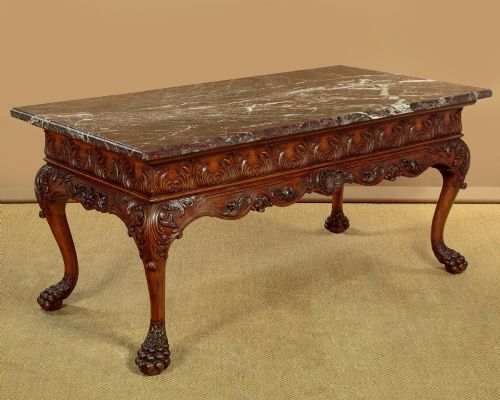
Cabinet makers constructed the foundational frames using dense timbers like mahogany, walnut, oak, and rosewood, sometimes applying giltwood or ebonised finishes to the carved elements. These wooden structures required robust joinery to support the substantial weight of fitted stone tops.
Table surfaces utilise solid marble or multi-coloured specimen marble and pietra dura inlay work, relying on the natural grain and polished finish of the stone for visual impact. Workshops integrated brass mounts and ormolu details to accent the timber and stone combinations.
Listings feature woods including mahogany, oak, walnut, rosewood, and ebonised timber alongside solid marble and glass.
Distinctions in quality
The calibre of a piece rests heavily on the depth and crispness of the hand-carved woodwork, distinguishing deeply sculpted acanthus leaves, lion masks, or eagles from shallow, mechanical shaping. Superior examples display thoughtful proportion between the heavy stone top and the supporting legs.
The selection and arrangement of the marble dictate the upper tier of the range, particularly where multi-coloured specimen marbles or intricate pietra dura work appear. Finer tables maintain tight joints between the heavy stone slab and the timber frieze without excessive modern shims.
The Georgian Marble Table Glossary
- Console table
- A table designed to stand against a wall, typically supported by front legs or brackets while relying on wall fixings for stability.
- Specimen marble
- A decorative surface composed of various coloured marbles cut and fitted together in geometric patterns or pictorial designs.
- Pietra dura
- An artistic technique using finely cut and fitted polished coloured stones to create inlaid images on a tabletop.
- Giltwood
- Timber coated with a thin layer of gold leaf applied over a prepared gesso ground on carved decorative mouldings.
- Demi-lune
- A half-moon shape used for tabletops and console frames intended to sit flush against a flat wall surface.
Georgian Marble Table: Frequently Asked Questions
How were these tables used originally?
These tables served primarily as permanent fixtures in grand hallways, dining rooms, and reception spaces where they displayed porcelain, lamps, or decorative ornaments.
Because of their heavy marble tops, they were rarely moved about a room and remained positioned against walls or fixed in the centre of large spaces.
Where should I place a console table?
Console tables fit naturally against entrance hallway walls, beneath large mirrors, or behind sofas to provide a steady surface for lamps and decorative objects.
Their shallow depth ensures they occupy minimal floor space while offering a distinct visual anchor in living areas.
How do I distinguish 18th century from revival pieces?
Eighteenth-century originals show period-specific tool marks, timber shrinkage consistent with age, and construction methods characteristic of early hand workshops.
Revival pieces, built during later periods like the nineteenth or twentieth century, often utilise machine-sawn timber elements and standardised joinery while copying earlier styles.
What is the difference between a side table and a centre table?
Side tables are built to stand flush against a wall, often featuring finished details only on the front and visible sides.
Centre tables are constructed to be viewed from all four directions, featuring finished carving and design work around the entire perimeter of the frame.